Summary
Unveiling the Truth: Cloned Tyres Discovered in MACC’s Ops Grip Raids—Exposing Tampered Labels and Altered Production Dates is a landmark investigation into the widespread illegal importation, distribution, and sale of counterfeit and tampered tyres in Malaysia. Initiated by the Malaysian Anti-Corruption Commission (MACC) in response to complaints from international tyre manufacturers, the operation—known as Ops Grip—resulted in coordinated raids across 23 locations in the Klang Valley, Penang, and Johor, leading to the seizure of nearly 18,000 tyres suspected of being smuggled and bearing falsified documentation.
The investigation uncovered sophisticated methods of tyre cloning, including tampering with production dates and affixing altered sticker labels to disguise the true origin and condition of the tyres. These counterfeit products included a mix of new but improperly declared tyres, used tyres, and retreaded units that failed to meet safety standards, posing significant risks to consumer safety and road security. International tyre manufacturers such as Michelin, Bridgestone, and Goodyear were engaged to verify the authenticity of the seized tyres, confirming the prevalence of label tampering and counterfeit practices.
Ops Grip also revealed broader criminal activities tied to the tyre smuggling syndicate, including money laundering involving customs officials and importers. Financial investigations led to the freezing of bank accounts valued at approximately RM70 million and highlighted an estimated loss of RM350 million in government tax revenue since 2020 due to illicit tyre importation. The operation exemplifies a multi-agency enforcement effort involving the MACC, Inland Revenue Board, Bank Negara Malaysia, and Royal Malaysian Customs, reflecting a concerted approach to tackling organized crime in the tyre industry.
The case has sparked increased public and governmental awareness of the dangers posed by counterfeit tyres, often described as a “time bomb” for road safety due to their substandard quality and potential to cause accidents. It underscores the critical need for rigorous inspection protocols, advanced detection technologies, and stronger regulatory frameworks to combat tyre cloning and protect consumers, while also emphasizing the importance of consumer vigilance and purchases from authorized dealers.
Background
The tyre industry encompasses a vast range of manufacturers producing numerous tyre styles and models, each available in multiple sizes, resulting in a wide variety of surface patterns. These patterns, along with wear, tear, and any visible damage, are critical in linking tyre marks found at crime scenes to specific tyres. Tyres are marked on their sidewalls with important information such as maximum load and maximum pressure values, which are presented in both metric and English Engineering units. However, these markings do not necessarily correspond to the recommended inflation pressures for a particular vehicle, which are specified by the vehicle manufacturer and should be followed to ensure optimal tyre performance and safety.
The authenticity of tyres is a significant concern, as counterfeit or tampered tyres pose serious safety risks. Genuine tyres are manufactured to meet global performance and safety standards, ensuring proper grip, handling, stability, tread wear, braking efficiency, and puncture resistance under various road and temperature conditions. In contrast, fake or altered tyres, which may include retreaded or improperly declared products, can fail to meet these criteria, endangering vehicle safety.
In a major enforcement action known as Ops Grip, the Malaysian Anti-Corruption Commission (MACC) seized approximately 18,000 tyres across 23 locations in the Klang Valley, Penang, and Johor. These tyres included a mix of new, used, and retreaded units suspected of being smuggled and bearing falsified import and export documents. To verify the authenticity of the seized products, international tyre manufacturers were enlisted to assist in the inspection process. The investigation revealed the extent of tampering with labels and altered production dates, highlighting the challenges in combating tyre smuggling and counterfeit products within the region.
Initiation of Investigation
The investigation into cloned tyres began following a complaint from an Italian tyre manufacturer, which reported suspected irregularities involving counterfeit tyres and undeclared imports entering Malaysia. Most of the seized tyres were found to have originated from a specific foreign country, raising concerns over the authenticity and legality of these products in the Malaysian market.
In response to the complaint, the Malaysian Anti-Corruption Commission (MACC) initiated a multi-agency operation known as Ops Grip. This integrated task force comprised personnel from the MACC’s Special Operations Division, the Inland Revenue Board (LHDN), Bank Negara Malaysia (BNM), and the Royal Malaysian Customs Department. Their combined efforts focused on uncovering and curbing the illegal importation and distribution of cloned tyres, which included forged documents and tampered product labels.
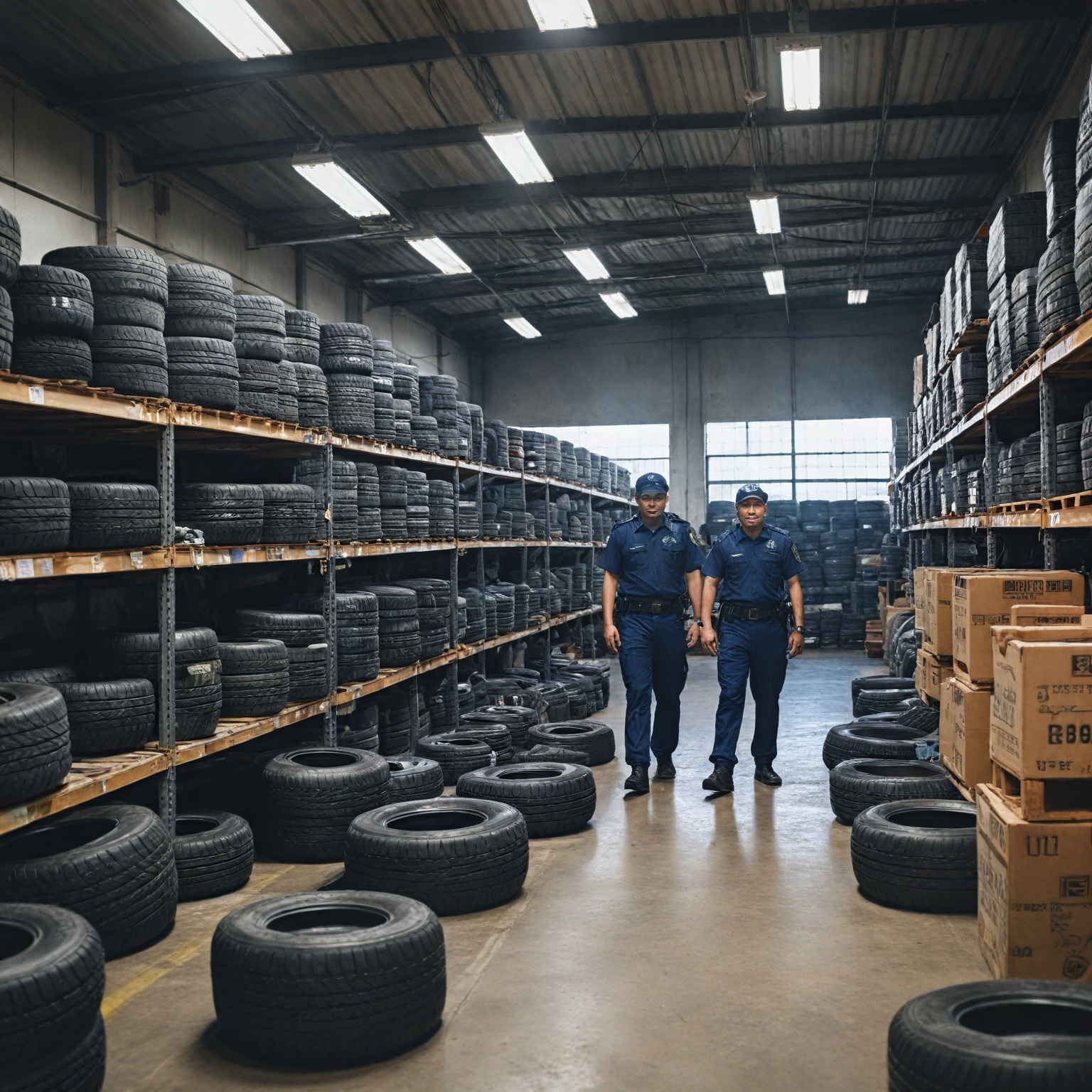
The operation involved simultaneous raids on 23 locations across the Klang Valley, Penang, and Johor, targeting warehouses and storage containers suspected of housing counterfeit and substandard tyres. During these raids, authorities seized a total of 17,672 tyres from various international brands for further verification. Among the key findings was the discovery of stacks of sticker labels used to alter production dates and other identifying information, indicating deliberate attempts to disguise the tyres’ true origins and conditions.
The seriousness of the issue was emphasized by MACC senior officials, who noted that the influx of used and substandard tyres posed a significant safety risk to consumers and could potentially lead to accidents. The investigation is being conducted under Section 18 of the MACC Act 2009 and Section 4(1) of the Anti-Money Laundering, Anti-Terrorism Financing and Proceeds of Unlawful Activities Act 2001 (AMLATFPUAA 2001), highlighting the legal framework underpinning the probe.
Furthermore, the investigation is also tracing other assets potentially acquired through money laundering involving customs officials and tyre importers. This underscores the broader implications of the case, linking it to organized illegal activities beyond just the distribution of counterfeit tyres.
Operation Grip: The Raids
Operation Grip was a coordinated multi-agency enforcement effort led by the Malaysian Anti-Corruption Commission (MACC) through its Special Operations Division. The operation involved collaboration with the Inland Revenue Board (LHDN), Bank Negara Malaysia, and the Royal Malaysian Customs Department to tackle the illegal distribution of cloned tyres across several Malaysian states.
During the raids, authorities targeted 23 locations, including tyre import businesses, warehouses, and storage containers situated in the Klang Valley, Penang, and Johor. These simultaneous actions resulted in the seizure of 17,672 tyres from various international brands, which were collected for verification and further investigation. One significant discovery was the presence of large stacks of tampered sticker labels found in a warehouse in Shah Alam, which raised concerns about altered production dates and falsified product authenticity.
In addition to physical seizures, investigators moved to freeze private and corporate bank accounts linked to the suspects, involving an estimated total value of RM70 million. This financial action aimed to disrupt the economic infrastructure supporting the illicit tyre operations. The comprehensive nature of Operation Grip showcased a concerted effort by Malaysian authorities to clamp down on fraudulent activities related to tyre importation and sales.
Evidence and Findings
The Malaysian Anti-Corruption Commission (MACC) seized a total of 17,672 tyres during Ops Grip, an operation targeting suspected tyre smuggling and falsification of import and export documents across 23 locations in the Klang Valley, Penang, and Johor. Following the raids, international and local tyre manufacturers—including Michelin, Bridgestone, Toyo, Continental, Goodyear, Yokohama, Maxxis, and Pirelli—were enlisted to inspect the seized tyres and verify their authenticity.
Inspections revealed multiple forms of tampering aimed at concealing the tyres’ true origins and compromising consumer safety. These included altered production dates and tampered tyre sticker labels, which are normally affixed at the manufacturing stage to certify the tyre’s legitimacy and production details. The managing director of Michelin Malaysia, Singapore, and Brunei, Florentin Odenwald, highlighted that such label tampering was deliberately done to prevent consumers from recognizing the genuine source of the tyres.
Initial investigations further identified that the seized tyres comprised a mix of new tyres that were improperly declared, used tyres, and retreaded tyres that failed to meet safety standards. The discovery of these counterfeit and potentially dangerous tyres expanded the scope of the investigation beyond smuggling and document falsification to include serious concerns over product safety and consumer protection.
The presence of tampered labels and altered production dates signifies sophisticated counterfeit methods designed to mimic genuine products while circumventing regulatory controls. Counterfeiters often employ imitation techniques such as reproducing security labels, holograms, or QR codes to deceive both regulators and consumers. This illegal activity not only undermines brand integrity but also poses significant risks to road safety, given that substandard tyres can contribute to vehicle defects leading to accidents.
The operation and subsequent forensic analyses underscore the critical need for rigorous inspection protocols and collaboration between regulatory bodies and manufacturers to combat tyre counterfeiting and ensure public safety.
Methods of Tyre Cloning and Label Tampering
Tyre cloning and label tampering have emerged as sophisticated methods used by counterfeiters to deceive consumers and authorities regarding the authenticity of tyres. In the case of Ops Grip, the Malaysian Anti-Corruption Commission (MACC) uncovered approximately 18,000 tyres exhibiting various forms of tampering and cloning, necessitating expert inspection from international tyre manufacturers to verify their authenticity.
One prevalent method involves tampering with tyre labels to obscure the product’s true origin. According to Florentin Odenwald, Managing Director of Michelin Malaysia, Singapore, and Brunei, counterfeiters manipulate labels to prevent consumers from recognizing that the tyres are fake or smuggled. These alterations may include falsifying production dates, replacing or modifying sticker labels, and replicating security features such as holograms or QR codes.
Counterfeiters often use cheaper materials and alternative manufacturing processes, which can result in tyres that appear similar to genuine products but fail to meet safety standards. To enhance the deceptive appearance, fake logos and certification marks are frequently applied, mimicking legitimate products to mislead buyers.
Detection of tampering employs a combination of visual inspections and advanced forensic techniques. Visual methods include examining inconsistencies in printing quality, label placement, and security elements. Digital tools and forensic software can analyze metadata, detect alterations, and reveal inconsistencies in production details. For example, ink analysis and handwriting analysis are useful in document forensics and can be adapted to inspect printed labels for signs of manipulation. Manufacturers have also deployed specialized technical teams to scrutinize suspected tyres for tampered production dates and altered labels, further aiding in identifying counterfeit products.
Economic and Safety Impact
The widespread circulation of cloned and counterfeit tyres has significant economic and safety repercussions. Economically, illegal tyre smuggling and the use of forged import-export documents have resulted in substantial losses to government revenue. Since 2020, these illicit activities are estimated to have cost the Malaysian government approximately 350 million ringgit in lost tax revenue. This financial drain directly undermines legitimate businesses and disrupts market fairness, as companies adhering to regulations face unfair competition from syndicates dealing in substandard products.
From a safety perspective, the consequences of using illegal or defective tyres are dire. Each year, dozens of fatalities and hundreds of serious injuries occur due to accidents caused by such tyres, which are often under-inflated, have inadequate tread depth, or contain manufacturing defects. Substandard used tyres, which frequently enter the market through illegal channels, pose a severe risk to road safety and have been linked to traffic crashes and fatal highway incidents. In fact, 75% of tyre defects implicated in fatal incidents are attributed to poor maintenance, highlighting the critical role of tyre condition in vehicle safety.
Furthermore, cloned tyres—often sold as branded but lacking certification and authenticity—can deceive consumers into purchasing unsafe products. These tyres not only jeopardize driver safety but also tend to ignore environmental regulations, contributing to increased pollution due to improper production and disposal practices. Efforts to identify and eliminate fake tyres are vital to protecting consumers and maintaining environmental standards. The ongoing operations by authorities, such as the Malaysian Anti-Corruption Commission (MACC), aim to curb these illegal activities, enhance road safety, and safeguard economic interests.
Legal and Regulatory Framework
The enforcement actions during Ops Grip were conducted under a stringent legal and regulatory framework designed to combat smuggling, falsification, and safety violations in the tyre industry. The Malaysian Anti-Corruption Commission (MACC) carried out the investigation and raids in accordance with Section 18 of the MACC Act 2009, which empowers the commission to investigate corruption and related offences. Additionally, the operations adhered to Section 4(1) of the Anti-Money Laundering, Anti-Terrorism Financing and Proceeds of Unlawful Activities Act 2001 (AMLATFPUAA 2001), reflecting the focus on tracing illicit financial activities tied to the smuggling and distribution of substandard tyres.
Collaboration among enforcement agencies was a critical component, involving the MACC, the Standards and Industrial Research Institute of Malaysia (SIRIM), and the Ministry of Domestic Trade and Cost of Living. This multi-agency effort ensured that both the legality and safety compliance of seized tyres were thoroughly evaluated. Furthermore, international tyre manufacturers participated to inspect and verify the authenticity of the nearly 18,000 seized tyres, enabling the authorities to identify tampered labels, falsified production dates, and tyres that did not meet safety standards.
The regulatory procedures followed strict guidelines that govern inspections and compliance assessments. Investigators adhered to protocols outlined in the Regulatory Procedures Manual, particularly Chapter 6-3, which stipulates that inquiries regarding the adequacy of a firm’s response to inspectional findings should be directed to the Compliance Branch, rather than being addressed directly by the investigator to the firm. This ensures a structured and consistent approach to enforcement actions and prevents premature judgments during ongoing investigations.
Detection and Inspection Technologies
Detection and inspection of counterfeit or cloned tyres rely on a combination of visual examination, technological methods, and brand verification processes. Traditional systems tend to perform well when defects or tampering resemble those seen in the training data, but their effectiveness decreases significantly when encountering new or different types of defects. This limitation highlights the need for advanced techniques that integrate multiple technologies and incorporate unsupervised learning to adapt to novel counterfeit methods.
Visual inspection remains a fundamental tool in identifying fake tyres, focusing on discrepancies in branding, labeling, material quality, and construction. Consumers and inspectors look for irregularities such as tampered production dates, altered tyre sticker labels, and inconsistencies in holograms or serial numbers used for brand protection. Enhanced brand protection efforts by manufacturers include implementing unique serial numbers, advanced labeling, and holographic features to make counterfeiting more difficult.
In large-scale enforcement operations like Malaysia’s Ops Grip, international tyre manufacturers collaborate with authorities to verify the authenticity of seized tyres. These manufacturers deploy technical teams to inspect various aspects of the products, particularly focusing on signs of tampering and smuggling. Such inspections have uncovered evidence of label tampering and falsified production dates, underscoring the complexity of identifying cloned tyres without thorough and multi-faceted examination methods.
The fusion of multiple inspection technologies—ranging from visual data analysis using CCD cameras to advanced machine learning algorithms—is recognized as a vital trend for the future of counterfeit tyre detection. Systems capable of combining different technological approaches and performing unsupervised learning within the inspection framework are expected to provide higher accuracy and adaptability in identifying tampered or counterfeit products.
Consumer Guidance
Consumers can take several precautionary measures to avoid purchasing counterfeit or tampered tyres. Visual inspections remain a primary method for identifying suspicious products, where consumers should carefully examine tyre labels and markings for signs of tampering or inconsistencies. Genuine tyres typically feature specific certification labels such as the Department of Transportation (DOT) code, which includes a date code indicating the week and year of manufacture. Missing, incorrectly formatted, or altered codes may signal counterfeit products.
It is also important for consumers to consider the point of sale. Legitimate tyre vendors usually operate from established and reputable locations, whereas counterfeit tyres are more often sold in informal settings such as pop-up
Official Responses and Public Communication
Following the discovery of suspected cloned tyres and uncertified products during the MACC’s Ops Grip raids, official responses have underscored the gravity of the issue and the government’s commitment to consumer safety and legal enforcement. Authorities highlighted that some of the cheaper tyres seized were possibly not certified by governing bodies, raising concerns about their authenticity and compliance with safety standards. The problem of used tyres failing to meet standards was described as a “time bomb,” emphasizing the risk these products pose to consumer safety and the potential to cause accidents, thereby necessitating more stringent action by the authorities.
The Malaysian Anti-Corruption Commission (MACC) confirmed the raids and detailed that the investigation was conducted under Section 18 of the MACC Act 2009 and Section 4(1) of the Anti-Money Laundering, Anti-Terrorism Financing and Proceeds of Unlawful Activities Act 2001 (AMLATFPUAA 2001). As a result, MACC froze private and company bank accounts with an estimated combined value of RM70 million, which were suspected to involve proceeds of unlawful activities connected to the tyre syndicate. The operation targeted a syndicate implicated in causing an estimated tax revenue loss of RM350 million since 2020, illustrating the significant financial impact of these illegal activities on the government.
In public communication, officials stressed that these actions are part of ongoing investigations designed to ensure that all those involved are held accountable. Collaboration among multiple government agencies—including the Inland Revenue Board (LHDN), Bank Negara Malaysia (BNM), and the Royal Malaysian Customs Department—was emphasized as critical to the success of the crackdown, highlighting a multi-agency approach to combating tyre smuggling, document forgery, and related financial crimes. Furthermore, the use of tampered security labels, holograms, and QR codes in cloned tyres was noted as a sophisticated method employed by counterfeiters to deceive consumers and regulators, prompting calls for enhanced brand protection and rigorous quality assurance measures by manufacturers.
Aftermath and Continuing Efforts
Following the extensive Ops Grip raids conducted by the Malaysian Anti-Corruption Commission (MACC), significant actions have been taken to address the ramifications of the uncovered tyre smuggling and counterfeiting syndicate. The operation led to the seizure of nearly 18,000 tyres, which are currently undergoing authenticity verification with the assistance of international tyre manufacturers to determine whether the confiscated products meet safety and certification standards.
A critical concern arising from the investigation is the potential danger posed by substandard tyres in circulation. Used tyres that fail to meet regulatory standards have been described as a “time bomb,” due to their impact on consumer safety and the heightened risk of accidents. Authorities are thus emphasizing stricter enforcement and enhanced inspection mechanisms to mitigate these risks.
In addition to product seizures, financial investigations have resulted in the freezing of bank accounts amounting to RM70 million linked to individuals and companies involved in the smuggling activities. The MACC is pursuing further asset tracing and seizure efforts, focusing on money laundering activities that may have involved customs officers and tyre importing companies. These financial countermeasures aim to dismantle the economic foundations sustaining the illicit network.
The raid uncovered numerous fraudulent practices, including tampered production dates, altered tyre sticker labels, and the circulation of smuggled tyres masquerading as legitimate products. These deceptive methods complicate detection and underline the necessity for more sophisticated verification systems. Experts suggest that future defect detection approaches should incorporate unsupervised learning techniques and the fusion of multiple technologies to enhance the accuracy and efficiency of inspections.
The global nature of the counterfeit tyre problem underscores the challenges faced by regulatory bodies worldwide, particularly in regions with weaker enforcement and limited consumer awareness. MACC’s ongoing collaboration with international tyre manufacturers and industry stakeholders reflects a concerted effort to curb the spread of counterfeit products and protect consumers. Such cooperation is vital for tracing the supply chains of illicit tyres and implementing more robust certification verification processes.
Past legal precedents, such as Continental’s successful litigation against counterfeit tyre resellers in Germany, demonstrate the feasibility and importance of pursuing judicial action against counterfeiters to protect brand integrity and consumer safety. Building on these lessons, Malaysian authorities are expected to continue leveraging both legal and technological tools to combat tyre smuggling and counterfeiting, thereby enhancing overall public safety and market transparency.