Exploring the Evolution of Mobility Aids: From Walkers to New Gadgets in 2025
Highlights
- Discover how cutting-edge mobility aids enhance independence and quality of life for users.
- Stay informed on the latest advancements in mobility technology and their societal impact today.
Summary of Mobility Aids Evolution
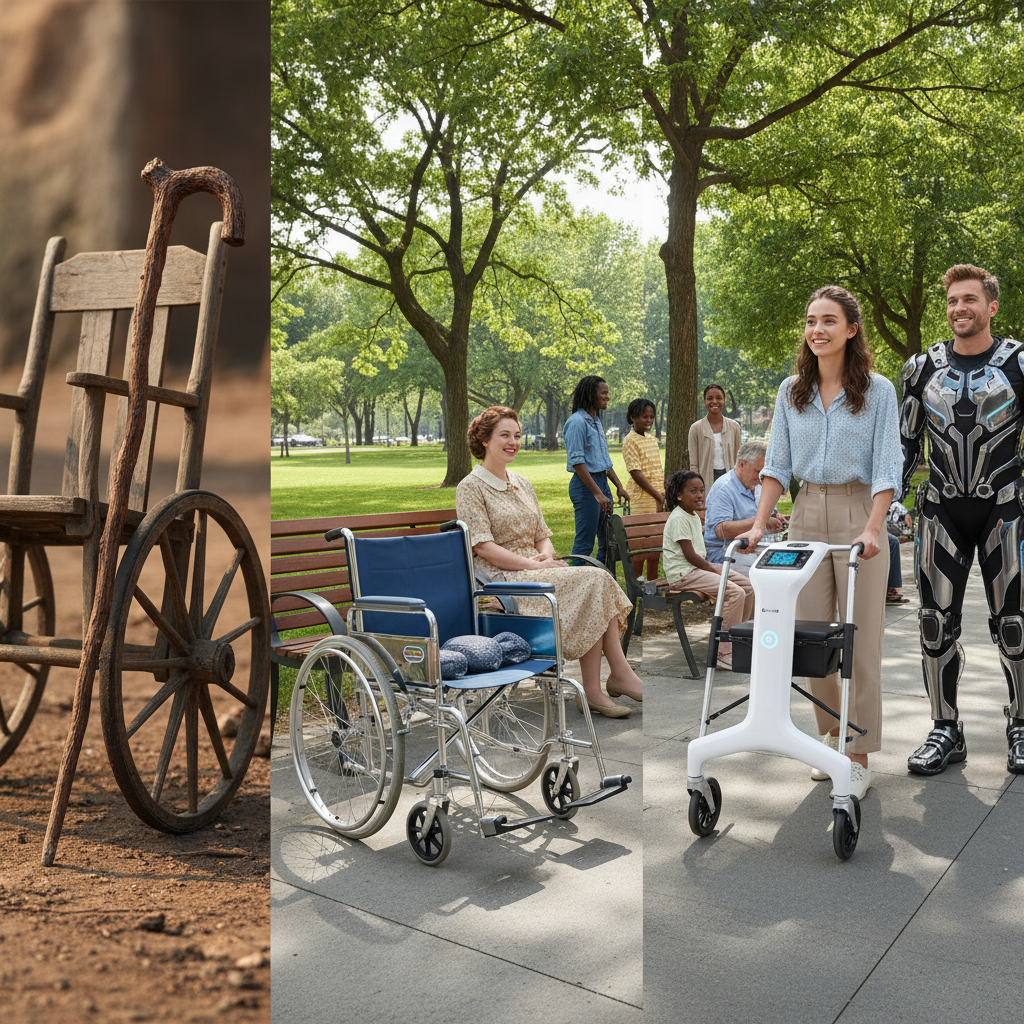
Mobility aids have evolved from ancient walking sticks and early wheelchairs to advanced smart walkers and robotic exoskeletons by 2025. Key innovations include wheeled chairs in antiquity, folding wheelchairs in the 20th century, and the integration of AI, sensors, and IoT in recent decades. Modern devices offer AI-powered navigation, voice and gesture controls, autonomous operation, and modular customization, enhancing user independence and inclusion. Despite progress, challenges like accessibility and cost remain, with ongoing efforts focusing on user-centered design and equitable participation for people with disabilities.
Historical Background and Early Developments
Mobility aids date back thousands of years, beginning with walking sticks depicted in ancient Egyptian hieroglyphs (~4000 BCE) and early wheeled devices (~1300 BCE). The first recorded wheelchair was used by Confucius in the 5th century BCE. Throughout history, aids served both practical and status-symbol roles. The Middle Ages saw walking canes become essential tools, while the 18th and 19th centuries introduced wheeled chairs like the “Bath chair” and advances for veterans. The modern walker appeared in the 1950s, reflecting evolving societal attitudes and technological progress.
Advancements from Mid-20th Century to Early 21st Century
The mid-20th century introduced wheelchair-accessible vehicles and power wheelchairs with improved designs. The 1930s ‘X-frame’ folding wheelchair became a commercial success. Walkers diversified with features like folding and stair-climbing. The Disability Rights Movement and legislation such as the ADA fostered inclusion and guided technological development. Early 21st-century mobility aids incorporated robotics, AI, and IoT, adding features like GPS, collision avoidance, and health monitoring, expanding global accessibility efforts.
Modern Mobility Aids: Design and Technology
Modern aids include canes, walkers, rollators, manual and powered wheelchairs, and scooters, selected based on user needs. Devices emphasize customization with modular parts and accessories. Advanced safety features such as collision avoidance and health monitoring are common. Smart wheelchairs use AI and sensors to navigate environments and monitor users’ health. Robotic exoskeletons assist with mobility and rehabilitation but present challenges like pain and fall risk. Walkers and rollators have been improved for maneuverability and specialized mobility support.
Smart Technologies and Innovations by 2025
By 2025, AI powers navigation and obstacle detection in smart canes and autonomous wheelchairs. Voice, gesture, and eye-tracking controls enable hands-free operation. Robotic exoskeletons assist daily mobility and rehabilitation. Connectivity via 5G and IoT allows remote device monitoring, GPS tracking, and integration into health networks. Modular designs with advanced materials support customization. Autonomous mobility robots like Hyundai’s MobED provide new mobility solutions. Future aids will increasingly incorporate sensors, GPS, and AI for health management and seamless integration with wearable technologies.
Clinical Applications and Rehabilitation
Mobility aids are vital in rehabilitation, tailored through patient assessments to optimize recovery, especially after neurological injuries. Early, gradual mobilization and repetitive walking exercises improve outcomes. Devices like canes, crutches, and walkers support balance but require proper fitting to reduce fall risks. Advanced aids with sensors monitor progress and adapt therapy. Assistive technologies also include transfer devices to enhance patient safety and efficiency in clinical and home settings.
Impact on Users
Mobility aids significantly enhance independence, dignity, and quality of life for individuals with mobility challenges. Devices are matched to user needs and environments to improve acceptance and effectiveness. Despite benefits, fall risks persist, prompting integration of smart features like fall detection and health monitoring. Lightweight, foldable designs improve portability. Policy initiatives, such as India’s 2025 distribution programs, support wider access to mobility aids globally.
Historical and Recent Milestones Summary
From the 17th-century “invalid’s chair” to ancient symbolic canes, mobility aids have evolved dramatically. The 21st century introduced robotics and sensor technologies, creating smart walkers that support users and assist healthcare providers. Research focuses on restoring walking abilities and reducing supervision needs. Future aids will feature AI, wireless connectivity, and interoperability with wearable health devices, marking a transformative era in personal mobility and healthcare.
Future Trends and Societal Implications
Advancements in AI, robotics, and connectivity are shaping mobility aids that offer personalized, adaptive support. Smart infrastructure and IoT integration improve urban accessibility through real-time coordination and inclusive design. Augmented reality and navigation apps enhance user interaction with environments. The shift toward individualized care and inclusive policies fosters social integration for people with disabilities. Future mobility solutions will combine technology and human-centered design to promote independence and accessibility within smart cities.
The content is provided by Avery Redwood, Gear Shift Zone