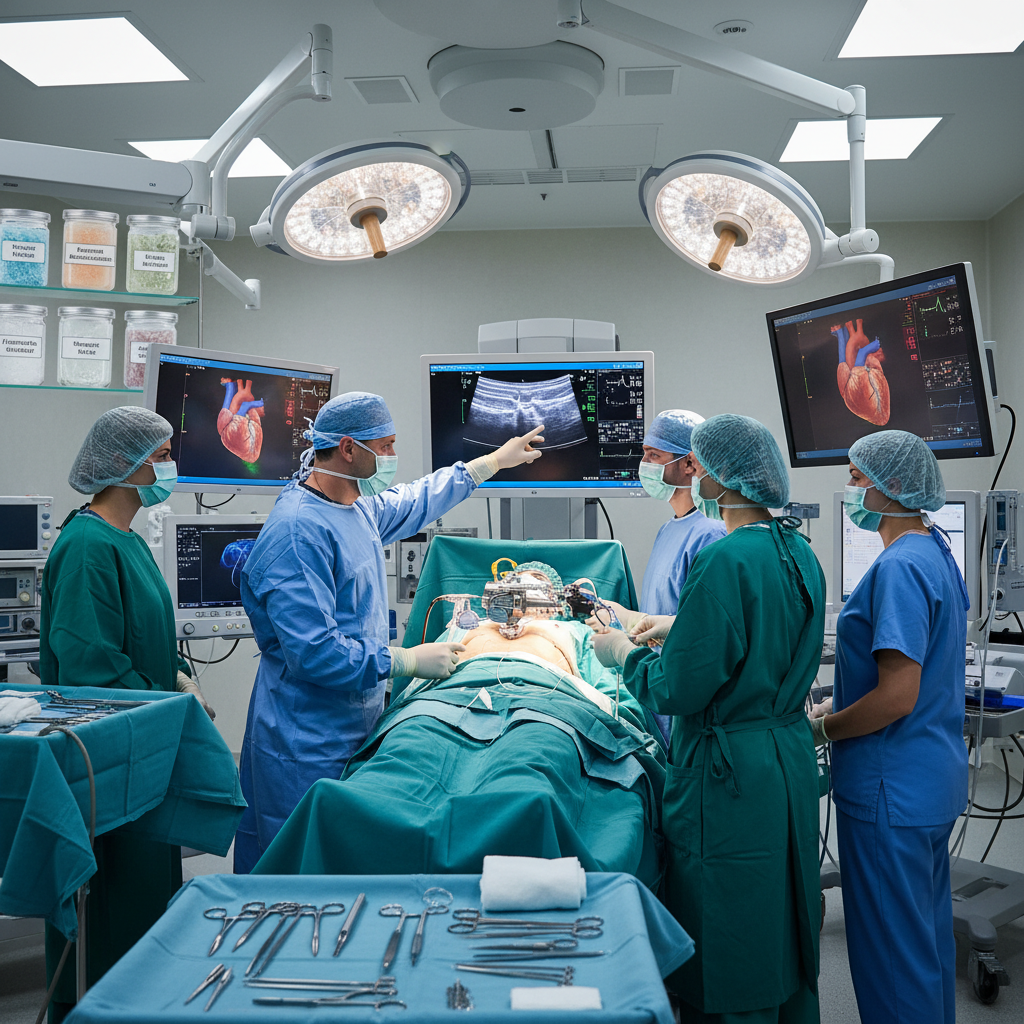
Highlights
- Innovative biomaterials and designs are revolutionizing aortic valve surgery for better patient outcomes.
- Engaging with emerging technologies ensures access to cutting-edge treatments for aortic valve disease.
Summary and Historical Background
Aortic valve replacement (AVR) has evolved dramatically since the first prosthetic valve implant in 1952 and the advent of cardiopulmonary bypass in 1953. Surgical techniques progressed from open procedures to minimally invasive and transcatheter approaches, improving patient outcomes and expanding treatment options. Innovations in biomaterials like polymeric nanocomposites and refined biological tissues aim to enhance valve durability and reduce calcification. Advanced valve designs such as rapid deployment sutureless valves and the single-point attached commissure (SPAC) technique have streamlined surgery and improved hemodynamics. Transcatheter aortic valve replacement (TAVR) platforms now extend to intermediate- and lower-risk patients, supported by trials like PARTNER 2 and SURTAVI, though concerns remain about neurologic complications and long-term durability. Ongoing research focuses on optimizing materials, surgical methods, and patient selection to provide durable, safe, and patient-centered care.
Technological Advances in Materials and Valve Design
Recent progress includes novel polymeric and nanocomposite materials such as POSS-PCU and functionalized graphene oxide composites that improve valve strength, elasticity, and resistance to calcification. Bovine pericardial tissue remains favored for bioprosthetic valves, with advanced cross-linking methods enhancing mechanical stability. Valve designs like rapid deployment and sutureless valves (e.g., Edwards Intuity) reduce operative times and improve outcomes. The SPAC technique simplifies implantation, enhancing hemodynamics. Frame technologies are evolving to support future valve-in-valve procedures, increasing valve adaptability. These material and design advances integrate with TAVR platforms, broadening minimally invasive treatment options.
Minimally Invasive and Hybrid Surgical Approaches
Minimally invasive AVR (MIAVR) reduces surgical trauma primarily through limited incisions such as upper hemisternotomy and right anterior minithoracotomy, offering benefits like reduced blood loss and shorter ICU stays, though procedure times may be longer. Robot-assisted and percutaneous surgeries complement these approaches. Hybrid methods, including TAVR, serve high-risk or inoperable patients but still involve extracorporeal circulation and aortic manipulation. Rapid deployment and sutureless valves enhance surgical efficiency within minimally invasive techniques. Trials like SURTAVI are assessing TAVR versus surgical AVR in intermediate-risk patients to refine treatment strategies.
Transcatheter Aortic Valve Implantation (TAVI) Developments
Since 2002, TAVI has expanded from high-risk to intermediate- and lower-risk patients, supported by trials such as PARTNER 2 and SURTAVI demonstrating similar mortality and stroke rates compared to surgery. The Edwards Sapien and Medtronic CoreValve platforms dominate, with ongoing refinements improving procedural success and valve durability. Valve design features like commissural alignment may enhance future interventions. While surgical valves show durability beyond 20 years, TAVI has limited long-term data, prompting research into novel designs including SPAC molded valves to optimize hemodynamics and outcomes.
Operative Protocols and Perioperative Management
Minimally invasive approaches focus on limited incisions rather than altering key procedural steps like extracorporeal circulation. Benefits include reduced blood loss and shorter ICU stays, though respiratory complication reductions are inconsistent. Updated perioperative management guidelines emphasize echocardiographic assessment to guide care in non-cardiac surgery patients with valvular disease. Rapid deployment valves like Edwards Intuity reduce operative times and improve outcomes. However, TAVI is associated with higher rates of neurologic events, mainly embolic strokes, underscoring the need for vigilant neurological care. Research continues on improving valve hemocompatibility to reduce thrombotic risks.
Clinical Outcomes and Patient Benefits
Comparisons of TAVI and surgical AVR in low-risk patients show favorable outcomes for both. Real-world surgical mortality and stroke rates are comparable or better than trial results. Although TAVI carries a higher incidence of neurological events, 30-day mortality and composite outcomes of death or stroke are similar between TAVI and surgery. These findings support TAVI as a viable alternative, with ongoing evaluation of secondary outcomes and long-term effects.
Challenges and Limitations
Key challenges include limited long-term durability data for TAVI, thrombogenic risks of mechanical valves requiring lifelong anticoagulation, and structural degeneration of bioprosthetic valves. Patient selection and risk stratification remain complex, with variability in operator experience affecting outcomes. Declining surgical volumes pose sustainability concerns, especially in smaller centers. Mechanical valves lack compatibility with future valve-in-valve procedures, limiting options for redo interventions. Large randomized trials are needed for definitive comparisons, but low mortality rates necessitate very large cohorts, making current evidence preliminary.
Future Directions and Research
Future advances focus on sutureless and rapid-deployment valves to reduce ischemic time and morbidity. Research aims to develop mechanical valves with lower thrombogenicity and bioprosthetics resistant to calcification, using novel decellularization and cross-linking agents. Polymeric heart valves and nanocomposites offer promising alternatives combining durability and biocompatibility. TAVR technology continues improving with enhanced delivery systems and valve materials. Multidisciplinary Heart Valve Centers enable tailored treatments and broader access while maintaining quality. Minimally invasive surgical techniques and innovative valve designs, such as SPAC molded valves, are under investigation to optimize hemodynamics and patient recovery.
The content is provided by Avery Redwood, Gear Shift Zone