Unveiling the Honda N-One e: A Stylish Kei EV Inspired by the Super EV Concept, Offering a 270 km WLTP Range and Soon Available for Purchase
Summary
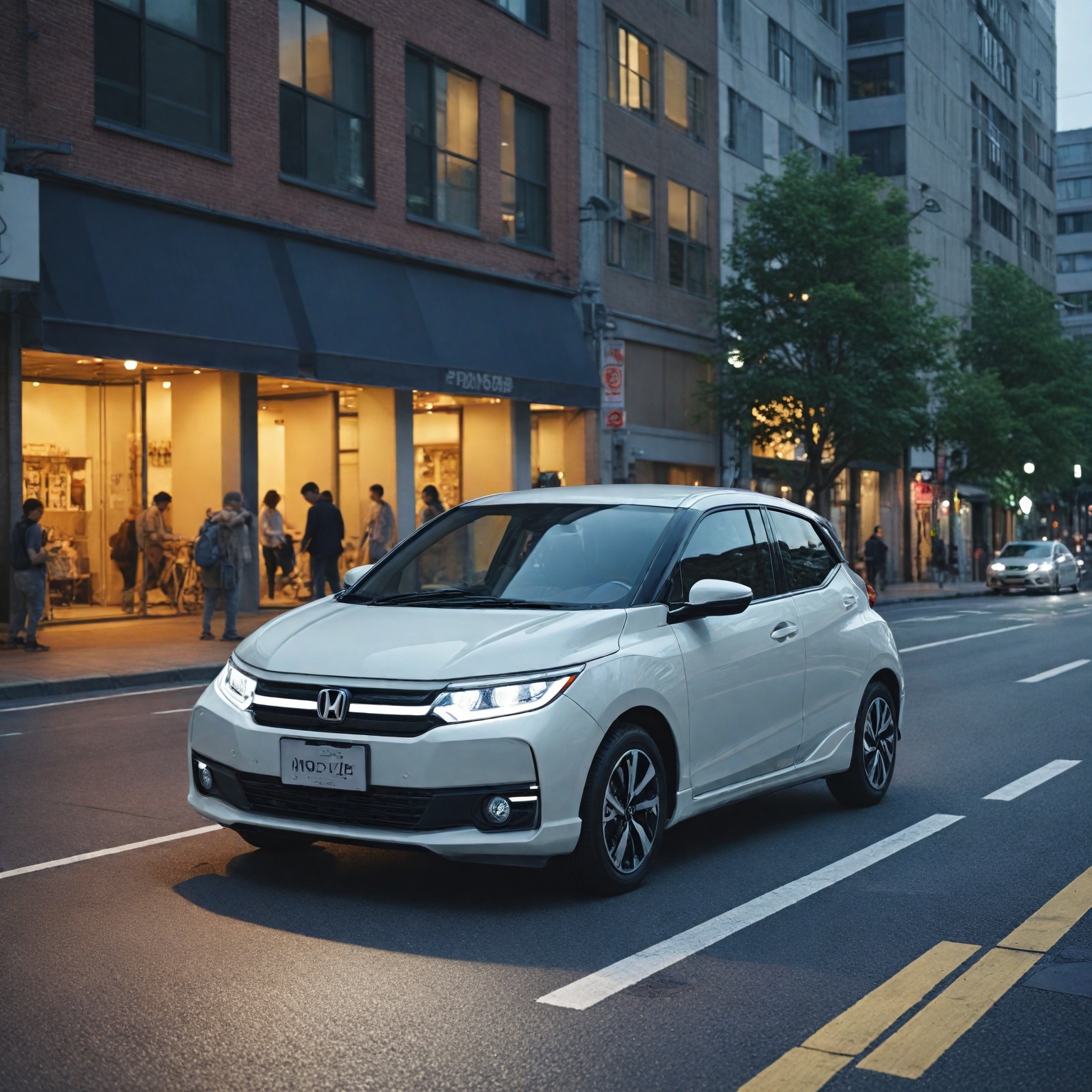
The Honda N-One e is a stylish electric kei car that draws heavily on Honda’s heritage in compact urban vehicles, combining retro-inspired design with modern electric vehicle (EV) technology. Inspired by Honda’s Super EV and Urban EV concepts, the N-One e features distinctive styling cues reminiscent of the classic 1969–1972 N360 and the original N-One, such as a short hood, upright windshield, and bulging fenders, updated with contemporary elements like LED headlights, rearview cameras replacing traditional mirrors, and a charging port positioned on the hood. Developed specifically for Japan’s kei car segment, which emphasizes small dimensions and efficiency for dense city environments, the N-One e continues Honda’s tradition of compact, practical urban mobility while embracing electrification.
Underpinned by a dedicated rear-motor, rear-wheel-drive electric platform, the N-One e is equipped with a water-cooled 35.5 kWh lithium-ion battery providing a WLTP-rated range of approximately 270 kilometers (168 miles). Its compact size, balanced 50/50 weight distribution, and low center of gravity contribute to agile handling and urban practicality, while features such as Sport Mode and Single Pedal Control emphasize an engaging driving experience. The vehicle also incorporates advanced technologies including an AI-driven Honda Personal Assistant and remote-controlled sliding doors, blending convenience with a premium feel uncommon in the kei car category.
Despite its innovative design and technical strengths, the N-One e faces challenges related to market acceptance and internal strategic debates. Previous Honda electric city cars, notably the Honda e, were praised for their styling and urban suitability but criticized for limited range and high pricing, leading to modest sales and production discontinuation in early 2024. Within Honda, tensions arose over battery size and range priorities, balancing the desire for extended driving distances with the constraints of compact vehicle design and urban use cases. The N-One e represents Honda’s effort to refine this balance, aiming to deliver an affordable, characterful electric kei car tailored for dense urban markets in Japan and potentially beyond.
As Honda seeks to expand its electrified offerings, the N-One e holds significance in maintaining the brand’s strong presence in the kei segment while advancing its broader electrification strategy in Japan and Europe. By combining nostalgic aesthetics with modern EV functionality and practical range, the model aspires to meet growing consumer demand for small, efficient, and stylish electric vehicles in crowded urban environments, although its ultimate success will depend on competitive pricing and overcoming the limitations experienced by earlier models.
Background
The Honda N-One e draws significant inspiration from Honda’s earlier Urban EV and Super EV concepts, which showcased a blend of retro styling and modern electric vehicle (EV) technology. The design features a short hood, bulging fenders, an upright windscreen, slender pillars, and a relatively flat roof, evoking a nostalgic yet contemporary aesthetic reminiscent of Honda’s kei cars. Notably, the vehicle abandons traditional door mirrors in favor of tiny rearview cameras and incorporates a charging port on the hood, contrasting with the common placement on rear quarter panels found in many other EVs.
The N-One e’s design philosophy is rooted in the Japanese kei car segment, a class of ultra-compact vehicles developed to navigate Japan’s densely populated urban environments. Kei cars have historically featured small exterior dimensions and engine displacements tailored to local regulations and driving conditions, such as speed limits that initially capped at 40 km/h before being raised to 60 km/h in the mid-1960s. The segment experienced fluctuating popularity throughout the 1970s due to stricter emissions regulations and mandatory inspections, leading major manufacturers like Honda and Mazda to gradually withdraw from passenger kei cars, although commercial variants remained available. The N-One, introduced in 2012, revitalized the segment by combining classic kei car proportions with modern performance and convenience, setting the stage for its electric evolution.
Internally, the N-One e was developed on a dedicated rear-motor, rear-wheel-drive electric vehicle platform designed to maximize agility and compactness for urban use. The vehicle houses a water-cooled lithium-ion battery pack beneath the floor between the wheels, enabling a balanced 50/50 weight distribution and a low center of gravity, which contributes to improved handling and stability. This rear-wheel-drive layout also eliminates torque steer, a common issue in front-wheel-drive EVs. The development team prioritized a smaller battery size, around 35.5 kWh, balancing range and vehicle size despite initial internal resistance within Honda that favored larger batteries for extended range. The final design offers a range of approximately 270 km (168 miles) under the WLTP cycle, aligning with its urban mobility focus. Features such as a ‘Sport Mode’ for enhanced acceleration and ‘Single Pedal Control’ with regenerative braking further emphasize the vehicle’s practical and sporty nature.
Design and Development
The Honda N-One e draws significant design inspiration from Honda’s earlier kei cars, particularly the styling cues reminiscent of the 1969–1972 N360 and the pure-petrol N-One, characterized by upright, blocky proportions and a compact form factor. The Super EV Concept, unveiled at the Goodwood Festival of Speed, notably influenced the N-One e’s design with its retro-cool aesthetic that combines nostalgia with modern electric vehicle (EV) technology. Key styling elements include a new bonnet and front end inspired by the 2023 Honda Sustaina-C concept, featuring rounded headlights embedded into a blanked-off grille area, as well as bespoke roof spoilers and clear-lens rear lights complemented by a distinctive “Honda” script on the tailgate.
The development of the N-One e was guided by the principle of delivering an A-segment compact EV that harmonizes practical usability with Honda’s signature “joy of driving.” Emphasizing sporty and responsive driving dynamics unique to compact vehicles, the vehicle aims to offer an uplifting and heart-pounding experience despite its small size. This philosophy echoes the approach taken with previous Honda EV concepts, such as the 2017 Urban EV Concept and its production counterpart, the Honda e, which featured a retro design paying homage to the first-generation Civic and utilized innovative technologies like rear-hinged suicide doors and advanced artificial intelligence systems for driver interaction.
The project team responsible for the N-One e faced internal debates regarding battery size and vehicle range. While some executives advocated for a larger battery to extend driving range, the development team insisted on a smaller battery optimized for the vehicle’s compact dimensions and intended urban use, reflecting a strategic balance between performance, size, and practicality. This approach aligns with Honda’s broader electrification strategy in Japan and Europe, following the success of their first battery electric vehicle (BEV), the Honda e, which attracted new customers and reinforced the brand’s commitment to electric mobility.
The second-generation N-One, introduced in November 2020, carried forward the legacy of the original model with updated sheetmetal and a trim lineup including Original, Premium, Premium Tourer, and the sporty RS variant. Although the new generation retained the familiar silhouette, it integrated contemporary technological and design enhancements that set the stage for the forthcoming N-One e as an electrified evolution of Honda’s kei car tradition.
Technical Specifications
The Honda N-One e is equipped with a rear-mounted electric motor available in two power outputs: 100 kW (134 hp) and 113 kW (152 hp), both delivering 315 N⋅m (232 lb⋅ft) of torque. This motor powers the rear wheels, enabling the car to accelerate from 0 to 100 km/h (0 to 62 mph) in approximately 8.3 seconds according to Honda testing. The vehicle utilizes a dedicated rear-motor, rear-wheel-drive platform designed for agility and compact urban driving, with a water-cooled 35.5 kWh lithium-ion battery pack positioned under the floor to provide a balanced 50/50 weight distribution and a low center of gravity.
In terms of dimensions, the N-One e measures 3,895 mm (153.3 in) in length, 1,750 mm (68.9 in) in width, and 1,512 mm (59.5 in) in height. It features a hatchback body style with four doors and seating for four occupants. The curb weight is approximately 1,514 kg (3,337.8 lb).
The battery pack offers a WLTP-rated range of around 270 km (approximately 168 miles), making it suitable for urban commuting and short trips. Charging capabilities include a CCS Combo 2 inlet supporting both AC and DC fast charging. The vehicle is equipped with a 6.6 kW onboard charger for Type 2 AC charging and can charge from 10% to 100% in roughly 6.3 hours using a 22 kW AC charger or about 1.7 hours with a 50 kW DC fast charger under optimal conditions around 25°C. Honda also plans to offer an optional Power Charger capable of up to 7.4 kW single-phase charging, reducing full charge times to around 4 hours.
The N-One e features driving modes such as ‘Sport Mode’ for enhanced acceleration response and ‘Single Pedal Control,’ which uses regenerative braking to decelerate the car when the accelerator is released, reducing reliance on the brake pedal. The top speed is electronically limited to 145 km/h (90.1 mph).
Additional technical features include an electric power-assisted steering system designed to offer stable handling at higher speeds while remaining light enough for easy parking maneuvers. The vehicle’s long wheelbase and wide track contribute to its stable and balanced driving dynamics. The inclusion of dual six-inch screens on the dashboard displays rearview camera images, enhancing visibility and driver awareness.
Features
The Honda N-One e A features a design that pays homage to the classic 1969–1972 N360, characterized by a short hood, bulging fenders, an upright windscreen, slender pillars, and a relatively flat roof, creating a nostalgic yet modern silhouette. The vehicle is tailored as a stylish kei car with dimensions expected to be around 3,395 mm in length or slightly larger, aligning with the compact standards of the Japanese market but intended for global availability.
One of the standout exterior elements includes a fresh facelift at the front, marked by a closed-off grille and updated round LED headlights, enhancing its retro-inspired yet contemporary look. Additionally, the N-One e A is equipped with advanced convenience features such as a remote-controlled sliding door system, which allows the door to unlock and open automatically at the push of a button on the remote, providing a level of hands-free luxury typically found in higher-end chauffeured vehicles.
The interior design focuses on spaciousness and comfort, engineered to accommodate four adults up to 190 centimeters tall, an uncommon consideration for a kei car. This is achieved through a long wheelbase with tires positioned at the edges, resulting in increased rear seat and trunk space. The cabin exhibits a “living room” inspired atmosphere, featuring widescreen displays and an earth tones color scheme with brown seat belts and contrast stitching, although some interior materials such as the wood trim have been noted as plastic rather than genuine wood.
From a technological standpoint, the N-One e A integrates the Honda Personal Assistant, an AI-driven voice recognition system activated by the phrase “OK Honda,” which uses machine learning to improve its responsiveness over time. The car also emphasizes urban agility and balanced handling through its rear-motor, rear-wheel-drive platform, complemented by a water-cooled battery pack positioned under the floor to achieve a 50/50 weight distribution and low center of gravity, thereby eliminating torque steer and enhancing driving stability.
Market Release
The Honda N-One e, inspired by the Super EV Concept and designed as a stylish kei electric vehicle, targets primarily the urban commuter market, aligning with Honda’s vision for compact and efficient city cars. Reflecting its intended use in dense urban environments, the vehicle is expected to serve short-range daily travel needs, much like other kei cars tailored for congested city streets.
The production and market introduction of the Honda e, which shares design and conceptual elements with the N-One e, were formally announced following its pre-production prototype reveal in early 2019. The vehicle was showcased at several prominent events, including the Geneva Motor Show in March 2019 and later at the IAA in Frankfurt in September 2019, where the final production version was unveiled. Unlike the initial Urban EV Concept, which featured a three-door hatchback design, the production model was configured as a five-door vehicle to enhance practicality.
Pricing for the Honda e varied across European markets, with the base model starting at approximately €29,470 in Germany (including local subsidies) and £26,160 in the UK. A higher-grade “Advance” trim with an uprated motor was offered at €32,470 in Germany and £28,660 in the UK. Despite its compact size and advanced urban-focused features, the vehicle’s price point was considered relatively high compared to customer expectations for city electric vehicles.
Charging convenience was a key feature emphasized in the Honda e’s design. The centrally located charging port on the bonnet allowed charging from either side of the vehicle, facilitating easier use in tight urban parking spaces. Additionally, Honda introduced an intelligent charging app, e:PROGRESS, enabling users to schedule charging sessions during off-peak electricity tariff periods, thus reducing charging costs.
Although the Honda N-One e and its related models fit well within specific markets, such as Japan and parts of Europe, the vehicle faced challenges that limited its broader adoption. Sales were modest, with approximately 12,500 units sold globally over three years, leading Honda to announce in late 2023 the cessation of production in January 2024 and no plans for a second generation. Factors contributing to this decision included limited electric range as measured by the WLTP standard, interior ergonomics that some found impractical, and pricing that did not meet the expectations of the increasingly competitive electric vehicle market.
Reception
The Honda e received generally positive feedback for its retro-inspired styling, which successfully blends a nostalgic aesthetic with modern functionality. Its design draws heavily from the 2017 Urban EV Concept, featuring flush-mounted door handles and compact rear-view cameras that enhance aerodynamics while maintaining a distinctive, approachable look. This friendly and glossy design aligns with contemporary consumer expectations for seamless, user-friendly technology integration rather than overtly technical or robotic appearances.
The interior of the Honda e was also praised for its surprisingly spacious cabin, with rear seats designed to comfortably accommodate four adults up to 190 centimeters tall, a notable achievement for a compact city car. This focus on interior ergonomics contributes to its appeal as a practical urban vehicle despite its small footprint.
However, the Honda e faced criticism related primarily to its limited electric range and relatively high price point. Its WLTP-rated range was considered moderate compared to many competitors, restricting its appeal predominantly to short-range urban commuting. Additionally, the base price starting at approximately €39,900 ($44,100) positioned it at the higher end of the market for small electric vehicles, limiting its accessibility for some customers.
Despite its design and technological strengths, the Honda e struggled with sales, particularly outside select European markets. Honda announced in late 2023 that production would cease in January 2024 due to slow sales, with only about 12,500 units sold globally over three years. The combination of price, range limitations, and interior ergonomics that did not fully meet customer expectations contributed to its underwhelming commercial performance.
Future Prospects
The Honda N-One e represents a strategic effort by Honda to blend its popular kei car design with electrification, building upon the success and styling cues of the original N-One while embracing a fully electric powertrain. With a targeted WLTP range of approximately 270 kilometers, this model aims to address the growing demand for compact, efficient, and characterful electric vehicles in urban environments, a niche that has been underserved by larger, more conventional EVs.
Honda’s previous experience with the electric Honda e city car highlighted both the opportunities and challenges within this segment. Although the e showcased a retro-inspired design and urban suitability, its relatively high price point and limited electric range restricted broader market acceptance, leading to the cessation of its production by early 2024. Learning from this, the N-One e is expected to offer improved value through a competitive price structure potentially below $35,000, while retaining a distinct personality that resonates with consumers seeking alternatives to typical bland electric crossovers.
Given that kei cars account
The content is provided by Avery Redwood, Gear Shift Zone