Highlights
- Night shift cleaning is essential for maintaining hygiene in commercial spaces after hours.
- Increased demand highlights the need for better safety measures and training for cleaners.
Summary
Night shift office cleaning is a specialized occupation focused on maintaining the cleanliness and sanitation of commercial properties such as office buildings, schools, hospitals, and retail spaces during overnight hours when regular business activities have ceased. This schedule enables cleaners to perform tasks like trash removal, floor care, furniture wiping, and bathroom sanitization without disrupting daytime operations, often allowing for more efficient and thorough cleaning processes. The role is essential for ensuring that workplaces remain hygienic, safe, and ready for use each business day, highlighting its importance in facility management and public health.
Working conditions for night shift cleaners present unique challenges, including exposure to hazardous chemicals, physical demands, and the necessity of personal protective equipment (PPE). Health and safety concerns are heightened by factors such as circadian rhythm disruption, which is associated with increased risks of chronic diseases and mental health issues. Additionally, the job often involves social and psychological difficulties, including work–family conflicts and safety concerns, especially for female workers who report higher rates of harassment and feelings of insecurity during night shifts.
Employment in this sector typically requires a combination of technical skills—such as knowledge of cleaning equipment, chemical handling, and safety protocols—and soft skills like time management and reliability, as cleaners frequently work independently with limited supervision. While night shifts commonly offer higher wages compared to daytime cleaning roles, the schedule can contribute to job insecurity, strained social relationships, and physical strain, making adequate labor protections and employer support critical.
Despite these challenges, night shift office cleaning remains a growing field due to increasing demand in various industries and the need for continuous facility maintenance. Industry experts and labor advocates emphasize the importance of improved safety measures, training, and workplace policies to address the occupational hazards and social impacts associated with night shift cleaning, underscoring ongoing debates about workers’ health, rights, and well-being in this vital yet often overlooked profession.
Overview
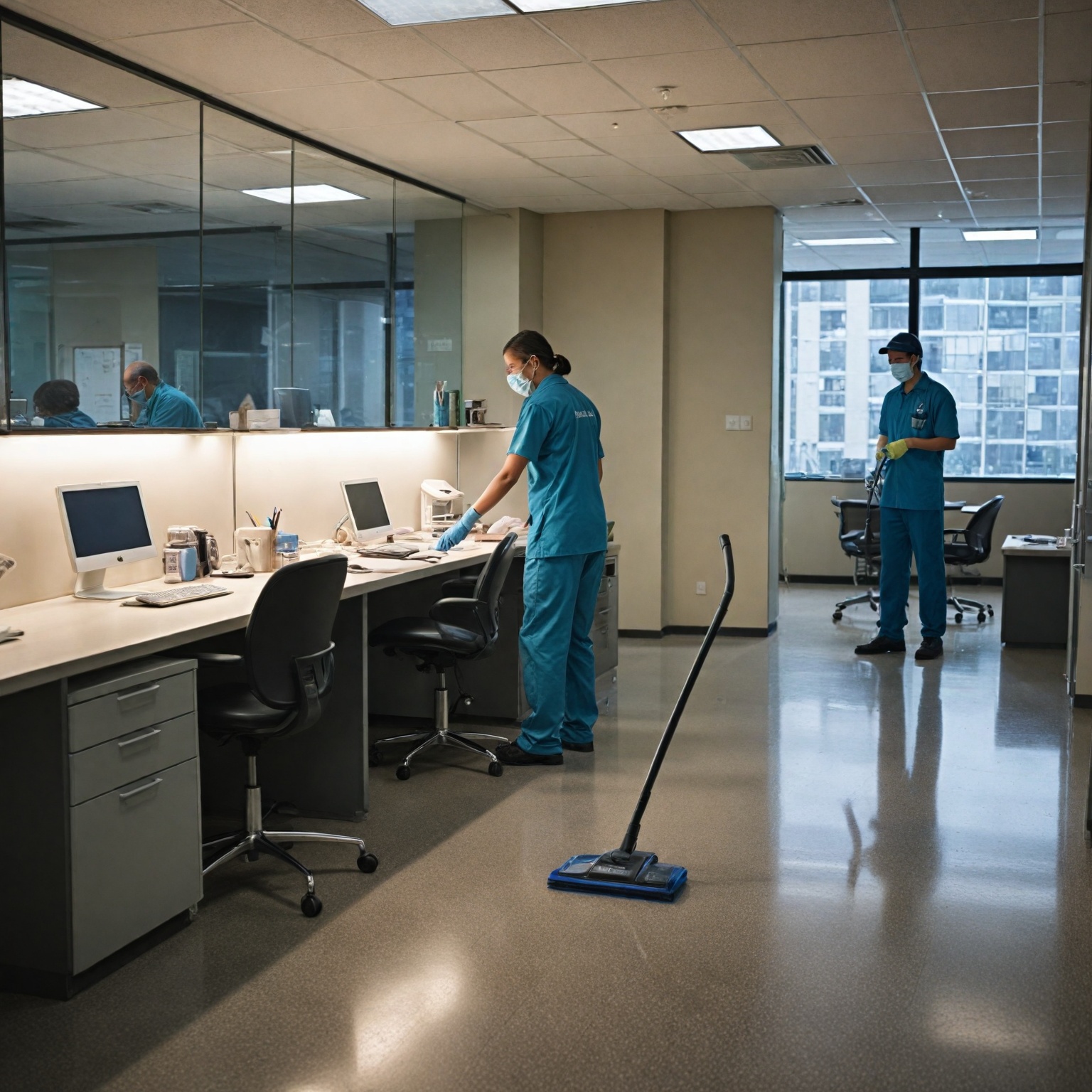
Night shift office cleaning is a specialized role that involves maintaining the cleanliness and sanitation of commercial properties such as office buildings, schools, hospitals, and retail spaces during after-hours when regular business operations have ended. This timing allows cleaners to perform their duties without disrupting employees, customers, or visitors, ensuring that workspaces remain functional and professional throughout the day. Typical responsibilities include taking out the trash, cleaning floors, wiping down furniture and desks, sanitizing bathrooms, and managing spills. Cleaners may work directly for the property owner or be employed by external cleaning companies. The absence of daytime foot traffic and workplace clutter often enables cleaners to work more efficiently and complete tasks such as deep cleaning or carpet care with fewer interruptions.
Working conditions for night shift cleaners can vary widely depending on the location and time of year. Cleaners might be required to visit construction sites or outdoor areas, necessitating the use of personal protective equipment such as hard hats, safety glasses, and respirators when needed. They must also be prepared to work in different weather conditions, including heat, cold, rain, or snow, and be able to use available sanitary facilities onsite.
Health and safety are significant concerns in this physically demanding job. Cleaners face risks such as musculoskeletal injuries from repetitive tasks, burns, traumatic injuries, and chronic pain. To mitigate these risks, employers are encouraged to provide ergonomically designed equipment like long-handled vacuums, mops, and dusters to reduce strain on workers. Additionally, training on how to interpret Safety Data Sheets for cleaning products, the importance of proper ventilation especially in confined spaces, and procedures for dealing with spills or exposure to hazardous substances is essential. Some employers also offer self-defense classes to address safety concerns during nighttime work hours.
Job Responsibilities
Night shift office cleaners perform a variety of tasks to maintain cleanliness and hygiene in commercial buildings during after-hours. Their core duties typically include dusting, vacuuming, sweeping, mopping, trash collection, and disinfecting high-touch surfaces such as desks, bathrooms, and common areas. They may also be responsible for furniture rearrangement, spill cleanup, and occasional deep cleaning tasks like waxing floors or shampooing carpets.
Cleaners often work independently or as part of a team to ensure that the environment is sanitary and presentable before the start of the next business day. They must report any issues encountered during their shift—such as safety hazards, malfunctioning equipment, or the need for maintenance—to their supervisor or relevant personnel for further action. Additionally, maintaining cleaning equipment in a safe, clean, and operable condition is an important part of their responsibilities.
Working as a night shift cleaner requires attention to detail, effective time management, and knowledge of cleaning procedures, including the safe use of chemical agents. Many positions prefer or require a high school diploma, familiarity with cleaning tools, and sometimes specific safety certifications such as OSHA training. In some cases, cleaners may also need to mix chemicals carefully and conduct end-of-shift inspections to ensure that cleaning standards meet company guidelines.
Working Conditions
Night shift office cleaning presents unique working conditions that differ significantly from daytime cleaning. One major aspect is the health and safety precautions required when handling cleaning chemicals. Workers must wear appropriate personal protective equipment (PPE), such as goggles and gloves, to prevent eye and skin contact with hazardous substances. Dust masks are insufficient to block chemical inhalation, and employers are mandated by OSHA standards to provide and enforce the use of suitable eye and face protection, maintain accessible safety data sheets for hazardous chemicals, and ensure proper storage and usage instructions are followed to avoid dangerous chemical reactions, such as mixing bleach and ammonia.
The timing of shifts also influences workers’ well-being. Night shift cleaners often face isolation, disrupted social relationships, irregular sleep schedules, and increased physical and mental health challenges. Despite these adverse effects, many workers accept non-daytime shifts due to higher pay rates and limited availability of daytime positions, which can be crucial for those needing to meet financial demands. Additionally, night shifts may complicate emergency assistance access and require workers to develop strategies to maintain alertness and safety during hours when support may be less readily available.
Environmental and physical conditions of night cleaning jobs require adaptation. Cleaners must be prepared to work in varying weather conditions when cleaning outdoor sites and utilize construction site facilities when applicable. Use of PPE such as hard hats, safety glasses, and respirators is often mandatory, along with adherence to strict equipment maintenance protocols to ensure operational safety. Furthermore, night cleaning improves efficiency by allowing unrestricted access to all areas, enabling disinfectants to work effectively without immediate human contact, and providing cost savings for businesses due to lower utility rates and optimized HVAC use.
Skills, Qualifications, and Certifications
A career as a night shift cleaner typically requires a high school diploma or GED certificate as a basic educational qualification. Candidates must possess the ability to handle heavy cleaning equipment and demonstrate a fundamental understanding of cleaning materials and procedures. Familiarity with cleaning machinery and safe handling of chemical agents is essential, as night cleaners are often responsible for mixing and applying cleaning chemicals safely, which involves knowledge of safety data sheets and compliance with OSHA safety standards.
In addition to technical skills, soft skills such as attention to detail, time management, reliability, self-motivation, and the ability to work independently during night hours are highly valued. Since supervision during night shifts may be limited, these traits ensure that cleaning tasks are completed efficiently and thoroughly.
Some employers require OSHA safety certifications or equivalent training to ensure proper handling and storage of hazardous materials according to regulatory standards. In certain roles, especially within healthcare environments, certifications like those from the International Association of Healthcare Central Service Materiel Management (IAHCSMM) and relevant experience in acute care settings may be preferred or required. A valid driver’s license, sometimes with a clean driving record, is necessary when the job involves operating company or state-owned vehicles.
Health, Safety, and Ergonomics
Night shift office cleaning jobs present a range of health, safety, and ergonomic challenges that must be carefully managed to protect workers. The disruption of the circadian rhythm caused by night work is linked to numerous physical and mental health issues, including an increased risk of Type 2 diabetes, heart disease, stroke, obesity, pregnancy complications, certain cancers such as colorectal and breast cancer, and sleep disorders like insomnia. This circadian disruption also leads to suppressed melatonin production, which negatively affects sleep quality and increases vulnerability to fatigue-related accidents.
Ergonomics plays a critical role in reducing injury risks for night shift cleaners, who often engage in repetitive physical labor. Access to ergonomically appropriate equipment—such as long-handled vacuums, mops, and dusters—can help minimize bending, stretching, and musculoskeletal strain, thereby lowering the risk of chronic pain, back and neck injuries, and other physical trauma. Furthermore, the use of personal protective equipment (PPE), including goggles and gloves, is essential to protect workers from hazardous cleaning chemicals. Dust masks are insufficient for preventing inhalation of chemical agents, and employers must comply with OSHA standards to ensure adequate eye and face protection from chemical exposures and other workplace hazards.
Safety concerns extend beyond physical health. Approximately 45% of female cleaners working the night shift report feeling unsafe at work, with over a third experiencing harassment either on the job or during their commute. Night shift schedules also contribute to greater conflicts between work, social, and family life, which can exacerbate stress and reduce overall well-being.
Effective noise management strategies, such as soundproofing and the use of noise-canceling headphones, can improve concentration and reduce fatigue in these roles. Providing healthy snacks and meals during shifts helps maintain energy levels, further decreasing the likelihood of fatigue-related errors or accidents. Additionally, fostering open feedback mechanisms where workers can report ergonomic and shift-related concerns supports continuous workplace improvements and better health outcomes.
Wage, Employment, and Benefits
Night shift office cleaning jobs typically offer higher pay rates compared to daytime cleaning positions due to the less desirable hours and the impact on workers’ social and sleep schedules. For example, pay differentials for night shifts can range from an additional $1 to $2 or more per hour depending on the employer and location, making night shifts financially attractive to some workers. Employers often use these wage incentives alongside other perks such as transportation services and daycare solutions to attract and retain competent night shift staff.
Employment in night shift cleaning roles usually involves flexible scheduling that can better accommodate certain lifestyles and financial goals. Shifts may vary, and employees are often required to be available for a majority of assigned hours, including weekends. These positions commonly involve full-time employment with reliable schedules and shift lengths of approximately 12 hours per day, typically accumulating around 36 hours per week in many cases.
In terms of benefits, night shift cleaning workers generally receive competitive pay with shift differentials and may have access to additional incentives and benefits offered by travel or contract agencies. Furthermore, employers are responsible for ensuring a safe work environment by providing appropriate personal protective equipment (PPE), following strict cleaning protocols, and maintaining compliance with OSHA standards related to chemical safety and hazard communication. This is crucial since cleaning staff regularly handle various chemicals and physical hazards on the job, making proper training and equipment essential for worker safety.
While night shift cleaning can offer increased job opportunities in commercial and industrial settings, workers should be aware that claims related to work injuries might be complicated, highlighting the importance of understanding workers’ compensation protections and seeking legal advice if necessary. Overall, the combination of higher wages, flexible scheduling, and safety measures makes night shift office cleaning a viable option for many seeking employment outside of typical daytime hours.
Social and Psychological Impact
Night shift work, particularly in office cleaning jobs, has significant social and psychological repercussions for employees. One of the most prominent issues is the conflict between work schedules and family or social life. Since night shifts often occur during periods traditionally reserved for family and social activities, such as evenings, nights, and weekends, workers frequently experience temporal desynchronization with their families and social circles. This misalignment can lead to strained relationships, with many workers reporting negative effects on their interactions with children and partners, as well as broader social isolation.
The psychological toll of this conflict extends to marital satisfaction and overall family dynamics. Studies have highlighted work–family conflict as a critical variable influencing the well-being of night shift workers, with disrupted schedules causing dissatisfaction in marital relationships and tension within households. These social challenges are compounded by safety concerns that disproportionately affect female night shift cleaners. Approximately 45% of female cleaners on night shifts report feeling unsafe at work, with over a third experiencing harassment either during their shifts or while commuting.
Health-related psychological issues also arise from night shift work due to disruption of circadian rhythms. This disruption contributes not only to physical health risks but also to mental and emotional challenges such as insomnia, chronic fatigue, and increased vulnerability to accidents and injuries. The cumulative effect of these stressors results in a demanding occupational environment that impacts both the social and psychological well-being of night shift cleaners. Consequently, there is a critical need for employers to address these issues through improved safety measures, supportive policies, and targeted health interventions.
Employment Trends and Workforce Demographics
The number of employees working in cleaning occupations, particularly during night shifts, has increased in the United States between 2022 and 2023. This growth reflects broader labor market dynamics where non-daytime work schedules are becoming more common across various industries. For example, the Augusta-Richmond County metro area, spanning Georgia and South Carolina, ranks third nationally for the percentage of night-shift workers, with over 27,000 workers starting shifts between 4 p.m. and midnight, and over 11,000 beginning between midnight and 5 a.m..
Within these night-shift roles, certain sectors exhibit higher concentrations of workers engaged in non-standard hours. Leisure and hospitality employ about 37% of night-shift workers, followed by transportation and utilities at 26%, and wholesale and retail trade at 25%. These figures underscore how industries with irregular or continuous operations rely heavily on night-shift labor.
Cleaners, in particular, often have limited control over their schedules. Many employers and clients do not offer daytime shifts, compelling cleaners to accept night or other non-daytime shifts. While these shifts frequently come with higher wages—making them a critical source of income for workers facing economic hardship—the irregular and unsocial hours pose challenges for worker well-being. Eddy Stam, head of UNI Global Union’s property services, emphasized the negative impacts of such scheduling and the urgent need for industry reforms prioritizing cleaners’ health and safety.
Demographically, a significant portion of night-shift cleaners are migrants, who comprise about 27% of the workforce in this sector. Language barriers and limited access to better employment opportunities often restrict their job choices, making night-shift cleaning positions a necessity rather than a preference. Additionally, some workers choose night shifts to accommodate other daytime responsibilities, such as pursuing education or holding multiple jobs.
These employment trends highlight the complexity of night-shift cleaning workforces, characterized by growth in demand, demographic diversity, and the interplay between economic necessity and occupational health concerns.
Job Security and Labor Protections
Job security for night shift office cleaners is often precarious, as many workers face limited agency in choosing their schedules and positions. Employers and clients frequently do not offer daytime shifts, compelling cleaners to accept evening or night shifts, which are typically less desirable but come with higher wages necessary to meet living expenses. This dynamic disproportionately affects migrant workers, who make up about 27% of cleaners and may face additional barriers such as language difficulties, restricting their employment opportunities and reinforcing job insecurity.
Labor protections for night shift cleaners are critical due to the increased physical risks and unique challenges associated with working at night. Night shift work has been linked to higher rates of occupational injuries, including musculoskeletal problems and fatigue-related accidents, which can be exacerbated by insufficient rest and breaks during these hours. Employers are legally required to conduct risk assessments to evaluate
Best Practices and Recommendations
To excel as a Night Shift Cleaner, several best practices and recommendations can help ensure both safety and efficiency. Familiarity with cleaning machinery, proper handling of chemical agents, and adherence to safety procedures are essential. Many employers require or prefer OSHA certification to guarantee compliance with occupational safety standards during nighttime operations.
Effective time management and self-motivation are critical soft skills, given the autonomous nature of the role and limited supervision during night shifts. Attention to detail ensures that cleaning and sanitizing tasks meet the necessary standards, while reliability helps maintain consistent facility readiness for daytime use.
Employers typically schedule night cleaning shifts overnight, often Sunday through Thursday, and sometimes include supervisory responsibilities over small cleaning crews. To support worker safety, it is recommended that employers implement comprehensive safety plans applicable to both day and night shift workers. These plans should address risks unique to night shifts, such as fatigue and reduced visibility, to minimize accidents and maintain a secure working environment.
The content is provided by Jordan Fields, Gear Shift Zone