Farewell to the Proton Iriz: The End of an Era Marked by Final Production on September 9
Summary
The Proton Iriz is a subcompact hatchback that was first introduced in 2014 by Malaysian automaker Proton as part of its strategic shift toward independently developed vehicles and away from reliance on older Mitsubishi technology. Designed to embody Proton’s emphasis on local identity and modern engineering, the Iriz featured innovative technologies such as Hot Press Forming (HPF) for enhanced structural safety, and it was intended to serve as a versatile platform capable of future upgrades, including an electric variant. Over nearly a decade, the model underwent several facelifts and updates, reflecting Proton’s evolving design language and technological integration under the stewardship of parent company Geely.
Throughout its production run, the Iriz maintained a steady presence in Malaysia’s highly competitive B-segment hatchback market, contributing to Proton’s sales growth domestically and in export markets. Despite its moderate commercial success and generally positive customer reception, the Iriz gradually became one of the oldest models in Proton’s lineup as the company shifted focus toward electrification and new product offerings such as the Proton X50 and upcoming models under Proton New Energy Technology (Pro-Net). The discontinuation of manual transmission variants and declining demand for legacy models further signaled the changing priorities within Proton’s product strategy.
In 2024, Proton announced the end of the Iriz’s production, culminating in its final assembly on September 9 at the Tanjong Malim plant. This decision marked the close of a significant chapter in Proton’s history, as the Iriz had symbolized both the brand’s ambitions to modernize its lineup and its challenges in sustaining market competitiveness amid evolving consumer preferences and industry trends. While the Iriz did not fully achieve its initial goal of expanding Proton’s international presence, it remains notable for its technological advancements and contribution to the company’s transition into a new era.
The farewell to the Proton Iriz thus represents more than the end of a single model; it underscores Proton’s ongoing transformation toward electrification and smart vehicle technologies. The legacy of the Iriz endures in Proton’s commitment to innovation, safety, and local identity as the company prepares to embrace the future of automotive manufacturing.
Background
The Proton Iriz, a B-segment hatchback, was first introduced in 2014 as part of Proton’s efforts to develop and manufacture vehicles independently, moving away from its earlier reliance on Mitsubishi’s technology and designs. The model was notable for its platform, which was designed to allow future enhancements, including the potential for an electric variant. The launch of the Iriz was preceded by a national naming contest called “Nama Siapa Hebat?” which engaged Malaysian citizens to select a Malay name with no more than six letters, reflecting Proton’s emphasis on local identity.
Over the years, the Iriz received several updates and facelifts aimed at improving its visual appeal and interior quality. Notably, the 2022 facelift introduced a redesigned exterior featuring new bumpers and the distinctive Infinite Weave with Ethereal Bow grille, with the Iriz adopting a new red profile to distinguish it further. Interior refinements focused on better build quality and reduced noise, vibration, and harshness (NVH), with Proton incorporating technology from its parent company Geely and its more premium models.
Despite these continuous improvements, the Proton Iriz became one of the older models in Proton’s lineup, alongside the Persona and Saga, both of which date back several years. Proton’s strategic focus has shifted towards electrification and newer models, such as the Proton #1 and potential #3, managed under Proton New Energy Technology (Pro-Net), signaling a pivot away from legacy internal combustion engine vehicles. This evolving corporate direction, combined with a drive to rationalize variants and discontinue models with declining demand, such as the manual transmission versions of the Iriz and Persona, set the stage for the end of the Iriz’s production life.
Throughout its tenure, the Iriz maintained a presence in the Malaysian market, achieving moderate sales and consistently ranking within the B-segment hatchback category, although overshadowed by other Proton models like the Saga and newer offerings such as the X70 and S70. As Proton prepares to conclude production of the Iriz in September 2024, this marks the end of an era for one of its foundational models that helped shape the brand’s modern identity under evolving ownership and market conditions.
Design and Engineering
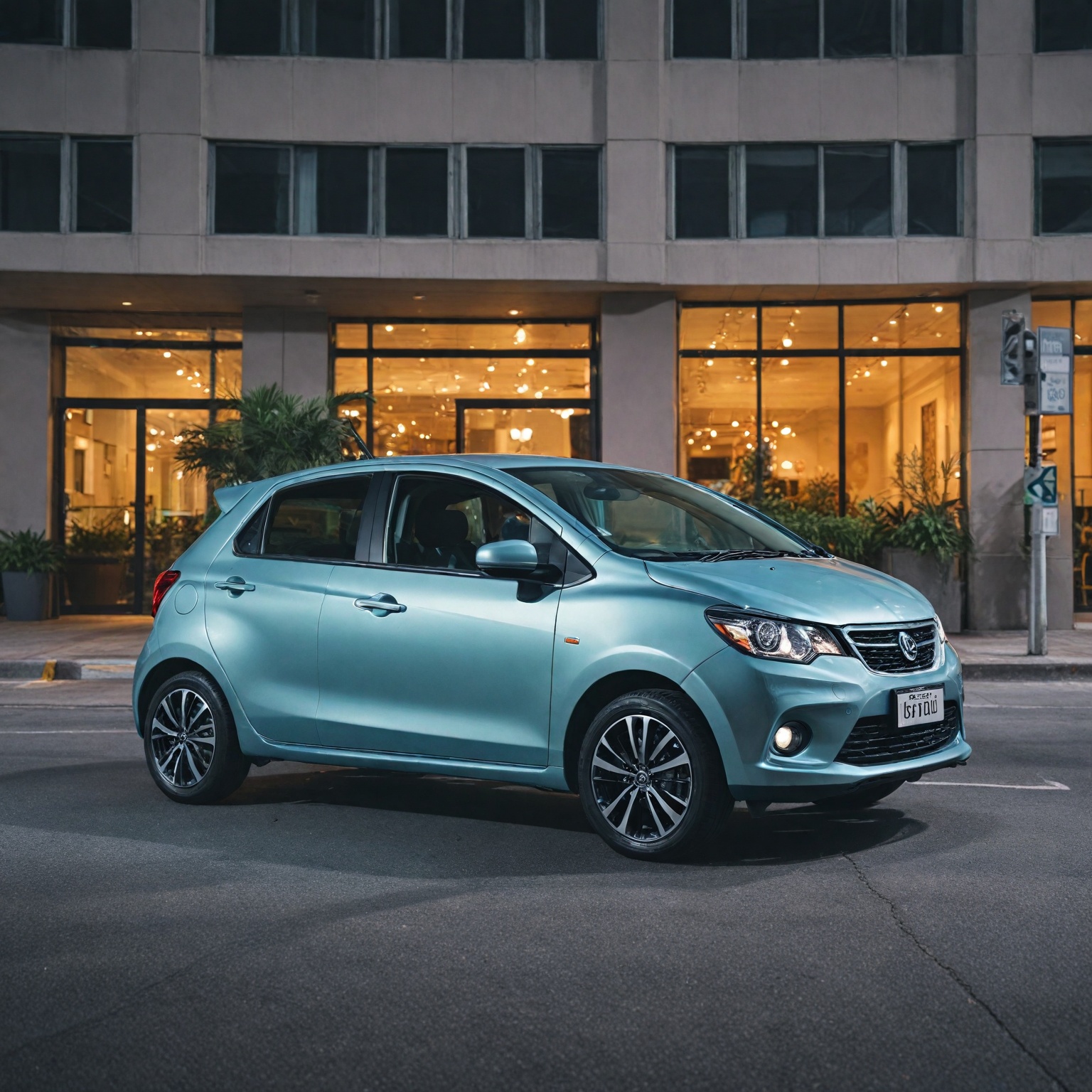
The Proton Iriz was developed on a versatile platform that allowed for continual improvements and even the potential introduction of an electric variant, showcasing Proton’s growing engineering capabilities beyond its origins of producing licensed Mitsubishi vehicles. Despite its classification as a small-class MPV, the Iriz featured a bold and distinctive design characterized by a front grille with a silver bar on base models and a chromed finish on higher trims. LED daytime running lights were integrated into the front bumper’s outer pods on the 1.6-liter versions, while the door panels exhibited modest shaping that some critics felt resulted in a somewhat bland overall appearance, indicating room for design evolution.
Internally, Proton’s designers adopted a minimalist dashboard layout highlighted by curved surfaces and an infotainment screen positioned atop the center stack. Ventilation controls consisted of round knobs situated beneath the screen. The cabin was engineered to accommodate five adults, although rear passengers were advised against being too tall due to space constraints. Subsequent facelifts notably enhanced the interior with improved build quality, ergonomic refinements, and the addition of modern technology features, including a new 8-inch floating infotainment head unit with advanced voice command functions.
From an engineering perspective, the Iriz incorporated Proton’s RESS hot press forming (HPF) technology in critical body structure sections, a process that produces steel five times stronger than conventional cold rolled galvanized steel. This advanced manufacturing technique positioned Malaysia as the sixth country worldwide to adopt HPF technology, underscoring Proton’s commitment to safety and structural integrity. The car also came equipped with comprehensive safety features such as six airbags, Anti-lock Braking System (ABS) with Electronic Brakeforce Distribution (EBD), traction control, vehicle stability control, and front and rear parking sensors, which contributed to its five-star rating in the 2020 ASEAN NCAP crash tests under updated protocols.
Powertrain options included 1.3- and 1.6-liter engines, both initially mated to a 5-speed manual gearbox, with a continuously variable transmission (CVT) option available for the 1.6-liter variant. The 2019 facelift reintroduced the 1.6L Executive CVT model while discontinuing manual transmissions for higher trims, reflecting evolving market preferences. Technological enhancements in later models featured rear-view cameras as standard on the 1.6-liter models and improved instrument clusters with full-color displays in Executive and Premium variants. Proton’s continuous refinement in design and engineering throughout the Iriz’s lifecycle exemplifies the brand’s evolution toward producing competitive, well-equipped vehicles tailored to modern consumer demands.
Production Timeline and Updates
The Proton Iriz was first launched in 2014 as a small-class MPV featuring a bold design and a platform developed to allow future improvements, including an electric version. Over the years, Proton implemented several updates to the Iriz to improve refinement and CVT performance, with significant facelifts occurring in 2019 and 2021 under the influence of Geely’s investment.
The 2017 update introduced the 1.6L Executive variant and limited manual transmission availability to the base Standard model. The 2019 facelift brought further refinements such as a revised front fascia featuring Proton’s new infinite weave design language, redesigned bumpers, and the return of the 1.6L Executive CVT model while manual transmissions were retained only on the 1.3L Standard variant. The launch of this facelift was initially delayed due to extensive road testing but was eventually unveiled in September 2019.
In 2022, Proton introduced a major facelift with new lights, bumpers, and the addition of the crossover-styled Active variant, which featured interior enhancements such as red highlights and stitching to elevate ambience. The update focused on improving interior build quality and reducing noise, vibration, and harshness (NVH), although it retained the Punch CVT gearbox exclusively, discontinuing manual transmission options for the Iriz.
Despite these ongoing updates, Proton announced the end-of-production (EOP) for the Iriz by the end of 2023, marking the conclusion of its manufacturing run on September 9 at the Tanjong Malim plant with the last unit being body number 97576. The Iriz, along with some other older models, is expected to be succeeded by newer models under Proton’s evolving lineup and strategic focus on electric vehicles and smart technology.
Throughout its production life, the Proton Iriz maintained a presence in export markets and contributed to Proton’s overall sales growth, although it never matched the export popularity of models like the Proton Saga and Proton X50. The discontinuation of the Iriz closes a significant chapter for Proton’s small hatchback segment, which had seen continuous evolution in styling, technology, and market positioning over nearly a decade.
Sales Performance and Market Presence
The Proton Iriz experienced varied sales performance throughout its production run, maintaining a notable presence in the Malaysian automotive market. In April 2023, despite a shortened sales and production month due to the Hari Raya Aidilfitri holiday, Proton as a brand grew sales by 6.5% compared to April 2022, achieving 9,415 units sold domestically and for export. This growth helped Proton maintain second place in the national automotive sales table with an estimated market share of 20.4% for the month. Specifically, the Proton Iriz contributed 338 units to this tally, securing fourth place in the B-segment hatchback category.
During the last quarter spanning March to May 2023, year-on-year sales figures rose by 10%, driving year-to-date (YTD) sales to 61,087 units for Proton as a whole. The brand’s market share was forecasted to be around 19.2% from an estimated Total Industry Volume (TIV) of 69,495 units, indicating consistent demand despite industry fluctuations. By the end of June, the Proton Iriz recorded 369 units sold, maintaining its position within the competitive B-segment hatchback market.
The Iriz’s sales performance reflects its resilience and relevance in a market where Proton’s other models, such as the Saga and X70, have also demonstrated strong sales figures. The Saga led Proton’s sales with 3,949 units in April 2023 alone, while the X70 and X90 achieved sales of 756 and 248 units respectively during similar periods. The Proton Iriz’s ability to hold a steady position among these models underscores its sustained market presence throughout its lifecycle.
Customer feedback has been largely positive, with 59 out of 64 genuine owners expressing satisfaction with the Iriz’s performance and features. This favorable reception is indicative of the model’s appeal and helped sustain its market relevance until production concluded. Moreover, continuous updates and modifications have kept the Iriz competitive, including aesthetic enhancements and technological upgrades that aligned it with Proton’s evolving brand strategy under Geely’s influence.
Discontinuation and End of Production
Proton officially announced the discontinuation of one of its original models, confirming that production would end by the close of the year. Azmil Abu Bakar, Proton’s senior director of group technical procurement, revealed during a Global Investors event that among the four original models, three would continue production while one would reach its End-of-Production (EOP) status by year-end. This model was widely understood to be the Proton Iriz, a significant vehicle in Proton’s lineup since its launch.
The final production run for the Iriz is set to conclude on September 9, symbolizing the end of an era for this compact hatchback. While the plant shutdown associated with the model’s phase-out caused a short-term impact on sales, Proton remains optimistic about future growth. The efficiencies gained during this transition are expected to support improved performance in the latter half of the year. Proton’s recent launch of the 2024 Proton X50 has also been met with strong market demand, helping to offset any downturn caused by the Iriz’s discontinuation.
Impact and Legacy
The Proton Iriz holds a significant place in the history of Malaysia’s automotive industry as a model that symbolized both the challenges and progress of the national carmaker. Launched in 2014, the Iriz was initially envisioned as the vehicle that would help Proton expand beyond domestic borders and elevate its global presence. Rooted in designs dating back to the 2010 Giugiaro EMAS concept, the Iriz represented a fresh start for Proton’s B-segment hatchback market and was a critical step in the company’s efforts to modernize its lineup.
Over its production lifespan, the Iriz underwent multiple updates, notably in 2019 and 2021, reflecting Proton’s responsiveness to customer feedback and commitment to continuous improvement. These facelifts, supported by Geely’s investment following Proton’s acquisition, enhanced refinement, CVT performance, and interior quality—factors that had initially hampered the model’s reception. The introduction of variants such as the rugged-looking Active version, although somewhat toned down, showcased Proton’s attempt to diversify the Iriz’s appeal.
Technologically, the Iriz was a pioneer in several respects for the Malaysian market. Proton’s early adoption of Hot Press Forming (HPF) technology in the Iriz’s construction marked Malaysia as the sixth country worldwide to implement this manufacturing process, improving vehicle safety and structural integrity. Safety features such as the body control module’s automatic door unlocking in emergencies and head restraints designed to mitigate whiplash injuries underscored Proton’s focus on occupant protection.
Despite these advancements, the Iriz’s legacy is bittersweet. It never fully realized its initial promise of being the flagship model to propel Proton onto the international stage or to significantly revive the brand’s fortunes single-handedly. Nevertheless, the car played a critical role in stabilizing Proton’s product range during a period of transformation, eventually being succeeded by newer models inspired by global collaborations, such as those based on Geely platforms. The end of the Iriz’s production on September 9 marks the conclusion of an era, but its impact on Proton’s technological progress, manufacturing capabilities, and design philosophy remains influential.
The content is provided by Sierra Knightley, Gear Shift Zone