Summary
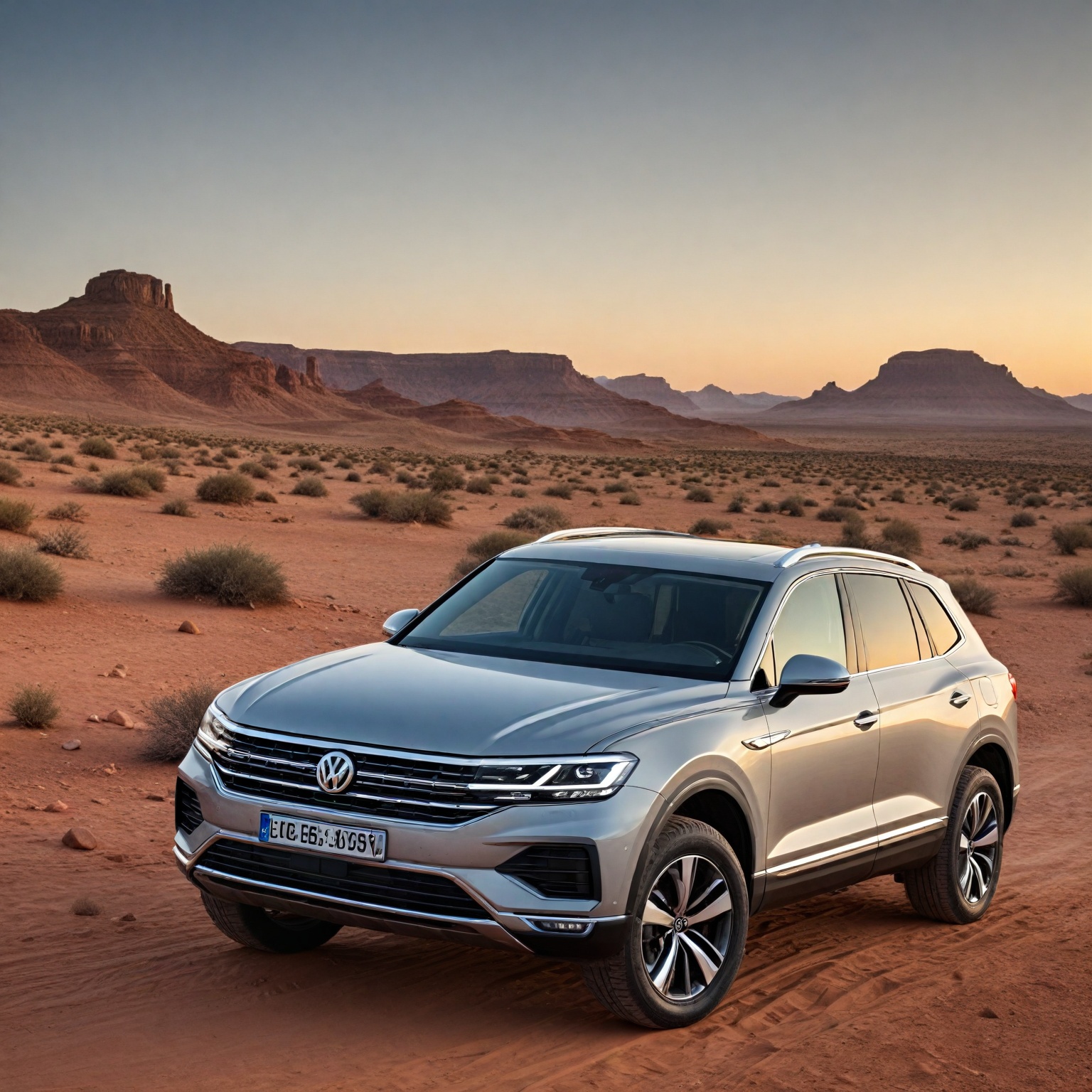
The Volkswagen Touareg, introduced in 2002, has been a flagship mid-size luxury SUV for the brand, known for combining advanced technology with robust performance and premium comfort. Over its production span, the Touareg was praised for integrating innovations such as adaptive cruise control, matrix LED headlights, and hybrid powertrains, establishing itself as a competitor to vehicles like the Land Rover Discovery and Volvo XC90 rather than the more aggressively styled Porsche Cayenne or Audi Q7 with which it shared platforms. Despite its technological pedigree and strong presence in markets such as Europe, China, and Russia, the Touareg faced declining demand in North America, leading Volkswagen to discontinue it there after 2017.
Volkswagen’s evolving strategy to prioritize electrification and software-driven vehicle platforms has shaped the decision to phase out the Touareg entirely by 2027. This move aligns with a broader industry shift and Volkswagen’s ambition to increase electric vehicle sales to 40% of its total output by 2030. The Touareg’s phase-out is accompanied by the introduction of successor models, including the Tayron—a versatile, more affordable SUV launched initially in China and expanding globally—and the fully electric ID.5, which reflects Volkswagen’s commitment to electrified mobility.
While the Tayron offers a range of powertrains from mild hybrid to plug-in hybrid options and targets markets favoring cost-effective SUVs, the ID.5 represents Volkswagen’s full embrace of battery electric vehicles, featuring advanced digital interfaces and connectivity. However, the ID.5 struggled to gain significant market traction, especially in China and Europe, resulting in its planned discontinuation alongside the Touareg’s phase-out, highlighting the competitive challenges in the electric SUV segment.
The transition from the Touareg to the Tayron and ID.5 marks a pivotal moment in Volkswagen’s SUV lineup, illustrating the brand’s strategic pivot from traditional combustion-engine luxury SUVs toward electrified and software-centric models. This evolution is part of Volkswagen’s larger vision to streamline its portfolio, adapt to shifting consumer preferences, and lead in sustainable and connected mobility across global markets.
Background
The Volkswagen Touareg, first introduced in 2002, marked the brand’s entry into the growing mid-size luxury SUV segment and has since undergone several generations and updates. Named after the nomadic Tuareg people of the Sahara, the vehicle has long been positioned as a technologically advanced and functional SUV, blending luxury with practicality in a manner akin to the Land Rover Discovery or older Volvo XC90, rather than the more ostentatious Porsche Cayenne or Audi Q7 to which it is technically related. Over its lifespan, the Touareg served as a technological testbed for Volkswagen, integrating innovations such as advanced driver assistance systems and high-end interior features.
Despite its pedigree and continual technological enhancements—including features like a panoramic sunroof, adaptive cruise control, bi-xenon headlights, and advanced infotainment systems—the Touareg struggled in certain key markets, particularly in the United States, where consumer interest waned towards the end of its production. Conversely, the model found stronger demand in regions such as China, Europe, and Russia, where the third-generation Touareg has been showcased with upgraded digital instrument clusters, premium infotainment screens, ambient lighting, and luxury interior options like diamond-patterned white leather seats.
Volkswagen’s broader strategic pivot toward electrification and software integration in vehicles has influenced the brand’s SUV lineup, reflecting a shift from traditional hardware-focused engineering to high-tech, software-driven platforms. This transition is embodied in Volkswagen’s increasing investment in electric vehicle production and ambitious sales targets, aiming for a 40% electric vehicle sales share by 2030. Within this context, the decision to phase out the Touareg and replace it with models like the Tayron and the ID.5 electric SUV aligns with Volkswagen’s emphasis on electrification and adapting to evolving market demands.
The Touareg’s final iterations included refined powertrains and technology upgrades, aiming to sustain its appeal in the European market where Volkswagen continues to strengthen its model range. However, with shifting consumer preferences and VW’s renewed focus on electric mobility, the Touareg’s discontinuation marks the end of an era for the brand’s traditional luxury SUV, paving the way for its successors to lead Volkswagen’s future in the SUV segment.
Phase-Out of the Touareg
Volkswagen began discontinuing the Touareg in certain markets following the 2017 model year, primarily in North America. This decision was influenced by declining sales and the introduction of the larger, more affordable Volkswagen Atlas (known as the Teramont outside the United States, Canada, and Chile), which was designed specifically for the North American market and built on the Volkswagen Group MLB platform shared with the Porsche Cayenne and Audi Q7. Despite the phase-out in North America, the Touareg continued production in other regions with a third generation introduced in 2018 that emphasized fuel efficiency.
The planned full discontinuation of the Touareg is set to take effect in 2027 as part of Volkswagen’s broader strategy to streamline its model range and focus on high-volume vehicles. This move accompanies the retirement of the ID.5 electric vehicle, a coupe-styled variant of the ID.4 that struggled to gain traction, particularly in China and Europe. Volkswagen aims to concentrate on models with stronger market appeal and higher sales volumes, adjusting its portfolio to shifting consumer preferences and regulatory demands.
Volkswagen’s future SUV strategy includes introducing new models such as the next-generation T-Roc and the Tiguan Allspace-replacing Tayron, both slated for launch around 2025. These vehicles may represent some of the last new models in Europe to debut with internal combustion engines before the brand shifts further toward electrification. The Tayron, in particular, is seen as a key successor in Volkswagen’s SUV lineup, effectively filling the gap left by the Touareg in various global markets.
This phase-out aligns with Volkswagen’s overarching mission to develop sustainable mobility solutions, including expanding its range of electric vehicles and integrating autonomous driving technologies. The company is pursuing a multi-brand mobility platform and plans to significantly grow its electric vehicle offerings, particularly in North America and China, where market electrification is accelerating. As Volkswagen pivots towards electrification and streamlined model offerings, the Touareg’s discontinuation marks the end of an era for one of its long-standing SUV models.
Successor Models
Volkswagen has announced the planned discontinuation of the Touareg, set to take effect in 2027, as part of a broader strategy to streamline its SUV lineup and focus on high-volume models. The Tayron has been positioned as a key successor, serving as a lower-cost alternative with broader market appeal. Initially launched for the Chinese market in 2018 by FAW-Volkswagen, the Tayron will expand globally from 2024, effectively replacing the Tiguan Allspace in several markets and fulfilling much of the Touareg’s role.
The Tayron offers versatile configurations, including two- and three-row seating options, and a robust towing capacity of 2500 kg in the 2.0 TSI 4Motion variant. It features a range of powertrains, including 1.4-litre and 2.0-litre turbocharged engines paired with a 7-speed dual-clutch gearbox, as well as mild hybrid and plug-in hybrid variants such as the Tayron GTE. In China, the second-generation Tayron is marketed as the Tayron L to emphasize its longer wheelbase and distinguish it from the first generation. Volkswagen has also indicated plans to export Tayron models produced in China to other regions including Asia, South America, and the Middle East, capitalizing on the growing acceptance of China-manufactured vehicles in these markets.
Alongside the Tayron, Volkswagen is expanding its electric vehicle portfolio to address the rising demand for electrification, particularly in North America. The introduction of the ID.5 electric SUV aligns with Volkswagen’s vision to develop tailored electric models for key markets, with a focus on family-friendly and performance-oriented vehicles. This transition underscores Volkswagen’s commitment to enhancing its all-electric lineup, which will complement the phasing out of traditional combustion-engine SUVs like the Touareg.
Technological Innovations and Platform Differences
The Volkswagen Touareg has long been recognized for its advanced technological features and robust platform, which evolved significantly over its production lifespan. The second-generation Touareg, launched in 2010, was hailed as a major technical milestone for Volkswagen, introducing an array of innovations that underscored the model’s premium positioning. It featured powerful engine options, including the flagship V10 TDI diesel engine delivering 230 kW (313 PS) and a remarkable 750 Nm of torque, paired with a smooth Aisin 8-speed automatic transmission and the 4MOTION permanent all-wheel drive system.
One of the most notable advancements in the Touareg line was the introduction of IQ.Light HD matrix headlights, a cutting-edge lighting system employing nearly 40,000 micro-LEDs. This technology enabled an interactive light carpet to improve visibility and safety during night driving, setting new standards in automotive lighting. Additionally, advanced driver assistance systems such as night vision assistance, active all-wheel steering, and front cross traffic assist enhanced both handling and safety.
The Touareg also embraced electrification with the Touareg R eHybrid, Volkswagen’s most powerful model to date, combining plug-in hybrid technology with impressive performance capabilities. This model included innovative features like Park Assist Pro, enabling remote parking via a smartphone app, further exemplifying the shift toward software-driven automotive experiences.
In contrast, the Tayron and ID.5 EV, which are positioned as successors or replacements in Volkswagen’s lineup, highlight a clear transition in platform philosophy and technological focus. The Tayron, available with a high-tech mild hybrid powertrain (eTSI) featuring a 48-volt system and Active Cylinder Management, as well as plug-in hybrid variants with a 19.7 kWh battery, emphasizes efficient electrification blended with traditional internal combustion engines. The plug-in hybrids deliver an electric-only range exceeding 100 km and a total range of approximately 850 km, supported by turbocharged petrol and diesel engines paired with either front-wheel or 4MOTION all-wheel drive.
On the other hand, the ID.5 represents Volkswagen’s full embrace of electric mobility, built on a dedicated electric vehicle platform that prioritizes software integration and connectivity. It features large digital displays, including a 15.0-inch infotainment screen angled toward the driver, and a shift away from physical controls toward touch-based interfaces, reflecting the industry’s move toward software-defined vehicles. The ID.5 offers multiple battery and motor configurations, with the GTX variant delivering up to 175 kW peak charging speeds and dual-motor all-wheel-drive setups producing up to 330 horsepower.
While the Touareg’s platform was rooted in traditional combustion and hybrid technologies with a focus on mechanical refinement and hardware prowess, the Tayron and ID.5 mark Volkswagen’s pivot to electrification and software-centric design philosophies. This evolution signifies a broader industry trend where vehicles are no longer just well-engineered machines but complex digital platforms, shaping the future of mobility through connectivity, automation, and sustainable powertrains.
Production and Availability
The Volkswagen Touareg was first introduced in 2002 for the European and North American markets. While production and development for the European market continued, the model was discontinued in the United States after the 2017 model year due to changing market priorities and the introduction of the larger, less expensive Volkswagen Atlas (known as the Teramont outside of North America), which was specifically designed for the U.S. market. The second-generation Touareg, produced from 2010 to 2018, sold more than 479,000 units globally. The third generation, unveiled in March 2018 at the Poznań Motor Show, featured modernized design, fuel efficiency improvements, and a lighter steel and aluminum body.
In China, Volkswagen introduced the Tayron, a midsize SUV positioned as a more affordable and versatile alternative to the Touareg. The Tayron was initially presented as the VW Advanced Midsize SUV concept in March 2018, followed by its production version debuting at the Chengdu Motor Show in September 2018. Built by FAW-Volkswagen, the Tayron offers 1.4-litre and 2.0-litre turbocharged engines paired with a 7-speed dual-clutch gearbox and has been available in the Chinese market since October 2018. It is offered in both two- and three-row configurations, with a towing capacity of up to 2500 kg in the 2.0 TSI 4Motion version, fulfilling much of the role previously occupied by the Touareg.
Volkswagen has announced plans to phase out the Touareg globally in favor of the Tayron and the ID.5 electric vehicle, reflecting a strategic shift towards electrification and models with broader market appeal. Although the Touareg remains in production for certain markets such as Europe, Volkswagen is focusing on exporting Chinese-made Tayron models to regions including Asia, South America, and the Middle East, where demand for competitively priced SUVs remains strong.
Market Impact and Reception
The phasing out of the Volkswagen Touareg, particularly in the U.S. market where it was discontinued after the 2017 model year, marked a significant shift in Volkswagen’s SUV strategy. The decision was largely influenced by sales performance and the introduction of the larger, more affordable Atlas SUV (known as the Teramont outside North America), which better suited the preferences of the U.S. market. The Atlas shares the Volkswagen Group MLB platform with luxury counterparts such as the Porsche Cayenne and Audi Q7, offering consumers a more spacious and competitively priced option.
The Touareg had a notable production run, with over 479,000 units of the second generation sold between 2010 and 2018. The third generation, unveiled in 2018, emphasized modern design and fuel efficiency but faced limited availability in North America, reflecting Volkswagen’s realignment of its SUV offerings. Despite its premium positioning and robust off-road capabilities, the Touareg struggled to maintain a foothold in the increasingly competitive SUV segment in key markets like the U.S..
Volkswagen’s introduction of the Tayron in China and Europe represents a strategic move to fill the gap left by the Touareg in certain markets. Positioned between the premium Touareg and the mid-sized Tiguan, the Tayron aims to capture consumers seeking a balance of exclusivity and efficiency. Developed on the advanced MQB evo platform and available in five- or seven-seater configurations, the Tayron has been tailored specifically for markets open to Chinese production, such as Asia, South America, and the Middle East.
On the electric front, Volkswagen’s ID.5, a coupe-style variant of the ID.4, was intended to capitalize on growing EV demand but ultimately failed to resonate with buyers, particularly in China and Europe. The slow sales and shifting consumer preferences towards more practical electric SUVs led Volkswagen to discontinue the ID.5. This move highlights the increasingly crowded and competitive nature of the electric SUV market, where models like the BMW iX3, Ford Mustang Mach-E, Kia EV6, Tesla Model Y, and Hyundai Ioniq 5 vie for dominance.
Volkswagen’s ID.4 continues to demonstrate competitive performance and range within the electric SUV segment, with variants offering between 263 and 291 miles of EPA-estimated range and acceleration times competitive for the class. This underlines Volkswagen’s ongoing commitment to electric mobility despite the ID.5’s discontinuation.
Future Outlook
Volkswagen is actively transforming its mobility offerings in line with its mission, “Mobility for generations to come,” by focusing on sustainable, connected, and autonomous vehicle technologies. The Group aims to integrate all of its brands’ mobility services onto a single platform, leveraging autonomous driving combined with new mobility solutions to become a leading provider of sustainable mobility. This transformation includes building a comprehensive vehicle fleet spanning rental, subscription, and ride-pooling services to ensure high availability and profitability.
Looking ahead, Volkswagen plans to evolve electric vehicles (EVs) into mobile power banks, enabling them to function as distributed
The content is provided by Sierra Knightley, Gear Shift Zone