Unveiling the Xpeng G7 EV SUV: Longer than G6, Advanced Autonomous Features, Triple Turing AI Chips, and More
Summary
The Xpeng G7 is a mid-size electric SUV introduced by Chinese automaker Xpeng Motors, positioned above the Xpeng G6 in both size and technological capability. Measuring 4,892 mm in length and featuring a spacious interior with a minimalist design, the G7 emphasizes advanced features such as frameless doors with electronic soft-close, a full-width tail lamp, and customizable wheel options. The vehicle is notable for integrating cutting-edge artificial intelligence technology, including XPeng’s self-developed Turing AI chips, which power its autonomous driving system and intelligent cockpit, marking it as one of the first production vehicles to claim Level 3 compute capabilities for semi-autonomous driving.
Technologically, the G7 is offered in two variants: the Max edition with dual Nvidia Orin-X chips and the Ultra edition equipped with three proprietary Turing AI chips, delivering a combined computing power significantly surpassing industry norms. Its autonomous driving suite, XPILOT ASSIST 3.5, leverages multi-sensor fusion and advanced AI algorithms to support complex urban and highway driving scenarios, including a Navigation Guided Pilot (NGP) system with semi-autonomous features. While the G7 meets the computational requirements for Level 3 autonomy, it currently lacks the full hardware redundancy and regulatory certification needed for official Level 3 autonomy status, highlighting ongoing challenges in bringing such advanced systems to market.
The interior of the Xpeng G7 combines luxury and technology, featuring a large floating central display, premium materials, and a co-developed augmented reality head-up display (AR-HUD) with Huawei that projects an 87-inch virtual screen onto the windshield. This AR-HUD enhances driver awareness by overlaying navigation and driver-assist data directly in the driver’s line of sight while addressing common HUD limitations. The cabin also includes comfort-focused features such as Nappa leather seats with ventilation and massage functions, a panoramic glass roof, and wireless charging with cooling capabilities.
Market reception for the G7 has been positive, with its blend of advanced technology, competitive pricing starting around ¥235,800 (approximately $32,800 USD), and spacious design appealing to a growing segment of EV buyers in China and Europe. The vehicle competes against established models like the Tesla Model Y, with XPeng leveraging its proprietary AI chips and autonomous driving ambitions to differentiate itself. Despite strong technological innovations, the G7 faces challenges related to regulatory certification of its autonomous systems and intense competition within the rapidly evolving global electric SUV market.
Overview
The Xpeng G7 is an electric SUV that positions itself above the existing Xpeng G6 in terms of size and technological advancements. Measuring 4,892 mm in length, 1,925 mm in width, and 1,655 mm in height with a wheelbase of 2,890 mm, the G7 offers a more spacious interior and a refined exterior design featuring frameless doors with electronic soft-close functionality, flush door handles, and optional 18- or 20-inch wheels. The vehicle is available in six exterior colors, including starry grey, crescent silver, and interstellar green, while its rear design integrates a full-width tail lamp with embedded driver-assist indicators.
Technologically, the G7 is billed as the world’s first AI-powered vehicle with Level 3 compute capabilities. It is available in two variants: the Max edition equipped with dual Nvidia Orin-X chips, and the Ultra edition, which features XPeng’s self-designed Turing AI chip across three units. This advanced processing setup supports both autonomous driving and the smart cockpit system, complemented by Qualcomm’s Snapdragon 8295P chip to deliver in-cabin AI compute performance that is 26 times greater than competing flagship models. Despite meeting the computational requirements for Level 3 autonomy, the G7 lacks hardware redundancy and regulatory certification to fully achieve this level of autonomous driving. XPeng emphasizes localization of processing to reduce cloud dependency and system complexity.
A highlight of the G7’s interior is the augmented reality head-up display (AR-HUD), co-developed with Huawei, which projects an 87-inch virtual screen onto the windshield. This AR-HUD offers lane-level navigation, speed, and driver-assist data while addressing common HUD issues like glare and limited visibility. The minimalist cabin design eliminates traditional physical instrument clusters, focusing on digital interaction and driver immersion.
Powering the G7 is a 218 kW (292 hp) electric motor paired with a CALB Lithium Iron Phosphate (LFP) battery pack. While official range figures have yet to be disclosed, the SUV is designed with an emphasis on energy efficiency and real-world usability, benefiting from XPeng’s continuous improvements in battery and thermal management systems. The vehicle aims to combine competitive pricing, intelligent technology, and spacious design to appeal to a broad range of buyers, thereby strengthening XPeng’s position in the increasingly competitive global electric vehicle market.
Advanced Technologies
The Xpeng G7 EV SUV incorporates a suite of advanced technologies that underline the company’s commitment to innovation, particularly in autonomous driving and in-house semiconductor development. Central to its technological prowess is the integration of up to three proprietary Turing AI chips developed by Xpeng, delivering a combined computing power exceeding 2,200 TOPS. This marks a significant leap over industry-standard processors, which typically range between 80 and 700 TOPS, positioning the G7 as one of the most powerful AI-driven vehicles in its class.
Xpeng’s strategic decision to develop and deploy its own Turing AI chips reflects its goal to reduce reliance on third-party suppliers such as Nvidia and to secure greater control over its product roadmap amid global chip supply challenges. These chips power both the autonomous driving system and the intelligent cockpit, with the in-cabin AI compute capability reported to be 26 times greater than rival flagship models when paired with Qualcomm’s Snapdragon 8295P. The Turing chips feature a 40-core processor architecture, dual neural processing units (NPUs), and are optimized for neural network operations, enabling advanced on-device AI inference. This local processing reduces latency and dependence on cloud connectivity, which is critical for consistent autonomous driving performance across varied geographies.
The G7’s autonomous driving system, known as XPILOT ASSIST 3.5, leverages an industry-leading multi-sensor fusion platform integrating high-definition cameras, millimeter-wave radars, and ultrasonic sensors to deliver comprehensive environmental awareness. The system supports over ten active and passive safety functions such as Autonomous Emergency Braking (AEB), Blind Spot Detection (BSD), and Door Opening Warning (DOW), enhancing driver, passenger, and pedestrian safety. XPILOT ASSIST 3.5 is designed to operate effectively in complex urban environments, dynamically adapting to traffic data and road topology through a hybrid model of rule-based and data-driven algorithms.
A standout feature enabled by the Turing AI chips is the Navigation Guided Pilot (NGP) system, which provides semi-autonomous driving capabilities for both city and highway scenarios. This includes advanced functionalities such as highway navigation-guided pilot and intelligent parking assist, allowing the vehicle to execute tasks with minimal driver intervention under appropriate conditions. Xpeng claims that some G7 models will achieve Level 4 (L4) autonomous driving on highways following over-the-air software updates, aligning with SAE International’s definition where the vehicle can operate autonomously in most conditions without human intervention, although manual control remains an option.
Powertrain-wise, the vehicle employs a single 218 kW motor and an LFP battery optimized for safety and efficiency, complementing its intelligent systems with robust performance.
Interior and Comfort
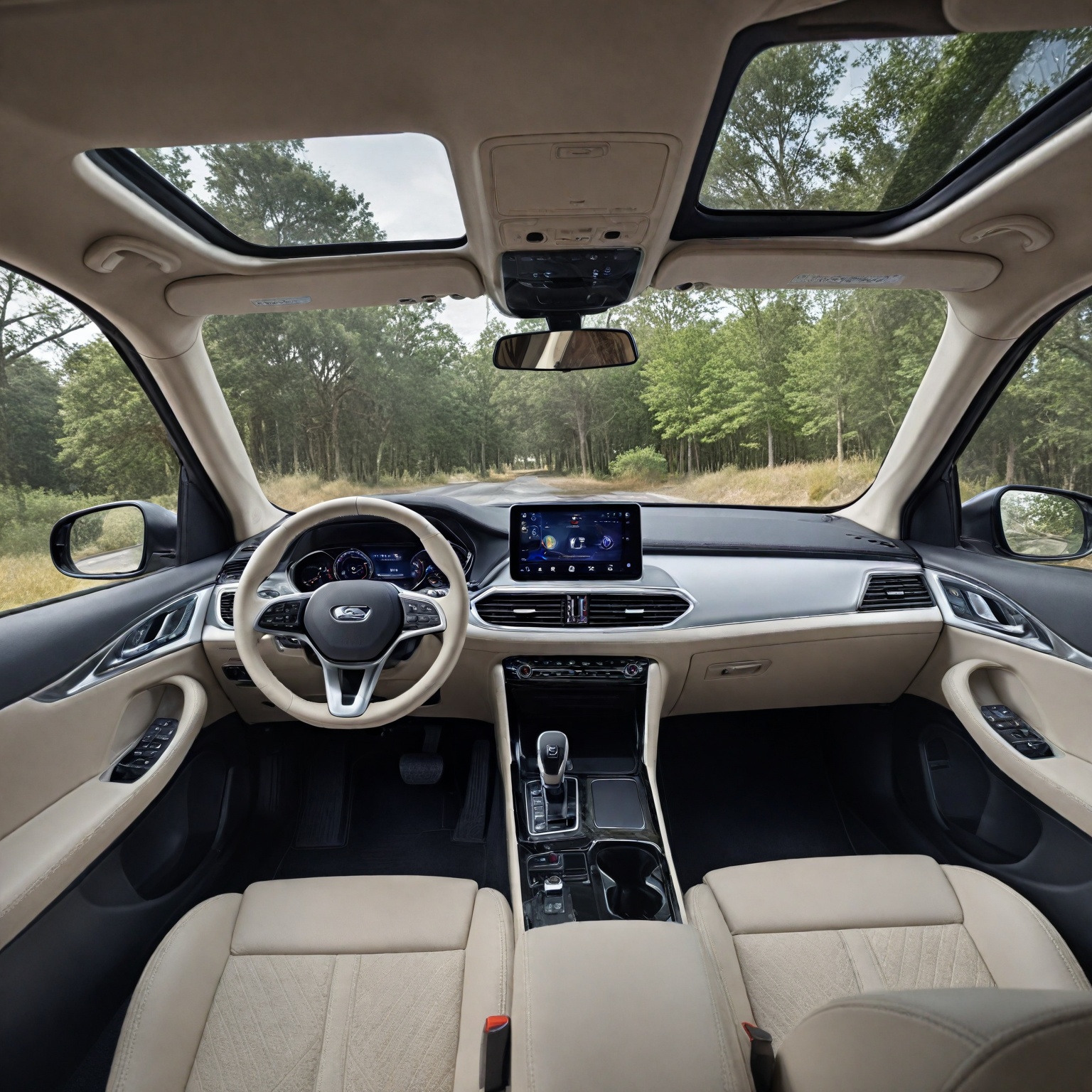
The Xpeng G7 offers a highly refined and technologically advanced interior designed to maximize comfort and convenience for its occupants. It adopts a minimalist layout, foregoing the traditional instrument cluster in favor of a large 15.6-inch floating central display that integrates both driving data and infotainment functions. This design emphasizes a clean and modern cabin aesthetic, complemented by the use of premium materials such as real wood, metal, and leather. Four interior color options are available, allowing for personalization according to customer preference.
Seating in the G7 is crafted for both luxury and comfort, featuring Nappa leather seats equipped with ventilation, heating, and massage functions, enhancing the overall passenger experience on long journeys. The cabin also benefits from a spacious feel, supported by a substantial wheelbase of 2,890 mm, which provides ample legroom and headroom for all passengers.
A standout feature of the G7’s interior technology is the debut of Xpeng’s “Light Pursuit Panoramic” augmented reality heads-up display (AR-HUD), developed in collaboration with Huawei. This AR-HUD overlays digital navigation and driver-assist information onto the real-world view, significantly aiding driver decision-making and safety. The system boasts an impressive 85% NTSC color gamut, brightness exceeding 12,000 nits, and a contrast ratio of 1800:1, leveraging self-developed LCoS imaging modules and automotive-grade chips.
Additional comfort and convenience features include a panoramic glass roof, wireless charging pads with cooling functionality, and big 20-inch wheels fitted with Michelin tires, further enhancing the driving experience and passenger comfort. Overall, the Xpeng G7 combines luxury materials, cutting-edge technology, and thoughtful design elements to deliver a sophisticated and comfortable interior environment.
Variants and Pricing
The XPeng G7 is offered in multiple variants designed to cater to different customer preferences and technological needs. Pricing for the G7 starts at ¥235,800 (approximately $32,800 USD), positioning it competitively below similarly equipped Tesla Model Y models while appealing to buyers interested in brands like Zeekr, Nio, and premium BYD offerings.
Among its variants, the G7 Ultra stands out by featuring XPeng’s proprietary Turing AI chip, which integrates a 40-core processor, dual neural processing units (NPUs), and a neural network-optimized architecture. This configuration delivers a total of 2200 trillion operations per second (TOPS), tripling the compute capacity of many current industry-leading chips that typically range from 80 to 700 TOPS. The Ultra variant exclusively powers XPeng’s flagship XNGP Ultra autonomous driving system, reflecting the company’s full commitment to pure vision technology across its lineup.
The G7 Max variant is equipped with dual Nvidia Orin-X chips, continuing XPeng’s tradition of integrating high-performance computing for advanced driving assistance. Additionally, the G7 introduces XPeng’s new Vision-Language Model (VLM), enhancing the vehicle’s perception and decision-making capabilities beyond prior models.
Customers who place an order for the XPeng G6 before 30 June 2025 are eligible for a complimentary 10-year extended warranty valued up to $4,980 (including GST), highlighting XPeng’s focus on long-term customer assurance and vehicle reliability.
It should be noted that features and specifications may vary depending on the G7 model and country of sale, reflecting regional regulatory requirements and market preferences.
Market Reception
The Xpeng G7 has garnered significant attention in the highly competitive electric SUV market, with its combination of sleek design, advanced technology, and competitive pricing positioning it favorably among potential buyers. The vehicle’s emphasis on spaciousness and intelligent features has been highlighted as key factors likely to appeal to a broad range of consumers, further strengthening Xpeng’s standing in the global EV market.
Pre-orders for the G7 began at RMB 235,800 (approximately $32,900), with display models arriving at dealerships ahead of the official launch in the third quarter of 2025. The SUV was showcased earlier in the year at Milan Design Week, signaling Xpeng’s intent to expand its presence in Europe, where it already sells vehicles in numerous countries including the UK, Germany, France, and Italy among others.
The launch of the G7 coincides with Xpeng’s ambitious goal to double vehicle sales in 2025. Following a successful 2024 with 190,068 vehicles delivered, the company aims for approximately 380,000 deliveries in 2025, underpinned by strong monthly sales figures such as the 33,525 units delivered in May alone. This momentum reflects growing market confidence in Xpeng’s expanding lineup and innovative offerings.
Competitors
The Xpeng G7 enters an increasingly competitive electric SUV market, facing established rivals such as the Tesla Model Y, as well as other highly rated vehicles like the Renault Scenic and Skoda Elroq. Positioned between the Xpeng G6 and G9, the G7 aims to carve out its niche by combining advanced technology, sleek design, and a compelling price point that could be lower than that of the Model Y.
Xpeng’s strategy emphasizes a balance between cutting-edge autonomous features and competitive pricing, positioning the G7 to appeal to a broad range of buyers and strengthen the company’s presence as a major global EV player. Despite these strengths, the G7 will have to contend with the strong brand recognition and established market share of competitors like Tesla, which maintains a stronghold with its Model Y, known for its technology and five-star ratings.
Future Developments
Xpeng has ambitious plans to expand the application of its advanced AI technologies beyond passenger vehicles. Central to this vision is the utilization of the Turing chip, which will not only power upcoming electric vehicles but is also intended for future AI-powered robots and flying cars, signaling the company’s commitment to diversified innovation in mobility and robotics.
The company is targeting the commercialization of Level 3 (L3) autonomous driving capabilities in the second half of 2025, aiming to enhance driver assistance systems to a new level of autonomy. Moreover, Xpeng is actively exploring the development and deployment of Level 4 (L4) autonomous driving technologies, with plans anticipated around 2026. This progressive roadmap reflects the company’s strategic emphasis on advancing self-driving capabilities through continuous AI integration.
According to Candice Yuan, Xpeng’s head of autonomous driving products, the company employs an end-to-end vehicle model trained on human driving data to generate trajectory plans that adapt to real-world scenarios across city roads and diverse conditions. This AI-driven approach aims to generalize driving behaviors without reliance on Lidar sensors, positioning Xpeng’s autonomous driving technology as a potential alternative to existing systems.
In addition, the intelligent cockpit within Xpeng vehicles is recognized as a pivotal control center, with significant potential for upgrades as new functions and supporting equipment are developed and introduced. Although not all features are currently realizable, the platform’s design accommodates future enhancements, indicating ongoing evolution in vehicle intelligence and user interaction.
The content is provided by Jordan Fields, Gear Shift Zone