Unveiling the Magnificent Porsche 963 RSP Inspired by Count Rossi’s Legendary 917 Racing Car
Summary
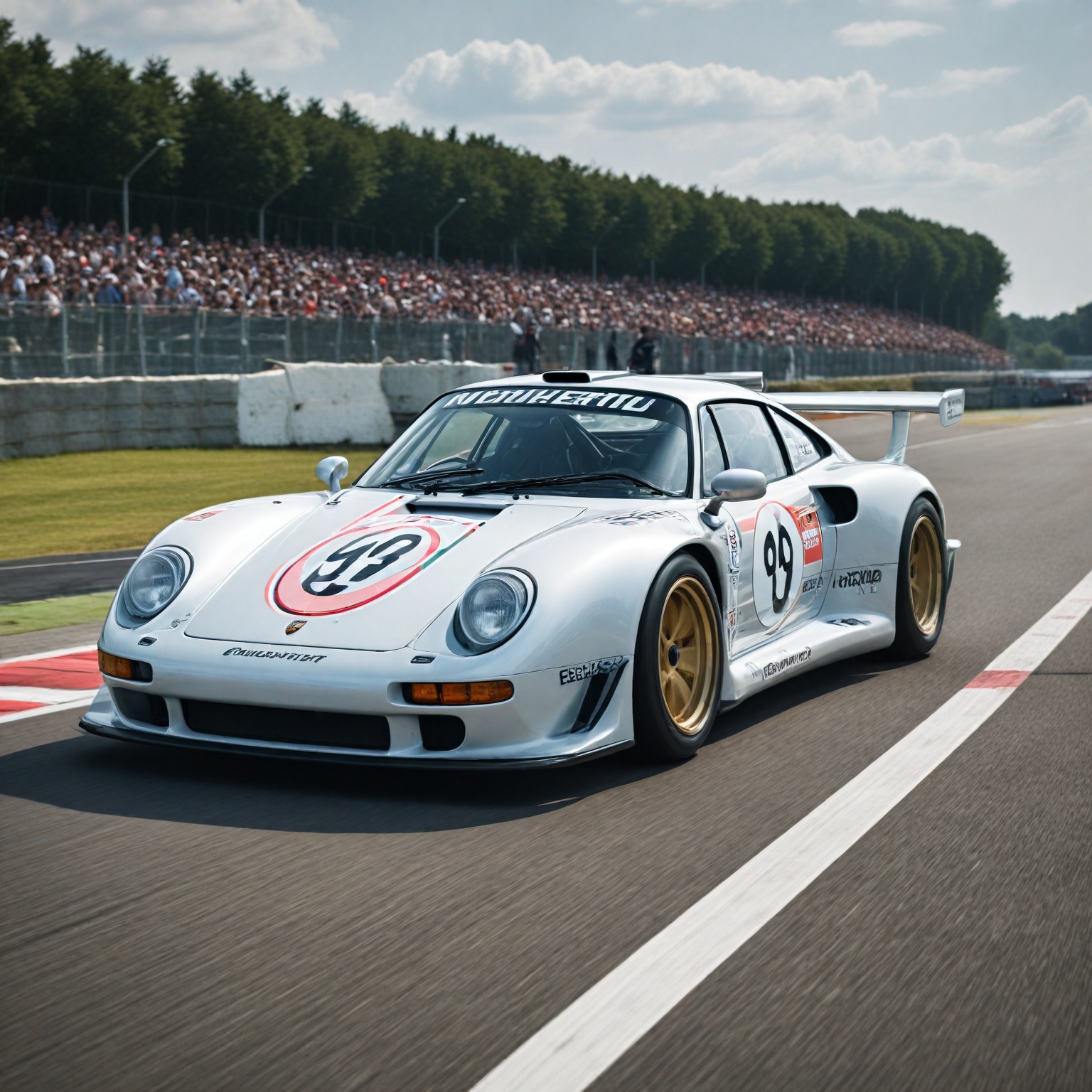
The Porsche 963 RSP is a one-of-a-kind hybrid hypercar that pays tribute to the legendary Porsche 917, specifically the rare road-legal 917 commissioned by Count Rossi di Montelera, heir to the Martini & Rossi fortune. Combining cutting-edge racing technology with bespoke craftsmanship, the 963 RSP uniquely bridges Porsche’s storied motorsport heritage and modern road-going capabilities. Developed through a collaboration between Porsche AG, Porsche Penske Motorsport, and motorsport icon Roger Penske, the car embodies both historical design cues and advanced engineering innovations.
Inspired by the 1970s 917 chassis 030—famously modified for street use at Count Rossi’s request—the 963 RSP incorporates aesthetic elements such as Martini Silver paint and vintage Michelin logos, alongside a hybrid V8 powertrain derived from the Porsche 918 Spyder. It features significant technical adaptations for road compliance, including raised suspension, softer dampers, and reprogrammed electronics for turn signals and headlights. Despite its race-bred origins, the car holds special permission to be driven on public roads under certain conditions, an exceptional feat for a prototype-class vehicle.
The 963 RSP’s unveiling at the Circuit de la Sarthe during the 24 Hours of Le Mans and subsequent showcase at the Porsche Museum highlight its symbolic role in celebrating Porsche’s endurance racing legacy. While not fully homologated for conventional street use, the car exemplifies Porsche’s commitment to blending historic racing excellence with future-facing technology and sustainability, including the use of renewable fuels and hybrid power.
Although the 963 model family competes actively in IMSA and the FIA World Endurance Championship with notable success, the RSP variant serves primarily as a cultural and technical homage rather than a direct racing competitor. Its development and reception underscore ongoing tensions between motorsport innovation and road-legal requirements, positioning the 963 RSP as both a tribute to and an evolution of Porsche’s racing and design heritage.
Background
The Porsche 963 RSP draws deep inspiration from the legendary Porsche 917, a car renowned not only for its racing prowess but also for its unique connection to Count Rossi, the influential figure behind the iconic Martini & Rossi sponsorship. Count Rossi, well known for his passion for high-performance sports cars, famously requested in 1974 that Porsche convert a 917K model for street use, an unusual move given the 917’s racing pedigree and rarity among road cars.
Chassis 030 of the 917 holds particular significance, as it was the only 917 officially prepared for road use and personally supplied by Porsche to Count Rossi in 1975 as a token of appreciation for his long-standing patronage. This car was initially raced only once during the 1971 World Sportscar Championship at the Zeltweg 1000km, where it featured an experimental transistorised anti-lock braking system, a cutting-edge technology at the time. Following its brief competition history, the car was used as a test bed for ABS development and underwent modifications such as distinctive cooling vents on the front wings before being retired and stored.
Despite being essentially a race car, Count Rossi’s Porsche 917 was modified minimally for road legality, including the removal of some aerodynamic fins and the addition of an exhaust silencer to reduce noise for pedestrians. The car even retained its genuine tan leather interior, highlighting its unique blend of race heritage and street usability. Enthralled by this one-off creation, Count Rossi famously drove the 917 from Porsche’s Zuffenhausen factory to Paris in 1975, where the car remains in its original form to this day.
The influence of the Martini & Rossi brand extended beyond sponsorship to impact the aesthetics and legacy of the Porsche 917. When the wider 917/20 variant ran its first test lap, Count Rossi reportedly rejected the idea of the car racing in Martini’s signature colors due to its unusual appearance, prompting Porsche to swiftly develop a new racing livery. This incident underscores the close relationship between Count Rossi, Martini & Rossi, and Porsche during that era.
In homage to this rich heritage, the modern Porsche 963 RSP incorporates stylistic nods to the original 917, such as the Martini Silver paint and vintage Michelin tire logos, reviving the glory days of the marque while blending modern technology with historic design elements.
Development
The Porsche 963 RSP was developed as a one-of-a-kind project that pays tribute to the legendary Porsche 917, specifically the iconic 917 driven by Count Rossi 50 years earlier. The project emerged from a collaboration between Porsche AG, Porsche Penske Motorsport, Porsche Cars North America, and motorsport legend Roger Penske, whose initials inspired the RSP name. The development team sought to create a vehicle that retained the spirit and authenticity of the original 917 while integrating modern racecar technology and making the car road-legal for the first time in the 963 lineage.
The design process was led by Grant Larson, Director of Special Projects at Style Porsche, who, along with his team, aimed to keep the 963 RSP as close as possible to the original 917 in terms of aesthetic and character. This involved adopting a silver and black exterior color palette inspired by the Count Rossi 917, complemented by a bespoke interior featuring a mix of tan leather and Alcantara, reflecting the choices made in the 1970s. Notably, unlike contemporary racecars that typically use vinyl wraps, the 963 RSP is the first of its kind to be fully painted in Martini Silver—a complex feat due to the car’s ultra-thin Kevlar® and carbon fiber body panels designed to save weight.
To accommodate road use, several modifications were made to the racecar’s setup and electronics. The ride height was raised to its maximum setting, and the Multimatic DSSV dampers—originally designed for racing prototypes—were adjusted to their softest setting to provide a more compliant ride. The control unit was reprogrammed to enable turn signals and adjustable headlights suitable for road regulations. The hybrid V8 powertrain, derived from the Porsche 918 Spyder and capable of running on electric power alone, retained its standard race tune but was remapped to deliver power smoothly for road driving. Additionally, the powertrain was adapted to run on pump gas, a considerable technical challenge for the development team.
The 963 RSP’s engine is a 4.6-liter twin-turbo V8 producing approximately 680 PS at up to 10,000 rpm, sharing around 80 percent of its components with the 918 Spyder engine designed for hybrid integration. The hybrid system is a single-specification setup, with electric components supplied by Bosch, combining to provide a total power output up to 520 kW at the rear axle, depending on Balance of Performance (BOP) adjustments. These features enable the 963 RSP to achieve a powerful yet sustainable performance, running on renewable fuels and significantly reducing CO2 emissions in line with modern endurance racing standards.
The extensive modifications, including altered bodywork to cover the wheel arches, use of Michelin wet weather compound tires, and the fitment of a horn, allowed the 963 RSP to receive special permission from French authorities and the support of the Automobile Club de l’Ouest (ACO) to be driven on public roads with license plates—an exceptional achievement for a car derived directly from top-level motorsport prototypes. The first road miles behind the wheel, driven by Timo Bernhard, were described as a once-in-a-lifetime experience, marking the successful fusion of Porsche’s racing heritage with road-going practicality.
The 963 RSP was publicly unveiled at the Circuit de la Sarthe during the 24 Hours of Le Mans, before being showcased at the Porsche Museum in Stuttgart, symbolizing the bridge between Porsche’s rich racing history and its cutting-edge future in endurance racing.
Technical Specifications
The Porsche 963 RSP features a hybrid V8 powertrain paired with a lithium-ion battery capable of operating solely on electrical power. Approximately 80 percent of the engine components are shared with the Porsche 918 Spyder, which was originally designed to integrate a hybrid system. The hybrid system’s standardized components, including the motor generator unit, electronics, and software, are supplied by Bosch, while Williams Advanced Engineering provides the high-voltage battery.
The powertrain remains in the standard race tune but has been remapped to deliver smoother power more suited to road use rather than competitive racing. Additionally, the power delivery from the motor generator unit (MGU) was adjusted, and the engine was recalibrated to run on pump gasoline, a significant engineering challenge for the team. The combined power output is around 520 kW at the rear axle, with the engine producing approximately 680 PS (circa 500 kW) at 8,360 rpm.
The car employs a single-specification hybrid system paired with a 7-speed racing transmission featuring pneumatically actuated controls. For improved comfort and road adaptability, the ride height was raised to its maximum setting, and the adjustable Multimatic DSSV dampers, originally designed for racing prototypes, are set to their softest configuration to provide a more compliant ride. The electronic control unit was also modified to allow the car to operate road-legal features such as turn signals and adjustable headlights, distinguishing it from its track-only counterparts.
The 963 RSP’s chassis and bodywork consist of Kevlar® and carbon fiber, with bespoke paintwork applied rather than vinyl wrapping, paying homage to the traditional finish of its predecessor, the Porsche 917. This choice presented unique challenges due to the composite materials used in construction.
Regulatory and Homologation Context
The Porsche 963 RSP represents a unique case in the intersection of racing technology and road-going capability. Although it is a one-off build inspired by the 963 Le Mans Hypercar and designed with direct input from Roger Penske, the car is not fully street-legal in the conventional sense. It carries legitimate number plates and can be driven on public roads, but this is contingent upon having comprehensive race team support and cooperation from local authorities, highlighting the car’s special status beyond standard regulatory frameworks.
The 963 RSP retains its race car engine and many motorsport-specific components, which further complicate its homologation as a road vehicle. Unlike typical road-legal adaptations, the car is not designed for daily driving under normal regulations, emphasizing its role as a bridge between competitive racing and road use rather than a fully homologated street car.
Its regulatory positioning allows Porsche to showcase the 963 RSP at prestigious events such as the 24 Hours of Le Mans and Monterey Car Week, demonstrating the brand’s technological prowess and heritage while navigating the complexities of motorsport and road vehicle regulations. This special status situates the 963 RSP in a rare category of hypercars that straddle the line between track dominance and public road presence without conforming entirely to traditional homologation requirements.
Racing Heritage and Competitive Context
The Porsche 963 RSP draws deeply from Porsche’s illustrious motorsport heritage, continuing the legacy established by iconic predecessors such as the Porsche 917, 956, and 962. The 917, which dominated racing in the late 1960s and early 1970s, serves as a significant source of inspiration for the 963’s design and engineering, linking the modern hypercar to Porsche’s legendary past. The 963 name itself pays homage to the 956 and 962 models that competed successfully in both American and European racing series during the 1980s.
Introduced at the 2022 Goodwood Festival of Speed and revealed in Porsche’s traditional red, white, and black livery, the 963 was purpose-built as an LMDh sports prototype to compete at the highest levels of endurance racing. It was developed in partnership with Multimatic and is designed to compete in the Hypercar class of the FIA World Endurance Championship (WEC) and the GTP class of the IMSA SportsCar Championship, underlining Porsche’s commitment to returning to top-tier endurance racing.
Motorsport has always been an essential part of Porsche’s DNA, and with the 963, the brand aims to add a new chapter to its storied racing success. The car debuted competitively at the 2023 24 Hours of Daytona, marking Porsche’s re-entry into the IMSA WeatherTech SportsCar Championship. Demonstrating strong performance, Porsche achieved a dominant start in IMSA, winning the first four races of the 2023 season at Daytona, Sebring, Long Beach, and Laguna Seca. However, their initial campaign in the FIA WEC was more challenging, with the 963 struggling to keep pace with front-runners and securing a best finish of eighth place in its first three races.
Despite these mixed results, the 963 achieved a notable milestone at the 2025 24 Hours of Le Mans, finishing second overall—just 14 seconds behind the winning Ferrari 499P—showcasing its endurance capabilities and Porsche’s ongoing competitiveness in the sport’s most prestigious event. The 963 is engineered to excel in endurance classics such as the 24 Hours of Le Mans, 24 Hours of Daytona, and 12 Hours of Sebring, reinforcing Porsche’s dedication to high-level motorsport competition and its identity as a manufacturer “born to race”.
Legacy and Cultural Significance
The Porsche 963 RSP stands as a contemporary tribute to one of the most iconic race cars in motorsport history—the Porsche 917—most notably the special road-legal version commissioned by Count Rossi di Montelera. This unique 917, chassis 30, was not only a technological marvel of its time but also carried a distinctive cultural narrative due to its rare road legality and bespoke design elements.
Count Rossi, heir to the Martini & Rossi fortune and instrumental in forging Martini’s legendary racing partnership with Porsche, desired a 917 that could be driven on public roads. His vision led to the creation of a one-off 917, featuring subtle modifications such as the removal of certain aerodynamic fins and the addition of an exhaust silencer to make it pedestrian-friendly, while still retaining its authenticity as a racing machine. Remarkably, the car also boasted a genuine tan leather interior, a rare feature for race cars of that era.
This distinctive blend of race-bred engineering with road-legal practicality not only underscored Count Rossi’s passion but also cemented the 917’s status beyond the track. His journey driving the car from Porsche’s Zuffenhausen factory to Paris in 1975 symbolizes the bridging of motorsport excellence and everyday driving experience, an ethos that Porsche continues to celebrate.
Half a century later, Porsche has revived this heritage through the 963 RSP project, which draws heavily on the original 917’s design language and spirit. The homage extends to color schemes and materials, including a silver and black exterior palette and an interior mixing tan leather with Alcantara, closely mirroring Count Rossi’s vision. This one-of-one project not only honors Porsche’s racing lineage but also showcases the brand’s commitment to bespoke craftsmanship and motorsport innovation.
Culturally, the 917’s legacy, particularly in its Count Rossi iteration, remains a symbol of daring innovation and personal passion within automotive circles. The 917’s racing success is legendary, yet it is this unique street-legal variant that continues to captivate enthusiasts by embodying a rare fusion of racing pedigree and exclusivity. By invoking this legacy, the 963 RSP not only celebrates Porsche’s past triumphs but also inspires the brand’s future endeavors in endurance racing, as it competes in IMSA and FIA World Endurance Championship events.
Thus, the Porsche 963 RSP transcends its role as a race car to become a cultural icon, linking Porsche’s storied motorsport heritage with contemporary innovation and personalization—an enduring testament to the brand’s passion for performance, exclusivity, and historical reverence.
The content is provided by Sierra Knightley, Gear Shift Zone