Unveiling the Legendary Ferrari Testarossa: SF90s Iconic Successor Makes Its ASEAN Debut in Bangkok!
Summary
The Ferrari 849 Testarossa, the highly anticipated successor to the SF90 Stradale, made its ASEAN debut in Bangkok, marking a significant moment for Ferrari’s expansion in the Southeast Asian luxury automotive market. Reviving the iconic Testarossa nameplate from the 1980s, the 849 Testarossa blends nostalgic design elements with cutting-edge hybrid technology derived from the SF90 Stradale, showcasing Ferrari’s ongoing commitment to innovation and heritage. With a total output exceeding 1,000 horsepower and advanced aerodynamic features inspired by 1970s Ferrari race cars, the 849 Testarossa exemplifies Ferrari’s pursuit of a superior driver-focused experience rather than simply chasing raw performance figures.
Originally introduced in 1984, the Testarossa was a defining symbol of 1980s automotive design and culture, known for its distinctive flat-12 engine and appearances in popular media such as Miami Vice. The SF90 Stradale, launched to celebrate Scuderia Ferrari’s 90th anniversary, marked a technological leap as Ferrari’s first plug-in hybrid with a sophisticated powertrain delivering approximately 1,000 horsepower. Building on this foundation, the 849 Testarossa incorporates a refined hybrid system with mechanical and aerodynamic upgrades, including enhanced brake-by-wire technology, active rear spoilers, and a striking new design language that departs from its predecessors while paying homage to Ferrari’s racing lineage.
The Bangkok unveiling at ICONSIAM was part of Ferrari’s strategic focus on key growth markets in the ASEAN region, which has experienced a 27% increase in Ferrari sales as of 2021. The event featured both coupe and spider variants, reflecting Ferrari’s commitment to exclusivity and customer engagement through immersive experiences such as Universo Ferrari. Despite some controversy over the use of the Testarossa name on a hybrid V8 rather than a traditional 12-cylinder engine, the 849 Testarossa underscores Ferrari’s vision for combining heritage with future-forward technology in an evolving luxury performance market.
The launch highlights Ferrari’s broader strategy to deepen its presence in Asia-Pacific and ASEAN markets by blending emotional brand resonance with advanced engineering and tailored product offerings. As the 849 Testarossa ushers in a new era for Ferrari’s flagship lineup, it cements the marque’s status as a leader in the transition toward electrification while honoring its iconic past.
Historical Context
The Ferrari Testarossa, a hallmark of 1980s automotive design and performance, was first introduced as a two-door coupé at the 1984 Paris Auto Show. It became one of Ferrari’s most mass-produced models, with nearly 10,000 units manufactured, including its various revisions. The Testarossa featured a rear-mounted, five-speed manual transmission and was renowned for its distinctive flat-12 engine, which remained a Ferrari staple until the final F512 M iteration. This last version, produced between 1994 and 1996, marked the end of the Testarossa lineage and included significant aesthetic refinements and minor mechanical upgrades. Notably, the F512 M improved the car’s weight distribution to 42% front and 58% rear and represented the last Ferrari to employ the flat-12 engine configuration.
The Testarossa’s cultural impact extended beyond its engineering feats; it became an emblem of 1980s pop culture, notably popularized by the television series Miami Vice and the Sega video game Out Run, further cementing its iconic status. This blend of performance and cultural relevance underscored Ferrari’s ability to craft vehicles that transcend mere transportation, entering the realm of art and lifestyle.
Fast forward to the present, Ferrari’s dedication to innovation and racing heritage is embodied in the SF90 Stradale, introduced as a bridge between mid-rear-engined coupés like the F8 Tributo and hypercars such as the LaFerrari. The SF90 Stradale celebrates Ferrari’s 90th anniversary of Scuderia Ferrari, highlighting the synergy between track and road car technologies. It integrates advanced hybrid systems with a control logic that dynamically balances performance and efficiency tailored to driver preferences. Its radical interior and exterior designs showcase Ferrari’s cutting-edge technology and a clear evolution from previous models.
Building upon this lineage, the recently unveiled 849 Testarossa pays homage to the original Testarossa while incorporating modern engineering. It uses the electrified underpinnings of the SF90 Stradale, blending nostalgic design cues with contemporary aerodynamic advancements inspired by 1970s Ferrari race cars. The 849’s design features sharper crease lines and a twin-tail configuration that generates increased downforce, complemented by an active rear spoiler derived from the SF90 Stradale and 296 GTB models. While boasting exceptional power—1,050 PS with the best power-to-weight ratio ever achieved by a Ferrari—the 849 Testarossa prioritizes driver experience over outright speed, emphasizing Ferrari’s commitment to creating superior drivers’ cars rather than merely chasing performance statistics.
The 849 Testarossa’s debut in the ASEAN region, specifically in Bangkok, symbolizes Ferrari’s strategic growth focus on key luxury markets with strong demand for high-performance vehicles, such as Southeast Asia, Australia, Japan, and Korea. These markets have demonstrated significant growth potential for Ferrari, contributing to an overall 27% increase in sales in the Far East in 2021 compared to the previous year. This modern reinterpretation of a legendary model not only honors Ferrari’s past but also aligns with its future vision of technological advancement and market expansion.
Design and Engineering
The Ferrari SF90 Stradale represents a significant leap in design and engineering, combining cutting-edge technology with Ferrari’s trademark performance and aesthetics. It is the first Ferrari to feature a Plug-in Hybrid Electric Vehicle (PHEV) architecture, integrating a twin-turbocharged 4.0-liter V8 engine with three electric motors—two independent motors located on the front axle and a third positioned at the rear between the engine and gearbox. This setup produces a combined power output of approximately 1,000 horsepower (735 kW), making the SF90 Stradale the most powerful eight-cylinder Ferrari ever produced.
The control logic system of the SF90 Stradale optimally manages power flow to balance efficiency or performance, depending on the driver’s selected profile. It incorporates three key control areas: the high-voltage battery system, the RAC-e (Rotation Axis Control-electric) torque vectoring system, and the MGUK alongside the engine and gearbox. The car can switch between different modes, including a Performance mode that prioritizes battery charging and responsiveness, and a Qualify mode that allows the electric motors to operate at maximum power, emphasizing raw performance.
From a design perspective, the SF90 Stradale departs from traditional Ferrari proportions, with a mid-rear-engined berlinetta layout inspired by recent Ferrari supercars. The exterior features aerodynamic innovations such as a low-profile engine cover designed to optimize airflow interaction over and under the body, minimizing drag. The rear end includes a split suspended wing, with a fixed section housing the third brake light and a mobile section activated by electric actuators to maximize downforce. Front vortex generators and an evolution of Ferrari’s aerodynamic elements further enhance performance.
Ferrari also offers the Assetto Fiorano package, a racing-oriented upgrade that intensifies the car’s track capabilities. This package includes Multimatic shock absorbers derived from Ferrari’s GT racing experience, lightweight carbon fiber and titanium components that reduce the vehicle’s weight by 21 kg, a titanium exhaust system, and carbon wheels. The Assetto Fiorano amplifies the SF90’s dynamic character with improved suspension, braking, and weight reduction, underscoring its clear racing spirit.
The SF90 Stradale’s wheels have been specially designed in collaboration with Vossen, a leading US manufacturer of hi-tech forged wheels, to perfectly utilize the available space within the wheel arches, blending refinement with performance.
The interior breaks new ground with Ferrari’s Human Machine Interface (HMI), featuring a fully digital cockpit centered around a highly configurable 16-inch curved display and a heads-up display—both designed to enhance driver engagement while maintaining comfort and usability. The cabin prioritizes technological sophistication alongside functional refinement, allowing for conversation with the roof down, a marked contrast to Ferrari’s earlier models such as the Testarossa.
Performance Specifications
The Ferrari SF90 Stradale is powered by a hybrid powertrain that combines a twin-turbocharged V8 engine with three electric motors. The V8 engine produces a remarkable 735 kW (1,000 PS; 986 hp) at 7,500 rpm, while the electric motors contribute an additional combined output of 162 kW (220 PS; 217 hp), resulting in an impressive total power output. This hybrid system delivers power to all four wheels, marking the first time a mid-engine Ferrari employs an all-wheel-drive setup, managed through an eight-speed automatic transmission.
Performance modes allow drivers to tailor the vehicle’s behavior according to their preferences and driving conditions. These include EV Only mode, which enables all-electric driving on the front axle with a range of approximately 25 kilometers and a maximum speed of 135 km/h; Hybrid mode, which balances efficiency and performance; Performance mode, which keeps the engine running to charge the batteries and maintain responsiveness; and Qualify mode, which unleashes the full potential of the powertrain for peak performance.
Acceleration figures for the SF90 Stradale are extraordinary, with an official 0 to 60 mph time of 2.5 seconds, while the SF90 XX variant improves this slightly to 2.3 seconds. The 0 to 124 mph sprint is achieved in just 6.3 seconds, underscoring the car’s neck-breaking speed. Additionally, the car achieves a Fiorano lap time of 1 minute 17.5 seconds, approximately 1.5 seconds faster than the SF90 and only marginally slower than the SF90 XX, highlighting its exceptional handling and dynamic capabilities.
Advanced vehicle control systems play a crucial role in optimizing performance. The car features Ferrari Integrated Vehicle Estimator (FIVE), a digital system that creates a real-time digital twin of the vehicle, accurately estimating key performance metrics such as speed and yaw angle within very tight margins. The powertrain management system integrates high-voltage battery controls, electric torque vectoring through RAC-e (Rotation Axis Control-electric), and the MGUK, which collectively optimize power distribution for either efficiency or maximum performance based on driver selection.
The SF90 Stradale also benefits from sophisticated brake-by-wire technology paired with an ABS Evo controller, upgraded spring and damper configurations, and reduced component weight. These enhancements deliver improved feedback, superior control, and a benchmark-setting power-to-weight ratio for Ferrari’s lineup, further enhancing the driving experience.
The Ferrari 849 Testarossa: Successor to the SF90
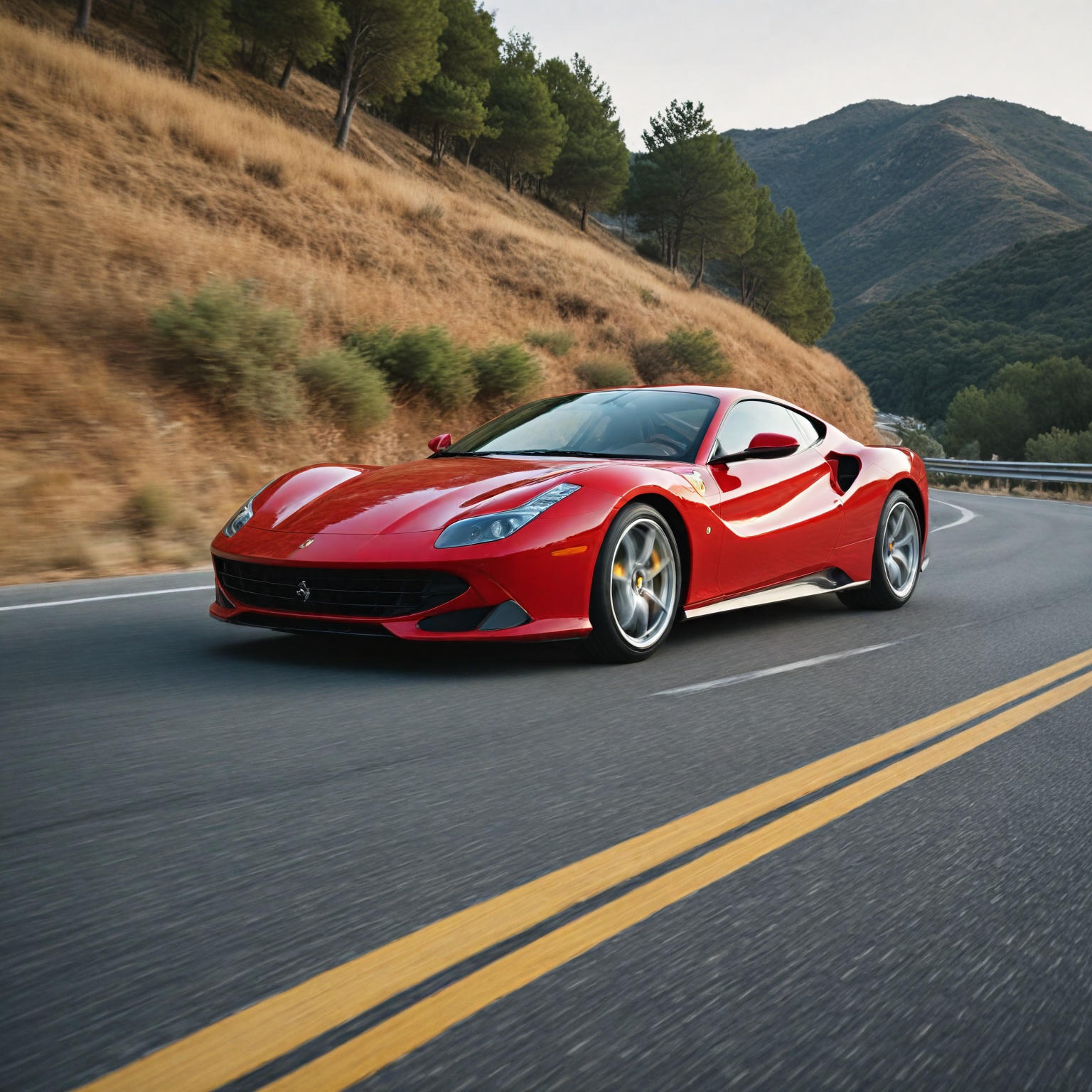
The Ferrari 849 Testarossa serves as the highly anticipated successor to the SF90 Stradale, marking a significant evolution in Ferrari’s flagship supercar lineage. Reviving the legendary Testarossa nameplate from the 1980s, the 849 Testarossa is offered in both coupe and spider variants and stands as the most powerful production Ferrari to date.
Design and Aerodynamics
Contrary to expectations, the 849 Testarossa does not resemble the classic 1980s Testarossa or present itself as a direct evolution of the SF90. Chief designer Flavio Manzoni emphasized Ferrari’s commitment to innovation by creating an entirely new design language, blending influences from 1970s sports prototypes with contemporary aerodynamic advancements. The car’s sharp, geometric lines contribute to a distinctive aesthetic while enhancing performance, generating a total downforce of 415 kg at 250 km/h—an increase of 25 kg over the SF90 Stradale.
One of the car’s most notable visual features is the blacked-out graphic on the nose, which conceals the headlamps and integrates a drop-down LED daytime running light element, offering a modern interpretation of Ferrari’s signature design cues. Ferrari also introduced new exterior colors such as Rosso Fiammante, a metallic evolution of Rosso Corsa, and Giallo Ambra, a warm, amber-inspired hue, complemented by an Alcantara interior option named Giallo Siena.
Powertrain and Performance
The 849 Testarossa retains a plug-in hybrid architecture akin to its predecessor, featuring two electric motors on the front axle and one at the rear that combine to produce 217 hp, supported by a 7.45-kWh battery pack slightly smaller than the SF90’s. The total output of the vehicle reaches 1,034 hp, positioning it just 150 hp shy of the flagship V6-powered Ferrari F80. Significant mechanical enhancements accompany this powertrain, including larger turbochargers and redesigned cylinder heads, engine block, exhaust manifolds, fuel rail, intercooler, intake plenums, titanium fasteners, and valve train system components, underscoring Ferrari’s dedication to technical refinement.
Driving Dynamics and Technology
The 849 Testarossa’s driving dynamics benefit from updated brake-by-wire systems, an advanced ABS Evo controller, and an optimized spring and damper setup that reduces component weight, resulting in improved control and an industry-leading power-to-weight ratio within Ferrari’s lineup. The car’s aerodynamic efficiency is also enhanced, with a 15% improvement in cooling performance compared to the SF90 Stradale. Control logic is finely tuned to manage power distribution for either efficiency or peak performance, adjustable according to driver-selected profiles.
Market Position and Availability
Ferrari plans to release the coupe version of the 849 Testarossa in mid-2026, followed by the spider variant several months later. The launch continues Ferrari’s strategy to blend heritage with cutting-edge technology, targeting a clientele that values exclusivity and innovation while expanding its market presence in luxury and performance segments.
Despite some controversy regarding the use of the Testarossa name on a plug-in hybrid V8 rather than a traditional 12-cylinder engine, the 849 Testarossa epitomizes Ferrari’s ongoing commitment to pushing the boundaries of design and performance in the 21st century.
ASEAN Market Debut
The Ferrari 849 Testarossa made its highly anticipated ASEAN debut in Bangkok, Thailand, marking a significant milestone for the brand in the Southeast Asian region. This event took place at The Pinnacle Hall, ICONSIAM, where the new model was introduced to enthusiasts and potential buyers, showcasing Ferrari’s continued commitment to innovation and performance in the luxury sports car segment.
Replacing the SF90 Stradale, the 849 Testarossa is offered in both coupe and convertible variants, the latter distinguished by the ‘Spider’ moniker, maintaining Ferrari’s tradition of combining cutting-edge hybrid technology with iconic design. The launch event formed part of the “Ferrari 849 Testarossa South-East Asia Premiere” series, which also featured a private viewing of Ferrari’s full range of models, including the Ferrari Roma, SF90 Stradale, and Portofino M, allowing attendees to experience the brand’s craftsmanship and technological advancements firsthand.
Further complementing the launch, Universo Ferrari debuted in Bangkok from November 21 to 25, providing a fully immersive Ferrari experience aimed at both owners and fans, celebrating the brand’s heritage, passion, and innovation in a region identified as crucial to Ferrari’s growth strategy. Southeast Asia, alongside markets such as Australia, Japan, and Korea, has been a strong contributor to Ferrari’s regional growth, recording a 27% increase from 2020 to 2021.
Ferrari’s approach in ASEAN emphasizes not only expanding its product portfolio but also enhancing brand exclusivity and emotional connection with its customers. The regional debut of the 849 Testarossa in Bangkok exemplifies this strategy by engaging a discerning market that values both performance excellence and luxury craftsmanship, strengthening Ferrari’s presence in one of the fastest-growing luxury automotive markets worldwide.
Reception and Media Coverage
The unveiling of the Ferrari 849 Testarossa in Bangkok drew significant attention from both media and automotive enthusiasts across Southeast Asia. The event, held at The Pinnacle Hall in ICONSIAM, was covered extensively by local and international outlets, emphasizing the model’s role in reviving the legendary Testarossa name and Ferrari’s commitment to blending heritage with innovation.
Oto Media Group reported live from Bangkok, highlighting the exclusivity of the launch event and Ferrari’s strategic positioning
Comparison with Predecessors and Competitors
The 849 Testarossa marks a significant evolution from its immediate predecessor, the SF90 Stradale, and pays homage to the original Testarossa that debuted in the 1980s. Unlike the SF90, which featured a sharper and more angular design, the 849 Testarossa adopts a lower stance and a presence that is more commanding and reminiscent of the classic Ferrari silhouette, though opinions on styling remain subjective. The model number “849” refers to the eight cylinders of its V8 engine, each with a displacement of 499 cc, highlighting the engineering focus on precision and performance.
In terms of performance, the 849 Testarossa boasts an extraordinary power output of 1,050 PS and the best power-to-weight ratio Ferrari has ever achieved. However, the engineering emphasis was not solely on raw figures but on creating a superior driver’s car that blends power with control and handling finesse. This approach contrasts with the original Testarossa’s reputation as an “outrageous and eye-catching” design icon of its era, which was produced in relatively large numbers — almost 10,000 units — and featured a rear-mounted, five-speed manual transmission, catering to a different driving experience and market segment.
The SF90 Stradale itself was designed as a cutting-edge hybrid supercar that bridged Ferrari’s racing technology with road car applications, integrating innovations like a carbon-fiber bulkhead and a cockpit with reduced drag, inspired by Ferrari’s supercar lineage. Positioned between the mid-rear-engined F8 Tributo and the hyper-technological LaFerrari, the SF90 set new standards for extreme performance cars infused with advanced technology.
The 849 Testarossa not only builds upon this foundation but seeks to refine it further, emphasizing driver engagement while offering enhanced aerodynamic efficiency and more powerful hybrid systems. Its debut in ASEAN markets like Bangkok symbolizes Ferrari’s strategy to appeal to regions with growing luxury car markets, underlining Singapore’s role as a symbolic operational hub in this strategy.
Impact on Ferrari’s Brand and Market in ASEAN
Ferrari’s presence and growth in the ASEAN region have been notably significant, contributing to the brand’s overall expansion strategy in Asia Pacific. Since the appointment of the regional head overseeing Ferrari’s operations across North East Asia, Southeast Asia, and Australasia in 2015, the company has strategically expanded its market coverage to include the Middle East and India from 2016, consolidating a strong network and fostering deeper market penetration. The ASEAN markets, along with countries like Japan, Korea, Australia, and New Zealand, have exhibited robust growth, with Southeast Asia alone contributing to a 27% sales increase in 2021 compared to the previous year.
Ferrari’s approach in ASEAN emphasizes maintaining the brand’s exclusivity while adapting to evolving customer preferences and regional market dynamics. The introduction of the Ferrari Purosangue, the brand’s first SUV, reflects Ferrari’s intent to broaden its appeal to new customer segments within these markets, without compromising its performance heritage. This balanced strategy has helped Ferrari sustain its prestige and desirability among affluent buyers who value both luxury and emotional connection to the brand.
The launch events and immersive experiences such as the Ferrari 849 Testarossa premiere in Bangkok, alongside Universo Ferrari’s South-East Asian debut, further reinforce Ferrari’s cultural and emotional resonance in the region. These events highlight Ferrari’s commitment to celebrating its heritage and innovation, effectively engaging both existing customers and enthusiasts. The Testarossa, with its blend of modern aerodynamics and homage to classic Ferrari design, embodies the brand’s ethos and serves as a tangible symbol of Ferrari’s elevated status within the ASEAN luxury automotive market.
The content is provided by Harper Eastwood, Gear Shift Zone