Summary
The recycling process of Electric Vehicle (EV) batteries is a crucial aspect of fostering a sustainable transportation ecosystem. The life of an EV battery is multi-faceted, beginning with its production, functional usage, and ending with its disposal, which often includes a complex recycling process. These batteries consist of numerous valuable and potentially hazardous materials like nickel, cobalt, and lithium that require efficient management once their utility in powering vehicles has ceased. The recycling process, primarily employing pyrometallurgical or hydrometallurgical methods, aids in the extraction of these metals for reuse, thereby reducing the need for fresh mining.
Beyond immediate recycling, many EV batteries can be repurposed for a variety of uses before undergoing recycling, including serving as a power source in less demanding devices or as an energy storage unit in other manufacturing processes. There are also growing initiatives to design batteries with recycling in mind, to ensure ease of disassembly and maximize material recovery. Nonetheless, the recycling process is not without its challenges, with current techniques being energy-intensive and potentially generating secondary harmful emissions. Moreover, economic factors often render it cheaper for battery manufacturers to use freshly mined metals rather than recycled ones.
The potential environmental impacts of battery disposal necessitate the need for effective recycling methods. Improper disposal of EV batteries risks soil and water contamination due to their toxic material composition. However, successful recycling can contribute to environmental preservation and offers potential economic benefits by creating jobs and increasing supplies of crucial battery metals. Despite existing challenges, the future of EV battery recycling will be shaped by technological innovations, improved battery design, and collaborative efforts towards more sustainable practices. As such, the life cycle of an EV battery encapsulates not only a technological journey but a significant environmental responsibility.
Electric Vehicle (EV) Batteries
Electric Vehicle (EV) batteries are not only made up of valuable metals like nickel and cobalt, but are also comprised of materials such as plastics, copper, aluminum and other constituents that may not be completely recovered in the recycling process due to their lower value. Consequently, materials that aren’t recycled must either be discarded in landfills or safely stored if they are too hazardous.
Battery Life and Reuse
Upon reaching the end of their effective lifespan in vehicles, many EV batteries could potentially be repurposed instead of being immediately recycled. An older battery might not be viable for long-distance driving but could still have enough storage capacity for other uses. For instance, used batteries could be employed to provide backup power during periods of high demand on the electricity grid. They could also be utilized as a power source in less demanding devices such as electric scooters or bicycles, or in other manufacturing processes as an energy storage unit.
Recycling Process
The process of recycling EV batteries is typically undertaken either through pyrometallurgical or hydrometallurgical methods. Pyrometallurgical recycling, while energy-intensive, involves subjecting battery parts to high temperatures to extract metals, whereas hydrometallurgical recycling involves the use of chemical solutions to leach out metals. The output from hydrometallurgical recycling can vary depending on the chemicals and processes used.
Environmental Impact
The practice of recycling EV batteries is of critical importance to a sustainable transportation system. It has been projected that by 2050, a substantial portion of key minerals needed for electric vehicles could be sourced from recycled batteries, thereby significantly reducing the necessity for new mining. Notably, the methods of recycling used can make a significant difference, with recycling processes with high mineral recovery rates and lower environmental impacts being preferable.
There is also a significant economic factor at play, as it is often cheaper for battery manufacturers to use freshly mined metals than recycled ones. Improved recycling methods, however, could not only help prevent pollution but also boost economic and national security by increasing supplies of crucial battery metals.
Designing for Sustainability
Increasing the sustainability of battery supply chains through recycling can further augment the emissions reduction benefits already offered by electric cars. This includes designing batteries with recyclability in mind, improving battery design for easier disassembly and material recovery, and encouraging manufacturers to adopt sustainable practices throughout the product life cycle.
However, if not disposed of carefully, EV batteries could negate the positive environmental impact of electric vehicles as they contain toxic materials such as lithium, cobalt and nickel, which if left in landfills, can leak into the soil and groundwater, creating significant environmental hazards. By recycling these batteries, toxic materials can be reused in the production of new batteries, saving the need to mine for new ones.
Despite the possible challenges and concerns, the future of EV battery manufacturing largely depends on adopting holistic approaches that prioritize sustainability, resource efficiency, and environmental responsibility.
The Lifecycle of an Old EV Battery
An Electric Vehicle (EV) battery is made up of a multitude of materials, including nickel, cobalt, plastics, copper, aluminum, and other materials. Once these batteries have reached the end of their useful lifespan, they typically undergo a complex recycling process. Recycling is not only a strategy to manage waste but also an effective method of transforming discarded materials into new products. This recycling process plays a significant role in preserving the environment, reducing carbon dioxide emissions, and minimizing waste.
The lifecycle of an old EV battery begins with collection and sorting. Different battery types require various handling processes to prevent cross-contamination. The batteries are then sent to a recovery facility where they are sorted, cleaned, and processed into materials that can be used in manufacturing.
An older EV battery, despite not being useful for long-distance driving, may still have enough storage capacity to find a second life elsewhere. Such batteries could be used to ease strain on the power grid by providing backup electricity when it’s needed most. However, even if they don’t find a second life as a power source, many parts of used EV batteries contribute to the production of new packs.
The recycling process of old EV batteries is intended to reduce the environmental footprint associated with disposing of used batteries in landfills or virgin material mining and refining. However, it should be noted that the process of recycling can consume considerable amounts of electrical and thermal energies, which may also generate secondary toxic gaseous emissions, water contaminants, and other gaseous and solid residues.
Advancements in digital technology are providing significant contributions to the expansion of EV battery recycling. Improved recycling processes driven by technological innovations are reducing the carbon footprint, creating economic returns and positioning businesses as greener choices in the market.
Deep Dive into the EV Battery Recycling Process
The Electric Vehicle (EV) battery recycling is a pivotal step towards fostering a sustainable, electrified transportation system. It is surmised that by 2050, a large part of key minerals needed for electrification could be obtained from recycled batteries. This significantly lessens the demand for fresh mining and underlines the importance of a recycling process characterized by high mineral recovery rates and reduced environmental impact.
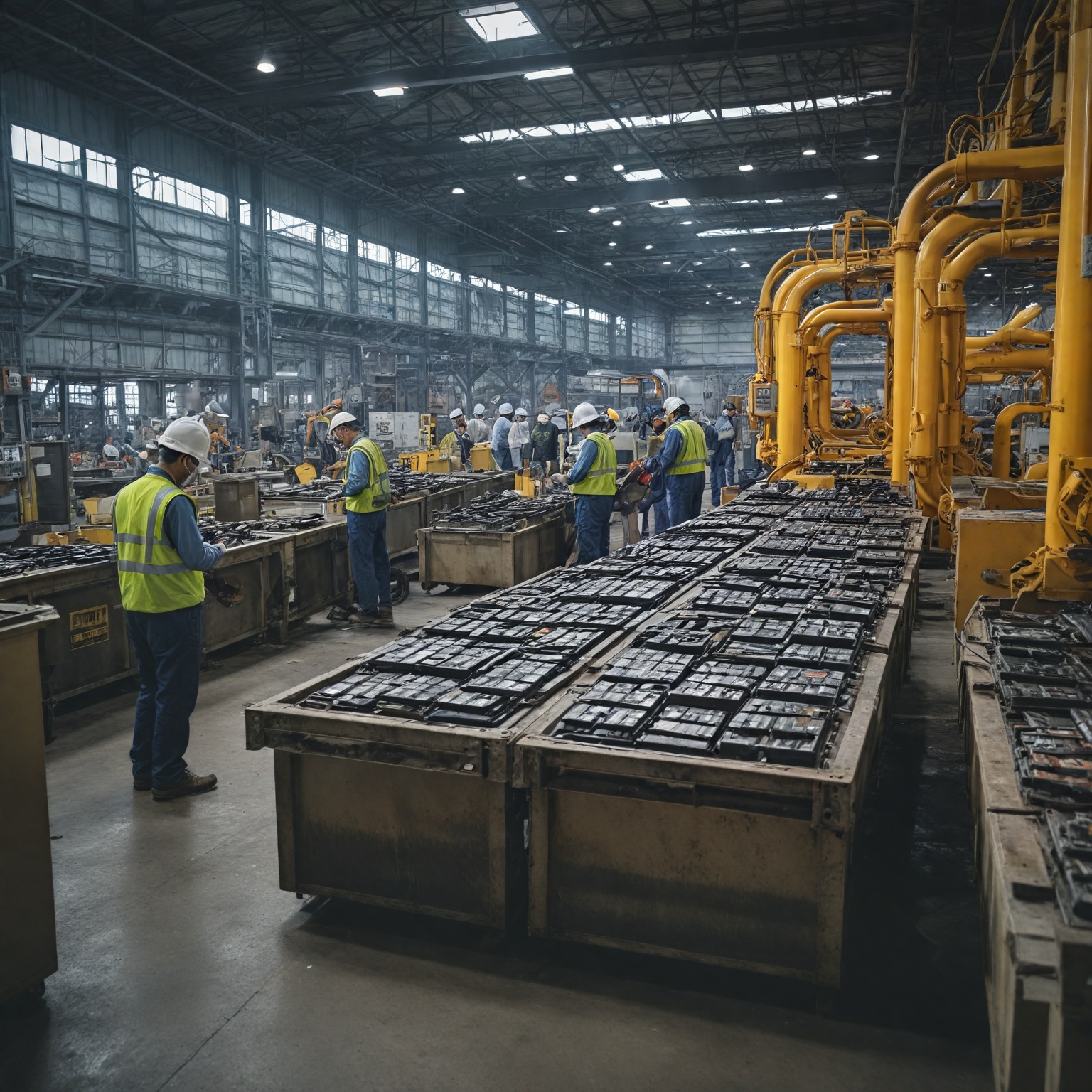
The recycling process begins with the collection of old batteries, which are then transported to a recovery facility. Here, the batteries are segregated based on their type and chemistry, as different battery types necessitate distinct recycling methodologies. Once sorted, the batteries are shredded into smaller pieces to facilitate the separation of different battery components like lead, nickel, and cadmium.
The shredded battery pieces are then subjected to smelting in a furnace, allowing for the extraction of valuable metals like lead and copper from plastic and other materials. The metals derived from the smelting process are subsequently purified to remove any impurities.
Redwood, a notable player in the field, uses a combination of these two processes. Their approach incorporates pyrometallurgy to burn batteries and remove unwanted organic materials and plastics, and hydrometallurgy, which involves the leaching of lithium-ion cells in acids to dissolve the metals into a solution.
However, the journey to achieving effective EV battery recycling is not without its challenges. But through innovative technologies, second-life applications, and collaborative efforts, substantial progress can be made to improve recycling rates and diminish the environmental impact of EV batteries. For instance, potential improvements in the deconstruction process through EV and battery design could include the use of binders instead of adhesives and standardization among pack designs. Currently, disassembly is a manual process, but if batteries are standardized and built to be disassembled, smart robots could be enlisted for the job. If extended producer responsibility is established, the design for disassembly and recycling is naturally incentivized.
Challenges and Opportunities in Battery Recycling
Battery recycling is an essential activity aimed at reducing the number of batteries disposed of as municipal solid waste. Various types of batteries like alkaline, lithium-ion, etc., contain heavy metals and toxic chemicals, the disposal of which raises concerns over soil contamination and water pollution. Therefore, the collection and sorting of used batteries are the first crucial steps in battery recycling, requiring a well-organised system to prevent cross-contamination.
Opportunities in Battery Recycling
Despite the challenges, there are numerous opportunities in the battery recycling sector. Technological innovations are improving recycling processes and, in turn, reducing the carbon footprint. This progress opens a window for greater economic return, as businesses can position themselves as a greener choice in the market. Government grants, incentives, and research are also driving progress in this space.
Several strategies have been proposed to overcome the challenges in battery recycling. These include increased funding for innovations in recycling technology, financial support for pilot projects, and market-pull measures aimed at creating a conducive economic and regulatory environment for large-scale used Electric Vehicle (EV) battery recycling.
Moreover, digital technologies offer significant potential for expanding the recycling of EV batteries. They can enhance traceability, efficiency, and sustainability in the recycling process. Investment in the research and development of more efficient and less capital-intensive recycling technologies is also recommended, such as direct recycling, which can reduce operating costs significantly. These efforts can pave the way for the development of more profitable recycling processes and building the necessary infrastructure for the recycling of millions of EV batteries reaching the end of their lifecycle.
Finally, a shift toward a circular economy approach can help improve resource efficiency, decrease environmental pollution, and support various Sustainable Development Goals (SDGs). This shift aligns with global environmental ideals and offers economic potential, including job creation, innovation, and market leadership. It ensures that reuse and recycling principles are integrated throughout the resource lifecycle, leading to reduced waste and increased utility beyond the initial stages.
However, more comprehensive and coordinated federal responses are needed to make a large-scale impact on meeting the demand for recycled materials. It is also crucial to ensure the conscientious fulfillment of the increasing need for recycled materials through better processes to manufacture and dispose of batteries and better ways to preserve virgin materials.
Challenges in Battery Recycling
Recycling used batteries aims to reduce the negative environmental impacts associated with sending them to landfills and the extraction and refining of virgin materials. However, recycling processes often consume significant amounts of electrical and thermal energy, potentially leading to secondary toxic gaseous emissions, water contaminants, and other unwanted residues. Furthermore, collecting and transporting used batteries may consume substantial energy, thereby negatively impacting the environment. Additionally, there are concerns about the social, environmental, and integrity risks associated with the extraction and refining of raw materials.
In addition, current recycling methods like heat-based smelting (pyrometallurgy) and liquid-based leaching (hydrometallurgy) have limitations. Current technologies may not be able to fully extract all valuable components from discarded batteries, leading to inefficiencies and potential financial setbacks. Furthermore, regulatory frameworks vary regionally, complicating international recycling initiatives, and developing nations may struggle with inadequate recycling infrastructure.
The Environmental Impact of Battery Disposal and Recycling
Battery recycling is a necessary endeavor aimed at reducing the amount of batteries being disposed of as municipal solid waste. Batteries are comprised of numerous heavy metals and toxic chemicals, and disposing them in the same way as regular household waste poses significant risks for soil contamination and water pollution. An important part of the battery recycling process is the proper collection and sorting of used batteries, as different battery types require different handling processes.
The increase of e-waste due to most modern devices requiring batteries is another concerning issue. In response, recycling efforts are being pushed, which typically involve collecting, sorting, preparing, and then recycling and recovering materials. Unfortunately, not all components within a battery are recycled due to their lack of value. These non-recyclable materials often end up in landfills or, in the case of particularly hazardous materials, are stored safely.
From an environmental and health perspective, the collection and recycling of EV batteries is crucial. If not properly disposed of, these batteries could pose a fire risk or result in land and water contamination due to the release of toxic chemical substances. Therefore, improving battery recycling methods could serve to mitigate these risks and contribute to a more sustainable and environmentally friendly future.
The content is provided by Blake Sterling, Gear Shift Zone