Summary
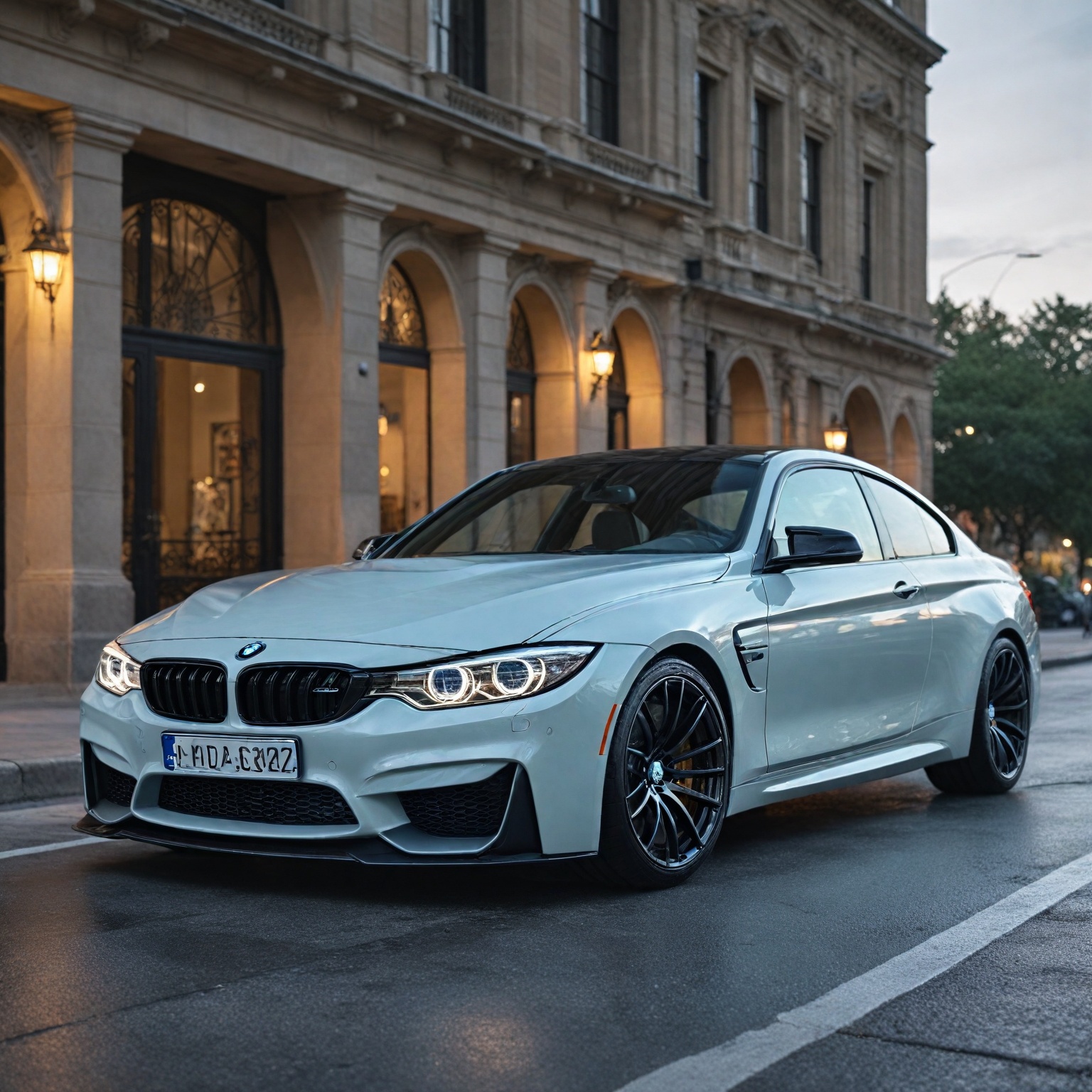
The BMW M3 and M4 represent the pinnacle of BMW’s high-performance compact executive cars, rooted in a rich motorsport heritage dating back to the original E30 M3 introduced in 1986. Initially developed as a homologation special for touring car racing, the M3 established itself as an icon for combining race-bred engineering with everyday usability. Since 2014, BMW restructured its lineup by separating the coupe and convertible versions of the 3 Series into the newly created 4 Series, with the high-performance coupe adopting the M4 name while the M3 badge remained exclusive to sedan and estate models.
Sharing a common engineering platform, the M3 and M4 feature advanced lightweight construction, adaptive suspension systems, and powerful 3.0-liter twin-turbocharged inline-six engines producing up to 543 horsepower in the latest M4 CSL variant. Despite their mechanical similarities, the M3 sedan prioritizes practicality and comfort with its four-door layout, whereas the M4 coupe emphasizes sportier styling, lighter weight, and enhanced driver engagement, catering to different preferences within the performance segment.
Both models offer a range of drivetrain configurations, including traditional rear-wheel drive with manual transmission and the optional M xDrive all-wheel-drive system paired with an eight-speed automatic, balancing pure driving dynamics with all-weather capability and traction control innovations. Over the years, BMW has also released numerous special editions and limited-production variants of the M3 and M4, underscoring their exclusivity and continuing legacy in motorsport and enthusiast communities.
While the M3 and M4 have been widely praised for their blend of modern technology, performance, and usability, some critics and purists debate the shift toward greater electronic assistance and diminished tactile feedback in the latest models. Nonetheless, the pair remain central to BMW’s performance lineup, offering distinct yet complementary experiences that have maintained their status as benchmarks in the high-performance luxury segment.
History and Development
The BMW M3 and M4 have their roots deeply embedded in the evolution of BMW’s high-performance 3 Series models. The original M3 was introduced based on the E30 3 Series as a homologation special designed to meet the requirements of the Deutsche Tourenwagen Meisterschaft and Group A Touring regulations, which mandated the production of 5,000 base models and an additional 500 “Evolution” specials. The initial M3 generation featured a naturally aspirated M10 four-cylinder engine with a cylinder head derived from the legendary BMW M1 engine, captivating customers with its performance and engineering pedigree.
In 1987, BMW released the “Evolution” model (also known as EVO1), which, although not officially designated as an Evolution by BMW, included a revised cylinder head to improve performance while maintaining the same power output as the standard E30 M3. To maintain competitiveness in the 1988 racing season, BMW introduced the Evolution 2, with only 501 units produced. This version incorporated a revised camshaft, new pistons, and an increased compression ratio from 10.5:1 to 11.0:1, along with a more efficient air intake and a lightened flywheel. The Evolution 2 also featured visual updates, such as the BMW Motorsport tricolour camshaft and intake plenum cover.
Since 2014, BMW restructured its 3 Series lineup by separating the coupe and convertible models into the newly created 4 Series. Consequently, the high-performance coupe variant adopted the M4 name, while the M3 badge remained reserved for the sedan models. This change marked the end of the M3 coupe as the M4 assumed that role, spawning variants like the M4 Competition and the M4 CSL. The second generation of the M4 was introduced in 2020 and later refreshed in 2024 alongside the rest of the 4 Series coupe and convertible lineup.
The most recent generation of M3 and M4 models, based on the G80/81 platform for the 2021 model year, saw a significant increase in performance, with both models eclipsing 500 horsepower. Notably, the 2023 BMW M4 CSL, carrying the iconic “CSL” moniker, delivers 543 hp and showcases BMW M’s commitment to blending raw performance with everyday usability. The development of these models places a strong emphasis on driving dynamics, chassis precision, and comfort, highlighting BMW M’s focus on enhancing the overall driving experience through technical innovations and meticulous engineering.
Design and Engineering
The BMW M3 and M4 share a common engineering foundation but exhibit distinct differences in design and technical specifications that cater to varied driving preferences and practical needs. Both models incorporate advanced lightweight construction techniques, with extensive use of carbon fiber components such as the boot lid, engine brace, and the coupe roof (except when an optional sunroof is installed), contributing to weight savings and structural rigidity. The European-spec M4 coupe with a manual transmission weighs approximately 1,572 kg (3,466 lb), while the dual-clutch M-DCT variant is about 40 kg (88 lb) heavier, yet still around 80 kg (176 lb) lighter than its E92 M3 predecessor.
In terms of body style, the M3 is a four-door sedan that balances performance with practicality, offering additional rear passenger space and greater trunk capacity, making it well-suited for everyday usability. Conversely, the M4 is a two-door coupe emphasizing a sleeker, more aggressive design and a sportier driving experience, partly due to its lighter weight and stiffer chassis. The M4’s coupe configuration prioritizes driver engagement and road feedback, albeit at the expense of rear-seat accessibility and ride comfort over uneven surfaces. Meanwhile, the M3’s extra weight and suspension tuning deliver a smoother ride and enhanced comfort, benefiting daily commutes and passenger accommodation.
Both vehicles employ a sophisticated adaptive M suspension system that allows drivers to select between comfort, sport, and track-focused settings, optimizing driving dynamics according to conditions. The chassis features multi-link strut construction, which provides excellent steering precision and reduces weight through fewer components. Notably, there is no camber adjustment at the front axle, but the shock absorbers have been further refined with a specific hydraulic setup to enhance performance and comfort. The steering system in the latest M3 and M4 models utilizes an electric power steering unit, a first for these models, although it has received some criticism for lacking tactile feedback.
Aerodynamically and stylistically, both cars exhibit hallmark M design elements including the distinctive M mirrors, contrasting carbon fiber roofs, and prominent wheel arches—particularly pronounced on the rear wheels of the M3 sedan. Additional aerodynamic features include carbon fiber side skirts, splitters, diffusers, canards, and the M Performance exhaust system, all contributing to both visual aggression and improved airflow management. The 2025 M3 model introduces further enhancements such as a rear lip spoiler, split LED taillights between the quarter panels and trunk lid, and a large diffuser integrating quad exhaust outlets, underscoring its performance character.
Inside, both models emphasize driver-focused ergonomics and advanced technology. The BMW Curved Display, powered by Operating System 8.5, combines a digital instrument cluster and infotainment screen under a seamless curved glass panel, controllable via touch or voice commands. The interior sports bold carbon fiber trim elements, including M Carbon steering wheels and shift paddles, complemented by high-bolstered front seats with optional carbon fiber shell designs that enhance sportiness and support. These details reflect BMW M’s commitment to merging high-performance engineering with refined style and cutting-edge technology.
Performance Specifications
Both the 2025 BMW M3 and M4 are powered by a 3.0-liter twin-turbocharged inline-six engine, delivering exhilarating acceleration and precise handling. Despite sharing the same engine and drivetrain architecture, subtle differences in weight, drivetrain configurations, and tuning create distinct driving experiences between the two models.
The engine in these models produces power outputs ranging approximately from 353 kW to 405 kW (473 to 543 hp), with peak torque reaching up to 550 Nm from 1,850 rpm, enabling high-revving performance up to 7,600 rpm. The BMW M4 Competition Coupé with M xDrive delivers up to 390 kW (530 hp) on the road, characterized by strong power development and the signature M sound. Both vehicles feature advanced transmission options, including a manual gearbox and the M-DCT dual-clutch transmission, with the latter providing quicker acceleration times—launching from 0 to 62 mph in 3.9 seconds compared to 4.1 seconds for the manual transmission.
Weight plays a pivotal role in differentiating performance between the M3 and M4. The European specification M4 coupe with a manual transmission weighs approximately 1,572 kg (3,466 lb), increasing by about 40 kg (88 lb) with the M-DCT transmission. This weight is roughly 80 kg (176 lb) lighter than the previous E92 M3 generation. While the M3 saloon is just 5 kg heavier than the M4 coupe, its altered weight distribution makes it slightly less engaging to drive, although most drivers may not notice this difference in everyday use. The M4 GTS variant further enhances performance by raising power output to 368 kW (500 PS; 493 hp) and reducing weight by 27 kg (60 lb) compared to the standard M4 with the DCT transmission.
Drivetrain configurations also influence performance characteristics. The introduction of BMW’s M xDrive system, an electronically controlled all-wheel-drive setup with a multi-plate clutch enabling variable torque distribution, is available on both the M3 Competition Sedan and M4 Competition Coupé. This system is calibrated for dynamic handling and track capability, supported by a redesigned double-joint spring strut front axle and tailored steering ratio. In 4WD Sport mode, the system permits more rear-wheel slip before engaging the front axle, enhancing driving dynamics.
Acceleration figures reflect these specifications: the M4 Competition Coupé with rear-wheel drive achieves 0 to 100 km/h in 3.9 seconds, dropping to 3.5 seconds with M xDrive. The standard M4 Coupé records 4.2 seconds for the same sprint, while the M3 Saloon matches the M4 Coupé’s acceleration closely despite its marginally higher weight. Both models maintain a top speed electronically limited to 250 km/h.
Drivetrain Configurations
The BMW M3 and M4 both offer distinctive drivetrain setups that cater to different driving preferences and performance demands. Traditionally, the M3 and M4 come standard with rear-wheel drive paired with a six-speed manual transmission, delivering power exclusively to the rear wheels and providing a pure, engaging driving experience favored by enthusiasts.
However, for those seeking enhanced traction and all-weather capability, BMW offers the optional M xDrive all-wheel-drive system, which is exclusively available with an eight-speed automatic transmission. This system features an electronically controlled multi-plate clutch in the transfer case that allows for fully variable and smooth distribution of torque between the front and rear axles, with a bias toward the rear wheels to maintain the characteristic sporty driving dynamics of M cars. The torque split is not fixed; instead, it dynamically adjusts to driving conditions, ensuring optimal grip and performance whether on the track or everyday roads.
Complementing the M xDrive system is the Active M Differential at the rear axle, which provides variable torque distribution between the rear wheels to maximize traction during cornering and acceleration, especially under hard driving or low-grip scenarios. Both the M3 Competition Sedan and M4 Competition Coupé equipped with M xDrive benefit from a specially redesigned front axle and tailored steering ratio to accommodate and enhance the all-wheel-drive setup.
Model Variants and Trims
The BMW M3 has traditionally been produced as a saloon, with its first incarnation based on the E30 3 Series, initially designed as a homologation special to meet Deutsche Tourenwagen Meisterschaft (DTM) and Group A Touring regulations. Early M3 models were offered primarily in coupé form, with convertibles introduced shortly after. The E36 generation (1994–1999) marked the first time M3 saloons were widely available, a trend that continued with the E90 generation (2008–2012). Notably, in 2020, BMW expanded the M3 lineup by introducing an estate (Touring) variant alongside the traditional saloon for the first time.
Since 2014, a significant change occurred in BMW’s model nomenclature: the coupé and convertible versions of the 3 Series were rebranded as the 4 Series, with their high-performance counterparts becoming the M4. This split effectively separated the M3 as the high-performance saloon and estate, while the M4 took over the sporty two-door segment. The F80 M3, introduced at the 2014 Detroit Auto Show, featured the return of a six-cylinder engine—the S55 twin-turbocharged 3.0-liter inline-six producing 425 hp and 416 lb-ft of torque—delivering brisk acceleration and enhanced performance. This model also marked the end of the M3 coupé and convertible, which transitioned fully to M4 badging.
Trim levels for both the M3 and M4 include base and Competition variants, with options such as rear-wheel drive or BMW’s xDrive all-wheel-drive system available. The M3 Competition models typically offer enhanced performance features and slightly higher pricing, with starting costs around $74,300 for the M3, excluding additional costs for Competition and xDrive versions.
Special editions have also been part of the M4 lineup, such as the limited-production M4 Edition M Heritage, which capped production at 750 units worldwide and featured unique color options like Laguna Seca Blue, Velvet Blue Metallic, and Imola Red. These editions usually build on the M4 Competition platform, emphasizing exclusivity and heritage.
While the M3 saloon closely matches the M4 coupé in performance and acceleration—being only marginally heavier—it differs in driving dynamics due to weight distribution changes. Despite this, both models remain highly engaging and enjoyable to drive. The M3 Touring stands out as an unconventional yet highly praised variant, blending estate practicality with BMW M’s signature performance credentials.
Technology and Innovations
The BMW M3 and M4 models incorporate advanced technologies and innovations that enhance driving dynamics, comfort, and precision, reflecting BMW’s commitment to delivering a superior driving experience. Both vehicles benefit from continuous advancements in wheel suspension, spring technology, damping, steering, and braking systems, with innovations often originating from higher-segment vehicles before being integrated into these models.
Central to their performance is BMW’s M Drive system, which allows drivers to customize various aspects of the car’s behavior, including steering feel, throttle response, and suspension stiffness. This system enhances adaptability by enabling multiple performance settings tailored to different driving conditions and preferences. Complementing this is an M-specific traction control system offering several levels of slip control to maintain optimal grip across diverse surfaces.
The M3 and M4 also utilize an intelligent all-wheel-drive system paired with the Active M Differential, which actively distributes drive torque variably between the rear wheels. This feature maximizes power transfer to the road, particularly during aggressive driving or when traction is compromised on one side, thereby enhancing stability and handling. The M4’s slightly lighter coupe chassis further contributes to its heightened responsiveness compared to the M3, which balances high performance with everyday practicality.
Inside the cabin, both models showcase a premium, driver-focused environment equipped with M-specific displays and high-quality materials. A notable innovation is the integration of a 14.9-inch curved touchscreen infotainment system running BMW’s iDrive 8.5 software, providing advanced connectivity and an intuitive user interface. These technological enhancements, combined with the engineering refinements, define the modern character of the BMW M3 and M4, appealing
Comparison of M3 and M4
The BMW M3 and M4 share many core components, including engines, transmissions, and technology, making their performance capabilities closely matched. Both models are powered by a 3.0-liter twin-turbocharged inline-six engine, delivering thrilling acceleration and precise handling. However, subtle differences in body style, weight, and chassis tuning influence their driving characteristics and practical use.
A primary distinction between the two lies in their body configurations: the M3 is offered as a four-door sedan, while the M4 is a two-door coupe or convertible. This difference affects not only aesthetics but also utility; the M3’s sedan layout provides greater everyday practicality, making it a preferred choice for buyers who need rear passenger access and a more spacious cabin. Meanwhile, the M4’s coupe design results in a lighter curb weight, contributing to a more agile feel and firmer ride, particularly noticeable during dynamic driving on tight corners or smooth surfaces.
In terms of suspension, both models feature adaptive M suspension that can be adjusted for comfort, sport, or track-focused settings. The M3’s slightly heavier build offers a smoother and more forgiving ride on uneven or rough pavement, which can be advantageous for daily commuting. Conversely, the M4’s stiffer chassis and reduced weight provide enhanced road feedback, appealing to drivers who prioritize performance and sharp handling.
Although their powertrains are nearly identical, differences in weight distribution and chassis tuning contribute to unique driving experiences. Both vehicles incorporate advanced suspension technologies, such as double-joint tension-rod front suspension and five-link rear axles, combined with lightweight construction and energy-efficient steering systems, maintaining BMW’s reputation for driving pleasure and agile handling.
When considering the choice between the two, personal preferences regarding body style and intended use are significant factors. The M3’s four-door design suits those seeking a balance of performance and practicality, whereas the M4 caters to enthusiasts desiring a sportier, more traditional coupe experience without sacrificing power or technology. Pricing, fuel economy, and standard features are also comparable, though final decisions often come down to individual lifestyle needs and aesthetic preferences. Overall, both models offer incredible power and driving dynamics, resulting in a tie when it comes to performance capabilities.
Special Editions and Limited Production Models
BMW has produced several special editions and limited production models of the M3 and M4, emphasizing exclusivity, performance, and heritage. One notable example is the M4 Velocity Edition, which comes exclusively in “Fashion Grey Metallic” and includes the Competition Package. This edition is limited to just 20 units, each featuring a laser-engraved dash and engine strut denoting its production number.
To commemorate the 50th anniversary of BMW M GmbH, the M4 Edition 50 Jahre BMW M was introduced in Europe and select markets. This exclusive two-door Coupé is available in several BMW Individual colors, including Carbon Black, Macao Blue, Brands Hatch Grey, Imola Red, and San Marino Blue. Production was capped at 700 units for the M4, alongside 500 units for the corresponding M3 edition.
Another highly sought-after special model is the M4 Edition M Heritage, limited to 750 units worldwide, with 75 allocated to the UK. Based on the M4 Coupe and powered by the M4 Competition engine, this edition was offered in three distinctive colors: Laguna Seca Blue, Velvet Blue Metallic, and Imola Red.
In the racing domain, the BMW M4 GT3 stands out as a competition-focused variant homologated under the FIA Group GT3 category. Intended as the successor to the BMW M6 GT3, it made its racing debut in the 2022 season. The M4 GT3 utilizes a race-prepped version of the inline-six engine found in the road-going M4, enabling participation in SRO, IMSA, and ADAC events.
Among the most legendary and collectible M models is the M3 CSL (Coupé Sport Lightweight), renowned for its lightweight construction and exceptional performance. The M3 CSL has earned a revered status among enthusiasts and collectors due to its rarity and engineering excellence.
Most recently, the 2023 BMW M4 CSL marked a significant milestone, reviving the iconic CSL badge with a 543 hp sports coupe that balances extreme performance with a distinctive, albeit polarizing, design. This model is widely regarded as a standout within the latest generation of M cars, setting a new benchmark for the M4 lineup.
These special editions and limited production models not only highlight BMW’s commitment to performance and exclusivity but also serve to deepen the legacy and appeal of the M3 and M4 within the high-performance automotive segment.
Motorsport Heritage
The BMW M3’s motorsport legacy began with the E30 model in 1986, marking the start of a success story that continues across more than six generations. The E30 M3 was designed with extensive input from BMW Motorsport, retaining some elements from the series production model but featuring numerous newly developed or adapted components to enhance its racing capabilities. The car’s maximum torque ranged between 230 and 240 Nm, showcasing its compact yet strong and sporty character.
One of the defining aspects of the E30 M3 was its durability and performance, tested rigorously on the demanding Nürburgring Nordschleife, famously known as the ‘Green Hell.’ The experience gained from this track ensured that both series and racing versions were robust enough to endure extreme conditions. The M3 also completed a 150,000-kilometre high-speed test at Italy’s Nardo Ring, further proving its endurance and reliability. Over its five years of production, the car’s performance steadily improved; notably, the 1988 Evolution version featured an increase to 220 hp and a top speed of 243 km/h. This model eventually became the most successful touring car in racing history.
In racing, the E30 M3 demonstrated its strengths primarily on asphalt surfaces. By 1993, race cars based on the M3 were equipped with six-speed gearboxes and produced up to 296 hp (221 kW). Despite being less competitive on loose surfaces compared to four-wheel-drive rivals, the M3 claimed significant victories, including the Tour de Corse in 1987 with Bernard Béguin behind the wheel. Additionally, the E30 M3 body combined with a 2.0L version of the S14 engine dominated the Australian 2.0 Litre Touring Car Championship, winning the title in 1993.
Following the E30, the E36 M3 continued BMW’s involvement in motorsport, even as BMW withdrew from the Deutsche Tourenwagen Meisterschaft (DTM) to focus on the Super Tourenwagen Cup with other models. The E36 M3 still competed in various racing series, including the German ADAC GT Cup, where the E36 M3 GTR secured victory in 1993 with Johnny Cecotto driving. The M3 GT also participated in the European FIA GT Championship, while in the United States, the Prototype Technology Group ran the E36 M3 in the IMSA GT Championship.
The transition from the M3 to the M4 marked a shift in BMW’s motorsport focus, with the M4 becoming the principal model for racing activities. The modern M4 Competition M xDrive incorporates advanced motorsport technologies, elevating driving dynamics on both racetrack and road. It features the potent S58 inline-six engine, delivering 530 hp (390 kW), underscoring BMW M’s continued commitment to blending aesthetics with high-performance motorsport heritage.
Reception and Reviews
The BMW M3 and M4 have garnered considerable attention and discussion within automotive communities and enthusiasts alike. Online forums and social media platforms reveal a vibrant exchange of opinions, with posts such as those by u/bimmer_plug and u/the_gamer_m7 receiving hundreds of votes and comments, indicating strong engagement and interest in the subject.
Critics and fans acknowledge that while the current generation of M3 and M4 may not appeal to purists seeking a traditional, raw driving experience, their blend of modern technology, everyday usability, and impressive performance make them compelling choices. The combination of power, reliability, and convenience provides a strong case for these models as practical yet thrilling vehicles for daily use. For those desiring a more classic, unfiltered driving feel, earlier generations of the M3 are often recommended, as each offers unique characteristics that stand apart from the current technologically advanced iterations.
Ultimately, the decision between the M3 and M4 often hinges on individual preferences and requirements—both in terms of daily practicality and emotional connection to the car’s appeal. Many enthusiasts consider which model will leave a lasting impression as they walk away, highlighting the importance of subjective experience alongside technical merits.
Sales and Market Impact
The BMW M3 and M4, while closely related in terms of engineering and performance, have distinct roles in the automotive market, which affects their sales dynamics. Both models are often compared based on price, fuel economy, and standard features, factors that influence consumer choice and market reception.
A notable market strategy involves the production of limited edition BMW M4 Coupés specifically for the Chinese market, where special exterior paint finishes such as Fire Orange and Stratus Grey have been introduced. These editions coincide with the celebration of BMW M GmbH’s anniversary in China during the Year of the Tiger, highlighting BMW’s targeted marketing efforts to enhance brand presence and exclusivity in this key region.
Furthermore, innovations focusing on driving experience, including dynamics, comfort, and precision, are emphasized by BMW M developers. Such enhancements are integral to maintaining the strong market position of both the M3 and M4, appealing to driving enthusiasts and contributing positively to their sales and market impact.
Future Developments and Upcoming Models
Speculation surrounding future iterations of the BMW M3 and M4 has been a point of interest among enthusiasts and industry watchers alike. One notable rumor that garnered attention was the potential introduction of an M4 Gran Coupé, which would have further blurred the lines between the traditionally four-door M3 and the two-door M4. However, BMW has reportedly ruled out the possibility of launching an M4 Gran Coupé in the near future, maintaining the current distinction between the two models based primarily on their body styles.
Looking ahead, while both the M3 and M4 continue to impress with their blend of performance, technology, and everyday usability, those seeking a more classic or “raw” driving experience might consider exploring previous generations of the M3. These earlier models offer a distinct character that contrasts with the modern, technology-rich approach of the latest versions. As BMW evolves its performance lineup, the focus remains on balancing cutting-edge advancements with the driving dynamics that have made these cars icons in their segment.