
Revolutionize Your Restoration Project with an Auto Rotisserie – 360-Degree Car Body Spinner
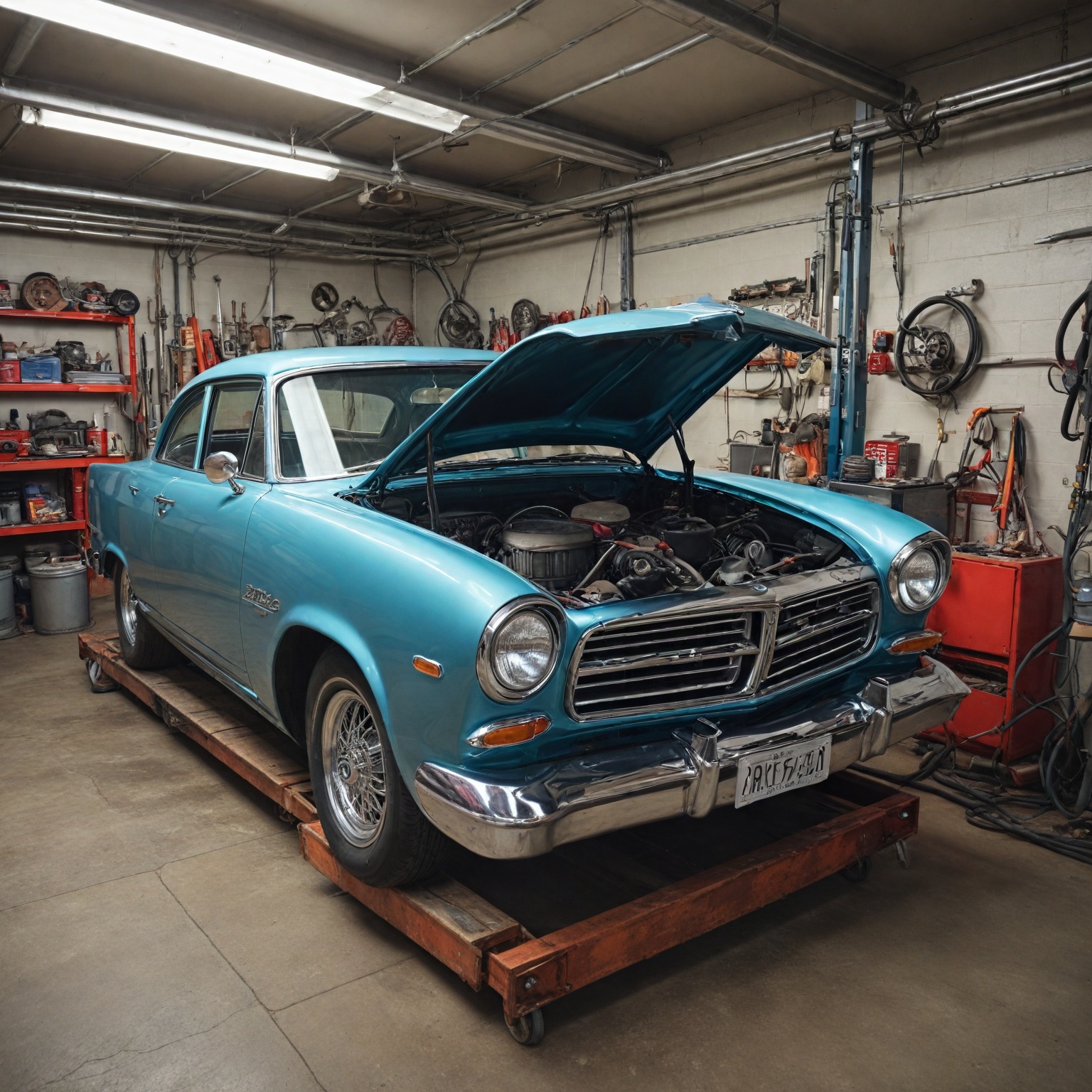
Summary
An auto rotisserie is a specialized mechanical device designed to securely hold and rotate a vehicle body along its longitudinal axis, providing 360-degree access for restoration, repair, and painting tasks. Typically constructed from heavy-duty steel and often equipped with hydraulic systems, these rotisseries enable restorers and mechanics to work on all surfaces of a car—including hard-to-reach areas such as the underside and interior—without obstruction or excessive physical strain. Their versatility and ergonomic design have made them indispensable tools in both professional automotive workshops and personal garages.
Notable for revolutionizing the vehicle restoration process, auto rotisseries allow comprehensive “frame-off” restorations where the car body is detached from its frame and mounted for full inspection and repair. This capability enhances the quality and efficiency of restorations by facilitating thorough rust removal, bodywork, and uniform painting, tasks that are difficult or inefficient with conventional methods. Various types of rotisseries exist, including four-post models prized for their stability, as well as electric and adjustable carts tailored to different vehicle sizes and restoration needs.
Despite their advantages, auto rotisseries require careful selection and proper use to ensure safety and optimal performance. Critical considerations include weight capacity, adjustability, locking mechanisms, and workspace clearance, as improper design or setup can pose risks during operation. Moreover, the relatively high cost of commercial models has led some hobbyists to pursue DIY builds, which can vary widely in quality and safety, sparking debate within the restoration community over best practices.
Looking forward, innovations such as motorized rotation, advanced materials, and smart sensor integration promise to further enhance the functionality and accessibility of auto rotisseries, potentially lowering barriers for enthusiasts and professionals alike. These developments aim to streamline restoration workflows while promoting safer and more environmentally conscious practices, reinforcing the auto rotisserie’s role as a transformative tool in automotive restoration.
Overview of Auto Rotisserie
An auto rotisserie is a specialized piece of equipment designed to hold and rotate a vehicle along its longitudinal axis, allowing 360-degree access to the car’s body, underside, and interior for restoration and repair purposes. Typically constructed from solid steel, these rotisseries often feature a hydraulic system to enable smooth and controlled rotation, facilitating detailed work such as body repairs and painting. The inclusion of removable casters or wheels further enhances their portability and ease of storage.
There are various types of auto rotisseries available, with the four-post rotisserie being among the most popular for professional use due to its enhanced stability provided by four solid support posts. This design supports complete rotation and makes it easier for restorers to work on all areas of the vehicle without obstruction.
Using an auto rotisserie can greatly improve the restoration process by providing easier access to hard-to-reach areas, resulting in faster and more efficient repairs. This accessibility also contributes to higher-quality workmanship, although the term “rotisserie restoration” itself is somewhat imprecise and can vary widely in the extent and quality of work performed. For many automotive enthusiasts, owning an auto rotisserie is a cost-effective investment that enables them to carry out thorough restorations in a personal garage setting without requiring extensive space.
Technical Features and Components
Auto rotisseries facilitate restoration, repair, and painting of vehicle bodies by enabling smooth and controlled 360-degree rotation. This rotation capability allows mechanics to access all parts of the vehicle effortlessly and perform thorough inspections and repairs from multiple angles. It also significantly accelerates painting processes by making difficult-to-reach areas, such as rocker panels and floor sections, more accessible and easier to cover uniformly.
Many auto rotisseries employ a four-post design, which provides enhanced stability and support necessary for professional-grade restoration projects. The posts are usually constructed from heavy-duty steel or similarly durable materials, ensuring long-term durability and safe operation even when handling vehicle bodies weighing up to 3,000 pounds. The frame thickness is often recommended to be at least 3/16 inch to guarantee sufficient strength. Adjustable height and width settings accommodate various vehicle sizes and shapes. Some models incorporate two-piece adaptor arms consisting of cross bar mounts and body adaptor arms, allowing for customizable positioning and offset adjustments on the rotisserie.
A key operational component is the locking mechanism, which often includes multiple locking holes—commonly 12 locking positions every 30 degrees or locks every 15 degrees—enabling secure positioning of the vehicle at specific angles during restoration work. This infinite adjustment capability saves time and effort and improves safety by preventing unintended rotation while working on the vehicle. Advanced models may include hydraulic jacks to assist in lifting the car body to the desired height, easing the physical effort compared to manual rotation systems.
Mobility is important, with many rotisseries equipped with heavy-duty pillow block bearings to allow effortless rotation and swivel caster wheels—often six in total—for smooth movement around the workshop without damaging floors. Some units are designed for single-person operation, combining ergonomic design with mechanical advantages to reduce operator fatigue and improve workflow efficiency.
Advantages in Restoration Projects
Auto rotisseries have transformed the car restoration process by providing comprehensive access to every part of the vehicle. Modern restorers often fully disassemble their projects and mount the bare frame on a rotisserie to enable complete and meticulous show-quality restoration. This approach allows detailed work on areas that are otherwise difficult to reach.
One primary advantage is enhanced accessibility. By allowing full rotation, restorers can work on any section from multiple angles without awkward positioning or repeated lifting. The smooth 360-degree rotation, facilitated by heavy-duty bearings and locking mechanisms with multiple locking holes every 30 degrees, enables precise adjustments to position the vehicle perfectly for each task, reducing fatigue and improving safety.
Improved accessibility leads to increased efficiency. Tasks such as inspections, repairs, and especially painting become faster and more thorough. Painting rocker panels and other hard-to-reach parts becomes easier with the rotisserie’s ability to spin the body fully, ensuring 360-degree coverage and consistent curing of paint. This reduces overlooked details and improves restoration quality.
The use of sturdy materials like heavy-duty steel frames with appropriate thickness ensures durability and stability during operation. Adjustable brackets accommodate different vehicle sizes and frames, making the rotisserie versatile for various projects. This combination of durability, versatility, and ease of operation saves time and money while enhancing safety and workmanship quality, making the auto rotisserie indispensable for professional shops and serious DIY enthusiasts alike.
Types and Models
Auto rotisseries come in various types and models to accommodate different restoration needs, vehicle sizes, workshop spaces, and budgets. Primary categories include electric rotisseries, four-post rotisseries, and adjustable body carts.
Electric Rotisseries
Electric rotisseries use electric motors to rotate the vehicle automatically, providing consistent rotation speed. This enhances efficiency, especially in large-scale projects. Considerations when selecting an electric rotisserie include whether hydraulic jacks for raising and lowering the vehicle are necessary or if manual rotation suffices. Some models feature worm gear drive rotators for smoother operation.
Four-Post Rotisseries
Four-post rotisseries are built with four solid posts supporting the vehicle, enabling 360-degree rotation with added stability. These robust structures are typically designed for professional use in workshops and garages, prioritizing durability and safety. They allow detailed inspection and work on the car’s body and mechanical components throughout restoration.
Adjustable Body Carts
Adjustable body carts, such as the Body Cart Adjustable (BCA-3000), provide versatile solutions for handling car bodies with capacities up to 3,000 lbs and adjustable widths of up to 60 inches. These carts often feature two-piece adaptor arms consisting of cross bar mounts and body adaptor arms, which slide on the cross bar and are secured by pinch bolts. This design accommodates different body widths and enables offsetting the body on the rotisserie if necessary.
Additional Features
Some rotisserie units incorporate locking mechanisms securing the vehicle’s position every 15 degrees, facilitating precise placement during restoration. Hydraulic jacks ease lifting heavy vehicle bodies compared to manual lifting. It is important to ensure the garage or workshop has sufficient height clearance to accommodate the vehicle when fully lifted.
By understanding available types and models, restorers can choose suitable equipment to improve safety and efficiency in their projects.
Applications in Vehicle Restoration
Auto rotisseries play a crucial role in comprehensive “frame-off” restorations, where the vehicle’s body is completely separated from its frame. This process involves disassembling the entire vehicle and restoring each component individually, which can be challenging without appropriate equipment. Mounting the body onto a rotisserie provides 360-degree access, enabling rotation and work on all surfaces with ease.
Primary applications include thorough repairs such as rust removal, sheet metal replacement, and bodywork on hard-to-reach areas like rocker panels and floor pans. Positioning the body at any angle simplifies these tasks, reduces physical strain on technicians, and improves restoration precision. Rotational flexibility also allows efficient and uniform painting, with the entire body and internal surfaces coated and cured simultaneously without repositioning.
Compared to traditional manual methods with basic tools, rotisseries modernize restoration by streamlining disassembly, inspection, sandblasting, and repainting, ensuring rust, old paint, and corrosion are fully removed before restoration. This comprehensive access reduces overlooked details and results in higher quality and more durable restorations.
Although requiring ample workspace, models like Car Rotisseries AROT4500 and AORT4500GD are popular for their versatility and compatibility with a wide range of car models. These devices are valuable tools for enthusiasts and professionals, enhancing efficiency and quality by enabling meticulous bodywork difficult to achieve with conventional equipment.
Selection Criteria for Auto Rotisseries
Key factors when selecting an auto rotisserie include:
– **Weight Capacity:** Choose a model that supports your vehicle’s weight with a safety margin. Most support up to 3,000 pounds, with some exceeding 4,500 pounds for heavier vehicles.
– **Adjustability:** Adjustable height and width settings accommodate various vehicle sizes and shapes. Multiple locking holes every 30 degrees allow precise positioning and ease of access, improving efficiency and safety during work.
– **Materials and Construction Quality:** Heavy-duty steel ensures strength and longevity. Solid construction and reliable locking mechanisms provide stability and safety for full 360-degree rotation.
– **Type of Rotisserie:** Fixed height models offer simplicity; four-post designs provide enhanced stability for professional or heavy-duty use.
– **Additional Features:** Hydraulic lifting and adjustable arms ease positioning, reduce physical strain, and save time during restoration. Multiple models across price ranges allow balancing budget with desired quality and features.
Setup, Operation, and Maintenance
Setting up an auto rotisserie starts with selecting appropriate equipment tailored to your vehicle and project. Popular models like Car Rotisseries AROT4500 and AORT4500GD offer versatility and compatibility with many car models. Note that some suppliers charge extra for adapters, painting, or hydraulic lifting packages, while others include these features as standard. Ensuring necessary adapters and features are included streamlines restoration.
Operation begins with complete vehicle disassembly, removing all parts for inspection and repair. The body is then sandblasted to remove old paint, rust, grime, and corrosion, preparing it for restoration. Mounting the body onto the rotisserie allows 360-degree access through full rotation. This facilitates thorough inspection and convenient repair or replacement of components, greatly enhancing workflow. The rotisserie reduces physical strain, making restoration more efficient and ergonomic.
Maintenance is essential for smooth operation and longevity. Regularly check moving parts such as joints and bearings to prevent mechanical failures. Inspect hydraulic components for leaks and fluid levels if equipped. Clean and lubricate after use to protect against corrosion and wear. Follow manufacturer guidelines and avoid overloading to preserve function and safety during extensive projects. Proper maintenance ensures consistent performance, allowing focus on detailed restoration work without interruption.
User Experiences and Case Studies
Car enthusiasts and professional restorers widely acknowledge the benefits of auto rotisseries in restoration projects. Users report that smooth, secure rotation at various angles enhances thoroughness and quality of work. This 360-degree access enables detailed inspections, rust removal, and complete paint jobs, even in hard-to-reach areas covered by trim or headliners.
For those with limited workspace, models like AROT4500 and AORT4500GD are praised for compatibility with many car models and facilitating frame-off restorations by enabling body removal and independent component work. Experienced restorers note that rotisseries have transformed quick cosmetic fixes into meticulous, show-quality restorations due to precise positioning capabilities.
Users with physical challenges affecting hand, wrist, or shoulder mobility benefit from complementary tools like steering wheel spinner knobs, enhancing driving comfort during test drives or operational checks post-restoration. These aids combined with smooth, non-slip rotation contribute to a more comfortable and efficient restoration experience.
Case studies highlight faster project turnaround times due to simplified inspections and repairs. Technicians appreciate adjusting vehicles to nearly any angle, optimizing access to every frame and body nook, resulting in more precise, comprehensive restorations. This control and accessibility have transformed restoration, enabling superior results with greater ease and confidence.
Market Overview
The market for auto rotisseries is driven by automotive enthusiasts, restorers, and custom shops, especially in the United States, where car restoration and customization are popular. Auto rotisseries enable 360-degree rotation, providing full access for restoration, painting, or mechanical work, significantly enhancing workflow efficiency and precision.
Designs and prices vary, with some models costing between $1,500 and $3,000—a significant investment for hobbyists or occasional users. Many DIY enthusiasts build their own rotisseries, searching online for plans under terms like “DIY engine stand rotisserie”. This reflects a cost-conscious segment willing to invest time and effort in construction.
Buyers should consider included adapters, painting options, and hydraulic lifting packages, as these impact cost. Some distributors charge extra for adapters or features, while others include them as standard. Careful evaluation ensures best value.
The market overlaps with other automotive tools and accessories, including engine stands, lifting equipment, and products for motorcycles and general vehicle maintenance and customization. Overall, it caters to a niche but dedicated base focused on enhancing restoration projects through specialized, versatile equipment.
Environmental and Safety Considerations
Safety is paramount when using an auto rotisserie, as it must support the vehicle’s full weight at various angles. Home-built rotisseries require careful design using robust materials—preferably heavy-duty steel at least 3/16 inch thick—to ensure stability and longevity. Adjustable height and width settings accommodate different vehicle sizes while maintaining secure support. Locking mechanisms and multiple support points prevent accidental movement or failure during use.
Environmentally, rotisseries facilitate efficient painting and curing. The 360-degree rotation allows quick and uniform coating of hard-to-reach areas like rocker panels. Comprehensive coverage reduces missed spots, minimizing repeated painting and material waste. Faster, thorough painting cycles also reduce emissions from paint solvents and curing, making rotisseries environmentally considerate tools in restoration workflows.
Future Trends and Innovations
The future of auto rotisseries promises advancements enhancing efficiency, precision, and accessibility in restoration. Manufacturers are likely to introduce more adjustable and versatile designs accommodating wider vehicle types and sizes. Innovations may include lighter, stronger materials like advanced aluminum alloys or composites, reducing weight without compromising durability.
Automation and motorized rotation will likely become more common, enabling smoother, controlled movement and reducing manual effort while increasing safety. Smart sensors and digital controls may monitor vehicle position and angle in real time, allowing precise restoration tasks with greater ease and accuracy.
Cost-efficiency remains a focus, with more affordable models for weekend enthusiasts and smaller shops enabling broader access to 360-degree vehicle handling.
Environmental considerations will
The content is provided by Blake Sterling, Gear Shift Zone