Summary
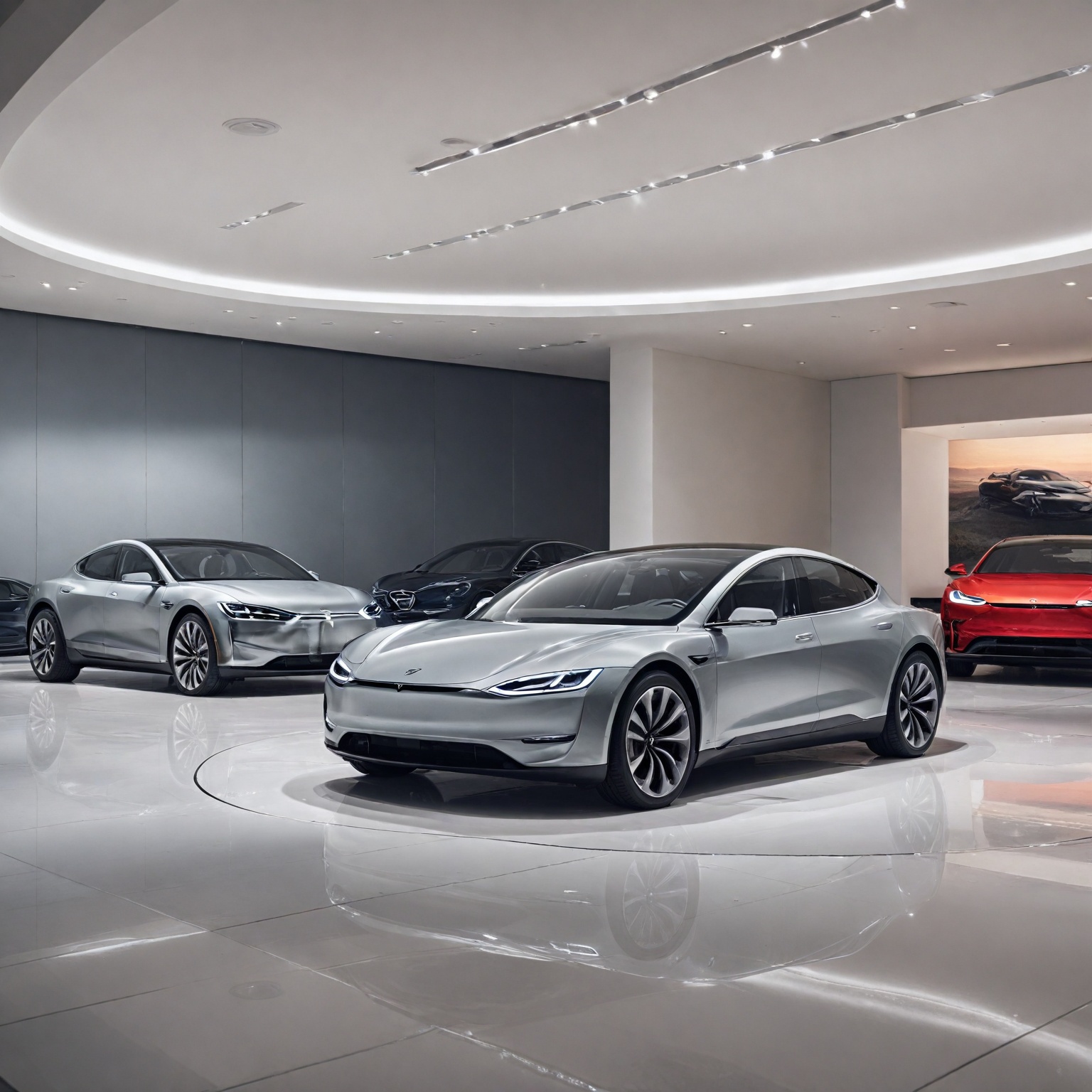
The “Showdown of Electric Vehicle Titans” page provides a detailed overview of the contemporary competition between major electric vehicle (EV) manufacturers: Tesla, Rivian, Lucid Motors, and traditional automakers such as Ford, General Motors, and Renault. This comparative analysis examines each company’s distinct strategies, production volumes, market shares, and unique selling propositions, thereby painting a comprehensive picture of the evolving EV landscape.
Tesla, spearheaded by Elon Musk, holds a pioneering role and a first-mover advantage in the industry, underscored by groundbreaking advancements in EV efficiency and range. The emerging player, Rivian, has garnered attention with its adventure-focused electric vehicles and an innovative customer-centric approach. Lucid Motors, a newcomer, has shown resilience in meeting production targets amid supply chain issues and has demonstrated its technological prowess by partnering with Aston Martin to develop electric motors and battery systems.
Traditional automakers like Ford, General Motors, and Renault, with their long-established presence in the automotive industry, have shown a growing commitment to EV technology, leveraging their vast resources and operational prowess to compete in this evolving market. The analysis includes market share data, production volumes, and key differentiating strategies, shedding light on the potential trajectory of this industry and the pivotal role these players hold in shaping the future of sustainable transportation..
Tesla
Tesla, founded by Elon Musk, is a leading electric vehicle (EV) manufacturer known for its relentless pursuit of efficiency and range in the automotive industry. The company has revolutionized the sector by focusing on extending the range of electric vehicles to dispel range anxiety and accelerate the transition to sustainable transportation. Various groundbreaking technologies and advancements have been implemented in this pursuit.
Tesla’s primary competitive advantage is its first-mover advantage in the EV industry. As one of the earliest players, it enjoys significant brand recognition, an expansive charging network, and the benefits of word-of-mouth advertising. Furthermore, Tesla’s Autopilot driver-assist feature has amassed approximately 2 billion miles of data, significantly enhancing its self-driving algorithm through machine learning. This data collection puts Tesla ahead of other tech giants such as Alphabet’s Waymo and General Motor’s Cruise.
Despite this, Tesla faces increasing competition in the EV market. This competition includes traditional automakers who are expanding their hybrid gasoline-electric cars, plug-in hybrid EVs, and battery EVs (BEVs) offerings, as well as new, price-competitive tech companies. Notably, Chinese manufacturers backed by a strong base of home-country consumers are emerging as significant rivals.
In 2022, for instance, Chinese automaker BYD overtook Tesla as the best-selling EV brand, widening the gap in 2023 by selling over one million more EVs than Tesla. This increasing competition, coupled with Tesla’s reliance on its domestic market, poses a substantial challenge to the company’s industry dominance.
However, Tesla remains a highly profitable company, posting a net profit of $2.3 billion in Q2 of 2022, up 98% year on year. Its commitment to designing scalable, sustainable systems that can work in tandem with its electric vehicles to maximize environmental impact is central to Tesla’s vision for a sustainable future and contributes significantly to its profitability.
Rivian
Rivian is an innovative electric vehicle manufacturer that has garnered attention with its all-electric truck, the R1T, and all-electric SUV, the R1S. The company is headquartered in California and is recognized for its commitment to revolutionizing the concept of adventure for future generations. The company’s electric vehicles are distinguished by their high capabilities and are specifically designed for modern explorers who are concerned about the environment.
Rivian has made strategic strides in positioning its brand by aligning its messaging and business objectives as it approaches its initial public offering. The technology underpinning Rivian’s vehicles is significant, boasting input from some of the world’s most renowned automotive experts. Rivian has a customer-centric approach that emphasizes exceeding customer expectations at every stage of interaction. This departure from the traditional dealership model is establishing Rivian’s reputation for exceptional service and fostering a loyal and engaged customer base.
The company’s innovative approach to electric vehicle technology, coupled with a firm commitment to sustainability, is providing Rivian with a disruptive presence in the traditional automotive market. The company has positioned itself as the brand of choice for outdoor adventures, thanks to its understanding and catering to the unique needs of the adventure enthusiast market. Rivian’s differentiation strategy includes its commitment to innovation, quality, and sustainability, along with superior performance and exceptional customer service.
Rivian’s market success hinges on its ability to address market dynamics, differentiate its products, and maintain a strong market presence. The company’s focus on developing adventure vehicles and targeting specific market segments sets it apart from its competitors. Rivian’s partnerships with companies like Amazon and Ford broaden its customer base and distribution channels, further reinforcing its unique market position.
Lucid Motors
Lucid Motors, originally under the name of Churchill Capital Group IV, emerged in the electric vehicle market a few years ago, and was rebranded to its current name following a merger in July . This technology company designs, engineers, manufactures, and sells electric vehicles, EV powertrains, and battery systems . It has also been noted for designing and developing proprietary software in-house for its vehicles .
On April 27, 2022, the Saudi Arabian government announced plans to buy between 50,000 and 100,000 electric vehicles from Lucid Motors over a decade . This move is part of a strategic push to reduce the country’s reliance on oil . Lucid Motors was selected for this deal as it is constructing its first international manufacturing plant in Saudi Arabia with a target of producing 150,000 cars annually .
Lucid Motors experienced a modest start in production with 7,180 vehicles in 2022, falling short of expectations due to supply chain issues . However, the following year saw an increase with 8,428 vehicles produced, meeting the higher end of the company’s guidance . In June 2023, Lucid Motors entered into an agreement to develop and supply electric motors, powertrains, and battery systems for Aston Martin’s forthcoming fully electric car range .
Lucid Motors made headlines in October 2021 by confirming the first customer deliveries of its flagship vehicle, the Lucid Air EV . This event prompted a surge in share prices by 31%, nearly reaching $40 . The Lucid Air EV, featuring a 900V+ electrical architecture and custom lithium-ion battery cells, contributed to approximately 80% of the company’s Q4 revenue of $26.4 million . Despite this, Lucid Motors missed earnings in its report, citing a loss per share of $0.37 .
Looking to the future, the company teased an upcoming SUV in a September 2024 investor presentation . Although the vehicle’s name has not been officially released, trademark filings have led to speculation that it might be named “Earth” .
Through these strategies and products, Lucid Motors seeks to design sustainable systems that are massively scalable, contributing to a significant environmental benefit .
Traditional Automakers
Traditional automakers have shown a growing commitment to electric vehicle (EV) technology, reflecting an industry-wide shift toward electrification . Some have focused their efforts on specific market segments where they have competitive advantages, such as commercial vans, mid-size and large pickup trucks, and long-range SUVs .
Comparative Analysis
Several major players are competing in the Electric Vehicle (EV) market, each with their distinct strengths and strategies.
Tesla
Tesla has revolutionized the automotive industry with its relentless pursuit of efficiency and range. Recognized for its superior battery power and driving range, Tesla has a commanding presence in the market, accounting for almost 74% of electric vehicles sold in the U.S. over the last three years. Despite facing challenges from rising competition, Tesla continues to be a profitable entity with a net profit of $2.3 billion in Q2 of 2022. However, a slowdown in sales across the U.S., China, and several European countries signals potential challenges ahead.
Rivian
Rivian, a relatively new entrant in the market, is seeking to differentiate its products through a commitment to innovation, quality, and sustainability. The company’s focus on customer experience and post-purchase support is central to its marketing strategy and has helped it build a loyal customer base. Although Rivian produced 57,232 vehicles in 2023, more than double its 2022 production, the company faces increasing competition from other automakers.
Lucid Motors
Lucid Motors, which entered the market a few years ago, has demonstrated its ability to meet production targets despite supply chain issues. The company’s 2023 production of 8,428 vehicles met the higher end of company guidance. Furthermore, Lucid’s partnership with Aston Martin to develop electric motors, powertrains, and battery systems signifies its ambition to be a leading player in the industry.
Traditional Automakers
Traditional automakers like Ford, GM, and BYD are leveraging their resources to compete in the EV market. These companies have the advantage of a long-established presence in the automotive industry, which could prove beneficial in their transition to electric vehicles. However, they are up against pioneers like Tesla, who have a head start in the sector. Despite these challenges, GM has managed to secure a net profit of $1.7 billion in Q2 of 2022.
Market Share Analysis
The U.S. electric vehicle (EV) market share stood at 8.7% in the last quarter of 2024, maintaining a steady rate from the previous quarter. Among the EV manufacturers, Tesla has been a long-standing market leader. However, the company’s dominance has witnessed a slight decrease, with its market share of total EV sales dropping to 48.9% in 2Q24. This is the first time Tesla’s market share has decreased to less than 50% of the light-duty vehicles sold since 4Q17.
This slight increase in the electric and hybrid vehicle market share was primarily driven by hybrid electric vehicle (HEV) sales. HEV sales showed a significant increase of 30.7% year over year, accounting for 8.6% of the total light-duty market in 1Q24, and further increasing to 9.6% in 2Q24.
The EV market has recently seen emerging competition with new entrants such as Rivian and Lucid Motors. The success of these companies largely depends on their ability to differentiate their products, address market dynamics, and establish a strong market position. However, these startups face significant profitability challenges. For example, Lucid Motors reported a net loss of approximately 2.8 billion U.S. dollars.
Moreover, Tesla’s market dominance is increasingly being challenged not only by startups but also by established automotive companies, including those from China. For instance, General Motors (GM) has announced ambitious plans for the future, aiming to invest US$35bn globally in EVs and autonomous vehicles (AVs) by 2025.
Despite the increasing competition, Tesla’s success continues to drive EV popularity in the U.S., attracting more companies to the EV market. As the market dynamics continue to change with new entrants and shifting consumer preferences, the showdown of electric vehicle titans promises to be a dynamic and interesting phase in the automotive industry.
Differentiation Strategies
In the burgeoning electric vehicle (EV) industry, each automaker is deploying unique strategies to distinguish itself from its competitors.
Rivian
Rivian is targeting a niche market, specifically adventure enthusiasts, to differentiate itself within the crowded automotive industry. Through innovative technology and marketing efforts, Rivian has successfully crafted an appealing brand identity that resonates with outdoor adventurers. In addition to its innovative electric vehicle technology, Rivian’s commitment to sustainability is a key element of its brand identity. Its customer-centric approach, a departure from the traditional dealership model, has been instrumental in establishing a loyal customer base. Furthermore, partnerships such as that with Volkswagen Group signify the company’s strategy to strengthen its global competitive and technological position.
Lucid Motors
Lucid Motors entered the market in a splash, originally under the name of Churchill Capital Group IV, and has focused on production efficiency in the face of supply chain challenges. Despite a lower-than-expected production in 2022 due to supply chain issues, the company rallied and met the higher end of company guidance with the production of 8,428 vehicles in 2023. It further demonstrated its technological capabilities by signing an agreement to develop and supply electric motors, powertrains, and battery systems for Aston Martin’s upcoming range of fully electric cars.
Tesla
Tesla, a pioneer in the EV industry, has revolutionized the automotive industry with a relentless focus
The content is provided by Sierra Knightley, Gear Shift Zone