Summary
The first-generation Honda NSX restomod by Pininfarina and JAS Motorsport is a meticulously crafted reinterpretation of the iconic 1990s mid-engine sports car, blending classic design elements with modern performance and materials. This limited-edition project, named Tensei (meaning “rebirth” in Japanese), revives the original NSX’s lightweight, driver-focused philosophy while incorporating advanced carbon-fiber bodywork and an enhanced naturally aspirated V6 engine tuned to deliver significantly increased power. The collaboration marks a renewed partnership between Honda and the legendary Italian design house Pininfarina, who was instrumental in shaping the NSX’s original design concept in the 1980s.
Building on JAS Motorsport’s extensive racing heritage and expertise with Honda’s NSX GT3 race cars, the restomod maintains the original’s signature mid-engine layout and manual transmission, while introducing modern mechanical and aerodynamic refinements. Visually, the car retains hallmark features such as the low-slung stance and pop-up headlights, complemented by subtle contemporary upgrades including enlarged air intakes and sleek LED lighting, all wrapped in a bespoke carbon-fiber shell. The interior has been completely redesigned by Pininfarina to offer a luxurious yet driver-focused cockpit, combining nostalgia with modern technology.
With production limited to just 35 units to celebrate the NSX’s 35th anniversary, this restomod is targeted at collectors and enthusiasts seeking a rare blend of heritage, craftsmanship, and cutting-edge performance. Priced starting at around €880,000 (excluding the donor car), it represents a high-value entry in the growing market for Japanese sports car restomods, traditionally dominated by European and American classics. The project has been widely praised for honoring the NSX’s legacy while setting a new standard for restomod design and engineering.
While specific powertrain details remain partially undisclosed, the restomod’s emphasis on a naturally aspirated, high-revving engine and manual transmission has been highlighted as a deliberate choice to preserve the original’s engaging driving dynamics. This focus on driver involvement, combined with lightweight construction and race-inspired technology, positions the Pininfarina-JAS NSX restomod as both a tribute and an evolution of one of Japan’s most revered sports cars.
Background
The original first-generation Honda NSX, marketed as the Acura NSX in North America and Hong Kong, was produced from 1990 to 2006 and quickly established itself as a revolutionary mid-engine sports car. Known for its lightweight all-aluminum body, a mid-mounted V6 engine, and significant input from Formula 1 champion Ayrton Senna, the NSX combined advanced engineering with exceptional driving dynamics. Its design drew inspiration from the 1984 Honda Pininfarina eXperimental (HP-X) concept, contributing to its timeless and iconic styling.
Though the second-generation NSX, introduced in 2016, was well-received, it did not garner the same legendary status as its predecessor. To honor and revive the spirit of the original, JAS Motorsport partnered with the renowned Italian design house Pininfarina to create a restomod version known as “Tensei,” meaning reincarnation in Japanese. This collaboration aims to blend the classic NSX aesthetics with modern enhancements such as carbon-fiber body panels and a competition-derived powertrain, reinvigorating the NSX legacy for contemporary enthusiasts.
Restomod Project Overview
The restomod project represents a collaboration between the legendary Italian design house Pininfarina and JAS Motorsport, an Italian team closely linked with Honda’s racing heritage. Together, they are reimagining the first-generation Honda NSX, specifically the NA1 model, by blending modern technology and materials with the iconic design and performance DNA of the original supercar. This partnership revives a relationship that dates back to 1984, when Honda and Pininfarina first joined forces on the HP-X concept—a mid-engine wedge that ultimately evolved into the original NSX.
Named Tensei, meaning “rebirth” in Japanese, the project aims to offer enthusiasts and collectors a contemporary interpretation of the NSX’s grand touring philosophy. The goal is to maintain the car’s high-performance, perfectly balanced, and safe driving characteristics, while integrating modern craftsmanship and innovation that reflect decades of racing and design expertise. The restomod features a carbon fiber body styled by Pininfarina, whose design language draws on its rich legacy of creating some of the most beloved Ferrari models, lending the NSX a distinct and refined presence on the road.
JAS Motorsport brings its extensive experience from Honda’s TCR racing campaigns and its role in building the NSX GT3 racer, adding motorsport DNA to the project that ensures a performance-focused outcome without compromising the car’s heritage. While detailed specifications on the powertrain and performance remain under wraps, the restomod retains the original mid-engine V6 configuration, promising a faithful yet modernized driving experience.
Simultaneously, Italdesign is also working on a separate NSX restomod, hinting at a resurgence of interest in this classic sports car among Italian coachbuilders. Italdesign’s teaser suggests modern design touches such as a roof scoop and LED-outlined integrated rear spoiler, although further details are yet to be revealed. Nonetheless, the Pininfarina and JAS Motorsport collaboration stands out for its deep historical ties to the NSX’s inception and its commitment to a carbon fiber-bodied, motorsport-infused reinterpretation of this iconic vehicle.
Design Elements
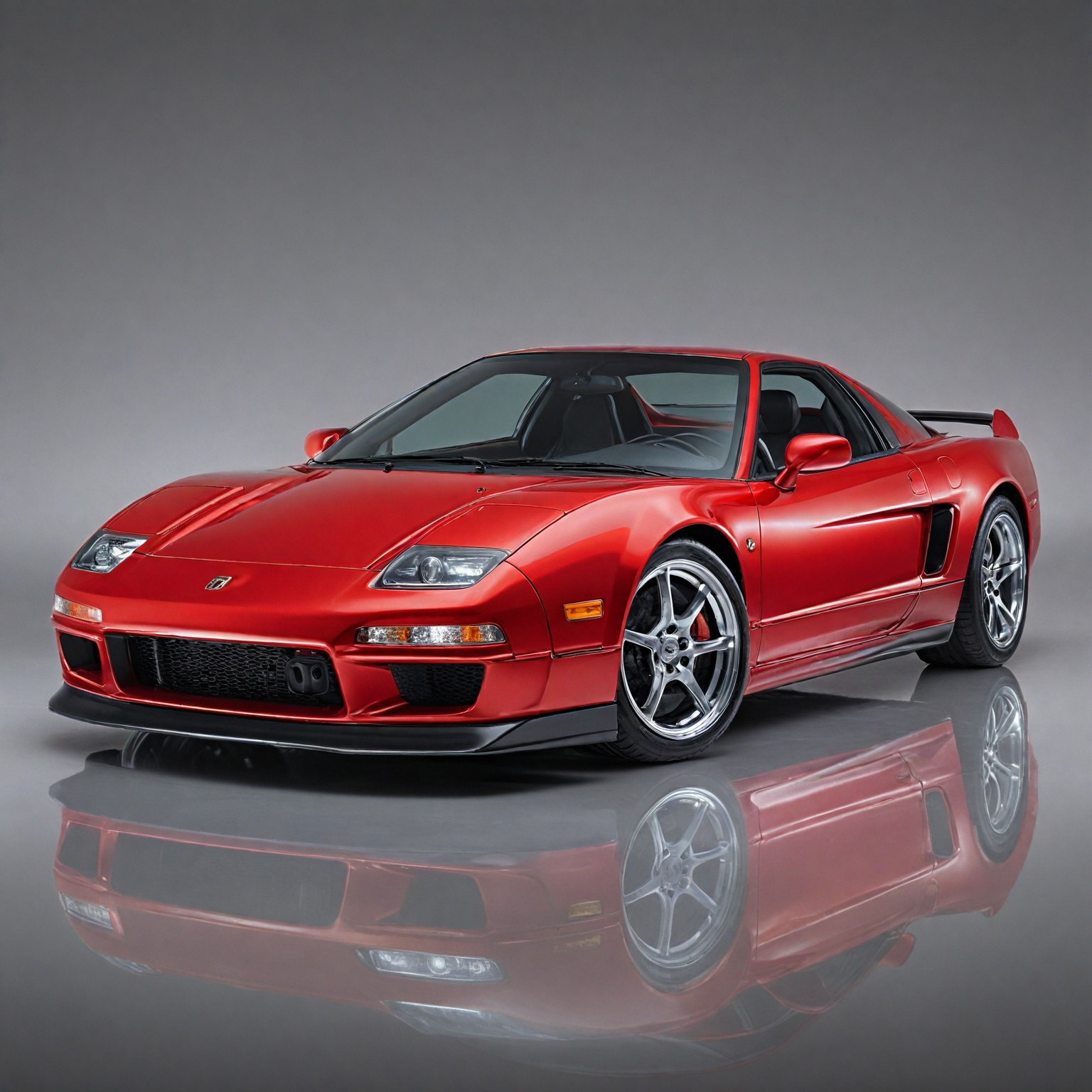
The first-generation Honda NSX restomod by Pininfarina, developed in partnership with JAS Motorsport, is a meticulous blend of classic design and modern enhancements that pay homage to the original NA1 NSX while integrating contemporary technology. The restomod utilizes the original NSX chassis as a foundation but replaces the aluminum body with a bespoke full carbon fiber shell crafted by Pininfarina, lending the car a strikingly lightweight yet durable exterior.
Visually, the car preserves the iconic low-slung, mid-engine stance and the sleek, wraparound glass canopy that defined the original NSX’s silhouette. One of the most celebrated retro design elements resurrected is the pop-up headlights, which coexist with ultra-slim LED daytime running lights positioned in place of the original front reflectors. The front fascia also features a new bonnet vent inspired by the second-generation NSX-R, adding both functional and stylistic appeal.
The carbon fiber bodywork exhibits subtle modern touches such as enlarged side inlets that accentuate the widened rear fenders and vents behind the swollen front wheel arches, enhancing both aesthetics and aerodynamic efficiency. The roof design, with a seemingly separate glass greenhouse, and the all-black F-16-inspired canopy contribute to the car’s futuristic yet classic look. The rear of the vehicle incorporates an aerodynamic diffuser influenced by Honda’s racing heritage, while LED rear lights complete the contemporary lighting package.
Distinctive JAS Motorsport emblems replace the traditional Honda badges, signaling the car’s unique identity as a restomod project while maintaining a clear connection to its NSX roots. Buyers can select between left- and right-hand-drive configurations, ensuring global accessibility.
Inside, although no images have yet been released, the cabin has been comprehensively redesigned by Pininfarina to address the original NSX’s dated interior. The new cockpit is expected to feature luxurious leather seats designed for comfort on long journeys, clear and crisply lit gauges, intuitive controls, and likely a modern infotainment system, all while maintaining a driver-focused layout that honors the NSX’s philosophy of direct driver connection.
Performance Enhancements
The first-generation Honda NSX restomod developed by JAS Motorsport in collaboration with Pininfarina preserves the core essence of the original’s naturally aspirated V6 engine while significantly enhancing its performance and responsiveness. The restomod utilizes an evolved version of the original 3.0-liter V6, increasing displacement to 3.5 liters through a newly designed crankshaft and rotating assembly. Cylinder heads have been reworked with larger valves and modified ports, complemented by six individual throttle bodies replacing the original intake setup. This powertrain revision yields an output of approximately 420 horsepower and 258 pound-feet of torque, a substantial improvement over the original NSX’s 270 horsepower and 210 pound-feet.
JAS Motorsport emphasizes maintaining the naturally aspirated character of the engine, favoring high-revving performance and mechanical engagement over forced induction. The engine is paired with a six-speed manual transmission featuring a limited-slip differential and traction control with six selectable modes, enhancing driver control and involvement. Extensive mechanical upgrades drawn from JAS Motorsport’s rich racing heritage further contribute to improved power delivery, sharper throttle response, and greater overall driving dynamics.
Weight reduction also plays a crucial role in the restomod’s performance enhancements. By extensively employing carbon fiber for the bodywork—crafted by Pininfarina—the car’s weight is significantly decreased compared to the original, with ongoing refinements targeting further mass savings. This lightweight construction aids in delivering a more agile and responsive driving experience, reminiscent of the original NSX’s celebrated chassis dynamics, which were famously honed with input from Ayrton Senna.
Design Philosophy and Process
The design philosophy behind the first-generation Honda NSX restomod by Pininfarina and JAS Motorsport centers on honoring the original vehicle’s iconic identity while integrating modern materials and design sensibilities. To realize this vision, JAS requires buyers to provide an original NA1 or NA2 NSX, which it then transforms with a carbon fibre body designed by Pininfarina. This approach preserves the key stylistic elements that define the NSX as a design icon, including the all-black F-16-inspired canopy, the distinctive overarching rear spoiler, and notably, the NA1’s signature pop-up headlights.
Pininfarina’s involvement in the project is both historically resonant and forward-looking. The Italian design house was originally commissioned by Honda in the 1980s to develop the HP-X concept, the precursor to the production NSX, although the final production model deviated from the original concept. This restomod project rekindles that collaboration, blending Pininfarina’s traditional ability to balance aesthetics and functionality with a modern reinterpretation that respects the car’s legacy. The redesign draws from the original NSX’s philosophy of creating a car that fosters a direct connection between driver and machine, a principle Honda emphasized at the NSX’s 1990 debut.
The process itself reflects a synthesis of craftsmanship and innovation. JAS Motorsport, known for its work on the NSX GT3 race car, brings motorsport expertise, while Pininfarina injects refined design enhancements that update the NSX’s visual language without losing its essence. The carbon fibre bodywork not only modernizes the car’s appearance but also reduces weight, contributing to the vehicle’s performance and balanced handling—a core trait of the NSX DNA.
This restomod is intended as an ultra-limited production run aimed at collectors who value both nostalgia and cutting-edge craftsmanship. By breathing new life into a Japanese automotive classic, Pininfarina and JAS Motorsport’s collaboration marks a notable expansion of the restomod scene, traditionally dominated by European and American icons, and offers a fresh, modern definition of the Grand Touring concept embodied by the original NSX. The first prototype is expected in early 2026, promising to deliver a restyled NSX that remains true to its heritage while embracing contemporary performance and design standards.
Production and Availability
Production of the first-generation Honda NSX restomod by JAS Motorsport and Pininfarina will be extremely limited, with a cap of just 35 units to commemorate the NSX’s 35-year milestone. Each car will begin life as a donor NSX from the early 1990s, which will then be extensively reworked with a new carbon fiber body designed by Pininfarina and refined mechanical components. The build process will take place at JAS Motorsport’s facility in Arluno, near Milan, Italy, leveraging the company’s 25 years of experience with Honda and over 900 motorsport victories.
Customers will be able to choose between left- or right-hand drive configurations, accommodating a global collector base. While detailed specifications and the project’s official name have yet to be announced, the restomod aims to maintain the original NSX’s hallmark qualities of high performance, perfect balance, and suitability for both road and track use. The first prototype is expected to debut in early 2026, marking the beginning of this ultra-exclusive series.
Pricing for the restomod starts at approximately €880,000 (around $1.02 million), excluding the cost of the donor car, reflecting its bespoke nature and limited production volume. Given the ultra-limited production and the involvement of iconic design and motorsport partners, the final price is anticipated to reach into the high six or even seven figures.
Reception and Impact
The Pininfarina and JAS Motorsport restomod of the first-generation Honda NSX has been met with significant acclaim from enthusiasts and collectors alike. Celebrated for its faithful preservation of the original NA1 NSX’s iconic design language, the restomod retains beloved features such as the low-slung, mid-engine stance, sleek wraparound glass canopy, and notably, the resurrection of the classic pop-up headlights that defined the 90s supercar aesthetic. The tasteful modern upgrades by Pininfarina have been praised for enhancing the car’s timeless design without compromising its heritage, blending nostalgia with contemporary appeal.
The project is regarded as a masterclass in craftsmanship, reflecting decades of dedication to perfecting the balance of performance and style. The involvement of JAS Motorsport, with their 30-year legacy in competitive racing and expertise from Honda’s TCR campaigns, adds a layer of technical credibility and excitement around the car’s driving dynamics. Although powertrain specifics remain undisclosed, the restomod is anticipated to deliver a substantial performance boost through a meticulously engineered supercharged engine mated exclusively to a 6-speed manual transmission, emphasizing driver engagement and precision shifting.
Critics and fans alike see the restomod as a new interpretation of the Grand Touring concept that the NSX originally epitomized: a high-performance, perfectly balanced, and safe sports car equally at home on the track and the road. Its ultra-limited production run and the collaboration between two iconic firms—Pininfarina and JAS Motorsport—position the car as a highly coveted collector’s item destined to make a lasting impact within the automotive community.
Legacy and Influence
The first-generation Honda NSX, originally launched in 1990, is celebrated for its groundbreaking blend of everyday usability and supercar performance, setting a benchmark that continues to inspire automotive design and engineering decades later. Its innovative approach to combining driver engagement with reliability helped establish a new standard in the sports car segment, making it an icon that resonates deeply with enthusiasts worldwide.
The recent collaboration between Pininfarina and JAS Motorsport to create a restomod of the original NSX further cements the car’s enduring legacy. This project not only pays homage to the NSX’s heritage but also integrates advanced composite materials and modern engineering techniques, preserving the classic low-slung, mid-engine silhouette and even reviving signature features like the pop-up headlights. The design retains the essence of the NA1 NSX while introducing carbon-fiber bodywork and contemporary craftsmanship, underscoring the car’s timeless appeal and adaptability to modern supercar standards.
Importantly, this restomod represents a notable shift in the restomod culture, which has traditionally focused on European and American classics such as the Porsche 911 and Ford Mustang. By bringing a Japanese modern classic into this sphere, the NSX revival highlights the growing appreciation and collector interest in Japanese sports cars, marking the NSX as a pivotal figure in the global automotive heritage. The collaboration’s fusion of JAS Motorsport’s racing pedigree and Pininfarina’s design excellence exemplifies how
The content is provided by Harper Eastwood, Gear Shift Zone