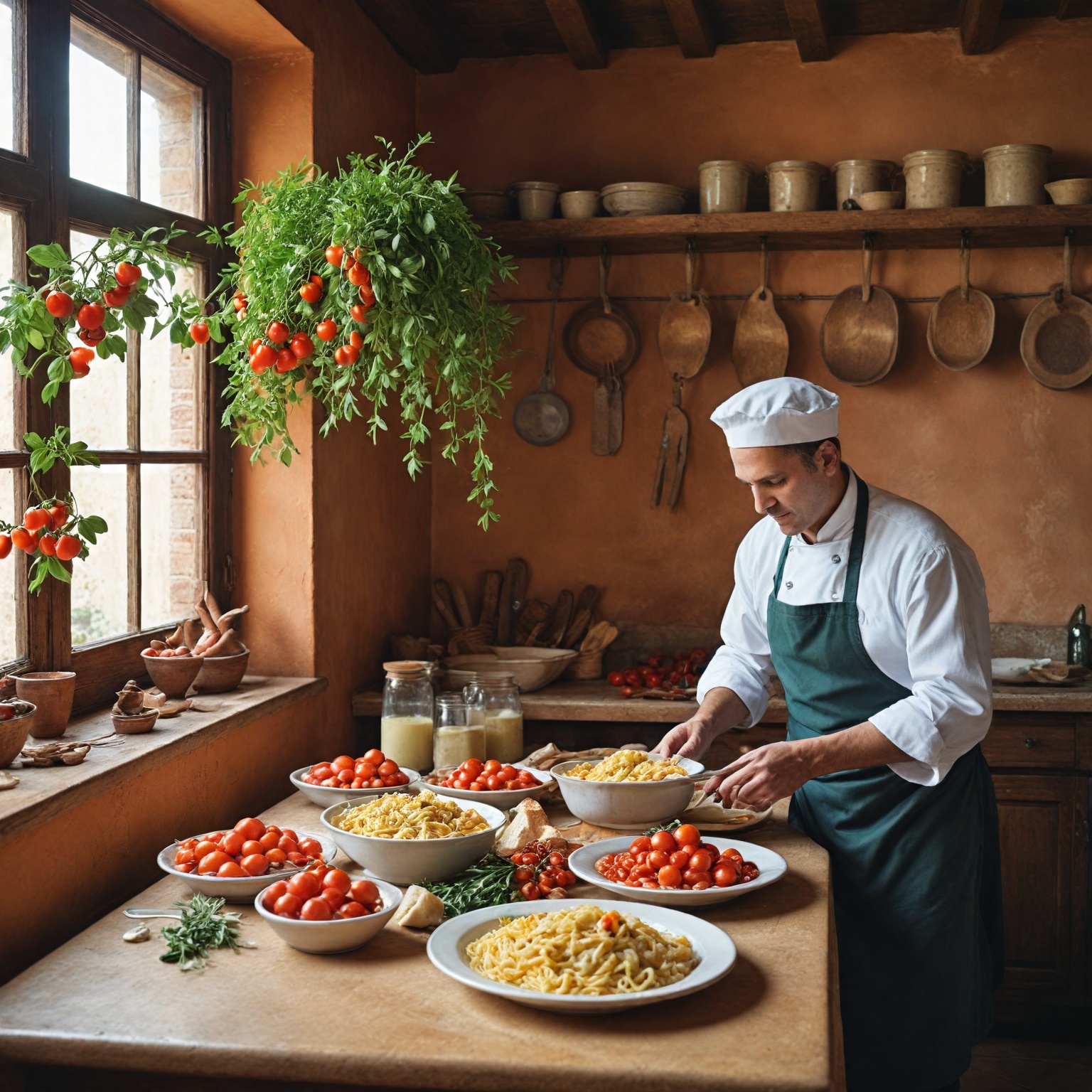
Highlights
- Discover how regional dialects shape the names and meanings of iconic Italian dishes.
- Master essential culinary vocabulary to deepen your appreciation of Italy’s rich food culture.
Summary of Italian Cuisine, Language, and Culture
Unlocking the Secrets of Italian Cuisine explores Italian culinary traditions shaped by regional diversity and linguistic influences. Italy’s fragmented history created distinct regional dishes influenced by local ingredients and foreign cultures. Language plays a crucial role, with regional dialects impacting dish names and culinary terms, highlighting the connection between gastronomy and cultural identity. The guide covers key ingredients, cooking techniques, iconic regional specialties, and discusses modernization’s effects on Italian cuisine worldwide. Mastery of Italian culinary vocabulary is emphasized as essential for fully appreciating Italy’s food culture.
Historical and Linguistic Background
Italian cuisine traces back to ancient Roman times, evolving through centuries of regional development due to Italy’s political fragmentation. Influences from Arab, Austrian, and other cultures shaped local specialties. Pellegrino Artusi’s 19th-century cookbook helped unify regional recipes into a national cuisine. Linguistically, Italy’s regional languages, often mislabeled as dialects, have contributed unique culinary terms, reflecting strong local identities despite the dominance of Standard Italian.
Regional Ingredients and Culinary Diversity
Italian cooking relies on local, seasonal ingredients with notable regional variations. Olive oil, garlic, tomatoes, and cheeses are staples, while northern regions favor butter and dairy due to French and Habsburg influences. Each of Italy’s twenty regions boasts unique dishes—from Piedmont’s braised beef and cheeses to Venetian seafood specialties and Sicily’s Arab-influenced recipes. Protected designations like PDO and PGI safeguard authentic regional products.
Iconic Regional Dishes
Distinct regional specialties showcase Italy’s culinary heritage: Lazio’s offal dishes and pecorino romano cheese; Venice’s seafood and desserts like tiramisu; Sicily’s Arab-influenced arancini and cassata; Naples’ pizza and seafood pasta; and Piedmont’s Barolo wine-based dishes. Regional dish names often derive from local dialects, emphasizing linguistic diversity alongside culinary tradition.
Traditional Techniques and Meal Structure
Italian cuisine features slow-cooked sauces and stews, such as Bolognese and braised ossobuco, reflecting regional ingredients and history. Cooking balances tradition with innovation, respecting seasonality and local sourcing. Meals typically include colazione (breakfast), pranzo (lunch), and cena (dinner), underscoring food’s cultural and social importance.
Cultural Significance and Modern Impact
Italian cuisine embodies family, regional pride, and storytelling, rooted in centuries-old traditions and simple, accessible dishes created by ordinary people. It reflects Italy’s diverse geography and history, blending local flavors and global influences. Modern advancements and globalization have spread Italian food worldwide, sometimes causing authenticity issues, yet regional culinary identities remain strong.
Language Learning and Culinary Vocabulary
Understanding Italian culinary vocabulary enhances appreciation and communication, especially when dining in Italy. Familiarity with menu terms like antipasti, primi, secondi, and dolci aids navigation. Pronunciation practice, supported by language apps, improves confidence. Historical cookbooks and etiquette guides provide context for Italy’s food culture, enriching knowledge of both language and cuisine across regions.
The content is provided by Sierra Knightley, Gear Shift Zone