Defying Protests: Loke Urges KTM and RapidKL to Maintain Services on July 26
Summary
The planned Himpunan Turun Anwar rally, held on July 26, 2025, in Kuala Lumpur, Malaysia, represented a significant political demonstration demanding the resignation of Prime Minister Anwar Ibrahim. Anticipated to draw between 10,000 and 15,000 participants, the protest underscored growing public dissatisfaction and was a focal point of political unrest in the country amid a broader wave of social demonstrations in 2025. The event prompted heightened security measures, including the deployment of approximately 2,000 police officers to manage crowd control and ensure public safety.
In response to concerns over potential disruptions to the city’s transport infrastructure, Malaysia’s Transport Minister Anthony Loke Siew Fook urged Keretapi Tanah Melayu Berhad (KTMB) and RapidKL to maintain full operational services throughout the day. Despite circulating rumors on social media suggesting service suspensions at key stations, both KTMB and RapidKL confirmed uninterrupted train and bus services to facilitate commuter movement and minimize traffic congestion during the rally. This stance was part of a coordinated effort between transport authorities and law enforcement to balance public assembly rights with the need to sustain essential urban mobility and economic stability.
Anthony Loke, overseeing Malaysia’s transport sector since December 2022, has been instrumental in modernizing public transportation through digitalization initiatives and improved inter-agency cooperation. His directive to keep transit services operational during the protests highlighted the government’s commitment to resilient and accessible public transport, even amidst political challenges. Enhanced security presence at major LRT, MRT, and Monorail stations further ensured the safety and smooth functioning of the transit network during the mass gathering.
The management of public transport services during the Himpunan Turun Anwar rally attracted mixed public and media reactions. While authorities were praised for proactive security planning and clear communications countering misinformation, some commuters expressed concerns about safety and potential delays. The event also drew attention to the critical role of integrated public transport in maintaining urban order during times of political unrest, underscoring ongoing challenges faced by Malaysia’s transit operators in balancing service continuity with security imperatives.
Background
A major rally, known as ‘Himpunan Turun Anwar’ (Rally demanding Anwar to step down), was scheduled for July 26, 2025, in Kuala Lumpur, expected to draw between 10,000 and 15,000 participants. The protest was seen as a significant public expression of growing dissatisfaction with Anwar’s leadership, with authorities anticipating a large turnout starting from various locations in the city before marching to Dataran Merdeka at 2 pm. Approximately 2,000 police officers and personnel were deployed to manage the event, reflecting the high security concerns surrounding the rally.
In response to the anticipated protests, there were calls from certain quarters urging public transport operators KTM and RapidKL to maintain their services on the day to minimize traffic disruptions and ensure commuter convenience. KTM, however, denied issuing any notice to reduce or halt operations, emphasizing that no official announcement had been made by its management regarding service changes.
RapidKL’s MRT and LRT lines serve a broad area stretching from the northern stop at Gombak in Majlis Perbandaran Selayang to the southern terminus at Putra Heights in Subang Jaya, with the westernmost stop at Alam Megah and easternmost at Ampang in Majlis Perbandaran Ampang Jaya. The operator provides real-time updates on train schedules and service hours through its app, which is crucial during large public gatherings to manage commuter flow effectively.
The context of this rally and the associated transport concerns occurred amid a broader climate of social and political unrest, with similar large-scale demonstrations taking place both domestically and internationally in 2025. Previous disruptions in Kuala Lumpur’s transport hubs, such as the closure of KL Sentral and activity around Puduraya bus stations in early July, underscored the critical importance of maintaining efficient transport services during mass events.
Roles and Responsibilities
Anthony Loke Siew Fook, as the Minister of Transport, oversees a broad portfolio that includes several key transport entities in Malaysia. His responsibilities cover Keretapi Tanah Melayu Bhd (KTM), Prasarana Malaysia Bhd—which operates the RapidKL public transport system as well as bus services under the RapidPenang and RapidKuantan brands—and other sectors such as airport operations under Malaysia Airports Holdings Bhd (MAHB) and the maritime industry.
Prasarana Malaysia serves as the closest entity in ASEAN to a National Transport Corporation, managing major urban rail lines including the Ampang, Sri Petaling, Kelana Jaya, and Monorail Lines through its subsidiary Rapid Rail Sdn Bhd. Despite this extensive control, Prasarana does not govern all public transport services, as KTM services remain under the jurisdiction of Keretapi Tanah Melayu Berhad (KTMB).
The consolidation of public transport concessions under a single operator like Prasarana changes the dynamic between regulator and operator from contractual negotiations to more of an inter-departmental cooperation. This structure aims to streamline public transport management and policy implementation across the nation.
During his second term starting in December 2022, Loke has been actively introducing policies aimed at digitalising the transport system, reflecting his commitment to modernising Malaysia’s public transport infrastructure while managing the financial and operational challenges faced by these entities.
Public Transport Operations During the Protests
In response to the planned Himpunan Turun Anwar rally scheduled for July 26, Transport Minister Anthony Loke instructed Keretapi Tanah Melayu Berhad (KTMB) and RapidKL to maintain normal operations despite social media rumors suggesting service suspensions at key stations such as Bank Negara and Kuala Lumpur from 9 a.m. to 5 p.m. The notice, which was falsely attributed to KTM, warned of Komuter trains not stopping at these stations during the protest period; however, the minister clarified that all services would run as usual to avoid disruptions for commuters.
To ensure the safety and smooth functioning of public transport services during the rally, security personnel deployment was increased at strategic transit hubs. These included LRT stations such as KL Sentral, Masjid Jamek, Pasar Seni, Dang Wangi, Plaza Rakyat, Bandaraya, and Sultan Ismail; MRT stations including Muzium Negara, Merdeka, and Bukit Bintang; as well as Monorail stations like Imbi, Raja Chulan, Bukit Nanas, Medan Tuanku, and Chow Kit. This coordinated effort between transport operators and law enforcement aimed to prevent service disruptions and maintain economic stability during the event.
Official Communications and Statements
In the lead-up to the planned Himpunan Turun Anwar rally on July 26, various official communications were issued to address public transport operations and security arrangements. The Dang Wangi District Police Chief was formally notified by the rally organisers, prompting proactive measures to ensure safety and facilitate the event while preventing untoward incidents. These measures aimed to maintain smooth public services and safeguard economic stability during the rally, with public transport providers urged to take all necessary safety precautions.
Contrary to circulating social media notices claiming KTM would suspend services at Bank Negara and Kuala Lumpur stations from 9 a.m. to 5 p.m. on the day of the rally, KTM officially denied issuing any such notice. The Ministry of Transport, through Minister Anthony Loke, confirmed that both KTM and Prasarana (RapidKL) would continue normal operations despite the protest. Loke further encouraged protesters to utilize public transport to minimize traffic congestion in the city.
These official statements underscored a cooperative approach between authorities and transport operators, reflecting a shift from contractual protection to inter-departmental coordination given the sole holder status of public transport concessions in the region. The communications aimed to balance the facilitation of public assembly rights with the uninterrupted delivery of essential transport services during a period of heightened political activity.
Security and Safety Measures
The Dang Wangi District Police Chief was formally informed by the organisers, prompting proactive measures to ensure security and facilitate the event while preventing any untoward incidents. The police have announced the implementation of strict crowd control measures aimed at maintaining order throughout the demonstration.
To minimize disruptions to public services and safeguard the country’s economic stability, the authorities have urged public transport providers to take all necessary safety precautions. Accordingly, police officers and public transport personnel will increase their presence at key transit points, particularly at 15 strategic locations including LRT stations such as KL Sentral, Pasar Seni, Masjid Jamek, Dang Wangi, Plaza Rakyat, and Bandaraya, as well as MRT and Monorail stations like Muzium Negara, Merdeka, Bukit Bintang, Imbi, Raja Chulan, Bukit Nanas, Medan Tuanku, and Chow Kit. Over 2,000 police officers are scheduled for deployment to oversee security during the rally.
The Royal Malaysia Police (PDRM) Special Branch projects an attendance of between 10,000 and 15,000 participants. While respecting the community’s right to peaceful assembly, the police have urged participants to avoid provocation and maintain proper conduct to ensure public safety and security.
In addition to these measures, all public transport services, including those operated by KTMB and Prasarana Malaysia Berhad, are expected to operate as usual on the day of the rally. Transport Minister Loke emphasized the importance of maintaining smooth public transportation in Kuala Lumpur to allow commuters to continue their weekend activities without disruption. Commuters have been advised to plan their journeys by checking the latest schedules on official platforms to ensure seamless travel.
Public and Media Reactions
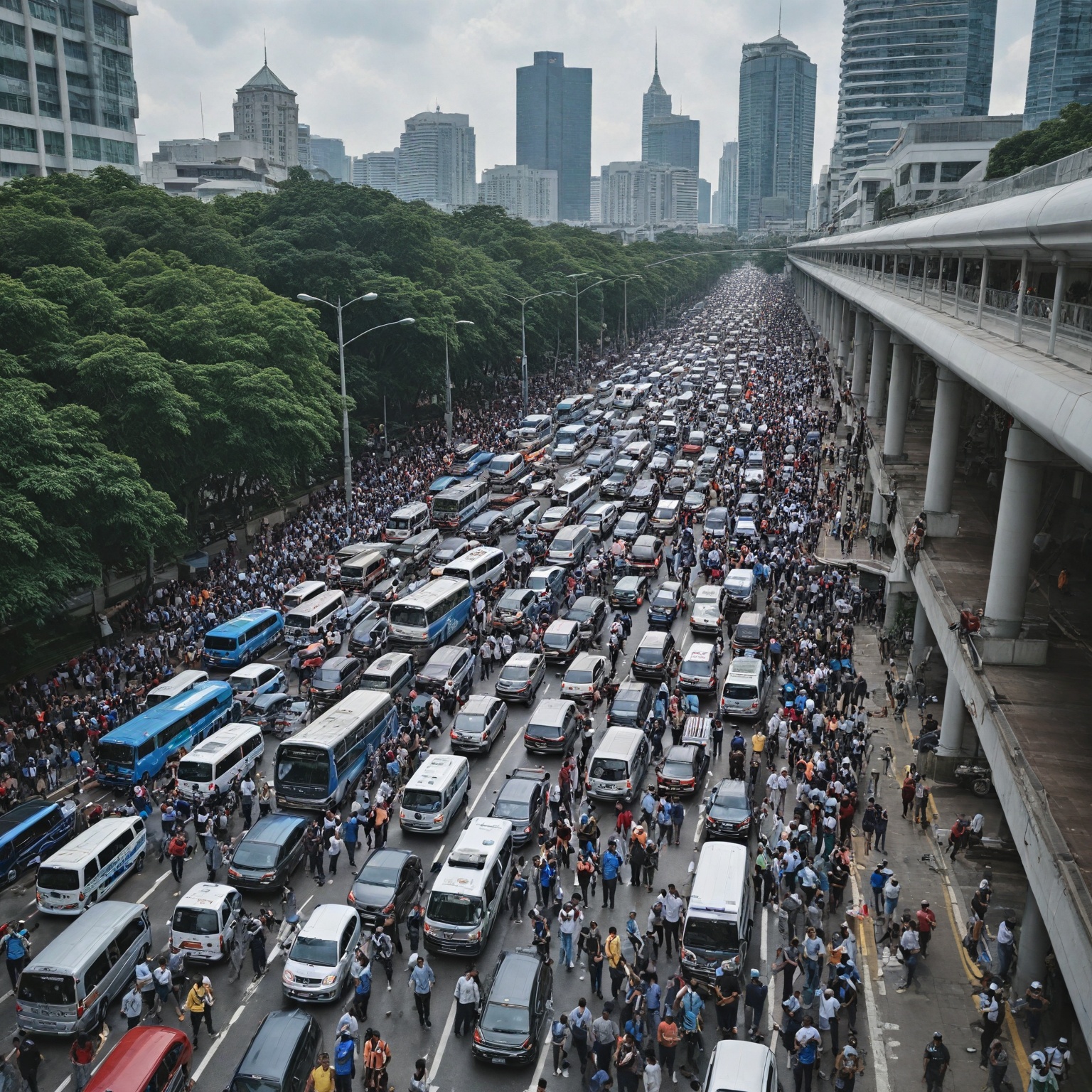
The announcement regarding the planned protests and the urging by transport minister Loke for KTM and RapidKL to maintain services on July 26 garnered mixed reactions from both the public and media outlets. Media coverage highlighted concerns over potential disruptions to public transport and traffic congestion in Kuala Lumpur, especially given past incidents where transport hubs like KL Sentral and Puduraya experienced significant crowding and operational challenges.
Some reports emphasized the proactive measures taken by authorities to ensure security and facilitate the rally without incident. The Dang Wangi District Police Chief confirmed that organizers had informed the police ahead of the event, prompting security preparations to manage the gathering effectively. However, public sentiment showed a cautious approach, with some commuters expressing worries about possible delays and safety during the protests.
In response to these concerns, Loke encouraged protesters and commuters to utilize public transport options to reduce traffic jams, promoting the use of subsidized travel passes such as the RM50 My50 pass and the RM6 MyCity pass for unlimited one-day rides on various transit services including LRT, MRT, BRT, Monorail, and RapidBus. This encouragement aimed to alleviate road congestion and maintain smooth transit operations amidst the expected crowds.
Additionally, KTM management clarified that no official notice had been issued to restrict services, countering rumors of service suspensions circulating on social media. This clarification helped to reassure daily commuters and the general public about the continuity of transport services during the protest period.
The wider regional context also influenced reactions, with neighboring Bihar state in India placing its security forces on alert due to unrest linked to pro-monarchy movements in nearby Nepal. This cross-border tension added to the media narrative on security vigilance and the importance of maintaining public order during times of political demonstrations.
Analysis of Transport Service Continuity
Transport Minister Anthony Loke emphasized the critical importance of maintaining uninterrupted public transportation services throughout Kuala Lumpur during the rally. He assured that all public transport operations, including those managed by KTM Berhad (KTMB) and Prasarana Malaysia Berhad (RapidKL), would continue as usual to ensure that the majority of commuters could carry on with their weekend activities without disruption.
Loke highlighted that smooth functioning of public transit was essential not only for daily mobility but also for safeguarding the country’s economic stability amidst potential public disturbances. To this end, transport providers were urged to implement all necessary safety precautions to mitigate risks associated with the rally. The government coordinated closely with law enforcement, with the rally organizers notifying the Dang Wangi District Police Chief, enabling proactive security measures designed to facilitate the gathering while preventing untoward incidents.
The transport network’s extensive integration—covering key LRT stations such as KL Sentral, Pasar Seni, and Masjid Jamek; MRT stations including Muzium Negara and Bukit Bintang; and Monorail stations like Imbi and Raja Chulan—was aligned with broader governmental policies to promote accessible, cost-effective public transport. This integrated approach enhances the system’s resilience during times of public unrest by offering multiple transit options and dispersing passenger loads efficiently.
Further strengthening the public transport ecosystem is the partnership that allows integration between KTMB’s Rail Rewards and Capital A’s AirAsia Rewards programs, enabling passengers to enjoy expanded travel benefits and cross-platform loyalty rewards. This cooperation reflects the government’s ongoing commitment to incentivizing public transport use despite challenges posed by political events or other disruptions.
Aftermath and Subsequent Developments
Following the protests scheduled for July 26, significant attention was directed towards the operation and stability of public transportation services in Kuala Lumpur. Despite concerns about potential disruptions, Transport Minister Anthony Loke emphasized that all public transport services, including KTMB and Prasarana Malaysia Berhad stations, would continue to operate as usual to ensure minimal inconvenience to commuters and maintain economic stability. He urged the public to utilize public transportation to help reduce traffic congestion during the rally.
Security measures were intensified around major transit hubs. Police and public transport operators increased their presence at key locations such as KL Sentral, Pasar Seni, Masjid Jamek, and other vital LRT, MRT, and Monorail stations to safeguard commuters and maintain smooth operations amid the protests. This was part of a broader strategy to prevent disruption to the country’s public services and mitigate any adverse economic impact.
The aftermath of the protests also highlighted the importance of transport hubs, as seen from earlier incidents on July 9, when closures at KL Sentral and Puduraya bus stations left many stranded. This underscored the critical role that uninterrupted public transportation plays during times of civil unrest and the need for careful planning and coordination among operators and authorities.
Meanwhile, ongoing political unrest and related protests in the region have affected tourism and raised security concerns beyond Malaysia’s borders. Neighboring Indian state Bihar heightened its security near the Indo-Nepal border due to pro-monarchy movements in Nepal, indicating the broader regional impact of such protests. Globally, similar protest-related disruptions were anticipated, including pro-Palestinian demonstrations at Egyptian embassies starting July 26, highlighting the international atmosphere of unrest during this period.
Despite these challenges, operators like KTM and Prasarana, which have faced financial losses over the years, were called upon to demonstrate resilience and adaptability to maintain service continuity during turbulent times. Loke’s administration stressed the importance of keeping the public transport network operational, recognizing its role as a backbone of urban mobility and economic activity amid protests and uncertainties.
The content is provided by Jordan Fields, Gear Shift Zone