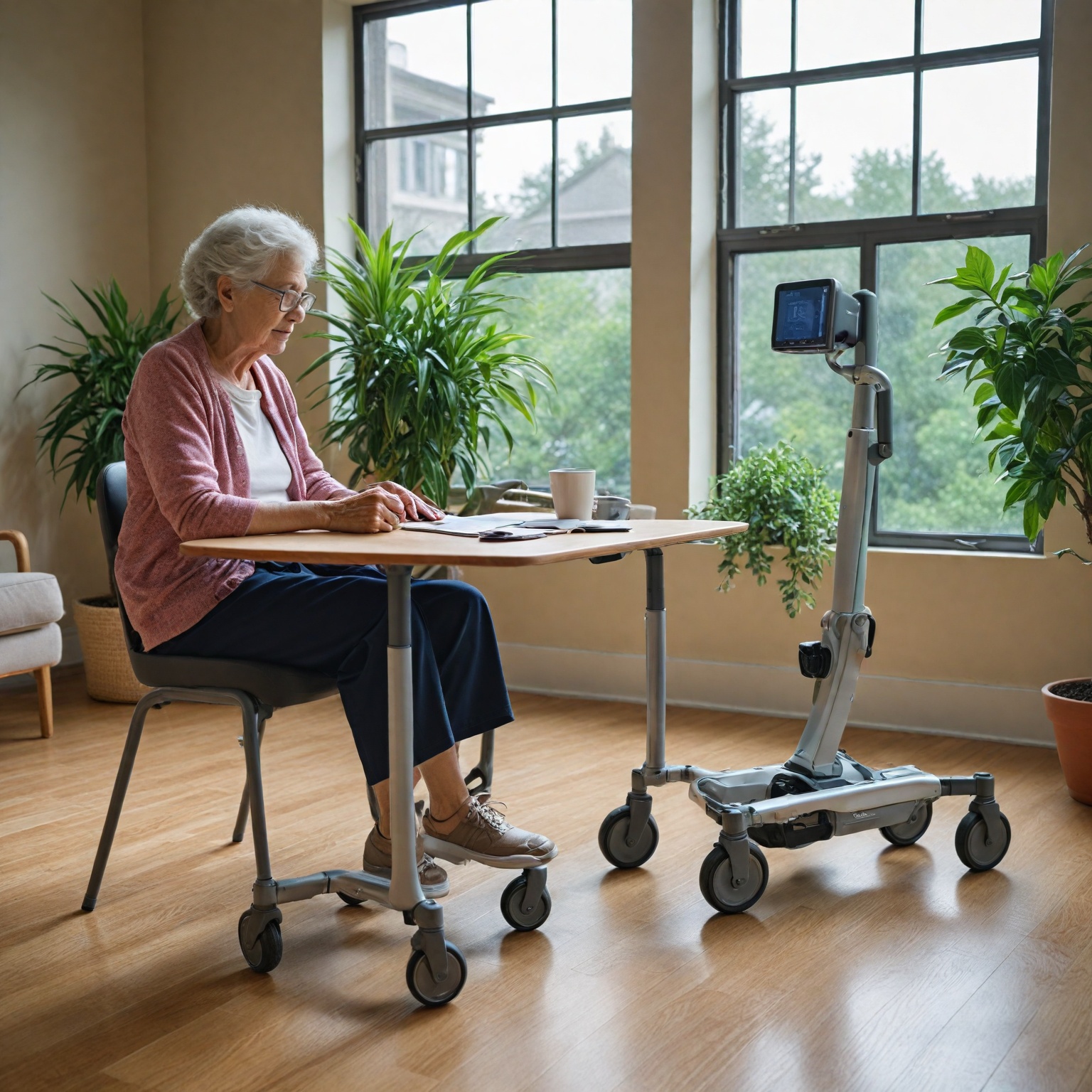
Highlights
- Smart mobility solutions are revolutionizing senior mobility, enhancing independence and safety.
- Advanced features like AI and IoT make smart devices more user-friendly for older adults.
Summary
Smart mobility solutions have emerged as a preferred alternative to traditional walkers among seniors in 2025, reflecting significant advancements in assistive technology designed to enhance independence, safety, and quality of life for older adults. With the global aging population increasing, maintaining safe and effective mobility has become a critical focus, as limited mobility is often an early indicator of declining health in seniors. While conventional walkers have long supported daily routines and autonomy, they present challenges related to stability, comfort, and physical effort, leading to growing interest in smart mobility aids that integrate artificial intelligence (AI), the Internet of Things (IoT), and machine learning technologies.
These smart devices offer advanced features such as real-time health monitoring, automatic fall detection, GPS tracking, and voice-activated controls, which collectively address many limitations of traditional walkers. Ergonomic design improvements and customizable settings further enhance usability and comfort, contributing to a safer and more user-friendly experience tailored to seniors’ diverse needs. The integration of these technologies into broader health management systems also facilitates proactive care and stronger communication between seniors, caregivers, and healthcare providers.
Despite their benefits, smart mobility solutions face notable challenges including high costs, technological complexity, and psychological barriers such as technophobia and limited digital literacy among older adults. Adoption is additionally influenced by social and cultural factors, as well as disparities in access to reliable internet connectivity, which manufacturers address by incorporating alternative communication technologies like Bluetooth Low Energy and cellular gateways. These factors highlight the importance of user-centered design, affordability, and comprehensive training to ensure widespread acceptance and effective use.
Looking ahead, the continued evolution of smart mobility aids, combined with expanding government support and healthcare integration, promises to transform senior mobility by 2025 and beyond. Emerging trends in virtual reality, telehealth, and adaptive AI-powered devices are expected to further enhance autonomy and safety, enabling older adults to maintain active, independent lifestyles with greater confidence than ever before.
Background
Attention to the health and physical fitness of older adults has increased due to the aging population, with a particular focus on maintaining physical abilities such as safe walking and movement. These abilities play a critical role in how older adults perceive their overall health, and limited mobility is often one of the earliest signs of declining fitness in this group. Traditional mobility aids like walkers and rollators have been widely used to support independence and daily routines. Most older adults regard their current walkers as effective tools, with high percentages agreeing on their role in maintaining independence and safety. However, concerns about stability and comfort remain prevalent among users.
In recent years, there has been growing interest in smart mobility solutions designed to enhance the functionality and usability of traditional assistive devices. These smart walkers incorporate elements from conventional mobile robotic platforms and traditional rollators, aiming to improve safety, ergonomics, and ease of use. Knee walkers and upright walkers, which provide ergonomic support and promote natural posture, are examples of such specialized devices that address specific mobility limitations and back issues in seniors.
The challenges related to mobility safety in older adults have often been overlooked, leading to limitations in understanding device failures and injury causes. Data collected from emergency departments and voluntary reporting systems highlight issues with device malfunctions but often lack detailed context about failure mechanisms. This underscores the need for improved design and safety protocols in mobility aids.
Emerging technologies integrating artificial intelligence (AI), machine learning, and the Internet of Things (IoT) are set to revolutionize mobility aids by 2025. These smart assistive devices and wearables are expected to create an interconnected ecosystem that supports elderly users by monitoring health, providing real-time feedback, and enhancing independence. The integration of smart home technologies and AI-driven analytics further supports a proactive, data-driven approach to senior care, improving communication between seniors and healthcare providers while addressing safety and accessibility.
To maximize the benefits of these innovations, it is essential that new technologies are affordable, user-friendly, secure, and seamlessly integrated into existing systems. Additionally, training healthcare professionals to effectively utilize these technologies in both clinical and outdoor settings is critical for successful adoption. Overall, the combination of traditional mobility aids with advanced smart technologies offers promising solutions to support the mobility, safety, and independence of older adults in the coming years.
Key Features of Smart Mobility Solutions Preferred by Seniors
Smart mobility solutions in 2025 incorporate a range of advanced features designed to enhance independence, safety, and ease of use for seniors, setting them apart from traditional walkers and other mobility aids. One of the most significant attributes of these devices is their integration with cutting-edge technologies such as artificial intelligence (AI), the Internet of Things (IoT), and machine learning. These technologies enable real-time health monitoring, personalized assistance, and seamless communication with caregivers, thereby creating a supportive ecosystem for seniors.
Safety remains a paramount concern for older adults, and smart mobility aids address this through features like automatic braking systems, fall detection, and stability monitoring. For example, smart walkers are equipped with sensors and accelerometers that detect sudden movements or tipping, triggering alerts to both users and caregivers to prevent injuries. GPS tracking is another key component, providing location monitoring to ensure that seniors can be quickly assisted in emergencies, which also offers peace of mind to family members.
Ease of use and accessibility are further enhanced by voice-activated controls and hands-free operation found in many smart home-integrated devices, such as those compatible with Google Nest Hub or Amazon Echo Dot. These allow seniors to interact with their mobility aids and related systems without requiring fine motor skills, which can be challenging due to physical limitations. Moreover, the use of lightweight, ergonomic, and customizable designs makes these devices not only functional but also comfortable and appealing to seniors, addressing both practical and aesthetic preferences.
Another important feature is the ability to function independently of complex internet setups, with some devices using Bluetooth Low Energy (BLE) and cellular gateways instead of Wi-Fi. This design consideration ensures usability among seniors who may lack reliable internet access or technical proficiency, thereby promoting inclusivity and simplicity in operation.
Finally, smart mobility solutions often integrate with broader health management systems, including wearable devices like smartwatches that monitor vital signs and detect health emergencies before they escalate. This interconnected approach supports seniors in managing their health proactively while reducing the day-to-day caregiving burden. Collectively, these features illustrate why smart mobility solutions are increasingly preferred by seniors in 2025 over traditional walkers, as they offer enhanced safety, autonomy, and convenience tailored to the evolving needs of older adults.
Seniors’ Perceptions and Experiences
Older adults generally recognize the importance of mobility aids in maintaining their independence and daily routines, with many viewing their current walkers as effective tools for supporting mobility and autonomy. Studies show that a significant majority—88% to 96%—agree on the usefulness of walkers in daily life and preserving independence, while 79% report feeling safe using them. However, concerns remain regarding stability, comfort, and overall safety; about 21% of seniors question the stability of their walkers, and 25% experience discomfort during use. These mixed perceptions highlight the ongoing challenges faced by older adults in aligning assistive devices with their specific needs.
The physical effort required to use traditional walkers is another notable concern, reported by approximately 42% of seniors and echoed by 40% of caregivers, underscoring the demand for more ergonomic and user-friendly designs. While mobility restrictions are sometimes downplayed by seniors themselves, caregivers and healthcare professionals often emphasize the need for adaptable solutions that accommodate varying physical abilities. This gap suggests that design improvements must not only focus on physical support but also on enhancing ease of use and comfort.
Moreover, older adults frequently encounter difficulties with traditional walkers during essential activities, such as sit-to-stand transfers, which are critical for everyday functioning. This misalignment between walker capabilities and user needs often leads to frustration and reduced adoption of assistive devices. In contrast, smart mobility solutions are increasingly seen as promising alternatives due to their ability to integrate features such as ergonomic adjustments, safety enhancements, and multifunctional use that better accommodate the physiological and psychological challenges faced by seniors.
Psychological and social factors also influence seniors’ perceptions and willingness to adopt new mobility technologies. Declining vision and motor skills, coupled with psychological barriers like technophobia and limited digital literacy, pose significant hurdles in embracing smart devices. Social connectivity plays a role as well; seniors with stronger social networks tend to engage more with digital tools, suggesting that efforts to improve adoption should also strengthen social support systems. User-centered design and pre- and post-exposure to new technology have been shown to ease skepticism and promote acceptance among older adults.
Seniors who have tested smart walkers often praise improvements in stability, comfort, and practical features such as adjustable handles and storage solutions, which enhance both safety and convenience. For instance, models like the Nitro Euro combine padded seating and ergonomic design to address common complaints related to comfort and balance, making them attractive options for elderly users seeking more than just basic mobility assistance. These advancements are part of a broader trend in the senior mobility aid market toward integrating technologies like GPS tracking and fall detection, which add layers of safety and autonomy for users.
Nevertheless, barriers such as high costs, complex interfaces, and cultural resistance still impede widespread adoption of smart mobility devices among seniors. These challenges highlight the importance of designing accessible, affordable, and easy-to-use solutions that respect the preferences and limitations of older adults. Overall, seniors’ experiences reflect a cautious optimism toward smart mobility solutions, recognizing their potential to better meet evolving needs compared to traditional walkers while acknowledging the necessity of addressing adoption barriers through thoughtful design and support.
Comparative Analysis: Smart Mobility Solutions vs. Traditional Walkers
The preference of seniors for smart mobility solutions over traditional walkers in 2025 stems from several key differences in functionality, safety, and user experience. Traditional walkers have long been valued by older adults for supporting daily routines and promoting independent mobility, with surveys indicating that 88% and 96% of users agree these devices are effective in maintaining routine activities and independence, respectively. Additionally, 79% of traditional walker users feel safe when using their devices, although concerns remain regarding stability and comfort, with 21% questioning safety and 25% reporting discomfort during use. Moreover, the physical effort required to operate traditional walkers is notable, with 42% of seniors and 40% of caregivers citing ergonomic challenges that affect safety and ease of use.
In contrast, smart mobility solutions offer enhanced features that directly address many limitations of traditional walkers. Devices like the iBuddy Smart Walker integrate basic mobility support with connectivity and safety monitoring capabilities, allowing families to stay informed about their loved ones’ status while preserving seniors’ autonomy. These smart aids commonly incorporate smartphone applications that enable users to monitor battery life, adjust speed settings, and track usage patterns in real time, adding a layer of control and customization absent in conventional walkers. For example, companies such as MOBOT have introduced app-controlled mobility scooters featuring remote locking and maintenance alerts, which enhance security and convenience.
Technological advancements, including artificial intelligence, robotics, and the Internet of Things (IoT), are revolutionizing mobility aids by fostering greater independence among seniors and reducing reliance on caregivers. The ergonomic design of smart mobility devices balances excellent stability with improved comfort, addressing common concerns among older adults with balance issues. Additional practical features, such as spacious storage compartments, further improve usability and daily convenience.
Despite these benefits, high abandonment rates of mobility aids underscore the importance of aligning device design with user needs and preferences. While smart walkers present complexity that may pose challenges to acceptance, their ability to enhance safety monitoring and user engagement represents a significant evolution from traditional walkers. Furthermore, consumer product safety data reveal that falls associated with mobility aids remain a critical issue, with nearly two-thirds of emergency department visits linked to falls involving products like canes and walkers. Smart mobility solutions have the potential to mitigate these risks through improved stability, real-time monitoring, and adaptive features.
Market Trends and Adoption in 2024–2025
The market for senior mobility aid devices has experienced significant growth in recent years, driven primarily by the increasing global aging population and heightened awareness of mobility impairment risks among older adults. In 2023, the elderly walker market alone was valued at approximately USD 1.56 billion, with projections estimating a rise to USD 2.73 billion by 2032 at a compound annual growth rate (CAGR) of 6.44% from 2024 to 2032. More broadly, the global senior mobility aid devices market reached a valuation of USD 10.4 billion in 2024 and is expected to nearly double to USD 20.3 billion by 2034, growing at a CAGR of 7.1% between 2025 and 2034.
North America leads in the adoption of elderly smart walkers, capturing roughly 38% of the global market share in 2024. This dominance stems from the region’s advanced healthcare infrastructure, higher disposable income levels, and proactive eldercare strategies. The United States, in particular, has seen extensive integration of smart mobility aids across clinical and homecare settings, supported by favorable reimbursement policies and the strong presence of leading medical device manufacturers.
Despite the promising market growth, adoption barriers remain. High costs relative to alternative technologies and limited adaptability due to complex pre-programmed functions and user interfaces pose significant challenges for widespread acceptance among seniors. Additionally, factors such as cultural attitudes toward technology, limited familiarity with digital devices—especially among older adults—and methodological difficulties in qualitative studies influence user perception and adoption rates.
Education level also plays a crucial role in technology acceptance. Seniors with higher education tend to exhibit greater willingness to engage with flexible smart walkers, particularly those offering versatile usage through polygonal structural designs. These differences in perception underscore the importance of tailoring mobility solutions to diverse user profiles to enhance acceptance and usability.
Design Principles and Usability Improvements in Smart Mobility Devices
Smart mobility devices for seniors are increasingly designed with user-centered principles that address the unique physical, cognitive, and emotional needs of older adults. Innovations focus on creating products that not only assist with mobility but also enhance overall autonomy and safety, allowing seniors to maintain independence while navigating their environments more confidently.
A key aspect of these design improvements involves ergonomic and customizable features that improve comfort and usability. Devices like smart walkers incorporate sensory enhancements and communication capabilities, making them more intuitive and responsive to user behavior and environmental changes. By tailoring design to accommodate diverse levels of mobility and cognitive function, these devices reduce the risk of falls and encourage more frequent use, thereby improving quality of life.
The integration of advanced technologies such as artificial intelligence (AI) and the Internet of Things (IoT) further elevates usability. AI enables smart mobility aids to learn from the user’s patterns and adapt accordingly, while IoT connectivity allows for real-time monitoring and communication with caregivers and healthcare professionals. This seamless integration not only enhances safety but also fosters a supportive ecosystem that empowers seniors to remain active in daily activities.
Moreover, usability improvements emphasize affordability, ease of use, and security, ensuring that seniors can adopt these technologies without significant barriers. Training and support for healthcare providers also play a vital role in optimizing the implementation of smart mobility solutions in real-world settings, particularly for outdoor use.
Impact on Quality of Life for Seniors
The integration of smart mobility solutions over traditional walkers has a profound impact on the quality of life for seniors, enhancing their independence, safety, and overall well-being. Traditional walkers often present challenges such as poor fit and safety risks, which can hinder mobility and reduce user confidence. In contrast, smart mobility aids incorporate advanced technology that addresses these limitations by improving movement support, preventing falls, and enabling more personalized assistance tailored to the user’s needs.
Smart walkers and other intelligent devices offer features that go beyond basic mobility support. They can monitor usage patterns and provide real-time data that help healthcare professionals assess a senior’s gait and safety more accurately, although no universally accepted standards for their prescription currently exist. This technological integration allows for a more nuanced approach to mobility care, accommodating cognitive abilities and user engagement levels, which fosters greater acceptance and consistent use among older adults.
Moreover, the proactive management enabled by
Challenges and Limitations of Smart Mobility Solutions
Despite the promising advancements in smart mobility solutions for seniors, several challenges and limitations affect their widespread adoption and effectiveness. One major issue is the high abandonment rate of mobility aids, including smart devices, which underscores a gap in understanding user needs and preferences. Although smart walkers and other intelligent aids offer enhanced connectivity and safety monitoring, their complexity can hinder acceptance and diminish the user experience among older adults.
Physiological factors, such as declining vision and motor skills, pose significant challenges for seniors when interacting with sophisticated smart technologies. Psychological barriers, including technophobia and limited digital literacy, further complicate adoption. Social obstacles, such as insufficient exposure to digital tools, create additional hurdles that must be addressed to bridge the digital divide effectively. Moreover, cultural paradigms and unfamiliarity with technology, especially among older populations, influence perceptions and willingness to use these devices.
Cost also remains a critical barrier. Smart mobility aids tend to be more expensive than traditional alternatives, which limits accessibility for many seniors. Additionally, these devices often feature complex, pre-programmed functions and user interfaces that may lack adaptability, reducing their practical usability. Methodological challenges in qualitative research complicate the comprehensive understanding of these issues, further impeding the design of user-centered solutions.
From a systemic perspective, the failure to address environmental and contextual factors holistically limits the potential impact of smart mobility aids. Effective solutions require integration across multiple domains, including smart home technologies, accessible public spaces, supportive policies, and innovative financing models. These interconnected determinants of mobility must be addressed collectively rather than in isolation to create sustainable improvements in senior independence.
Furthermore, data limitations hinder the timely identification and resolution of product malfunctions. Reporting systems like NEISS and MAUDE provide injury-related data but often lack detailed context regarding device failures. Voluntary reporting is also inconsistent, as consumers may underestimate the seriousness of malfunctions, potentially delaying necessary interventions to improve device safety and reliability.
Future Outlook
The future of senior mobility solutions is poised for significant transformation by 2025, driven by advancements in smart assistive devices and wearable technologies. These innovations leverage cutting-edge technologies such as the Internet of Things (IoT), artificial intelligence (AI), and machine learning to create an interconnected ecosystem that not only aids mobility but also monitors health and safety in real time, offering comprehensive support for seniors and their caregivers.
Emerging trends include the integration of virtual reality (VR) and telehealth solutions, which enhance mobility support and healthcare delivery remotely, reducing the need for frequent in-person visits and addressing challenges related to accessibility. Additionally, adaptive mobility aids powered by AI can learn individual user patterns and preferences, providing personalized assistance that improves both safety and independence for older adults.
Efforts to make these technologies affordable, user-friendly, and secure are critical to their widespread adoption. Seamless integration with existing devices and systems, along with adequate training for healthcare providers, will further facilitate effective use in both clinical and outdoor environments. The expansion of connected care ecosystems—incorporating remote monitoring, telemedicine, smart homes, and personalized assistive devices—signals a shift toward proactive, data-driven, and inclusive care models tailored to the diverse needs of seniors.
Government initiatives worldwide are playing a crucial role in accelerating access to advanced mobility solutions, aiming to promote independence, reduce social isolation, and alleviate caregiving burdens. Overall, the convergence of these technological and policy advancements promises to revolutionize the mobility landscape for seniors, empowering them with greater freedom and quality of life than traditional walkers can offer.