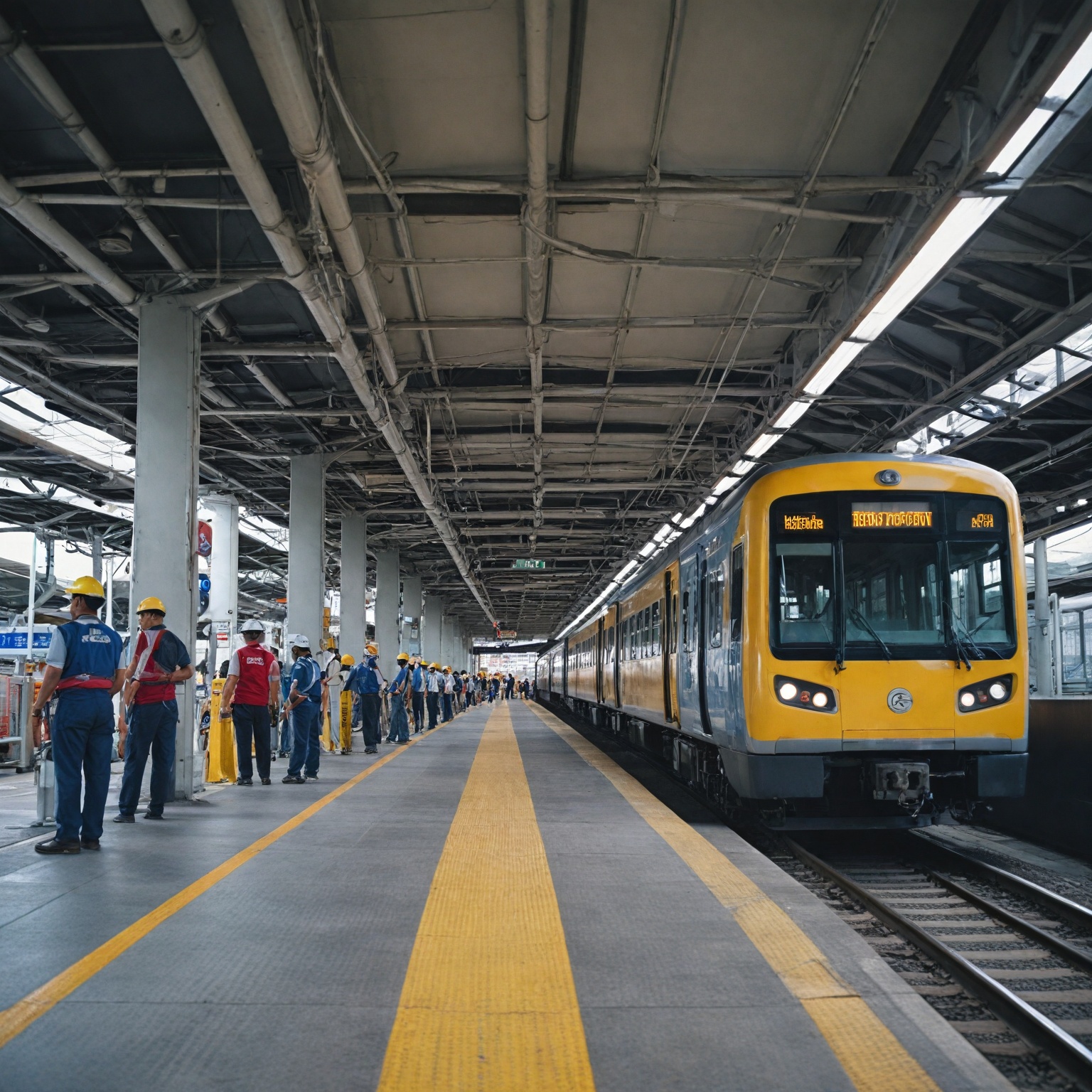
Summary
The safety of Malaysia’s Light Rail Transit (LRT) system, operated by Prasarana Malaysia Berhad, has been a growing concern due to multiple incidents involving train collisions, passenger falls onto tracks, suicide attempts, and door pinning. These safety challenges, highlighted in reports by the Japan International Cooperation Agency (JICA) and underscored by fatal accidents at stations such as Pusat Bandar Puchong and Titiwangsa, have prompted urgent calls for comprehensive safety enhancements across the LRT network. The system’s infrastructure, particularly older stations lacking platform screen doors (PSDs), has been identified as a critical risk factor contributing to these incidents.
In response, the Ministry of Transport has mandated Prasarana to accelerate the installation of platform screen doors at all LRT and Mass Rapid Transit (MRT) stations to prevent accidental or intentional track intrusions. Alongside physical barriers, Prasarana is deploying smart CCTV systems capable of detecting risky behaviors in real time and increasing the presence of station personnel, especially to assist vulnerable commuters such as persons with disabilities. These multi-layered safety measures aim to address both technological and human factors influencing commuter safety.
The implementation of these upgrades involves significant financial investment and logistical challenges, particularly in retrofitting older stations with legacy designs. Nonetheless, the government has prioritized these initiatives, recognizing that enhancing commuter safety is essential for public confidence and system reliability. Complementary efforts include ongoing track repairs, improved maintenance protocols, staff training, and traffic management during construction of new lines such as the LRT3 Shah Alam Line, reflecting a holistic approach to safety across Malaysia’s urban rail transit network.
Despite these advances, criticisms persist regarding staffing shortages on platforms and delays in fully implementing recommended safety features, particularly for disabled passengers who remain vulnerable to accidents. Advocacy groups and transport authorities continue to work collaboratively to address these challenges, aiming to create a safer, more inclusive transit environment for all users of the LRT system.
Background
The Light Rail Transit (LRT) system in Malaysia has faced multiple safety challenges, including train collisions, suicide attempts, dragging incidents, and door pinning, which have raised concerns about passenger safety and system reliability. These incidents highlight broader safety issues that necessitate urgent attention and improvements. The Japan International Cooperation Agency (JICA) has recommended various safety enhancements, such as improved maintenance protocols, updated software technologies, and upgraded station facilities to mitigate these risks.
One significant safety concern has been the absence or insufficiency of platform screen doors (PSDs) at many LRT stations. While underground MRT and sub-surface stations are equipped with full-height PSDs, and elevated stations were retrofitted with half-height doors by 2012, several LRT stations—such as those at Bukit Panjang, Sengkang, and Punggol—lack physical doors, featuring only barriers with openings instead. This has contributed to accidents involving passengers falling onto the tracks, including vulnerable groups like the visually impaired.
In response to these safety incidents, the Ministry of Transport and Prasarana have taken steps to enhance safety measures across the LRT network. This includes installing smart CCTV systems capable of detecting risky behavior, improving facilities for disabled passengers, and committing to the installation of platform screen doors throughout all LRT routes to prevent further accidents. The urgency for these measures intensified after fatal incidents at stations such as Pusat Bandar Puchong and Titiwangsa, which prompted official investigations and calls for comprehensive safety overhauls.
Moreover, safety monitoring during construction activities for related projects like the LRT3 line is being conducted in sensitive areas to minimize risks posed by noise, vibration, and dust, reflecting a broader commitment to safety not only in operation but also during infrastructure development. Rapid KL staff and Prasarana auxiliary police are also deployed at stations to assist passengers and manage crowds, further contributing to safety and orderliness within the system.
Safety Measures Mandated for LRT Stations
The safety of commuters using the Light Rail Transit (LRT) system has been a critical concern following multiple safety incidents, including train collisions, suicide attempts, dragging, and door pinning. These incidents have highlighted the urgency for enhanced safety protocols and infrastructure upgrades across LRT stations. The Japan International Cooperation Agency (JICA) has pointed out that poor maintenance, outdated software technologies, and depreciated facilities contribute significantly to the risks faced by passengers, recommending comprehensive improvements in these areas.
In response to recent fatal accidents, including one involving a passenger who fell onto the tracks at Pusat Bandar Puchong LRT station, the Ministry of Transport has prioritized passenger safety enhancements. Transport Minister Anthony Loke has directed Prasarana, the public transport operator, to accelerate the installation of platform screen doors at all LRT and MRT stations to prevent similar incidents in the future. While newer MRT stations are already equipped with automated safety doors that open only when trains arrive, many older stations on the Ampang LRT line still lack such platform screen doors due to their older design, prompting targeted plans for retrofitting these stations.
The implementation of platform screen doors is recognized as a costly endeavor requiring significant government funding, but it remains a top priority to safeguard commuters. In addition to technological measures, there is a recognized need for adequate human oversight on platforms, especially to assist visually impaired passengers. Ensuring the presence of control officers at strategic points is crucial for risk reduction, as incidents involving disabled passengers often correlate with the lack of platform personnel.
Beyond physical infrastructure, Prasarana is also set to install smart CCTV systems capable of detecting risky behaviors at stations, thereby enhancing preventive safety measures. These comprehensive initiatives reflect a multi-faceted approach that combines infrastructure upgrades, technology deployment, and human assistance to improve overall safety in the LRT network.
Implementation Timeline and Rollout Plan
The implementation of safety enhancements across Prasarana’s LRT stations follows a structured timeline and phased rollout plan aimed at ensuring commuter safety while minimizing service disruptions. Comprehensive repair works to the track structure between Masjid Jamek and Bandaraya stations (Phase 2) are underway, with completion expected by mid-October 2023, pending assessment and approval by relevant authorities. Once finalized, this will allow the LRT Ampang and Sri Petaling Lines to resume free-flowing operations.
In terms of safety infrastructure, the installation of safety passenger doors at all LRT stations has been mandated. However, the Ampang LRT line presents a unique challenge, as several stations still feature older platform designs without these doors. The transport ministry has tasked Prasarana to urgently address this issue, acknowledging the significant financial investment and additional government funding required to complete the comprehensive installation.
To manage operational safety during the upgrade period, Rapid KL and Prasarana auxiliary police personnel will be deployed at relevant stations for crowd control and assistance. Moreover, enhanced LRT service frequency and an expanded bus fleet are being introduced as interim measures to improve commuter experience and safety, reflecting lessons learned from past incidents such as the 2021 train collision.
For future projects, the LRT3 Shah Alam Line’s construction is set to commence in 2024, with an anticipated completion by the second quarter of 2027. This line will feature integration points at MRT Bandar Utama and the LRT Kelana Jaya line (CGC Glenmarie Station) to optimize connectivity. Traffic Management Plans will be implemented before construction to minimize road congestion and disruption around affected areas.
Finally, Prasarana continues to prioritize safety risk reduction by combining technological enhancements with increased deployment of control officers on platforms, especially to assist visually impaired passengers. This multifaceted approach aims to mitigate accidents and elevate the overall safety standards at all rail stations.
Safety Technologies and Systems
Prasarana has been actively implementing various safety technologies and systems across LRT and MRT stations to address prevalent safety concerns such as train collisions, suicide attempts, dragging, and door pinning.
A major safety enhancement initiative involves the installation of passenger safety doors—also known as platform screen doors—at all LRT and MRT stations. This measure aims to prevent accidents like the fatal fall of a commuter onto the LRT track at the Pusat Bandar Puchong station. While newer MRT stations are already equipped with automated platform screen doors that operate before train arrivals, some older lines such as the Ampang LRT still lack these doors due to their legacy station designs. Transport Minister Anthony Loke has urged Prasarana to expedite plans to retrofit these older stations despite the substantial costs involved, emphasizing that passenger safety remains a top priority.
In addition to physical barriers, Prasarana is deploying smart CCTV systems capable of detecting risky behaviors in real-time at stations. This data-driven approach is intended to facilitate proactive interventions before incidents occur. Preventive maintenance and targeted staff training also contribute to operational safety and efficiency. The LRT3 project exemplifies ongoing efforts to enhance connectivity while integrating modern safety features, supported by a significant government allocation of RM4.7 billion.
Cybersecurity is another critical component of the safety framework, with Prasarana maintaining vigilant oversight in collaboration with the National Cyber Security Agency to protect transport infrastructure from cyber threats. This comprehensive safety strategy encompasses not only physical infrastructure but also digital safeguards to ensure the continuous, secure operation of public transit services.
Collectively, these technologies and systems reflect Prasarana’s commitment to elevating passenger safety standards, minimizing accidents, and fostering a secure transit environment for all commuters, including persons with disabilities.
Impact on Commuter Safety and Experience
The implementation of enhanced safety measures at LRT stations has had a significant impact on commuter safety and overall user experience. The focus on addressing critical safety issues such as train collisions, suicide attempts, dragging, and door pinning is a direct response to longstanding safety concerns that have affected passengers and employees alike.
One of the most prominent safety enhancements is the planned installation of platform screen doors at all LRT and MRT stations, a measure aimed at preventing accidents like falls onto the tracks. This initiative was accelerated following several fatal incidents, including one involving a Taiwan national at the Pusat Bandar Puchong LRT station. Transport Minister Anthony Loke has emphasized that while the installation of these doors entails substantial costs and requires additional government funding, it remains a top priority to improve passenger safety across all stations, especially those with older designs that currently lack such protective features.
The safety improvements have been widely welcomed by advocacy groups, particularly those representing disabled commuters. Organisations such as the Society of the Blind in Malaysia (SBM) and OKU Sentral have expressed support for the move, highlighting that platform screen doors are crucial in preventing accidents involving visually impaired passengers, who have suffered multiple falls onto rail lines across KTM, LRT, and monorail stations. To further support vulnerable passengers, Prasarana staff and station auxiliary police are available to provide additional assistance, ensuring that the needs of disabled individuals and others requiring extra care are addressed promptly.
In addition to physical infrastructure upgrades, the government and Prasarana have taken steps to enhance operational safety by improving maintenance, updating software technologies, and upgrading facilities. These measures are part of a broader strategy recommended by the Japan International Cooperation Agency (JICA) to mitigate safety threats and improve the system’s overall performance. During peak periods and public holidays, service frequencies and staffing levels are also adjusted to maintain smooth and safe operations, reflecting a comprehensive approach to commuter safety and convenience.
Following tragic incidents, such as the fatality at Titiwangsa LRT station, the Ministry of Transport has demonstrated a commitment to ongoing investigations and collaborations with relevant stakeholders to prevent recurrence and strengthen safety management. Overall, these combined efforts contribute to a safer, more inclusive, and user-friendly public transport system that benefits all Malaysians, improving both the safety and experience of LRT commuters.
Challenges and Criticisms
The Light Rail Transit (LRT) system managed by Prasarana faces several safety challenges that have raised public concern and highlighted areas needing urgent improvement. A significant issue is the occurrence of safety incidents such as train collisions, suicide attempts, dragging, and door pinning, which serve as indicators of broader systemic safety shortcomings within the network. Despite these risks, commuters—including employees, students, and workers—continue to rely heavily on the LRT system, reflecting limited alternative transportation options.
One of the critical infrastructure challenges is the presence of older station designs, particularly on the Ampang LRT line, where several stations still lack platform safety doors. The absence of these doors increases the risk of accidents involving passengers falling onto the tracks or being injured by incoming trains. Although the Ministry of Transport and Prasarana have recognized the importance of installing safety passenger doors, the comprehensive rollout of these features has been delayed due to the substantial costs involved and the need for additional government funding. Meanwhile, incidents such as major service disruptions caused by technical issues—like the MRT Kajang Line’s train wheel problems in 2022—have led to operational cutbacks aimed at safeguarding passenger safety, underscoring ongoing maintenance and reliability concerns.
Further criticism centers on staffing and accessibility. There is a noted shortage of control officers stationed on platforms to assist passengers, particularly those with disabilities or visual impairments. This deficiency has contributed to accidents, including falls onto rail tracks, which disability advocacy groups such as the Society of the Blind in Malaysia have repeatedly highlighted. Calls for enhanced support have prompted commitments from the government and Prasarana to improve assistance and ensure a more inclusive and user-friendly transport environment. Nevertheless, the lack of adequate personnel remains a barrier to fully addressing safety risks.
In addition to these operational and staffing challenges, Prasarana’s mandate includes managing infrastructure development and safety enhancements under complex conditions. For example, the construction of new lines such as the LRT3 Shah Alam Line requires careful traffic management to minimize disruption to road users, illustrating the logistical complexities that accompany safety improvements and network expansion. While measures such as improved maintenance protocols, upgraded technologies, and facility enhancements have been recommended by organizations like the Japan International Cooperation Agency (JICA), full implementation continues to be hampered by financial constraints and the scale of the required upgrades.
Related Safety Initiatives by Prasarana
Prasarana has taken significant steps to enhance safety across all Light Rail Transit (LRT) stations in response to recent incidents and ongoing safety concerns. A key measure involves the installation of smart closed-circuit television (CCTV) systems capable of detecting risky behavior, which will enable proactive interventions to prevent accidents and improve overall security at stations.
In addition, the transport ministry has mandated the implementation of platform screen doors (PSDs) along all LRT routes. These safety barriers, similar to those already deployed in Mass Rapid Transit (MRT) stations, aim to prevent passengers from accidentally or intentionally falling onto the tracks. The plan for PSD installation is part of Prasarana’s long-term strategy to bolster passenger safety.
Beyond physical infrastructure improvements, Prasarana also emphasizes operational readiness and staff deployment to maintain smooth and safe service. During peak periods such as public holidays, the company adjusts service frequencies and increases staffing levels, ensuring adequate supervision and rapid response to any safety issues.
Moreover, preventive maintenance and data-driven staff training are integral to Prasarana’s approach to safety and operational efficiency. These practices are complemented by large-scale projects like the upcoming LRT3, which not only enhance network connectivity but also incorporate modern safety standards and technologies as recommended by international experts such as the Japan International Cooperation Agency (JICA).
Traffic management plans are also developed to minimize disruptions and ensure the safety of road users and pedestrians around construction sites for new transit infrastructure. Collectively, these initiatives reflect Prasarana’s comprehensive mandate to address safety challenges and improve the commuting experience for all LRT users.
Future Plans and Developments
Prasarana has outlined several initiatives aimed at enhancing the safety and overall efficiency of the LRT system. Following the 2021 train collision, there is a strong emphasis on preventing similar incidents, with safety declared the highest priority. Azharuddin, a key spokesperson, acknowledged that while the system is not yet on par with those of Singapore or Hong Kong, the operator is committed to learning and adopting proactive safety measures to avoid any recurrence of past accidents.
One significant future development involves the installation of platform screen doors across all L