
Unveiling the New Nissan Leaf Crossover with an Impressive Range of Over 372 Miles
Summary
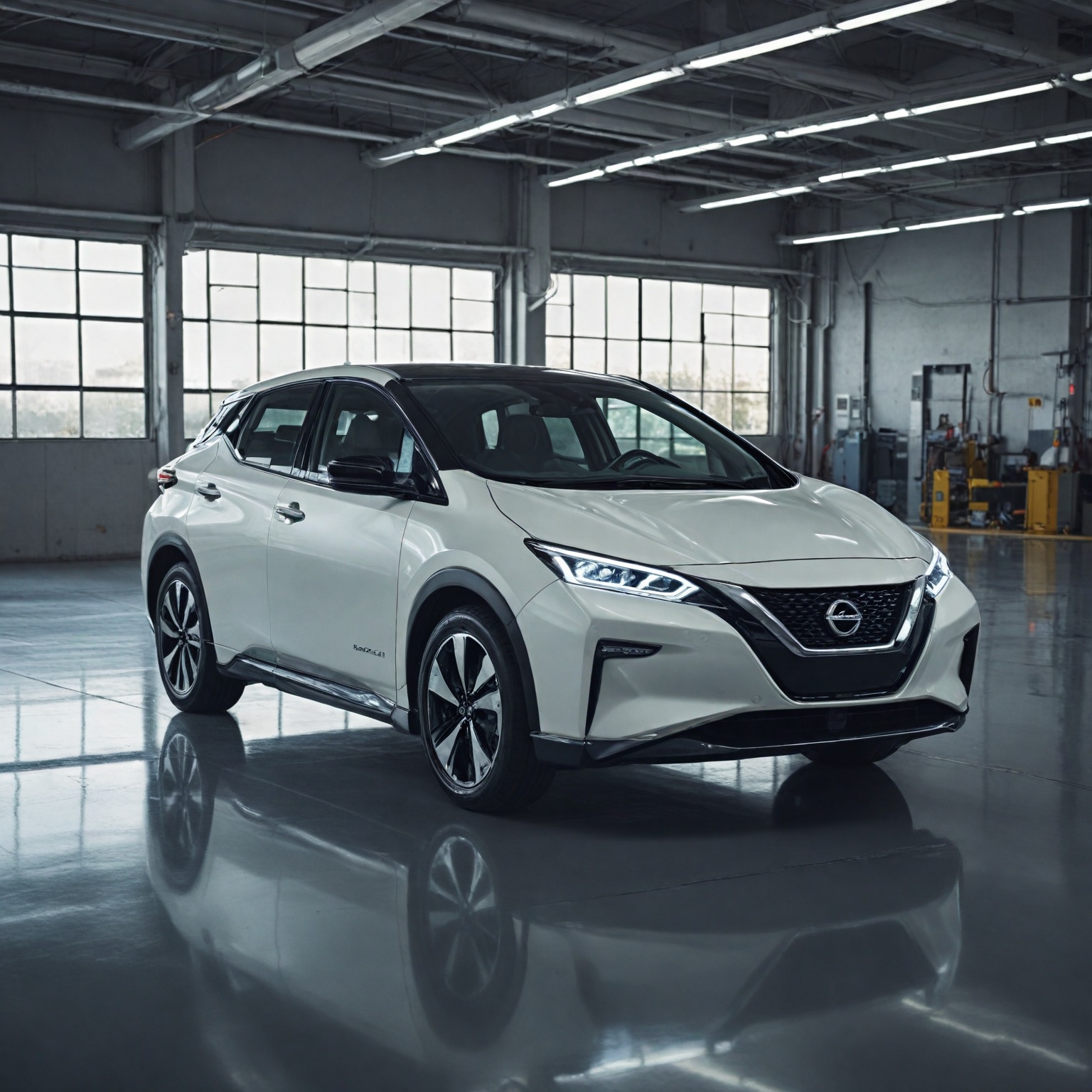
The 2026 Nissan Leaf is a highly anticipated electric vehicle (EV) from Nissan, featuring a significant redesign that includes a crossover-like silhouette and an extended driving range of over 372 miles on a single charge. This transition in design represents a bold shift in Nissan’s design philosophy and signifies a reentry into prominence within the evolving EV market. The updated design also enhances the aerodynamic efficiency of the Leaf, which is expected to reduce drag, increase efficiency, and boost performance under various driving conditions.
The new Nissan Leaf Crossover is powered by a ‘3-in-1’ setup for its powertrain, composed of a modular design of the motor, inverter, and reducer, along with Nissan’s lithium-ion battery technology. Despite being outpaced by some competitors in terms of range and charging capacity, the Leaf Crossover has demonstrated commendable performance in tests. The vehicle also incorporates various safety features, including Nissan Safety Shield technologies and Nissan ProPILOT Assist.
The new Leaf Crossover is a key component of Nissan’s recovery strategy and its positioning in the global EV market, which is seeing rapid growth thanks to strategic policy initiatives and incentives across different countries. The EV market has witnessed increased sales, bolstered by pre-existing policies and Covid-related stimulus measures. As part of a broader shift towards electric mobility and in response to policy incentives, Nissan has developed the new Leaf to address one of the key challenges of the EV market – range anxiety.
The Renault-Nissan Alliance, in their effort towards electrification, has committed substantial investment towards EVs, with the ultimate goal of introducing 35 new EV models to the market by 2030. As part of this initiative, Nissan is leading the development of breakthrough all-solid-state battery technology which will significantly impact the future of EVs.
Design Evolution
The 2026 Nissan Leaf is expected to undergo a significant redesign, breaking away from its traditional appearance to adopt a more crossover-like silhouette. This shift in design is reflective of Nissan’s Ariya and signifies a bold change in the automaker’s design philosophy. This updated design not only enhances the visual appeal of the Leaf, but also offers an improvement in aerodynamic efficiency which could potentially reduce drag, increase overall efficiency and enhance the vehicle’s range and performance under various driving conditions.
In the years leading up to the new model, Nissan’s Leaf has seen a reduction in prominence as competitors entered the EV market. However, this forthcoming redesign signifies Nissan’s comeback and their intention to realign with the needs and desires of modern EV enthusiasts.
This redesign is a part of a broader overhaul of Nissan’s crossover lineup, including the two-row mid-size crossover which has undergone a comprehensive makeover for the 2025 model year, resulting in improved styling and driving experience.
The crossover redesign is built upon the Renault-Nissan Alliance’s CMF-EV platform, designed to maximise the benefits of a pure-electric powertrain. The first vehicle to utilize this new platform was the Renault Megane E-Tech Electric, which made its debut in early 2022.
The Nissan Leaf has been lauded for its efficiency, with some owners reporting that it offers 2.5 times better energy efficiency compared to traditional internal combustion engine (ICE) vehicles. With the forthcoming redesign and improvements, it is expected that the Leaf will continue to improve on its already impressive efficiency, further cementing its place in the EV market.
Specifications
Powertrain and Range
The new Nissan Leaf Crossover features a unique ‘3-in-1’ setup for its powertrain, which includes a modular design of the motor, inverter, and reducer. The vehicle can achieve an impressive range of over 372 miles or 600 km on a single charge, thereby offering a “confident EV drive”. This means the Leaf Crossover enables its users to travel long distances without any worry regarding the availability of a charging station.
The Leaf Crossover’s performance is further enhanced by its 80-kWh AC synchronous motor which delivers a torque of 280 Nm. The motor provides instant acceleration and smooth running, and it is especially silent, leading to no polluting emissions. Moreover, the vehicle includes an adapter that allows the energy stored in its batteries to be harnessed for powering electric equipment with a maximum power of 1500 W.
Battery Technology
The vehicle’s impressive performance is powered by Nissan’s lithium-ion battery technology. This technology allows for a higher density of lithium ions to be stored using a pack structure that improves layout efficiency. These high energy densities have made Li-ion batteries the market leader in portable electronic devices and electrified transportation, including EVs like the Nissan Leaf.
Research efforts are currently underway to develop next-generation EV batteries with energy densities approaching 500 watt-hours per kilogram, double the industry standard. Such advancements in battery technology can contribute significantly to enhancing the efficiency and performance of EVs.
Safety Features
The new Nissan Leaf Crossover comes equipped with Nissan Safety Shield technologies and Nissan ProPILOT Assist. The Safety Shield includes features that monitor the space in front of, behind, and on either side of the vehicle to enhance driving safety. The ProPILOT Assist, meanwhile, can maintain a set distance from the car ahead and adapt to traffic flow, automatically stopping and resuming speed with traffic. However, drivers should remain in control of the vehicle at all times as these systems can’t prevent all collisions.
Other Features
The new Leaf Crossover includes an Eco Mode to boost the vehicle’s efficiency and convert braking energy into a charge for the battery. It also comes with NissanConnect® EV & Services app, powered by SiriusXM, which provides access to unique features of the fully electric vehicle, such as the ability to lock doors, sound the horn, flash headlights, and turn on climate control — all from a compatible smartphone.
Performance and Range
The Nissan Leaf Crossover is equipped with the company’s unique ‘3-in-1’ powertrain setup, which effectively modularizes the motor, inverter, and reducer. This contributes to its impressive range, with Nissan’s vehicle program boss Francois Bailly stating that the vehicle can travel up to 600 kilometers or approximately 373 miles on a single charge.
However, it is worth noting that this range figure trails rivals like the Hyundai Ioniq 6 and the Tesla Model 3. In addition, the Nissan Leaf Crossover’s 50-kW DC fast-charging maximum capacity is slower. Despite this, in tests, the vehicle managed a respectable 180 miles on a single charge when traveling at 75 mph on a highway.
The vehicle’s lithium-ion battery, composed of 48 compact modules, is linked to an 80-kWh AC synchronous motor that generates a torque of 280-Nm. This motor provides maximum torque at the start, resulting in instant acceleration and smooth operation. In addition, an adapter is available to utilize the energy stored in the batteries to power electric equipment with a maximum power of 1500 W.
The launch of the new Nissan Leaf Crossover coincides with an increasing emphasis on electric mobility around the world. For example, in India, the FAME initiative, which aims to accelerate the adoption and manufacturing of hybrid and electric vehicles, has entered its second phase with a budget allocation of 10,000 Cr. In New Zealand, the government offers subsidies for electric taxis and home charging points as part of its commitment to achieve net-zero emissions by 2050.
As countries aim to shift towards cleaner transportation options, the Nissan Leaf Crossover offers a promising, long-range electric vehicle solution. Its performance and impressive range are likely to be welcomed by consumers, particularly in regions where strong incentives and subsidies are in place to encourage the adoption of electric vehicles.
Technology and Features
The new Nissan Leaf Crossover, aimed at rejuvenating Nissan’s fortunes, will be built on the CMF-EV platform, a benchmark platform for the new generation of electric vehicles developed by the Alliance partners. The CMF-EV platform hosts a high-performance motor and an ultra-thin battery, promising optimal integration and optimization of all the elements specific to a 100% electric powertrain.
As part of the Alliance’s accelerated €⁄23 billion additional investment in electrification, the CMF-EV will serve as the foundation for 35 new electric vehicle models by 2030. 90% of these models will use one of five common EV platforms, including CMF-AEV, KEI-EV, and LCV-EV, covering the majority of markets and regions.
The adoption of electric vehicles is a growing trend worldwide. In the United States, strategic policies, such as technology-neutral incentives, loan support, targeted investments in domestic supply chains, charging infrastructure, and vehicle pollution standards, have been proposed to keep the country competitive in the next-generation motor vehicle market. Similarly, India’s FAME-II scheme promotes the faster adoption and manufacturing of electric and hybrid vehicles with a budget allocation of 10,000 Cr for a period of three years, effective from 1st April 2019.
The rapid adoption of plug-in electric vehicles in countries like the Netherlands is credited to factors such as the small size of the country reducing range anxiety, a long tradition of environmental activism, high gasoline prices that make running a car on electricity five times cheaper, and EV leasing programs that provide free or discounted gasoline-powered vehicles for long-distance vacation drives. Despite initial low sales of plug-in electric cars, policies and Covid-related stimulus measures have bolstered the electric car market.
In a few weeks, the Nissan Leaf Crossover will hit the roads, showcasing the latest innovations in electric vehicle technology, and potentially playing a significant role in Nissan’s turnaround.
Development Process
The development of the new Nissan Leaf was informed by a complex mix of factors, primarily revolving around policy incentives and a shifting societal landscape. Governments worldwide are actively pushing for EV adoption to meet climate targets and gain economic benefits, which impacts the development strategies of automotive companies. The growth of the EV market relies on various policy measures such as financial incentives, road access, and infrastructure development. Successful examples of these measures can be seen in countries like Norway, China, and the U.S. Such measures, when implemented effectively, can boost the EV market.
The implementation of these policies involves the combined efforts of various stakeholders, including academics, engineers, policymakers, and industry insiders. They work together to refine and enhance policy incentives to encourage the widespread adoption of EVs. This transition towards sustainable transportation is a crucial aspect of a country’s economic and social development, particularly considering the global net-zero emission goals.
Nissan, aware of this global shift towards electric mobility, has responded by developing the new Leaf with a substantial range of over 372 miles. This focus on real-world range addresses one of the key challenges faced by the EV market – range anxiety. As the EV technology becomes more mainstream, Nissan’s new Leaf model could accelerate changes in transportation norms, such as the decline of combustion vehicles and increased use of renewable energy.
The new Leaf is not just an evolution of Nissan’s previous offerings; it is a revolution. It showcases all of Nissan’s Nissan Intelligent Mobility technologies, providing a very different user experience, thanks to platform and IT breakthroughs. This car reflects Nissan’s belief in the turnaround of the EV market and serves as a testament to Nissan’s commitment to furthering EV adoption.
Reception and Market Positioning
The positioning of Nissan’s new Leaf Crossover in the global electric vehicle (EV) market is part of an extensive recovery strategy. This strategy, aimed at revitalizing the company’s fortunes, includes measures to stabilize revenue flow, reduce costs, and shorten the development cycle. Nissan’s global performance boss, Guillame Cartier, expressed strong confidence in the company’s turnaround plan and highlighted the need for effective communication to ensure understanding.
In the broader context, the Leaf Crossover’s market positioning aligns with the growth trend in the global EV market. EVs are seen as the future of transportation, and strategic policies are considered crucial for competitiveness in this emerging market. Such policies include technology-neutral incentives, loan support, targeted investments in domestic supply chains and charging infrastructure, and vehicle pollution standards.
The deployment of these policies can impact EV market penetration. For instance, financial incentives, road access, and infrastructure investments have proven effective in promoting EV adoption in countries such as Norway, China, and the U.S. However, while EVs can save consumers money through lower fuel and maintenance costs in the long run, most car buyers still focus on the upfront purchase price. Therefore, maintaining consumer incentives is important until production scales up and sticker prices decrease.
Existing EV strategies have successfully underpinned electric car sales. In the first half of 2020, for example, electric car sales were supported by pre-existing policies and Covid-related stimulus measures. Fiscal incentives and stringent CO2 emission standards were among the key policy measures that strengthened e-mobility strategies.
Government Policies and Incentives
Government policies and incentives play a crucial role in promoting the adoption of electric vehicles (EVs) at various levels—local, regional, and federal. Policymakers can integrate EV promotion with city-wide sustainable transport planning. These policies can take the form of financial and non-financial incentives. Financial incentives include purchase rebates, tax credits, and exemptions, while non-financial benefits may involve preferential parking and access to restricted traffic zones.
The value of these financial incentives may vary depending on the vehicle’s battery size or all-electric range, and often extend to hybrid electric vehicles. Some nations have also broadened these benefits to fuel cell vehicles and electric vehicle conversions. In recent years, several governments have set long-term regulatory signals such as Zero Emissions Vehicle (ZEV) mandates, CO2 emissions regulations, stringent fuel economy standards, and timelines for the phase-out of internal combustion engine vehicle sales.
While EVs are gradually becoming the most affordable transportation option globally, strategic policies are essential to keep a country competitive in the evolving motor vehicle market. These include technology-neutral incentives, loan support, targeted investments in domestic supply chains and charging infrastructure, and vehicle pollution standards. Until EV manufacturing scales further and prices decline, consumer incentives will continue to play a crucial role in bridging to a fully competitive EV market.
Critics have highlighted the need for more supply-side policy instruments such as ZEV sales requirements or ICE phase-out targets to speed up EV adoption. Some have pointed out the limited availability of EV models for average consumers. State and urban governments have also launched initiatives to fast-track road vehicle electrification. Existing EV strategies, combined with stimulus measures during the Covid-19 pandemic, have contributed to the growth of the electric car market in 2020.
Achieving global net-zero emission goals requires the widespread adoption of EVs, considered a vital element of a region’s economic and social development. However, addressing the challenges faced by EVs is essential for their adoption. A review of the challenges, solutions, and globally implemented incentive policies can offer useful insights into managing sustainable transportation.
Collaboration with Renault on EVs
The Renault-Nissan Alliance has made substantial strides in electric vehicle (EV) technology. This collaborative project first bore fruit in 2010 with the launch of Nissan Leaf and has been followed by a range of four Zero Emission Vehicles (ZEVs) from Renault in 2011. The Alliance has committed around US$11 billion to EVs since the launch of the first Nissan Leaf, with a new investment of US$26 billion planned for the next five years aimed at fleet electrification.
The ultimate goal of this initiative is to bring 35 new EV models to the market by 2030, with 90% of these vehicles built on five common EV platforms that will cover most global markets. This plan also includes the mass production of an all-solid-state battery before the end of the period. The Alliance’s strategy also involves major battery innovations, such as the use of cutting-edge lithium-ion battery technology. This technology comprises 48 compact modules paired with an 80-kWh AC synchronous motor that can generate a torque of 280 Nm.
In terms of new vehicle designs, notable models to be launched include the Renault R5 and the new compact EV set to replace the Nissan Micra. These vehicles will be based on the Renault-Nissan Alliance’s CMF-EV platform, designed to optimize the packaging benefits of a purely electric powertrain. Among the first cars to use this platform is the Renault Megane E-Tech Electric, which is set to go on sale in early 2022.
Furthermore, Nissan will lead the development of breakthrough all-solid-state battery technology that will be beneficial to all members of the Renault-Nissan-Mitsubishi Alliance. Lithium-ion batteries, with their high energy density and long lifespan, have become a dominant force in portable electronic devices and electrified transportation. The advancement of this battery technology will be a crucial step in the Alliance’s goal to decarbonize the economy’s energy use.
The Renault-Nissan Alliance’s efforts towards electrification coincide with the global push towards fleet electrification. Many countries have established targets for fleet electrification within a timeframe of 2030 to 2050, with incentive plans to promote EV consumption, such as tax deductions and financial subsidies.
The content is provided by Jordan Fields, Gear Shift Zone