Summary
Perodua, Malaysia’s largest automotive manufacturer, is making a bold entrance into the electric vehicle (EV) market with the unveiling of its innovative eMO series of concept cars, showcased prominently at the Malaysia Autoshow 2024. This move represents a strategic shift for the company as it aims to produce affordable, locally assembled EVs, leveraging both domestic technological development and international collaborations, notably with its long-term partner Daihatsu Motor Company and Australian technical experts. The upcoming eMO-III concept, anticipated for production by late 2025, is positioned to be Perodua’s first fully indigenous EV, reflecting significant advancements in design, powertrain technology, and local supply chain engagement.
Perodua’s EV initiative aligns with Malaysia’s broader ambitions to enhance sustainable mobility and strengthen its automotive ecosystem. By collaborating with Malaysian universities to develop core EV technologies and committing to involve over 60 local suppliers, Perodua aims to foster industry growth and reduce reliance on imported components. The company’s plan to price its EV below RM100,000 while maintaining performance and convenience features underscores its mission to deliver accessible electric mobility to Malaysian consumers. Additionally, the introduction of charging infrastructure at Perodua service centers and consideration of battery swapping technology signal a comprehensive approach to customer adoption and after-sales support.
Public and industry reception to Perodua’s eMO concepts has been generally positive, with praise for their futuristic yet market-friendly design language and the company’s transparent development roadmap. However, Perodua has also clarified that the final production EV will feature a distinct design from the current concept vehicles, reflecting ongoing refinement and responsiveness to market feedback. While the company’s shift toward electrification marks a transformative chapter, it also faces challenges in industrial upgrading and international competitiveness that have historically affected Malaysia’s automotive sector.
Overall, Perodua’s electrification strategy, embodied by the eMO series and supported by strategic partnerships and local innovation, positions it as a key player in Malaysia’s transition to electric mobility. The forthcoming launch of the eMO-III model will serve as a milestone for both the company and the national automotive industry’s sustainable future.
Background
Perodua, Malaysia’s largest automotive manufacturer, has been actively preparing to enter the electric vehicle (EV) market, responding to increasing customer interest and the global shift towards sustainable mobility. The company is collaborating with its long-standing Japanese partner, Daihatsu Motor Company, to locally assemble EV models, leveraging technical training, technology transfer, and investments provided through this partnership. Although Daihatsu does not currently have its own passenger EV in production, it is likely that Perodua will take a leading role in the development of the new EV models, potentially even influencing future offerings from Daihatsu.
The Malaysian automotive industry has historically experienced growth in sales, production, employment, and local content; however, it has faced challenges in industrial upgrading and achieving international competitiveness. Against this backdrop, Perodua’s move into electrification marks a significant step toward advancing Malaysia’s automotive ecosystem and supporting the nation’s sustainable mobility ambitions.
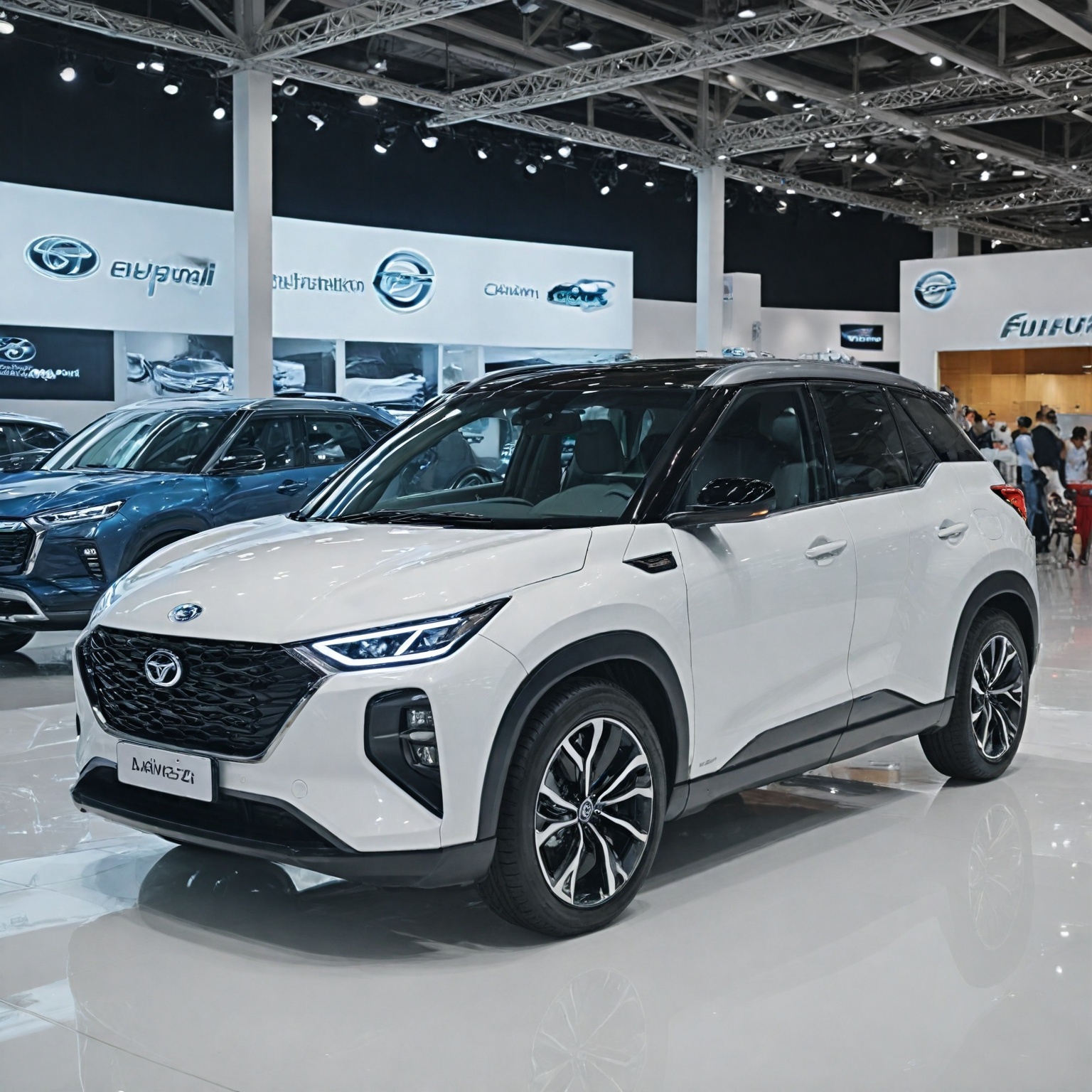
Perodua’s electrified concept cars, such as the eMO-II and the upcoming eMO-III, have been showcased at prominent events like the Malaysia Autoshow 2024, highlighting the company’s bold design direction and commitment to innovation. These concept vehicles feature distinctive styling cues, including a dramatic X-shaped front bumper, full-width light bars, and dynamic wraparound windscreens, embodying Perodua’s evolving design language and technological aspirations. The unveiling of these concepts at the Malaysia Autoshow 2024 underscores Perodua’s readiness to launch its first EV production model and its intent to be a key player in Malaysia’s transition to electric mobility.
Perodua: Company Overview
Perodua, officially known as Perusahaan Otomobil Kedua Sdn Bhd, was established in 1993 as Malaysia’s second national car manufacturer with the mission of providing practical and high-value mobility solutions to Malaysians. The company was founded with the aim of delivering affordable automotive products and services while maintaining global standards, supported by a comprehensive nationwide sales and service network for customer convenience.
Perodua operates a large headquarters situated on a 522-acre site in Sungai Choh, Rawang, which houses its corporate offices, two vehicle manufacturing plants, and a research and development facility complete with a test track. The company has built a reputation for popular models such as the Myvi, Axia, Bezza, and Aruz, which cater to diverse market needs.
Originally partnered with Japan’s Daihatsu Motor Company, Perodua has relied heavily on this collaboration for technology and development in the past. However, recent initiatives show Perodua advancing its technological capabilities independently, particularly with the development of its own electric vehicle (EV) platform. This shift includes local manufacturing of key EV components such as the power bench, power converter, and styling, with technical support from an Australian company. The company aims to launch its EV by the fourth quarter of 2025, marking a significant milestone in its evolution from rebadging and partnership reliance toward more autonomous innovation.
Perodua’s portfolio is not limited to manufacturing; it also encompasses research and development, sales, after-sales services, body and paint repairs, and pre-owned vehicle sales, underscoring its commitment to a full spectrum of automotive services. Through decades of growth and strategic development, Perodua continues to position itself as a leading affordable automotive brand in the region, embracing new technologies and market trends such as electrification to meet future mobility demands.
Perodua’s Participation at the Malaysia Autoshow
Perodua showcased its innovative vision for electric vehicles (EVs) at the Malaysia Autoshow 2024, held at MAEPS Serdang, by presenting the eMO-1 concept, an early prototype highlighting the company’s direction toward electrification. This event allowed visitors to experience firsthand Perodua’s commitment to advancing EV technology and sustainable mobility solutions.
The company’s involvement at the Autoshow is part of a broader collaboration initiated in September 2022, where Perodua partnered with three Malaysian universities to develop an EV powertrain from the ground up. This joint effort aims to enhance local expertise and capabilities in EV development, signaling a strategic investment in the country’s automotive future.
Perodua’s participation aligns with its overarching Smart Build blueprint, which seeks to elevate the entire Malaysian automotive ecosystem—including suppliers, dealers, and business partners—through continuous technological advancement and capacity building. This initiative is further supported by technical training and technology transfer programs in collaboration with Daihatsu Motor Company of Japan, reinforcing Perodua’s commitment to sustainable industry growth.
Moreover, the unveiling of the eMO-1 concept at the Autoshow foreshadows Perodua’s forthcoming all-electric vehicle lineup. It serves as a prelude to subsequent models like the eMO-II and the anticipated final eMO-III, which collectively mark the brand’s evolution toward producing affordable and locally assembled EVs for the Malaysian market.
Through these efforts, Perodua not only demonstrates its dedication to meeting rising customer demand for electrified vehicles but also contributes to Malaysia’s broader sustainability goals by aligning its initiatives with the United Nations’ Sustainable Development Goals.
Bold Concept Vehicles Unveiled
At the Kuala Lumpur International Mobility Show (KLIMS) 2024, Perodua unveiled its latest bold concept vehicle, marking a significant step forward from its earlier eMO-1 concept. This new concept features a more futuristic design, reflecting the brand’s vision for upcoming electric vehicles (EVs) targeted at affordability, with a price point expected to be under RM90,000. The design continues Perodua’s tradition of creating concept cars that resonate with the local market, offering excitement and accessibility to many potential consumers.
The development of the eMO-1 project began in September 2022, with construction commencing approximately nine months prior to its debut. Perodua emphasized that the vehicle’s three main components—the power bench, power converter, and overall styling—are primarily manufactured in Malaysia. The power conversion technology was developed in collaboration with an Australian firm, showcasing a blend of local and international expertise. Visually, the eMO-1 concept maintains the silhouette of the production-based model it derives from but is distinguished by a striking white, lime, and black livery exclusive to the concept. Despite this, Perodua’s CEO, Dato’ Sri Zainal Abidin Ahmad, has assured that the forthcoming production EV will feature a different design from the current concept.
Further expanding its concept lineup, Perodua also showcased the eMO-II, which appears as a compact hatchback akin to the popular Perodua Myvi. The eMO-II remains a concept rather than a production-ready vehicle but serves as a working prototype similar to the eMO-1. The eMO series, whose name stands for Electric Motion Online, was initially introduced as a scale model at the Malaysia Auto Show 2023. By the 2024 edition of the event, Perodua had progressed to presenting a full-scale prototype in the form of the eMO-1, which effectively converted the Myvi into an electric vehicle.
Looking ahead, the company has confirmed plans to construct an actual production model based on the eMO concept, with development slated for later in 2024 or early 2025. This move underscores Perodua’s commitment to delivering practical, locally developed EVs that align with Malaysia’s broader mobility goals.
The eMO-III Concept Vehicle
Perodua’s eMO-III concept represents the latest evolution in the company’s Electric Motion Online (eMO) series, building on the foundations laid by its predecessors, the eMO-1 and eMO-II. While specific details about the eMO-III remain limited as the model is still under development, it is widely anticipated to showcase significant advancements that will lead to Perodua’s first fully indigenous electric vehicle (EV), set for production by the fourth quarter of 2025.
The eMO-III is expected to diverge considerably from the earlier concepts, which were based on modified versions of the Perodua Myvi hatchback. Unlike the eMO-1, a converted 2021 Myvi featuring a 55.7 kWh lithium-ion battery and an estimated range of 350 km per charge, and the eMO-II, which retained much of the Myvi’s exterior styling with added unique design elements such as a dramatic X-shaped front bumper, full-width light bar, and innovative interior features like umbrella storage and collapsible stools, the eMO-III aims to introduce a completely new design and powertrain architecture.
Perodua has confirmed that the eMO-III will incorporate technology primarily developed in Malaysia, reflecting the company’s ongoing collaboration with local universities—Universiti Tenaga Nasional, Universiti Kuala Lumpur, and Universiti Putra Malaysia—to cultivate expertise in EV powertrain development. Furthermore, Perodua continues to work with an Australian partner for advanced power conversion technology, underscoring a strategic blend of local innovation and international collaboration.
Performance targets for the eMO-III are anticipated to improve upon earlier prototypes. The eMO-II showcased a zero-to-100 km/h acceleration time between six and seven seconds with a lithium iron phosphate (LFP) battery sourced from CATL, offering a range of 400 to 410 km. The eMO-III is expected to at least match or exceed these benchmarks, although detailed specifications have yet to be disclosed.
Charging capabilities are likely to reflect the needs of modern EV users, with previous models featuring both 11 kW AC and 50 kW DC fast-charging options, providing flexibility between full charges that range from just over an hour to several hours. Additionally, Perodua has acknowledged ongoing studies into battery swapping technology, which could become part of the eMO-III’s future offerings to enhance convenience and reduce downtime, although no official announcement has been made regarding its implementation.
Production Plans and Market Introduction
Perodua is gearing up to launch its first electric vehicle (EV) with production expected to commence in 2025 or beyond. The company has highlighted a strong emphasis on developing local vendors, anticipating the involvement of over 60 local suppliers to support the mass production of its EV models. Production will be carried out at Perodua’s existing manufacturing facilities, namely Perodua Manufacturing Sdn Bhd (PMSB) and Perodua Global Manufacturing Sdn Bhd (PGMSB), which together have an annual production capacity of up to 320,000 vehicles.
In terms of pricing strategy, Perodua aims to make its first EV affordable to the Malaysian market, setting a price point below RM100,000 but above RM50,000. This approach is intended to meet the affordability demands of the rakyat while delivering a vehicle form factor familiar and well-liked by Malaysian consumers. Additionally, Perodua plans to introduce a new mechanism designed to ensure better resale value for its EVs, addressing a common concern among electric vehicle buyers.
Supporting the transition to EVs, Perodua intends to establish charging facilities at its service centres nationwide to facilitate ease of ownership and encourage customer adoption. Alongside the rollout of EVs, the company is also looking to expand its hybrid vehicle offerings as part of its broader electrification strategy.
Industry and Public Reception
Perodua’s unveiling of its Electric Motion Online (eMO) concept vehicles at recent Malaysia Autoshow events has generated significant attention both within the automotive industry and among the public. The eMO series, including the full-scale eMO-1 prototype—a Myvi converted into an electric vehicle—showcases Perodua’s commitment to advancing electric vehicle (EV) technology while maintaining the accessibility and design familiarity of its popular models.
Industry observers have noted that Perodua’s approach to EV development involves close collaboration with local vendors, with plans to engage over 60 domestic suppliers in the mass production phase. This strategy highlights Perodua’s emphasis on nurturing the Malaysian automotive supply chain and supporting local industry growth alongside its EV ambitions. Such efforts align with Perodua’s established market presence, having achieved a record domestic market share of 35.7% in 2016 and annual sales surpassing 207,100 vehicles, reflecting strong consumer trust and brand loyalty.
Public reception has been enthusiastic, with the concept cars drawing attention for their bold and futuristic styling, particularly the exclusive white, lime, and black livery of the eMO-1. While the design has sparked excitement, Perodua’s CEO Dato’ Sri Zainal Abidin Ahmad has reassured that the final production EV model will feature a distinct look different from the current concepts, indicating ongoing refinement based on feedback and technological development. The presence of these concept cars at major automotive exhibitions has allowed potential buyers to engage directly with Perodua’s vision for electric mobility, fostering anticipation for the company’s first mass-produced EV.
Strategic Implications and Future Outlook
Perodua’s advancement into electric vehicle (EV) technology marks a significant strategic shift for the company as it positions itself to lead Malaysia’s automotive industry into a new era of sustainable mobility. Historically recognized as a manufacturer of affordable, practical vehicles, Perodua is now expanding its focus to include the development and production of EVs in-house—a notable departure from its previous reliance on rebadging or collaborations that primarily centered on conventional internal combustion engine models. This move not only aligns with global trends toward electrification but also reflects Perodua’s commitment to the United Nations’ Sustainable Development Goals, emphasizing environmental responsibility alongside economic growth.
The upcoming production of Perodua’s first EV model, the eMO-III, is expected to take place imminently, with an anticipated launch scheduled for the near future. The vehicle aims to offer a competitive range of approximately 350 kilometers on a single charge powered by a 55.7kWh lithium-ion battery, with charging times of over five hours via an 11kW AC charger or just over an hour using a 50kW DC charger. Pricing strategies indicate the EV will be accessible, targeting a price point between RM50,000 and RM100,000, thereby