
Meet the 2026 F1 Power Units: Unveiling the Suppliers and Teams with Akash Kalita!
Summary
The 2026 Formula One power units represent a major evolution in the sport’s technical regulations, marking a shift toward enhanced sustainability, increased hybrid performance, and simplified powertrain architecture. Building on the hybrid era introduced in 2014, the new regulations maintain the 1.6-litre V6 turbocharged internal combustion engine (ICE) but reduce its power output from approximately 550–560 kW to around 400 kW, while nearly tripling the electric motor’s peak power to 350 kW. This results in an almost equal split between electric and thermal power, reflecting Formula One’s commitment to net zero carbon emissions through the use of 100% sustainable fuels and advanced hybrid technology.
The regulatory overhaul has attracted a diverse and expanded field of six power unit manufacturers, including established names like Mercedes, Ferrari, and Renault, alongside returning and new entrants such as Honda, Audi, and Ford. Notably, Red Bull Racing will debut its first fully self-developed power unit through Red Bull Powertrains, supported by Ford, while Honda re-enters the sport as an exclusive supplier for Aston Martin. Audi’s entry as a factory team via its takeover of Sauber and its in-house power unit development adds further manufacturer competition, emphasizing innovation and strategic partnerships within the grid.
Technically, the 2026 power units remove the complex MGU-H (motor-generator unit—heat), focusing energy recovery solely on the MGU-K (motor-generator unit—kinetic) to improve reliability and reduce complexity. This simplification, coupled with enhanced battery capacity and energy harvesting during braking, enables cars to deploy greater electrical power, supporting lighter and more agile vehicles designed to improve racing dynamics. The adoption of drop-in sustainable fuels developed with ARAMCO aligns Formula One with broader environmental goals, potentially influencing emissions reductions across the global automotive industry.
While widely praised for advancing sustainability and technological innovation, the 2026 power unit regulations have also generated debate regarding their impact on performance balance, engine reliability, and competitive parity. Ferrari’s early development challenges and the transition of key personnel to rival manufacturers underscore the technical and strategic complexities teams face. Nevertheless, the comprehensive regulatory changes set the stage for a new era of intensified competition, technological advancement, and environmental responsibility in Formula One.
Background
Formula One power units have undergone significant evolution since the inception of the sport. Initially, engine regulations focused primarily on capacity limits, which had been a regular feature of Grand Prix racing since the early 20th century. Over the decades, engine formulae have been revised repeatedly to adapt to technological advancements, safety concerns, environmental imperatives, and competitive objectives. Notably, the introduction of turbocharged engines in the 1980s marked a pivotal era, with manufacturers like Honda emerging as dominant forces. More recently, the hybrid era began in 2014, standardizing the use of 1.6-litre V6 turbo-hybrid power units, which dramatically increased power output from approximately 750 hp to over 1000 hp by 2022 while improving efficiency and reducing emissions.
As Formula One prepares for the 2026 season, the sport faces a transformative shift in its power unit regulations aimed at sustainability and performance. The new regulations emphasize a reduction in the internal combustion engine’s power output from around 550-560 kW to 400 kW, complemented by a near 300% increase in electric power output from the battery, rising from 120 kW to 350 kW. These changes reflect Formula One’s commitment to net zero carbon emissions by adopting fully sustainable fuels and advanced hybrid technology. The 2026 power units will thus represent a fundamental step towards integrating cutting-edge electric power and sustainable energy sources without compromising on performance.
In addition to technical innovations, the 2026 regulations have sparked renewed manufacturer interest, with at least six different power unit manufacturers, including Mercedes, committing to the sport under the new rules. Red Bull, for instance, has continued to operate its engine program under the Red Bull Powertrains banner with technical support from Honda, which has resumed its branding as the engine manufacturer for Red Bull and AlphaTauri in 2023. Furthermore, Aston Martin announced an exclusive agreement to utilize a new engine supply for the 2026 season, signaling strategic manufacturer partnerships evolving within the sport.
These developments coincide with broader regulatory changes encompassing aerodynamics and safety, aimed at creating lighter, more agile cars with enhanced racing dynamics. The comprehensive overhaul represents Formula One’s vision to balance tradition with innovation, securing the sport’s future in an era defined by sustainability, technological progress, and intensified competition.
Overview of 2026 Power Unit Regulations
The 2026 Formula 1 season will introduce a significant overhaul to power unit regulations, focusing on sustainability, enhanced electric power, and a simplified hybrid system. The new power units will retain the turbocharged 1.6-litre V6 internal combustion engine configuration that has been used since 2014 but will undergo important changes to align with the sport’s environmental and technical goals.
One of the key features of the 2026 regulations is the shift towards 100% sustainable fuels, developed in partnership with ARAMCO, which will be used in all race cars. This “drop-in” sustainable fuel can be applied broadly to road vehicles, potentially benefiting over a billion cars worldwide by 2030 and helping reduce global emissions. Alongside this, the total power output of the power units will remain above 1,000 bhp (approximately 750 kW), but with a rebalanced distribution between the internal combustion engine (ICE) and electric components.
The ICE power output is set to decrease from the current 550–560 kW range to around 400 kW, while electric power will nearly triple from 120 kW to 350 kW. This results in an almost 300% increase in electric power contribution to the overall system. The Energy Recovery System (ERS) has been reconfigured to remove the MGU-H (motor-generator unit—heat), focusing recovery efforts solely on the MGU-K (motor-generator unit—kinetic), which harvests energy from braking. This simplification aims to improve system reliability and reduce complexity, although it presents new engineering challenges for teams.
Energy recuperation during braking will double to 8.5 megajoules per lap, allowing for greater energy deployment and efficiency. This increased electrical recovery and output will balance the lower ICE power, maintaining high-performance levels while enhancing environmental responsibility. The power units are expected to achieve a near 50:50 split between electric and thermal power sources, promoting sustainability and improving racing dynamics through enhanced agility and energy deployment strategies.
Additionally, six different power unit manufacturers, including Mercedes, have committed to the 2026 regulations, highlighting the sport’s drive towards innovation and competition among suppliers. The new regulations also emphasize lighter cars—approximately 30 kg less than current models—and the incorporation of advanced technology to support closer racing and a more thrilling spectacle for fans.
Confirmed Power Unit Suppliers for 2026
For the 2026 Formula 1 season, six power unit manufacturers have committed to supplying engines under the new regulations, marking a significant expansion and reshaping of the sport’s engine landscape. These manufacturers include established names Ferrari, Mercedes, and Renault, alongside returning and new entrants Honda, Audi, and Ford.
Honda, after officially ending its relationship with Red Bull Racing, will supply Aston Martin with its own exclusive power units through its Honda Racing Corporation subsidiary. This marks Honda’s return to Formula 1 following its withdrawal after the 2021 season, aligning with the sport’s new emphasis on sustainability and advanced power unit technology. Meanwhile, Ford will also return to the sport for the first time since 2004, collaborating with Red Bull Powertrains to supply Red Bull Racing and its sister team, AlphaTauri. Ford’s involvement is closely tied to its strategic shift toward electrification and software-driven vehicle technology.
Audi enters Formula 1 for the first time in 2026, taking a majority stake in the Sauber team (which will be rebranded as Stake F1) and developing its own power unit at its Neuburg facility in Germany. Audi has set an ambitious target to compete for race wins within its first three years in the championship.
Ferrari remains committed as a supplier, continuing its long-standing tradition of powering both its works team and customer teams such as Haas, which recently extended its engine deal with Ferrari through 2028. Additionally, Ferrari has forged a multi-year partnership with Andretti Formula Racing LLC, aimed at supplying power units and gearboxes should Andretti secure an official entry into the 2026 championship. However, Ferrari faces challenges with its 2026 engine reliability, having abandoned initial development concepts such as the steel cylinder head due to performance concerns.
Renault, meanwhile, will no longer supply engines as Alpine switches to Mercedes power units for the new regulations. Mercedes, with its High Performance Powertrains division based in Brixworth, UK, continues as a key supplier and will power both its works team and customer teams in the upcoming era.
Red Bull Racing, having transitioned from Honda engines, has established its own in-house engine division, Red Bull Powertrains, set to debut its first fully self-developed power unit in 2026. This program is supported by Ford, which has partnered with Red Bull Powertrains to assist in the development and supply of these engines.
The 2026 power unit regulations retain the turbocharged 1.6-litre V6 internal combustion engine architecture while introducing advanced hybrid components focused on sustainability and simplified energy recovery systems. This technical overhaul, combined with the diverse manufacturer involvement, aims to foster innovation, improve racing quality, and ensure long-term manufacturer engagement in Formula 1.
Teams and Their Power Unit Partnerships
The 2026 Formula 1 season will feature significant changes to power unit partnerships due to the introduction of new technical regulations and the arrival of new manufacturers. Six factory teams are expected on the grid, each with distinct power unit arrangements that reflect both continuity and innovation within the sport.
Red Bull Racing and its sister team, AlphaTauri, will continue their collaboration with Red Bull Powertrains, which has been developing power units since taking over Honda’s engine program in 2021. The partnership with Ford, initiated in 2023, will support the development of the next-generation power unit designed to meet the 2026 regulations. This collaboration marks Red Bull’s historic transition to becoming the first team to manufacture both chassis and power units independently. Honda remains involved as a technical partner but will focus on supplying Aston Martin under the Honda Racing Corporation banner, separating from Red Bull Powertrains.
Aston Martin will switch from Mercedes engines to an exclusive factory power unit deal with Honda starting in 2026. This marks Honda’s return as a fully independent engine supplier to the sport, building on its previous collaborations with Aston Martin’s predecessor teams dating back to the late 1990s and early 2000s.
Audi will enter Formula 1 as a factory team in 2026 following a majority takeover of the Sauber team, which will race as Stake F1 in 2024 and 2025. Audi aims to compete for race wins within its first three years, developing its power units at its Neuburg facility in Germany. This debut also coincides with the team’s transition from Ferrari engines (used during the Stake F1 phase) to fully bespoke Audi power units.
Ferrari will continue its role as a power unit supplier for customer teams, extending multi-year agreements with Haas and the newly approved Cadillac team. Haas will remain a Ferrari customer through at least 2028, while Cadillac, entering F1 as a new constructor in 2026, will initially race with Ferrari engines before planning to develop its own General Motors-built power units around 2029. Cadillac’s entry involves substantial investment, including the establishment of European and American facilities to support power unit development.
Technical Insights into 2026 Power Units
The 2026 Formula 1 power units introduce significant technical advancements aimed at enhancing both performance and sustainability. Central to these changes is the increased emphasis on hybrid technology, with the peak electric power output rising to 350 kW—nearly three times the current 120 kW—compensating for a 27% reduction in the internal combustion engine (ICE) output. Despite this reduction, the total power remains over 1,000 bhp (750 kW), maintaining the high-performance standards expected in the sport.
The turbocharged 1.6-litre V6 ICE configuration, used since 2014, will be retained but with modifications to align with new homologation standards applicable through the 2026–2030 seasons. A notable structural change is the removal of the MGU-H (Motor Generator Unit-Heat), which previously harvested energy from exhaust heat. This simplification redirects engineering focus exclusively to the MGU-K (Motor Generator Unit-Kinetic), simplifying the power unit architecture and potentially improving system reliability over time, albeit presenting new optimization challenges for teams.
Energy recovery and deployment strategies have also evolved considerably. The new energy recovery system (ERS) configuration allows for enhanced energy harvesting, with cars expected to exhibit three times the electric braking power compared to current models. This increase facilitates greater driver creativity in energy management during races and improves acceleration, especially out of corners, supported by aerodynamic enhancements and a 30-kilogram reduction in vehicle weight. The upgraded battery component enables the storage and deployment of significantly more electrical energy, further boosting hybrid performance.
Sustainability is a cornerstone of the 2026 regulations. All teams will run on 100% sustainable, drop-in fuels developed in partnership with ARAMCO, which are compatible with conventional internal combustion engines globally. This initiative aligns Formula 1 with broader environmental goals and could influence emissions reductions in the wider automotive industry by 2030, considering the estimated 1.2 billion vehicles worldwide that could potentially use similar fuels.
Impact on Competition and Strategy
The introduction of the 2026 power unit regulations is expected to significantly reshape competition and strategic approaches within Formula One. With the shift to a revised power unit configuration that delivers 350 kW of peak electric power, there is a notable 27% reduction in internal combustion engine (ICE) output. This change emphasizes the increased role of hybrid technology and energy recovery systems, encouraging teams to focus on maximizing electric power deployment and efficiency during races.
The entry of six manufacturers—Ferrari, Mercedes, Renault, Honda, Audi, and Ford (partnering with Red Bull Powertrains)—introduces a more diverse field of power unit suppliers. This expansion is poised to intensify competition, as manufacturers leverage the new regulations to innovate and differentiate their power units with a near 50-50 split between electric and ICE energy usage. This balance not only enhances racing performance but also aligns with broader sustainability goals, influencing team strategies on energy management and component reliability.
Additionally, the increased scope of pre-season testing, with three separate three-day test sessions, allows teams to develop and optimize their cars’ chassis and power units under the new rules more thoroughly than before. This extended testing phase is expected to reduce uncertainty and accelerate development, which will be critical in adapting race strategies to the new performance dynamics dictated by the hybrid power units and aerodynamic changes.
Teams will need to refine their energy deployment strategies to optimize the electric power boost and energy recovery capabilities, which could alter overtaking opportunities and race pacing. The advanced sustainability technology incorporated in the regulations not only promotes efficiency but also places a premium on strategic energy conservation, potentially affecting pit stop timing and tire management as teams seek to balance power output with endurance.
Furthermore, the increased manufacturer involvement and technological innovation foster a more competitive environment where new entrants like Audi and Ford collaborate with established teams, potentially accelerating the development curve and forcing existing competitors to adapt rapidly. The strategic interplay between manufacturer technology development and race execution is expected to be a defining element of the 2026 season.
Unveiling Event
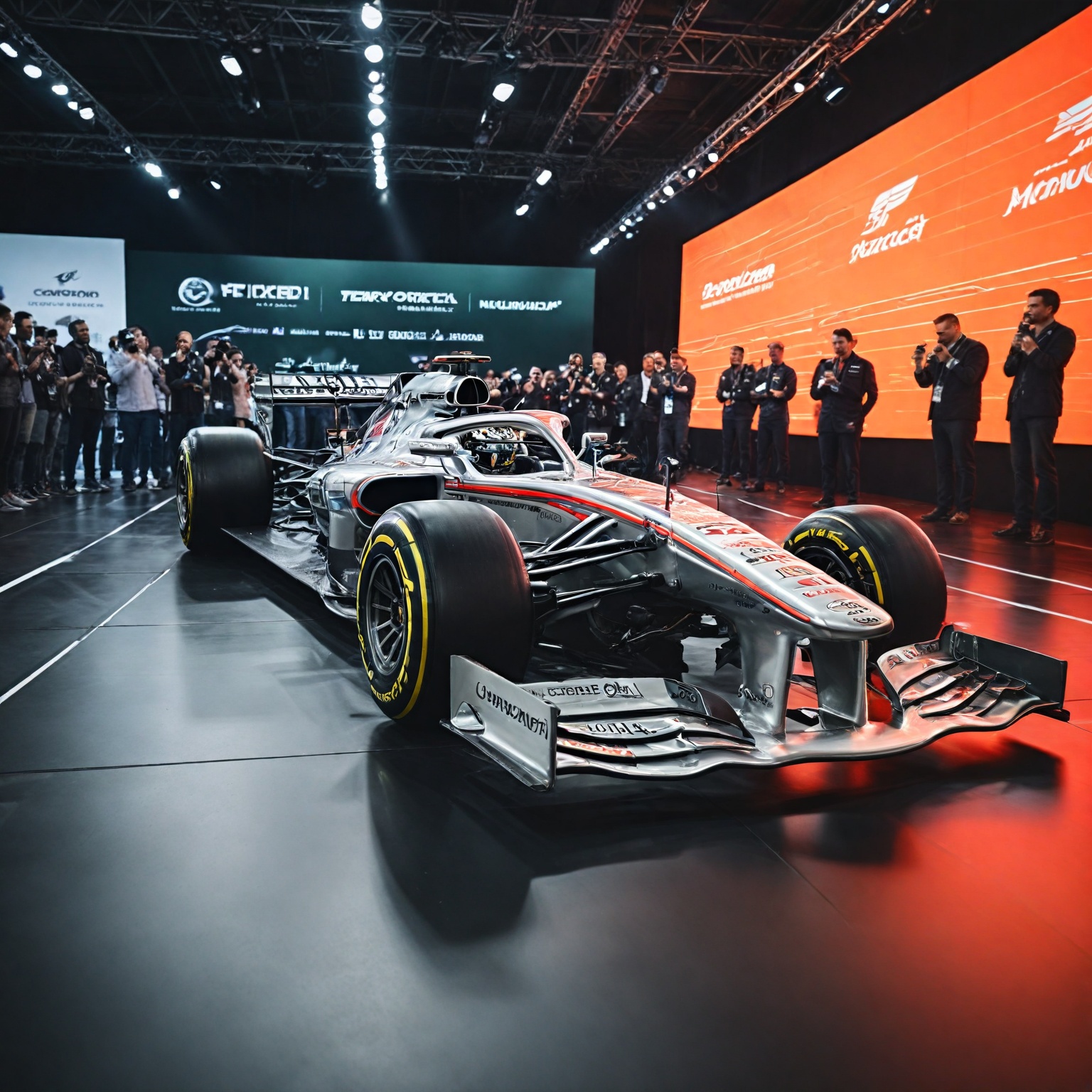
The unveiling event for the 2026 Formula 1 power units marked a significant milestone as the sport prepares for the introduction of all-new power unit regulations set to take effect at the start of the
Reception and Analysis
The unveiling of the 2026 Formula 1 power units has generated significant interest and analysis within the motorsport community. Enthusiasts and experts have focused on the technical overhaul mandated by the latest FIA regulations, which emphasize a streamlined and more sustainable powertrain architecture. One of the most notable changes is the removal of the MGU-H, which shifts engineering efforts entirely toward optimizing the MGU-K and overall energy recovery system (ERS). This simplification is expected to enhance system reliability while maintaining high performance and environmental responsibility.
The technical adjustments have been broadly welcomed for their potential to increase competition and improve racing spectacle. The 2026 regulations aim to produce lighter, more agile cars with approximately 30 kg reduction in weight and a higher electrical component in the power unit. These changes are designed not only to enhance driver skill expression but also to foster closer racing and greater competition among teams.
Industry observers highlight that these developments align well with Formula 1’s broader vision for sustainability and innovation. For instance, Cadillac’s entry as the sport’s 11th team in 2026 underscores the growing commitment to advancing technology while promoting inclusivity and accessibility within the sport. This expansion reflects a strategic effort to connect with a more diverse global fanbase and embrace sustainable fuels as part of the sport’s future trajectory.
From a fan and community perspective, the technical flair in discussions about the 2026 power units reveals both excitement and keen scrutiny regarding how these changes will impact race dynamics. Forums and social media have been active in debating the implications of power limits adjustments and the balance between performance and regulatory constraints.
Future Outlook
The 2026 Formula One season marks a significant turning point in the sport’s technical and competitive landscape, driven by a comprehensive overhaul of both power unit and chassis regulations. The new rules aim to create lighter, more agile cars that emphasize driver skill and enable closer racing among teams, thereby enhancing the overall spectacle of the championship. One of the most notable changes is the shift towards power units with a balanced 50% electrical and 50% thermal power distribution, reflecting Formula 1’s commitment to sustainability and technological innovation.
Sustainability is further emphasized through the adoption of 100% sustainable fuels from 2026, aligning the sport with broader environmental goals and the strategic objectives of the involved manufacturers. This shift not only supports the sport’s green initiatives but also complements the corporate sustainability ambitions of the new engine suppliers entering the grid.
The grid itself will see an expansion to six engine manufacturers, including the factory entries of Audi and Cadillac, both of which bring strong innovation and sustainability credentials. Audi’s entry coincides with Sauber ending its partnership with Ferrari, while Cadillac’s involvement reflects General Motors’ broader strategy to leverage Formula 1 as a platform for technological advancement and global market expansion, particularly in the growing U.S. audience where three races are now held annually. Cadillac’s commitment highlights a new era where manufacturers are not just participants but active innovators, fully embracing the FIA’s vision of inclusivity, accessibility, and a more diverse fan base.
The content is provided by Avery Redwood, Gear Shift Zone