Summary
The 2021 Suzuki Hayabusa (GSX1300R) represents the third generation of Suzuki’s iconic superbike, renowned for its combination of exceptional speed, advanced technology, and distinctive design. Building on a legacy that began in 1999 with the original Hayabusa—the fastest production motorcycle of its era—the 2021 model introduces significant updates including a redesigned aluminum frame, sharper aerodynamic bodywork, and a comprehensive suite of electronic rider aids known as the Suzuki Intelligent Ride System (S.I.R.S.). These enhancements enable the Hayabusa to deliver powerful performance while complying with modern emissions and safety standards, preserving its status as a leading sportbike.
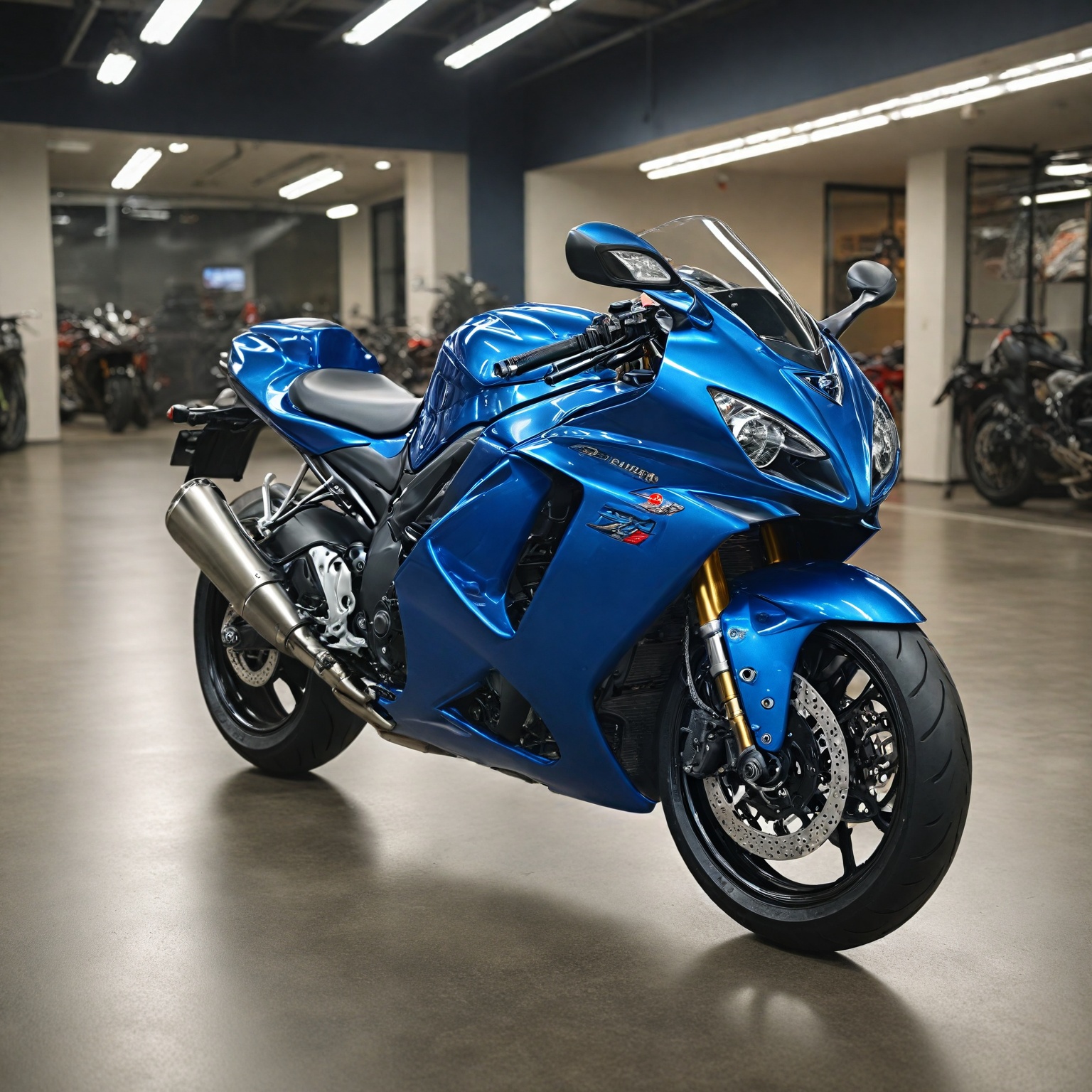
The bike’s 1,340cc inline four-cylinder engine produces 190 hp and 150 Nm of torque, optimized for smoother acceleration and versatility across riding conditions. Coupled with advanced features such as a bi-directional quick shifter, cornering ABS, traction control with a six-axis inertial measurement unit (IMU), and selectable riding modes, the 2021 Hayabusa offers riders a highly controllable and thrilling experience. Its aerodynamic design, characterized by sharp lines, stacked LED headlights, and a wind tunnel-tested silhouette, balances visual impact with functional airflow management for high-speed stability and rider comfort.
Celebrated for its historic impact on motorcycle performance and culture, the Hayabusa has achieved numerous milestones, including setting land speed records and influencing motorcycle engineering worldwide. Despite occasional criticism over its distinctive styling, Suzuki has maintained a careful evolution of the model, integrating modern technologies while preserving the bike’s legendary attributes. The 2021 update reflects Suzuki’s commitment to refining the Hayabusa’s identity as the “Ultimate Sport Bike” while preparing for incremental future enhancements like launch control and smart cruise systems.
Since its global reintroduction in 2021, the Hayabusa has received positive market reception for blending heritage with innovation, supported by extensive customization options and a strong dealer network. Positioned as a flagship superbike within Suzuki’s lineup, the Hayabusa continues to attract enthusiasts seeking a balance of raw power, cutting-edge technology, and unmistakable style in a modern sport motorcycle.
History and Development
The Suzuki Hayabusa, officially known as the GSX1300R, was first introduced in 1999, marking a significant milestone in Suzuki’s history and establishing itself as the fastest production motorcycle of its time, capable of reaching a top speed of 312 km/h (194 mph). Its debut followed shortly after Honda’s Blackbird, with Suzuki showcasing the Hayabusa to press and employees at the Circuit de Catalunya in Spain, heralding a new era in high-performance motorcycles.
The initial design of the Hayabusa was distinctive and polarizing. Koji Yoshirua, the creator of the bike’s iconic look, reflected in 2009 that the intent behind the design was “to create a somewhat grotesque design and create a strong initial impact”. Although the shape was occasionally criticized as unattractive, it played a critical role in enabling the Hayabusa’s record-setting aerodynamic performance. Market research from the early 2000s revealed that despite mixed reviews of its aesthetics, customers remained deeply enamored with the Hayabusa’s design and performance.
In 2008, Suzuki released the second generation of the Hayabusa, featuring subtle updates to the bodywork alongside engine enhancements such as fine-tuned pistons, head, and exhaust components. These refinements increased horsepower and ensured compliance with updated noise and emissions regulations without a complete overhaul of the engine or chassis. This generation maintained the model’s reputation for power and speed while adhering to evolving standards.
The third and most recent generation of the Hayabusa arrived in 2021, introducing the motorcycle to the modern era with a comprehensive suite of updates. This iteration preserved the bike’s characteristic style but incorporated sharper lines for improved aerodynamics. Significant modifications included a redesigned aluminum frame utilizing extruded aluminum sections for enhanced stability and handling. The 2021 model also featured state-of-the-art electronics such as an Inertial Measurement Unit (IMU) enabling traction control, ABS, and selectable riding modes, aligning with tightening global emissions and safety regulations.
Despite ongoing speculation about radical changes, Suzuki has taken a methodical approach to evolving the Hayabusa, maintaining its legacy while integrating modern technology incrementally. Future developments are expected to focus on subtle improvements such as new graphics and additional electronic features rather than drastic shifts toward electric or hybrid powertrains. Notably, updates anticipated for 2025 include the introduction of a Launch Control system and Smart Cruise Control, further enhancing the rider experience without compromising the Hayabusa’s foundational attributes.
Design and Features
The 2021 Suzuki Hayabusa presents a refined evolution of the iconic superbike, combining its legendary aerodynamic silhouette with numerous modern enhancements. The design team focused on integrating distinct lines and shapes to convey both sophistication and high performance, resulting in sharper styling with an emphasis on aerodynamics and rider comfort.
A key visual update includes the introduction of stacked LED headlights positioned between angular air intakes, along with new LED rear lights that enhance visibility and contribute to the bike’s aggressive front-end appearance. Chrome-plated twin exhausts add a classic yet sporty touch, complementing the bike’s powerful image. The instrument cluster features two analogue gauges flanking a TFT display, which provides extensive information such as trip data, ambient temperature, gear position, and riding mode selections, all accessible via simple and intuitive handlebar controls.
Suzuki’s attention to rider ergonomics is evident in the lowered seat height of 31.5 inches, achieved through redesigned bodywork and subframe. The rear seat is elevated to provide passengers with a forward view over the rider’s shoulder, accompanied by a reshaped grab rail placed within easy reach. An aerodynamic windscreen reduces wind blast while maintaining clear visibility of the instrument cluster, with an optional taller Suzuki Genuine Accessory windscreen also available.
The Hayabusa’s frame has been slimmed and lightened compared to previous models, featuring more compact engine mounts above and behind the engine to enhance agility and handling. The twin-spar aluminum frame is paired with adjustable KYB suspension components, contributing to improved stability and nimble ride dynamics.
The bike’s advanced electronics are encapsulated in the Suzuki Intelligent Ride System (S.I.R.S.), which extends beyond earlier systems like the Suzuki Drive Mode Selector Alpha (SDMS-α). This suite includes multiple riding modes, Motion Track Traction Control, cornering ABS, hill-start assist, anti-lift control, engine brake control, bi-directional quick shifter, cruise control, and an active speed limiter, all designed to optimize performance and safety across varying conditions. The 1340cc, four-cylinder, DOHC engine utilizes Ride-by-Wire throttle bodies with dual fuel injectors and Suzuki Ram Air Direct intakes to deliver explosive acceleration with refined throttle response.
In terms of personalization, Suzuki offers three standard color schemes—Metallic Matte Black & Glass Sparkle Black, Pearl Vigor Blue & Pearl Brilliant White, and Metallic Thunder Gray & Candy Darling Red—alongside a “Color Order Plan” that enables customers to select from 18 special body and wheel color combinations, allowing for up to 21 unique styling options. Additionally, the rear passenger seat and grab rail can be replaced by a color-matched single seat cowl that acts as a lumbar support, enhancing the Hayabusa’s performance-oriented styling.
Performance
The 2021 Suzuki Hayabusa features a fully re-engineered 1,340cc inline four-cylinder DOHC engine that delivers a powerful 190 hp (140 kW) at 9,700 rpm and 150 Nm (111 lb-ft) of torque at 7,000 rpm. This engine is designed to optimize power delivery, especially in the low- to mid-range rpm, providing quicker and smoother acceleration while meeting worldwide emissions standards. The engine incorporates advanced technologies such as Suzuki’s Ride-by-Wire electronic throttle bodies with dual fuel injectors per cylinder, pressurized air intake via the Suzuki Ram Air Direct system, and Suzuki Side Feed Injectors (S-SFI) that enhance fuel atomization and engine efficiency.
The Hayabusa’s engine is paired with a six-speed close-ratio transmission that supports both conventional shifting and a bi-directional quick-shift system. This allows clutchless upshifts and downshifts, enhancing riding versatility and performance. Additionally, the Suzuki Clutch Assist System (SCAS) reduces clutch lever effort while optimizing power transfer to the rear wheel for smooth and precise control.
Aerodynamics play a crucial role in the Hayabusa’s performance, with a wind tunnel-tested silhouette and an aerodynamic windscreen that reduces wind blast to the rider while maintaining excellent visibility. This contributes to the motorcycle’s remarkable top speed, which remains electronically limited to 299 km/h (186 mph). The lightweight twin-spar aluminum frame has been refined for the 2021 model to be slimmer and lighter, enhancing stability and handling without compromising rigidity.
The Hayabusa is equipped with an array of advanced electronic rider aids grouped under the Suzuki Intelligent Ride System (S.I.R.S.), including the Suzuki Drive Mode Selector Alpha (SDMS-α). This system offers customizable settings for power delivery, traction control, anti-lift control, engine braking, and quick-shift behavior, allowing riders to tailor the bike’s performance to their preferences and riding conditions. Features such as Launch Control and the new Smart Cruise Control system, which remains active even during gear changes with the quick shifter, further elevate rider confidence and control.
Braking performance is enhanced by a dual-channel Motion Track-ABS system capable of intervening during straight-line and cornering scenarios, ensuring maximum safety and stability. The Hayabusa rides on seven-spoke cast aluminum wheels shod with Bridgestone Battlax Hypersport S22 tires co-developed with Suzuki, which provide excellent grip and stability at high speeds.
Technology
The 2021 Suzuki Hayabusa integrates an advanced suite of electronic systems collectively known as the Suzuki Intelligent Ride System (S.I.R.S.), which significantly enhances both performance and rider safety. Central to this suite is the Suzuki Drive Mode Selector Alpha (SDMS-α), which offers three factory preset modes along with three user-customizable settings. This system manages five key electronic controls: Power Mode Selector, Motion Track Traction Control, Anti-lift Control, Engine Brake Control, and Bi-directional Quick Shift, allowing riders to tailor the bike’s behavior to their preference or road conditions.
A notable technological advancement is the incorporation of a six-axis Inertial Measurement Unit (IMU), which enables dynamic features such as lean angle-sensitive ABS—branded as Motion Track-ABS—and sophisticated traction control. These systems operate not only when riding in a straight line but also while leaning or cornering, greatly improving stability and safety. Additionally, the Motion Track Traction Control System limits rear-wheel spin, helping riders maintain confidence in various riding environments.
The Hayabusa’s throttle response is refined through a ride-by-wire electronic throttle system paired with SDMS-α, enabling smooth and linear power delivery. The new 43mm throttle bodies, combined with an increased air cleaner capacity and a longer intake pipe design, optimize low- to mid-range power output, making everyday riding more controllable. The bike’s engine management is further enhanced with dual fuel injectors per cylinder and Suzuki Ram Air Direct intakes, contributing to its legendary 1340cc, four-cylinder, DOHC engine performance.
Additional rider aids include hill-start assist, launch control with revised engine speed settings for 2025, engine brake control, cruise control, an active speed limiter, and a Smart Cruise Control system that uniquely does not disengage during gear changes when using the Bi-directional Quick Shift system. The Suzuki Clutch Assist System (SCAS) ensures efficient power transfer from the engine to the rear wheel, balancing slip and engagement for optimal control.
The Hayabusa’s instrumentation features a TFT display flanked by two analogue gauges, providing comprehensive information such as trip data, ambient temperature, clock, selected gear, and riding modes. The handlebar controls are designed for simplicity and intuitive use, allowing riders to effortlessly navigate through menus and adjust settings on the fly.
These technological enhancements combine to deliver a safer, more versatile, and exhilarating riding experience, maintaining the Hayabusa’s status as an iconic superbike with cutting-edge electronic sophistication.
Visuals and Aesthetics
The 2021 Suzuki Hayabusa continues the legacy of its striking and impactful design, originally conceived in 1999 by Suzuki’s Koji Yoshirua, who aimed to create a “somewhat grotesque design” that delivers a strong initial impression. Building on this foundation, the 2021 model presents a refined and aerodynamic silhouette characterized by distinct lines and shapes that express both sophistication and high performance.
The front of the bike features V-shaped chrome-plated moldings on the side cowlings, which not only accentuate the flow from the engine to the mufflers but also serve a functional role by directing airflow away from the rider’s legs. Complementing this design is an aerodynamic windscreen shaped to reduce wind blast while maintaining visibility of the instrument cluster, with an optional taller Suzuki Genuine Accessory windscreen available for enhanced rider comfort.
Lighting on the Hayabusa has been upgraded to a full-LED setup, including vertically stacked low beam and projector-type high beam headlights. These LED units provide clear nighttime illumination and enhance the bike’s visibility to other road users, contributing both to safety and a distinctive visual signature. The rear section has been subtly refined with sleeker lines and updated graphics, while the new LED rear lights contribute to a modern, cohesive aesthetic.
The cockpit integrates two analogue gauges flanking a TFT display that presents a wide array of information such as trip data, ambient temperature, selected gear, and more, blending classic and contemporary elements. Additionally, the exhaust system sports chrome-plated twin silencers, complementing the overall aggressive yet polished look of the motorcycle.
Color options for the Hayabusa offer riders the ability to express their personal style. The 2021 model comes with three standard color schemes and an exclusive “Color Order Plan” allowing selection from 18 special body and wheel color combinations, providing greater customization beyond the traditional hues. These choices enhance the visual appeal while reinforcing the Hayabusa’s identity as the “Ultimate Sport Bike.”
Market Reception
The 2021 Suzuki Hayabusa has been widely recognized as one of the most iconic superbikes in the motorcycle world, maintaining its legendary status through multiple generations. Its redesign in 2021, which includes over 550 new parts and updated aerodynamic features, has been met with appreciation for blending modern advancements with the familiar Hayabusa identity. Enthusiasts and riders often participate in discussion forums dedicated to this model, sharing reviews, technical insights, and real-world experiences, highlighting the bike’s engine performance, reliability, and repair costs.
Suzuki’s reputation in the motorcycle industry is bolstered by a diverse lineup that includes several iconic models such as the Katana, Boulevard, and V-Strom, but the Hayabusa stands out as the flagship and the “king” of their superbikes. The model’s combination of muscular power, refined handling, and a comprehensive suite of electronic rider aids has helped solidify its status as “motorcycling’s Ultimate Sportbike”. This has contributed to positive market reception, with many riders valuing both its performance and sophisticated design elements introduced in recent years.
The bike’s aesthetic appeal and functional enhancements continue to draw attention, supported by numerous reviews and comparisons available through various media channels, including video walkarounds and race comparisons, which further promote its market presence. Additionally, Suzuki offers customization options with a range of colors and special combinations, enhancing its appeal to a broader audience seeking both performance and personalized style. Overall, the 2021 Suzuki Hayabusa has been well received
Sales and Availability
The 2021 Suzuki Hayabusa has marked its return to the global market with a phased launch strategy. Suzuki Motor Corporation officially revealed the third-generation Hayabusa, initially targeting European markets by the end of the launch month, followed by releases in Japan and North America. The Indian market was also anticipated to receive the model in the second half of 2021.
In the United Kingdom, the new Hayabusa is set to arrive at dealerships starting next month, with a recommended retail price of £16,499 (approximately $22,499). Meanwhile, in India, the bike is expected to be priced around Rs 20 lakh (ex-showroom). With the discontinuation of its main rival, the Kawasaki ZX-14R, the Hayabusa is positioned to compete primarily against the BMW S 1000 RR and the Kawasaki Z H2 within the Indian superbike segment.
Although the Suzuki Hayabusa was discontinued in Europe and Japan in 2018 and 2020 respectively, the model has continued to be available in other markets such as the United States, maintaining a loyal customer base. Suzuki’s extensive global dealership network, spanning 192 countries with 133 distributors, supports the broad availability of the Hayabusa worldwide.
Records and Racing Heritage
The Suzuki Hayabusa has cemented its legacy as one of the most iconic motorcycles in the world, not only for its design and performance but also for its extensive records and involvement in racing heritage. Since its introduction, the Hayabusa was conceived as the “Ultimate Sport” motorcycle, aiming to surpass competitors like the Honda CBR1100XX and create a new category in sportbikes.
Over the years, the Hayabusa’s engine and aerodynamic design have enabled it to achieve extraordinary feats. It has been used in various forms of motorsport, including sanctioned closed course road racing, drag racing, and top speed competitions. Notably, modified Hayabusas have recorded top speeds exceeding 270 mph and engine outputs of more than 700 horsepower. These machines have also posted standing quarter-mile times as fast as 6.9 seconds, with speeds reaching over 209 mph.
One of the most remarkable milestones was set on July 17, 2011, when Bill Warner rode a highly modified turbocharged Suzuki Hayabusa to establish a new world motorcycle land speed record. Achieving a speed of 311.945 mph (502.027 km/h) from a standing start to 1.5 miles, Warner’s record at the Loring Timing Association’s Land Speed Race at the Loring Commerce Centre in Maine showcased the Hayabusa’s unparalleled capability in high-speed performance.
In addition to motorcycle racing, the Hayabusa engine has found its place in automotive innovation. Suzuki pioneered the integration of the Hayabusa’s engine into cars with concept models like the GSX-R/4 roadster and the Formula Hayabusa open-wheel race car, designed for a Japanese one-make competition series. The Hayabusa’s powertrain versatility further highlights its importance beyond the two-wheeled world.
Collectively, these achievements reflect the Hayabusa’s profound impact on motorcycle culture and motorsport, reinforcing its reputation as a benchmark for speed, engineering excellence, and racing heritage.
The content is provided by Sierra Knightley, Gear Shift Zone