Summary
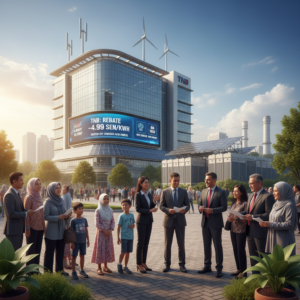
New Energy Asia (NEA) is a joint venture established between Malaysia’s Hicom Engineering and China-based Hangzhou Flash Charging (HFC) to distribute electric vehicle (EV) charging equipment across Malaysia and the broader ASEAN region. The partnership aims to address the growing demand for EV infrastructure in Southeast Asia by leveraging HFC’s advanced AC and DC fast charging technologies alongside Hicom’s local market expertise. NEA’s formation aligns with Malaysia’s national policies promoting sustainable mobility, carbon reduction, and green technology adoption, including the National Automotive Policy (NAP 2020) and the National Energy Policy (NEP 2022–2040).
Malaysia is currently in the early stages of EV adoption, with government incentives and infrastructure expansion targets driving growth in the sector. NEA offers a diverse portfolio of EV charging solutions, including smart AC chargers compatible with photovoltaic systems and battery energy storage systems designed to enhance grid stability and renewable energy integration. The joint venture also aims to support the development of a comprehensive and resilient EV charging network, addressing challenges such as interoperability, grid capacity, and operational costs.
The launch of NEA represents a strategic response to Malaysia’s ambition to become a regional EV hub by 2030, supported by collaborative industry efforts and robust policy frameworks. However, the venture faces challenges typical of emerging EV markets, including high capital investment requirements, regulatory complexities, and potential market saturation amid increasing competition. Despite these obstacles, NEA’s integration of advanced technologies and emphasis on sustainable energy solutions position it as a key player in Southeast Asia’s transition toward greener transportation.
Overall, New Energy Asia exemplifies the evolving landscape of electric mobility in Malaysia and Southeast Asia, highlighting the importance of joint ventures and government-industry partnerships in accelerating EV adoption and infrastructure development in the region.
Background
The introduction of electric vehicles (EVs) in Malaysia marks a significant shift in the country’s transportation landscape, as it gradually moves away from traditional internal combustion engine (ICE) vehicles towards more sustainable and environmentally friendly alternatives. Despite the growing global acceptance of EV technology, Malaysia’s EV adoption remains in the early stages, with more than 50% of consumers still favoring ICE vehicles. However, interest in hybrid electric vehicles (HEVs) and plug-in hybrid electric vehicles (PHEVs) is increasing, indicating a gradual shift in consumer preferences.
Malaysia’s government has taken an active role in promoting EV adoption through comprehensive policy frameworks such as the National Automotive Policy (NAP) 2020, the National Energy Policy (NEP) 2022–2040, and the Low Carbon Mobility Blueprint (LCMB) 2021–2023. These policies collectively aim to reduce carbon emissions, enhance energy efficiency, and position Malaysia as a regional leader in green mobility. Incentives such as tax reliefs for home EV charger installations and the Green Technology Incentive – Green Investment Tax Allowance (GITA) encourage both individual and corporate investments in EV technology and infrastructure.
Currently, Malaysia’s EV charging infrastructure comprises approximately 1,500 charging stations nationwide, with a concentration of 36.7% in Selangor and 24.5% in Kuala Lumpur. To support the anticipated growth in EV adoption, the government plans an ambitious expansion, targeting 25,000 public and 100,000 private charging points by 2030. Such expansion is critical given that interoperability and accessibility remain challenges in the ASEAN region, where charging networks have developed independently and unevenly.
Moreover, Malaysia’s automotive industry, represented by players such as HICOM Engineering and its subsidiary HFC under the Lotus Group, is actively developing expertise in EV charging technology. The team is currently training in China to master both AC and DC charging technologies and provide technical support to Malaysia, ensuring a localized and responsive service framework. This expertise aligns with the broader belief within the industry that advancing electric and hybrid vehicle technologies is a strategic move to enhance Malaysia’s position in the evolving automotive landscape and economy.
The development and deployment of EV infrastructure also depend on adherence to national compliance standards regulating charging modes and plug types. For instance, Mode 1 charging is prohibited due to safety concerns and lack of automatic charge termination, emphasizing Malaysia’s commitment to safe and efficient EV adoption.
With continued government support, industry collaboration, and infrastructure development, Malaysia aims to nurture an EV culture that could establish the country as a prominent EV hub in Asia within the coming decade.
Formation of the Joint Venture
New Energy Asia (NEA) was established as a joint venture between Hicom Engineering and Hangzhou Flash Charging (HFC) to secure distribution rights for electric vehicle (EV) charging equipment in Malaysia and the broader ASEAN markets. HFC, a subsidiary of Lotus Technology, specializes in producing a portfolio of EV charging equipment, including both AC chargers and DC fast chargers, which NEA will distribute regionally.
The formation of NEA reflects a strategic collaboration leveraging the strengths of both partners to address growing demand for EV infrastructure, aligned with Malaysia’s broader commitment to sustainability and carbon reduction goals. The joint venture is structured to capitalize on the increasing market opportunities in renewable energy and EV sectors within Malaysia and Southeast Asia.
In accordance with typical joint venture practices in Malaysia, the agreement likely specifies the obligations of the parties, profit and liability sharing based on contributions, and governance mechanisms to ensure effective decision-making and operational performance. Such arrangements are crucial to managing the risks and maximizing the benefits of the partnership, particularly in high-growth, technology-driven sectors like EV charging infrastructure.
This joint venture aligns with recent trends in Malaysia, where joint ventures have been increasingly used to combine resources and expertise to undertake large-scale projects in emerging industries such as renewable energy, data centers, and electric vehicles. NEA’s creation is also indicative of the Malaysian government’s support for green technology initiatives and sustainable development policies, which aim to stimulate investment and innovation in the energy sector.
Products and Technologies
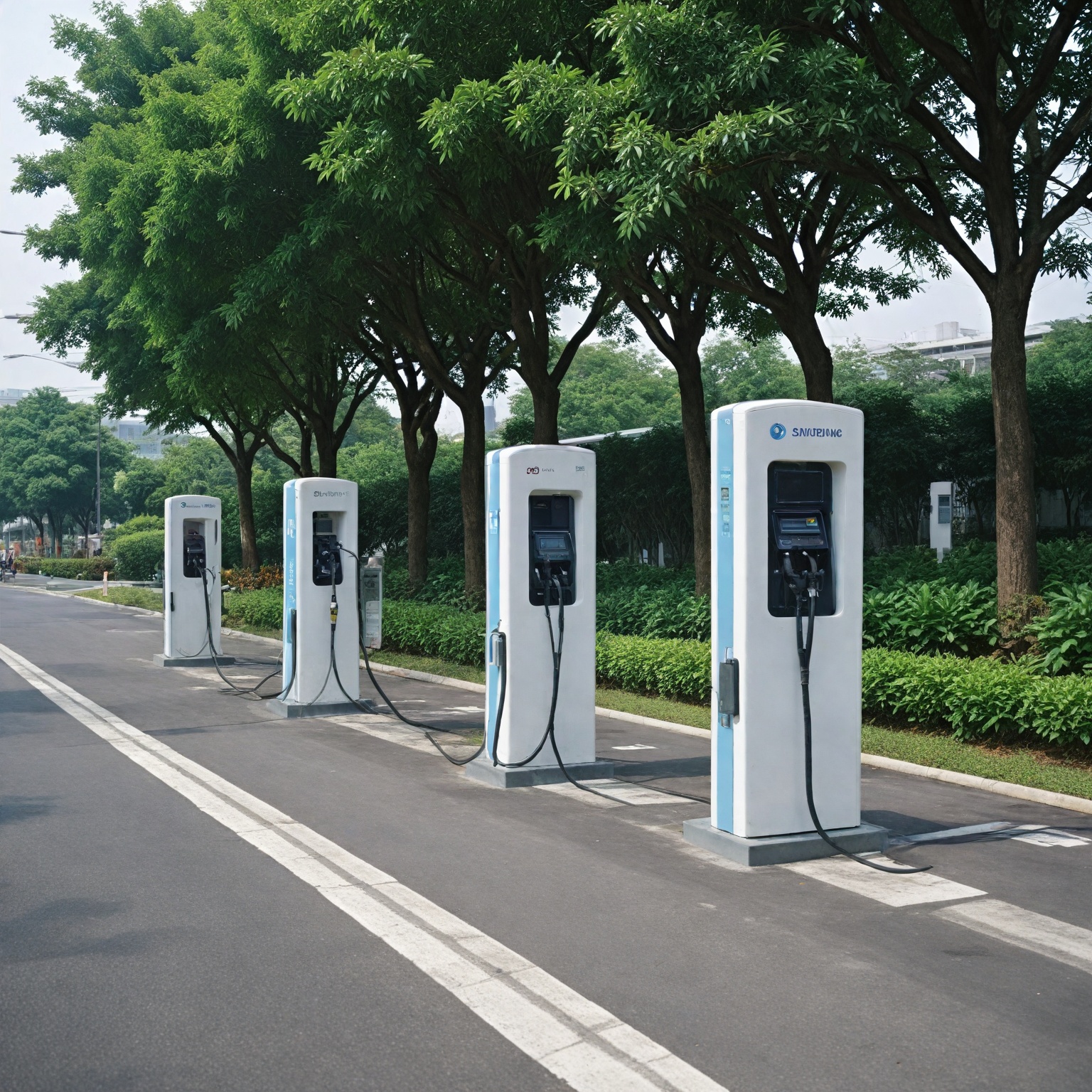
New Energy Asia (NEA) offers a comprehensive range of electric vehicle (EV) charging solutions designed to meet the diverse needs of both residential and commercial users in Malaysia and Southeast Asia. The company’s portfolio includes air- and liquid-cooled DC fast chargers as well as AC chargers. Among the AC chargers is a smart model configurable for 7.4 kW, 11 kW, and 22 kW output levels, enabling flexible charging power options tailored to different vehicle and infrastructure requirements. These chargers support three-phase 400 V sources and incorporate resource distribution features to optimize charging across multiple stations.
The smart AC chargers can be integrated with photovoltaic (PV) systems via the AC SMART mobile app, allowing users to harness solar energy for more sustainable and environmentally friendly charging. This capability reflects NEA’s commitment to incorporating renewable energy into its products, supporting Malaysia’s broader green technology initiatives. Additionally, NEA supplies advanced energy storage systems designed to meet growing demand for efficient home and commercial energy solutions. These Battery Energy Storage Systems (BESS) work in tandem with charging stations to provide low harmonic distortion and uninterrupted power supply, even during temporary grid outages. The integration of BESS is expected to facilitate the adoption of renewable energy sources and extend the lifecycle of EV batteries through reconditioning processes.
NEA’s products are currently marketed under the Lotus brand but are also available on a white-label basis to business operators targeting a broader EV user base beyond Lotus owners. This flexible branding strategy aims to accelerate the adoption of EV infrastructure across different market segments.
The technologies employed by NEA not only focus on hardware but also leverage advanced analytics and artificial intelligence (AI) to optimize fast-charging station operations. These innovations increase efficiency, reduce operational costs, and contribute to a more resilient and sustainable energy ecosystem. By enabling storage of excess renewable energy and implementing smart grid solutions such as demand response and battery storage, NEA’s offerings support grid stability and the seamless integration of EV charging with Malaysia’s evolving energy landscape.
Distribution Network and Market Rollout
The distribution network for EV charging equipment in Malaysia is set to leverage the country’s strategic location and strong domestic partnerships to facilitate market expansion. Given Malaysia’s position as a key maritime and data center hub in Southeast Asia, there is a growing demand for stable and extensive electricity supply, which supports the rollout of EV infrastructure. The joint venture aims to capitalize on these advantages by combining local market knowledge with foreign investment and technology, in line with government encouragement for joint ventures between domestic and international players.
To ensure efficient market penetration, the joint venture will emphasize building an extensive and resilient EV charging network. The government’s robust policy framework—including initiatives such as the National Automotive Policy (NAP 2020), the National Energy Policy (NEP 2022-2040), and the Low Carbon Mobility Blueprint (LCMB 2021-2023)—provides strong incentives for EV adoption and charging infrastructure development. This includes tax reliefs for home charger installations and the Green Investment Tax Allowance (GITA), which incentivizes companies investing in EV charging stations.
The rollout strategy will focus on both supply and demand stimulation by deploying charging stations with varied capacities, including fast chargers, while addressing challenges related to grid integration and operational costs. Incorporating renewable energy sources such as solar and wind into the charging infrastructure will enhance sustainability and reduce greenhouse gas emissions, supported by smart grid technologies and advanced energy management systems. The adoption of data-driven approaches, including AI and predictive analytics, will optimize station operation and help forecast infrastructure needs based on real-time usage data.
However, the expansion faces potential challenges such as excess supply and intense price competition as new players enter the market over the next three to five years. Additionally, interoperability and accessibility remain critical issues to address, particularly across Southeast Asia’s diverse public charging networks. Efforts to standardize charging protocols will be essential to ensure a seamless user experience and maximize the network’s efficiency across different EV models and routes.
The joint venture also aims to support commercial-scale deployments, including high-power charging stations, though such projects require significant investment and coordinated planning with public utilities and stakeholders to mitigate grid impact and high development costs. Early deployments are likely to focus on heavily trafficked freight corridors to maximize operational efficiency and cost-effectiveness.
Strategic Partnerships and Collaborations
The launch of the New Energy Asia joint venture for distributing EV charging equipment in Malaysia is situated within a broader context of active strategic partnerships and collaborations that have been pivotal in advancing the nation’s EV infrastructure and sustainable energy goals. Joint ventures in Malaysia increasingly emphasize leveraging the complementary strengths of partners to address large-scale projects, particularly in data centres and renewable energy sectors, driven by digital transformation and Malaysia’s commitment to reducing carbon emissions.
A key example in the EV sector is ChargeSini, Malaysia’s largest Charge Point Operator (CPO), which has surpassed 900 EV charging points nationwide as of Q4 2024. ChargeSini has formed multiple strategic partnerships to expand and enhance the EV charging ecosystem, including collaborations with academic institutions such as Universiti Tenaga Nasional (UNITEN) and innovation hubs like KevinLab to drive smarter energy solutions. Additionally, ChargeSini has entered into agreements with KEB Properties Sdn Bhd and PRO-NET, the new energy subsidiary of PROTON, to broaden EV charging accessibility in residential and commercial developments. Furthermore, Meta Bright Group Berhad is exploring collaboration opportunities with ChargeSini to strengthen the EV charging network across Malaysia.
These collaborations exemplify the importance of comprehensive joint venture agreements that clearly define the obligations, profit sharing, liabilities, and contributions of each party involved. Such agreements form the foundation for successful partnerships by ensuring mutual understanding and aligned objectives between the entities.
Beyond individual partnerships, the Malaysian government plays an active role in fostering an enabling environment for sustainable development through policies and frameworks such as the Green Technology Master Plan 2017-2030, National Energy Efficiency Action Plan, and the Securities Commission’s Sustainable and Responsible Investment Roadmap. These initiatives promote transparency and corporate responsibility in environmental, social, and governance (ESG) disclosures, which are crucial for attracting investment and ensuring long-term viability of green projects.
Moreover, government-led bodies like the Ministry of Investment, Trade and Industry (MITI) have established the National EV Task Force (NEVTF) and National EV Steering Committee (NEVSC) to accelerate EV adoption, infrastructure development, and investment. The integration of national policies, including the National Automotive Policy (NAP) 2020, National Energy Policy 2022-2040, and Low Carbon Mobility Blueprint 2021-2023, supports Malaysia’s ambition to become a regional leader in energy-efficient vehicles and achieve carbon neutrality by 2050.
Together, these strategic partnerships, collaborative efforts, and supportive government frameworks underscore the significance of joint ventures like New Energy Asia in driving Malaysia’s transition towards a sustainable and digitally integrated EV ecosystem.
Market Impact
The launch of the New Energy Asia joint venture for distributing EV charging equipment in Malaysia is poised to significantly influence the region’s evolving electric vehicle (EV) market. As the South and Southeast Asian (SSEA) electric car industry expands, substantial investment and careful financial discipline will be required to navigate execution risks and shifting policies over long horizons. This joint venture aligns with broader regional trends where new players and increased capacity may lead to intensified competition and potential price pressure in the coming three to five years.
Malaysia’s strong governmental support and policy frameworks, such as the National Automotive Policy (NAP) 2020, the National Energy Policy 2022-2040 (NEP), and the Low Carbon Mobility Blueprint 2021-2023 (LCMB), underpin the country’s ambitions to decarbonise industries and achieve carbon neutrality by 2050. These policies, combined with the Green Investment Strategy (GIS) targeting sectors like green mobility and renewable energy, have created an enabling environment for the EV sector and related infrastructure development, including EV charging networks.
The joint venture’s efforts to integrate renewable energy sources with EV charging infrastructure will further enhance Malaysia’s energy security and sustainability. This approach reduces reliance on fossil fuels, mitigates the impact of global energy price volatility, and supports Malaysia’s international environmental commitments. Moreover, it contributes to long-term economic stability and resilience by fostering technological advancements, attracting foreign investment, and encouraging the growth of local startups in the EV ecosystem.
Additionally, the joint venture is expected to benefit from Malaysia’s broader energy market momentum. The Malaysian share market’s energy sector, including power generation and infrastructure companies, has performed strongly amid supportive policies and growing energy demand. The expansion of EV charging infrastructure complements these trends by driving demand for clean energy and aligning with national emission reduction efforts that prioritize renewable over non-renewable power sources.
Challenges and Opportunities
The launch of the New Energy Asia joint venture for distributing EV charging equipment in Malaysia presents a range of challenges and opportunities shaped by market dynamics, regulatory frameworks, and evolving technological trends.
One of the key challenges lies in the high capital investment required for commercialising high-powered EV chargers, particularly those rated at 1 MW. Such installations entail significant costs related to both infrastructure and grid upgrades. Addressing these challenges will require revising public electric utility business models, coordinating planning among multiple stakeholders, and adopting smart charging technologies to manage grid impacts effectively. Additionally, the deployment of high-power chargers, especially for freight corridors, demands close collaboration between public and private entities due to their limited flexibility and high development costs compared to regular charging stations.
Regulatory complexity also presents a hurdle, especially concerning joint ventures involving listed companies. Recent legal clarifications mandate that shareholders’ approval is required only once before the binding of primary agreements and ownership transfer in joint ventures, ensuring clearer compliance pathways. Moreover, stringent disclosure rules for listed companies participating in joint ventures require transparency about transaction size and material changes, which can add layers of procedural requirements but also protect shareholder interests.
On the opportunity front, Malaysia’s commitment to reducing carbon emissions and advancing digital transformation fuels strong momentum for joint ventures in renewable energy, data centres, and electric vehicles. The memorandum of understanding targeting the development of 2GW renewable energy projects, including an initial 1GW phase in Sarawak, exemplifies this potential[
Future Plans and Expansion
The joint venture for distributing EV charging equipment in Malaysia is positioned to capitalize on the country’s ambitious renewable energy and electric vehicle (EV) strategies. Malaysia aims to expand its renewable energy capacity significantly, targeting an increase from 6 gigawatts to 14 gigawatts by 2030, with states like Sarawak leading with plans to achieve over 70 percent renewable energy use by that year. This expansion aligns with the national commitment to carbon neutrality by 2050 and is supported by policies such as the National Energy Policy 2022-2040 and the Low Carbon Mobility Blueprint 2021-2023, which emphasize energy efficiency, renewable energy adoption, and the growth of green technologies including EVs.
Investment in green infrastructure is a critical component of Malaysia’s growth plan. The Green Investment Strategy aims to mobilize RM300 billion by 2030 across sectors like renewable energy, green mobility, and hydrogen, with early emphasis on solar photovoltaic (PV) and EV technologies facilitated by agencies such as the Malaysian Investment Development Authority (MIDA). Additionally, the 2024 federal budget allocated significant funding towards environmental initiatives, including RM2.77 billion for electric vehicles and energy transition projects, highlighting governmental support for scaling EV infrastructure.
To support the increasing number of EVs, Malaysia is focusing on developing a comprehensive and resilient EV charging ecosystem. This includes plans to deploy advanced charging stations capable of delivering up to 1 MW of power, although such high-capacity infrastructure will require substantial investment in installation, grid upgrades, and regulatory adaptations. Smart grid technologies and energy storage systems will play a crucial role in balancing grid load and ensuring reliable, consistent power supply for fast charging, addressing challenges posed by the intermittent nature of renewable energy sources. Coordination among stakeholders and the revision of public utility business models will also be essential to manage the impact on the power sector.
Despite optimistic growth prospects, there is caution around the potential for excess supply and intensified price competition in the EV charging market as new players enter and capacity expands over the next three to five years. Financial discipline and strong local partnerships are expected to be key factors for success in this evolving landscape. Furthermore, stimulating supply and demand concurrently remains a challenge, particularly in emerging Asian markets, where achieving total cost of ownership parity between EVs and internal combustion engine vehicles is still underway.