Summary
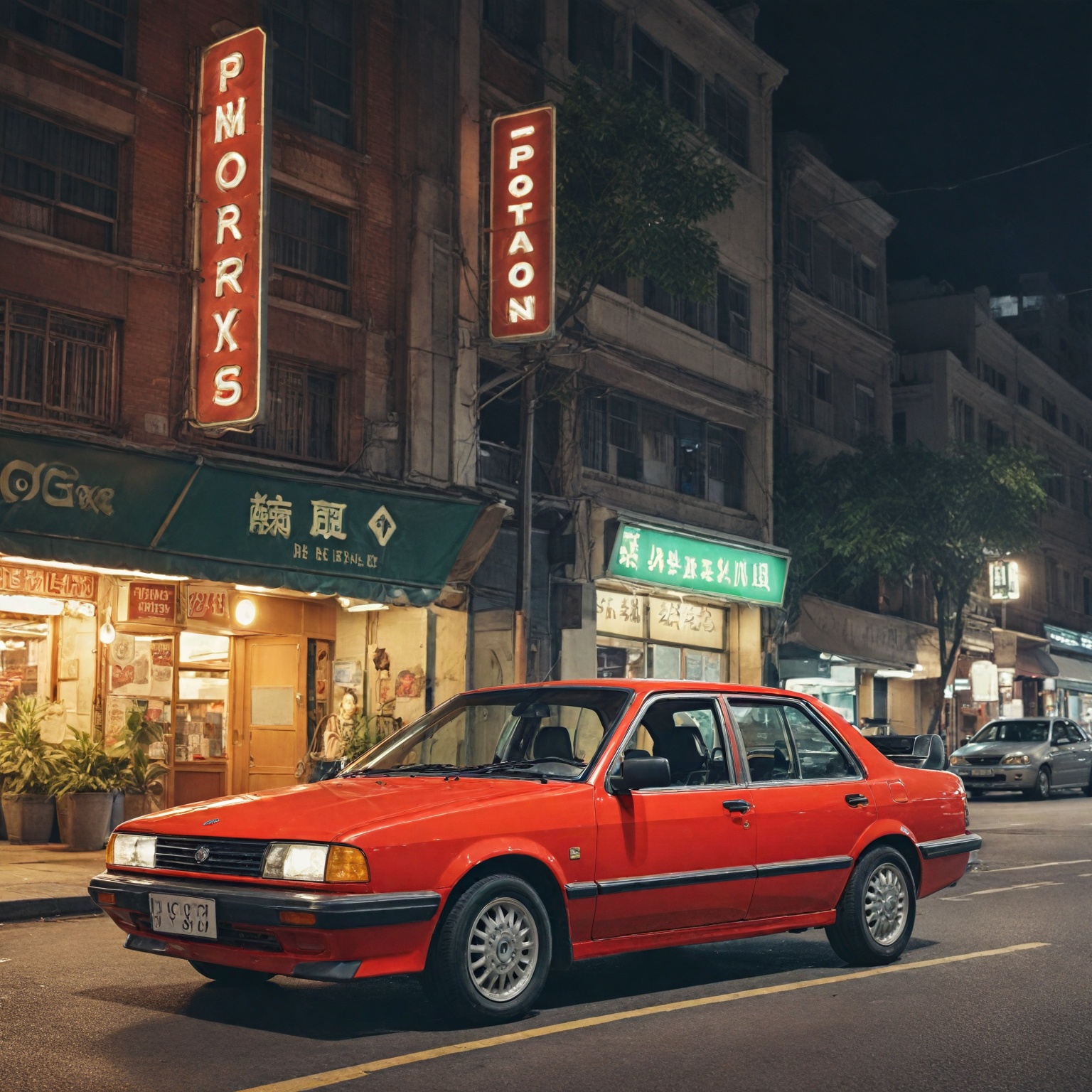
The 1993 Proton Wira is a compact car produced by Malaysian automaker Proton, notable for its role in the early development of affordable vehicles in Southeast Asia. Building upon the design cues of its predecessor, the Proton Iswara, the Wira featured enhancements such as rear disc brakes, electric windows, and airbags in select variants. Despite these features, the vehicle’s safety technologies were modest by today’s standards, reflecting the automotive safety landscape of the early 1990s.
Safety assessment programs like the ASEAN New Car Assessment Program (ASEAN NCAP) have since established rigorous benchmarks for vehicle crashworthiness tailored to the Southeast Asian market. Although the 1993 Proton Wira predates these programs, hypothetical NCAP-style crash tests and retrospective evaluations indicate that the Wira would likely score poorly due to the absence of modern active safety systems such as Electronic Stability Control (ESC) and Autonomous Emergency Braking (AEB), as well as limitations in structural crash protection.
This contrast highlights the substantial evolution in vehicle safety over the past three decades, with modern vehicles incorporating advanced passive and active safety features that significantly improve occupant and pedestrian protection. The Wira’s performance under contemporary safety criteria underscores the challenges faced by older models in meeting current regulatory and consumer expectations, emphasizing the importance of ongoing advancements in automotive safety technology.
The legacy of the 1993 Proton Wira thus provides valuable context for understanding the progression of automotive safety standards in the ASEAN region and the influence of NCAP assessments in shaping manufacturer priorities and consumer awareness. While once considered a practical and affordable option, the Wira today serves as a reference point for the critical improvements in vehicle safety realized since its production.
Background
The 1993 Proton Wira carries forward the design language initially introduced with the Proton Iswara, featuring a distinctive fluted bonnet that tapers toward the Proton badge on the grille. This model included notable features such as rear disc brakes, front and rear armrests, electric mirrors, folding rear seats, and electric windows on all doors, particularly in the 1.6-liter variant. In October 1993, Proton expanded the Wira lineup by introducing a five-door hatchback version, initially badged as the Wira Aeroback, similar in concept to the five-door Saga hatchback. This variant was available in two trims: the 1.6XLi MT and the 1.6XLi AT.
In terms of safety evaluation, the ASEAN New Car Assessment Program (ASEAN NCAP) serves as a benchmark for assessing vehicle safety across the Southeast Asian region. The program tests vehicles based on a series of crash scenarios and safety features, focusing on occupant protection for adults and children, as well as pedestrian safety. The aim is to encourage automotive manufacturers to adopt higher safety standards to improve overall road safety within the ASEAN countries.
Historically, older vehicles like the 1993 Proton Wira were equipped with basic safety features such as a driver’s side front airbag intended to reduce injury in the event of a crash. However, compared to modern vehicles, these older cars generally do not meet current crash safety standards, highlighting the importance of contemporary safety assessments and improvements.
Safety Features of the 1993 Model
The 1993 Proton Wira incorporated several safety features aimed at protecting occupants during a crash, although it lacked many modern active safety technologies. The vehicle’s passive safety components included front airbags for both the driver and passenger sides, designed to prevent occupants from striking interior parts of the car in the event of a collision. Additionally, side curtain airbags were implemented to reduce the risk of head injuries for passengers during side impacts.
The car’s structural design also played a key role in occupant protection. The folding zones, particularly in models like the Waja which shared design principles with the Wira, were engineered to absorb and dissipate crash energy effectively. This structural integrity helped maintain cabin strength in crash scenarios such as a frontal impact at speeds around 40–50 km/h, an important metric in NCAP-style tests. The Proton Wira’s body structure, combined with its passive safety features, aimed to safeguard adult occupants and, to some extent, children, in collisions.
However, the 1993 Proton Wira did not include advanced active safety technologies common in later vehicle models. Features such as Autonomous Emergency Braking (AEB), Electronic Stability Control (ESC), lane keeping assist, or driver attention detection systems were absent. These systems are designed to help prevent crashes or reduce their severity, particularly at higher speeds or in cases of driver fatigue, but were not part of the Wira’s safety suite.
Furthermore, the seat belt mounting system utilized in the Proton Wira and related models employed 90-degree upright anchor plates to secure safety belts effectively, ensuring occupant restraint during impact. While basic by modern standards, these components contributed to the overall occupant protection strategy of the vehicle.
Crash Testing and Safety Assessments
The safety of vehicles in the ASEAN region is primarily evaluated by the ASEAN New Car Assessment Program (ASEAN NCAP), which conducts a series of crash tests and safety assessments. These tests focus on various crash scenarios to assess occupant protection for adults and children, as well as pedestrian safety. The goal is to encourage manufacturers to adopt higher safety standards tailored to the needs and conditions of ASEAN countries.
ASEAN NCAP assigns safety ratings based on the results of these evaluations, typically expressed in star ratings. Vehicles are generally awarded a 4-star rating unless they undergo re-testing or further scrutiny. The assessments include both active safety features, which help prevent or reduce the severity of crashes, and passive safety features that protect occupants during an impact.
Regarding the 1993 Proton Wira, crash testing information analogous to ASEAN NCAP protocols shows that some variants, such as the 1996 GLi Hatchback 5dr, received an overall safety score of 0/10, indicating significant shortcomings in occupant protection and active safety features. This suggests that while ASEAN NCAP emphasizes comprehensive safety evaluations, older models like the Proton Wira may lack the safety technologies and structural integrity now deemed essential by contemporary standards.
Comparatively, while NCAP testing procedures have evolved globally—with organizations such as the US National Highway Traffic Safety Administration (NHTSA) and the Insurance Institute for Highway Safety (IIHS) employing distinct but related methodologies—the ASEAN NCAP follows a tailored approach to meet regional requirements, reflecting local traffic environments and regulatory frameworks.
Hypothetical NCAP-Style Crash Testing on the 1993 Model
If subjected to a modern NCAP-style crash test, the 1993 Proton Wira would likely face significant challenges in achieving a high safety rating. Unlike newer vehicles tested by programs such as ASEAN NCAP and Euro NCAP, which evaluate crashworthiness through a variety of impact scenarios including frontal, side, pole, and pedestrian collisions, the 1993 Wira was designed before many of these rigorous protocols were standardized.
The 1993 Proton Wira features basic safety equipment such as a driver’s airbag on all models and a passenger airbag on select Lux variants, along with side impact bars and standard ABS on some trims. However, the lack of side curtain airbags, advanced restraint systems, and active safety technologies like Electronic Stability Control (ESC) and Autonomous Emergency Braking (AEB) — which are factored into contemporary NCAP ratings — would likely result in lower scores for occupant and pedestrian protection.
Furthermore, with no existing NCAP crash test data available for this older design and given the advancements in vehicle structural integrity and safety systems over the past decades, it is improbable that the 1993 Proton Wira would match the performance of more recent vehicles assessed by ASEAN NCAP or Euro NCAP. For comparison, even more modern Proton models have demonstrated modest safety ratings, reflecting the evolving standards and expectations within the automotive industry.
Comparative Safety Analysis
The 1993 Proton Wira, a vehicle from an era when modern crash safety standards were not yet established, offers an interesting case study when compared to contemporary cars subjected to NCAP-style crash tests. Unlike current vehicles, which are designed with advanced safety features and are rigorously evaluated by organizations like ASEAN NCAP and Euro NCAP, the Wira was developed prior to the widespread adoption of such safety protocols.
Modern crash testing protocols, such as those conducted by ASEAN NCAP, assess vehicles based on a variety of crash scenarios, including occupant protection for adults and children as well as pedestrian safety. These evaluations encourage manufacturers in the ASEAN region to adopt higher safety standards, incorporating both passive safety elements—such as reinforced structures and airbags—and active safety features that help prevent or mitigate crashes.
In contrast, vehicles from the early 1990s, including the Proton Wira, typically lack many of these active and passive safety advancements. While enthusiasts often recall cars from that era fondly, it is clear that even the most basic modern models, like the Perodua Axia, Bezza, or the latest Proton Saga, outperform older cars in crashworthiness due to improved structural design and safety technologies.
Furthermore, contemporary safety assessments include not only static crash impacts but also consider the effectiveness of assisted driving technologies, which are becoming more common and play a crucial role in accident avoidance and severity reduction. The absence of such technologies in the 1993 Proton Wira underscores the gap in safety performance compared to modern vehicles.
Impact and Perception of Safety
The safety performance of vehicles like the 1993 Proton Wira is often evaluated through programs such as the ASEAN New Car Assessment Program (ASEAN NCAP), which provides regional safety ratings that help consumers make informed decisions when purchasing cars. These safety ratings focus on occupant protection for adults and children, pedestrian safety, and the effectiveness of active safety features designed to prevent or reduce the severity of crashes. Such assessments promote higher safety standards within the automotive industry in Southeast Asia, influencing both manufacturers and buyers.
In contrast to modern safety expectations, the 1993 Proton Wira was limited in its safety offerings. Most models of its time included only basic safety features such as three-point safety belts with pretensioners and laminated windshields. Some export variants had improved build quality and optional features like driver airbags, door intrusion bars, and anti-lock braking systems (ABS). This minimal safety provision, especially in domestic models, would likely result in lower safety ratings if subjected to contemporary NCAP-style crash tests, affecting consumer perception negatively.
Programs like Euro NCAP have demonstrated the value of comprehensive crash tests, including front, side, pole, and pedestrian impact scenarios, which contribute to star ratings that have become influential in shaping public opinion and manufacturer priorities. Similarly, ASEAN NCAP’s assessments have begun to raise awareness among Southeast Asian consumers and manufacturers about vehicle safety, highlighting the gap between older models like the Proton Wira and newer vehicles equipped with advanced safety technologies. Consequently, the perceived safety of the 1993 Proton Wira reflects both the era’s limited safety standards and the evolving expectations driven by NCAP assessments in the region.
Legacy and Safety Evolution
The Proton Wira, produced between 1993 and 2005, reflects the safety standards typical of its era, offering minimal active safety features compared to modern vehicles. Early models primarily included basic safety equipment such as three-point seat belts with pretensioners and laminated windshields, while export variants sometimes featured enhancements like driver airbags, door intrusion bars, and anti-lock braking systems (ABS) as optional extras. Despite these features, the Wira’s overall safety was considered modest, especially when viewed against contemporary expectations.
Over time, automotive safety has evolved significantly, with active safety systems now playing a crucial role in preventing or mitigating crashes. Modern vehicles are evaluated through comprehensive programs like the ASEAN New Car Assessment Program (ASEAN NCAP), which tests occupant protection for adults and children, as well as pedestrian safety across various crash scenarios to encourage higher safety standards in the region. While the Proton Wira was never originally designed to meet these rigorous assessments, retrospective evaluations suggest it could achieve up to a 4-star ASEAN NCAP rating under certain conditions.
The legacy of the Proton Wira highlights the broader evolution of vehicle safety, underscoring the challenges of older models in meeting modern crash safety requirements. Its safety features and structural design paved the way for improvements in later Proton models, which incorporated more advanced passive and active safety technologies to better protect occupants and pedestrians alike.