Highlights
- Night cleaning jobs are expanding due to higher wages and demand for sanitation services.
- The cleaning industry’s growth emphasizes the importance of safeguarding night workers' health and safety.
Summary
Night cleaning jobs have seen growing demand globally due to a combination of operational efficiencies, economic factors, and evolving market needs. These roles, primarily involving janitorial and sanitation duties during overnight hours, enable businesses to maintain continuous daytime operations without disruption while ensuring stringent hygiene standards. The cleaning industry, particularly commercial cleaning, is expanding rapidly, driven by increased awareness of health and sanitation, urbanization, and rising disposable incomes across regions such as North America, Asia-Pacific, and Latin America.
The rise in night cleaning employment reflects broader industry trends, including the shift towards green cleaning products and specialized sanitation services, which together are reshaping the sector’s landscape. Night shifts often provide higher wages and flexible hours, appealing to workers who require or prefer non-traditional schedules. However, these roles also come with significant challenges, including health risks linked to disrupted circadian rhythms, physical strain, and safety concerns due to isolated work environments.
Labor advocates and researchers have raised concerns about the adverse effects of night work on employee wellbeing. Prominent voices, such as UNI Global Union’s Eddy Stam, have called for transitions toward daytime cleaning schedules to mitigate the physical and social costs associated with night shifts. Studies from institutions like University College London underscore disparities in working conditions and highlight the need for stronger policies to protect night cleaning workers’ health and safety.
Looking ahead, the cleaning services market is expected to continue growing, with employment opportunities projected to increase faster than average across industries. Technological innovations, including automated cleaning equipment, and the rising demand for environmentally sustainable practices are anticipated to shape the future of night cleaning jobs. Despite these positive trends, addressing the labor challenges inherent in night shifts remains critical to ensuring a sustainable and equitable workforce.
Background
Night cleaning jobs have become increasingly common due to various practical, operational, and financial factors. Cleaning during night shifts allows businesses to maintain uninterrupted daytime operations, enhancing overall efficiency while ensuring strict sanitation standards are met. This schedule also provides cleaners with flexible work hours and often higher wages, addressing some worker preferences and economic incentives within the sector.
The cleaning industry plays a vital front-line role in maintaining cleanliness in office suites, restrooms, and common areas, which is crucial for the smooth functioning of many businesses. However, night shifts can pose significant challenges for workers. Extended or irregular work hours disrupt the body’s natural rhythms, leading to increased physical and mental fatigue, stress, and reduced concentration. These effects contribute to a higher risk of accidents and operator errors. Additionally, society’s orientation toward traditional daytime work hours often exacerbates the fatigue and alertness issues faced by night workers.
Concerns over the negative consequences of night shifts on workers’ health and wellbeing have been raised by labor advocates. For instance, UNI Global Union’s head of property services, Eddy Stam, has called for a transition to daytime work in the cleaning sector, emphasizing the harmful effects of unsocial shifts. Research led by Professor Ben Campkin and Dr. Alessio Kolioulis at UCL Urban Laboratory has highlighted the stark disparities in working and economic conditions for night workers, underscoring the need for policy interventions to improve their safety and wellbeing.
The growth of the cleaning industry itself is driven by broader market trends. The majority of cleaning businesses are small, with most employing fewer than ten people and being independently owned. Online sales of cleaning products are expanding rapidly, expected to grow by 15% annually and reach $20 billion by 2025. Significant growth is anticipated in regions such as Asia-Pacific and Latin America, propelled by urbanization and rising disposable incomes, particularly in countries like China and India. North America currently leads the cleaning services market, accounting for over 32% of the share in 2022, supported by population growth and lifestyle factors. Meanwhile, the Asia Pacific region is set for fast expansion due to demographic and economic developments.
Factors Driving the Growing Demand
The growing demand for night cleaning jobs is influenced by multiple factors linked to economic, social, and health-related trends. One key driver is the increase in disposable income resulting from lower inflation rates, which enables customers to spend more on cleaning services that simplify their lives. Additionally, the heightened focus on health and sanitation, especially following the COVID-19 pandemic, has led to stricter cleanliness standards across various sectors, including corporate offices, healthcare facilities, and educational institutions. This has significantly expanded the need for professional cleaning services that operate beyond regular business hours to maintain safety and hygiene.
Geographical and demographic factors also play an important role. North America leads the cleaning services market, accounting for over 32% of the global share in 2022, driven by population growth, higher living standards, and increasingly busy lifestyles. Meanwhile, the Asia Pacific region is experiencing rapid market growth due to urbanization, economic progress, and an aging population requiring more extensive cleaning solutions. The steady urbanization in countries like India and China contributes to the expanding demand for commercial cleaning, particularly in retail, supermarkets, and office buildings.
The commercial cleaning industry is also evolving with emerging trends such as green cleaning and specialized sanitation services. There is a growing demand for eco-friendly products as businesses aim to reduce environmental impact and improve indoor air quality for employees and clients. By 2025, green cleaning is projected to represent 30% of the total cleaning industry revenue, highlighting its increasing importance.
Employment opportunities in cleaning services are expected to grow, with the U.S. Bureau of Labor Statistics projecting a 10% increase in cleaning jobs through 2026—above the national average for all industries. This growth reflects the expanding market size, which reached $51 billion in 2015 and is anticipated to hit $111.49 billion globally by 2025. Commercial cleaning remains the dominant sector, with janitors and cleaners performing essential tasks like floor and window cleaning, often during night shifts to minimize disruption to daytime activities.
Furthermore, non-traditional work schedules inherent to night cleaning jobs contribute to demand. Many cleaning tasks are scheduled overnight to allow for maintenance without affecting business operations. However, these shifts pose challenges such as sleep disruption, fatigue, and increased safety concerns, which the industry must address to maintain workforce wellbeing and efficiency.
Types of Night Cleaning Jobs
Night cleaning jobs encompass a variety of roles across commercial, industrial, and residential settings, each with specific duties and requirements tailored to maintaining cleanliness and hygiene during off-hours.
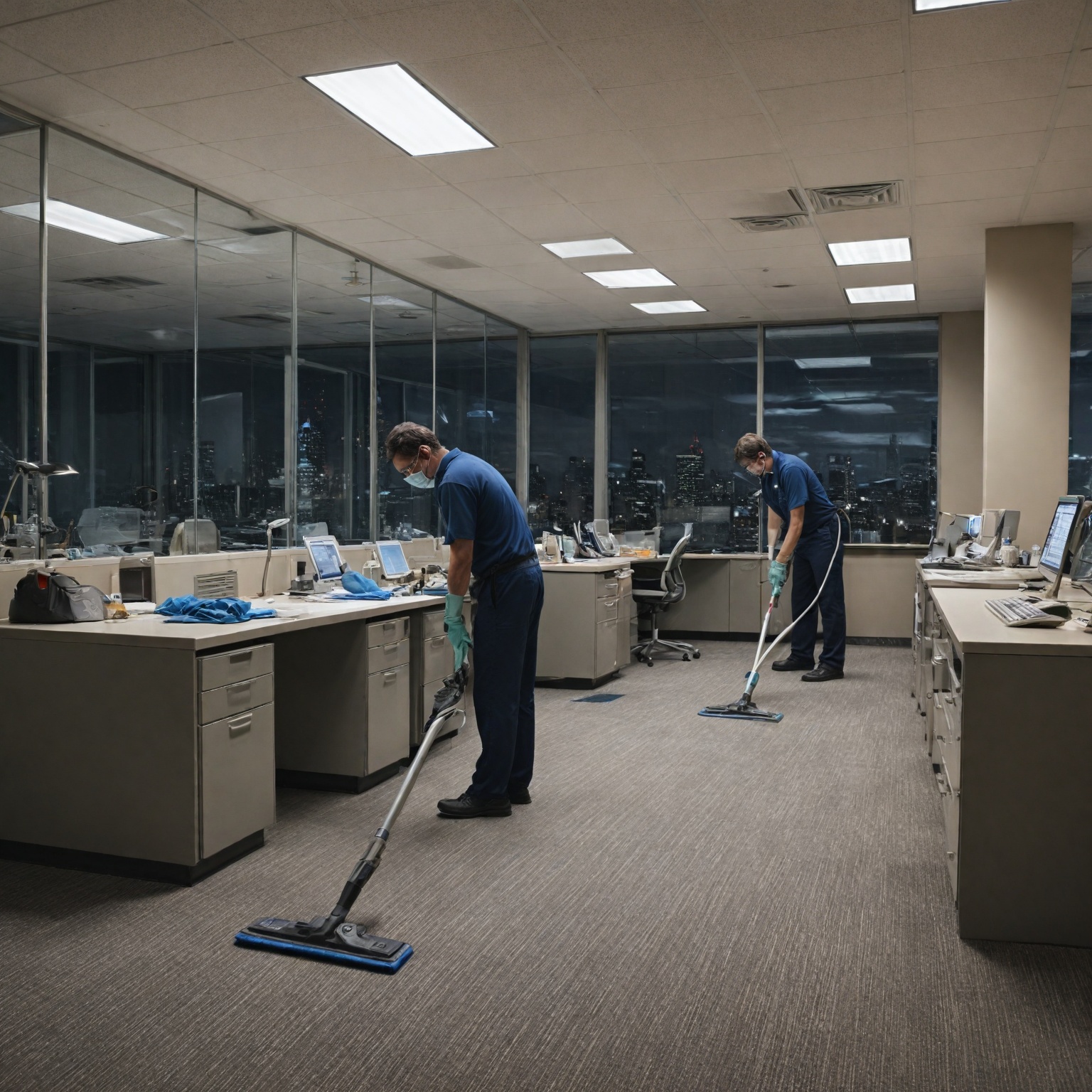
One common type is the night office cleaner, who typically works in commercial buildings such as corporate offices, hospitals, schools, shopping malls, retail stores, and community or religious facilities. Their responsibilities include vacuuming carpeted areas, sweeping and mopping floors, dusting surfaces and ceiling fans, wiping down tables, walls, and counters to ensure sanitation, as well as trash collection and restroom cleaning. These cleaners play a vital front-line role in ensuring that workspaces are fresh and sanitized before employees arrive, enabling uninterrupted business operations during the day.
In addition to general cleaning tasks, some night cleaning roles involve specialized duties such as deep cleaning, equipment maintenance, and handling specialized machinery like buffing and waxing machines. On-the-job training is often provided to prepare workers for these tasks. Night cleaners may also assist with cleaning appliances and other equipment, contributing to a thorough maintenance routine that cannot easily be performed during business hours.
Residential night cleaning is less common but growing, with some households scheduling bi-weekly or monthly services to maintain consistent cleanliness. Cleaning businesses often use scheduling software to manage recurring cleaning jobs efficiently, catering to these residential needs during flexible hours.
Furthermore, the cleaning industry includes specialized sectors such as window cleaning, which has seen steady growth driven by urban expansion and real estate investments. While window cleaning often occurs during daylight, some commercial operations schedule these tasks at night to minimize disruptions and increase safety. This sector emphasizes sustainability, energy efficiency, and innovative cleaning technologies, creating additional employment opportunities within the night cleaning workforce.
Typical Duties and Responsibilities
Night cleaning jobs typically involve a variety of tasks focused on maintaining cleanliness, sanitation, and safety in different work environments. Workers are responsible for cleaning and restocking restrooms, break rooms, offices, and common areas by performing duties such as sweeping, mopping, vacuuming, dusting, trash collection, and touchpoint disinfection. In addition to routine cleaning, night cleaners often assist with deep cleaning tasks, including cleaning equipment and appliances to ensure all areas meet hygiene standards.
Ensuring that all cleaning equipment is maintained in a clean, safe, and operable condition is a crucial responsibility to prevent accidents and maintain efficiency. Night cleaners must also promptly report any maintenance issues or safety hazards to management, helping to safeguard the workplace environment. Given the nature of cleaning products and disinfectants used during these tasks, workers need to adhere strictly to safety instructions to avoid exposure to harsh chemicals that can cause skin irritations, respiratory issues, and other health complications.
Some night cleaning roles require additional skills such as groundskeeping, laundry, stocking, and facilities maintenance, as well as reliable transportation and a valid driver’s license for positions involving travel between work sites or operating ground equipment. Overall, night cleaning professionals play a vital role in ensuring that workplaces remain safe, sanitary, and welcoming for employees and visitors alike.
Workforce Demographics
The workforce engaged in night cleaning jobs, particularly maids and housekeeping cleaners, predominantly consists of female workers, who made up approximately 85.4% of the 1.07 million employed in this sector as of 2021. This high female representation highlights the gendered nature of the occupation and suggests a robust labor market for women in residential cleaning services.
Ethnically, the workforce is diverse, with White individuals constituting the largest group at around 38–59.6%, depending on the data source. Hispanic or Latino workers represent a significant portion as well, ranging from 19.0% to 43%, with Mexican-origin workers forming the majority within this group (53.2%), followed by Salvadoran (8.83%) and Puerto Rican (5.82%) origins. Black or African American workers account for approximately 11.0% to 19.2%, while Asian workers make up about 5.0% of the cleaner workforce.
Age-wise, the average cleaner is about 48 years old, reflecting a mature workforce. Educational attainment among maids and housekeeping cleaners varies, with the majority having completed a high school diploma or equivalent. Specifically, around 421,972 workers have achieved this level, while others have completed secondary education or some college coursework, indicating moderate levels of formal education within the field.
Nativity plays a notable role in this workforce demographic. A substantial proportion of house cleaners are foreign-born: approximately 20.3% are noncitizens, and another 14.8% are U.S. citizens born abroad. Notably, noncitizens are particularly overrepresented in house cleaning jobs, constituting about half (50.8%) of the workforce, highlighting the occupation’s reliance on immigrant labor.
Economic and Social Factors
The growing demand for night cleaning jobs is driven by a combination of economic and social factors that reflect broader trends in income, employment, and workplace dynamics. One key economic driver is the increase in disposable income among consumers, largely due to lower inflation rates. With more financial flexibility, individuals and businesses are more willing to spend on cleaning services that provide convenience and meet elevated hygiene standards. This trend is particularly evident across various sectors such as corporate offices, healthcare facilities, and educational institutions, where outsourcing cleaning tasks to professionals is becoming more prevalent.
The rise in night cleaning opportunities is also linked to shifts in employment patterns and preferences. Night shifts often offer higher wages as compensation for the inconvenience and demands associated with overnight work, making these positions attractive to certain workers seeking financial benefits or schedules better aligned with their lifestyles. Additionally, entry into night cleaning jobs requires minimal qualifications and no prior experience, lowering barriers for those seeking employment in this sector. This accessibility helps address workforce needs while providing job opportunities for a wide demographic.
Social factors play a critical role as well. Night workers, who constitute a significant portion of the labor force in urban centers, face unique challenges including health risks, safety concerns, and issues related to workplace dignity and pay inequality. These concerns highlight the need for improved labor policies and protections to support night cleaning employees. Moreover, there is a growing emphasis on green cleaning and specialized sanitation services, reflecting societal awareness of environmental impact and indoor air quality, which further influences demand in the cleaning industry.
Health and Safety Considerations
Night cleaning jobs pose several health and safety challenges that require careful attention to protect workers. One primary concern is the risk of musculoskeletal disorders resulting from manual handling of cleaning equipment, as well as skin complications such as allergies, asthma, and chemical burns caused by toxic substances in cleaning agents. Enforcing safety guidelines and educating workers on best practices are essential to minimizing these hazards.
Working during nighttime hours can exacerbate health risks due to the disruption of natural sleep patterns. Night shift cleaners often experience fatigue, sleep disturbances, appetite and digestive issues, and increased accident rates compared to their daytime counterparts. Extended or irregular shifts further contribute to physical, mental, and emotional stress, leading to decreased alertness and higher susceptibility to errors and injuries. To mitigate these risks, tasks requiring heavy physical labor or intense concentration are recommended to be scheduled at the beginning of the shift, when alertness is higher.
Safety concerns also arise from the nature of working alone or in isolated and poorly lit environments during night hours. The potential for crime, combined with limited immediate assistance in emergencies, makes it imperative to have comprehensive safety protocols. Employers should ensure access to emergency preparedness training, regular drills, and readily available emergency contacts. Additionally, providing appropriate personal protective equipment (PPE), first aid kits, and clear instructions on handling cleaning chemicals can significantly improve workplace safety.
Chemical exposures represent a major public health issue within night cleaning roles, as many workers are routinely exposed to irritant or hazardous substances found in cleaning products. Understanding the specific hazards associated with each chemical and limiting unnecessary use can reduce adverse health effects on skin and respiratory systems. Proper training on the interpretation of Safety Data Sheets, use of ventilation, and emergency procedures in the event of exposure is crucial.
Labor Challenges
Night cleaning jobs present several labor challenges related to health, safety, scheduling, and worker agency. One significant concern is the physical and mental toll on workers due to extended or unusual work shifts, particularly night shifts. These shifts can disrupt the body’s natural sleep cycle, leading to fatigue, irritability, lack of concentration, depression, and headaches, which increase the risk of occupational injuries and operator errors. The Occupational Safety and Health Administration (OSHA) recommends that employers closely monitor night shift workers for these symptoms to mitigate hazards.
Safety risks are heightened during night shifts, not only from fatigue but also from environmental and situational factors. Workers may face greater vulnerability to crime and injury, especially when working alone or in isolated areas. The most common injuries in commercial cleaning include sprains and muscle strains from slips and falls, underscoring the importance of safety protocols such as wearing non-slip shoes and using caution signs. Health hazards also extend to musculoskeletal disorders from manual handling of equipment and exposure to toxic cleaning chemicals that can cause skin allergies, asthma, or burns.
Another challenge relates to the scheduling and agency of night cleaning workers. Many employees have little control over their shift times because employers and clients often do not offer daytime options. While night shifts may come with higher wages that are necessary for workers facing financial pressures, the irregular and unsocial hours can negatively affect workers’ well-being and family life. Labor organizations have advocated for transitioning toward more daytime work to address these issues, recognizing the adverse consequences of non-traditional shifts on workers’ health and social conditions[
Training, Qualifications, and Professional Development
The night cleaning industry presents opportunities for individuals with varying levels of experience and education. Entry-level positions such as night cleaner roles generally require minimal qualifications; there are no specific educational prerequisites, and prior experience is often unnecessary due to low competition for overnight custodian jobs. However, physical fitness is important, as the work typically involves manual labor throughout the shift.
As clients increasingly demand proof of advanced training and certified compliance—especially for specialized tasks like high-rise cleaning—professional development has become a key aspect of career growth in this sector. Workers aiming to advance their careers can benefit from obtaining certifications and participating in training programs that address both technical skills and safety compliance.
Essential skills for night cleaning personnel extend beyond basic sanitation and include customer service, communication, facilities maintenance, and proper handling of cleaning agents. Employees must also be trained to interpret Safety Data Sheets (SDS) for cleaning products, understand ventilation requirements in confined spaces, and know emergency procedures for spills or exposure to hazardous substances.
Companies prioritize strict adherence to safety guidelines by providing appropriate Personal Protective Equipment (PPE) and ensuring all cleaning staff are trained in emergency preparedness, such as fire evacuation drills and medical incident responses. Regular training and drills reinforce these protocols, enabling quick and effective reactions during emergencies.
In addition to technical and safety training, some employers offer self-defense classes to night cleaning crews. These classes are designed to equip workers with skills not only to protect themselves from physical threats but also to handle a variety of situations they might encounter during nighttime shifts.
Legal Protections and Regulatory Framework
Night cleaning jobs are subject to various legal protections and regulatory frameworks aimed at ensuring worker safety and health. Although specific laws may differ by state, region, or country, internationally recognized agencies provide guidelines that help employers maintain safe working environments for cleaning staff. The Occupational Safety and Health Administration (OSHA) in the United States plays a key role by enforcing hazard-specific safety and health standards and mandating employers to provide workplaces free from recognized hazards that could cause death or serious physical harm.
While OSHA does not specifically regulate night shifts, it recommends measures to mitigate the risks associated with working during these hours, such as encouraging night shift workers to take regular breaks to reduce fatigue. Employers are also advised to strictly adhere to safety protocols, supply appropriate personal protective equipment (PPE), and implement emergency preparedness training including fire evacuations and medical incident responses to enhance safety for cleaning workers during night shifts.
Furthermore, certification programs like Green Seal support the environmental safety aspect by validating cleaning products and services that meet sustainability standards, which indirectly promotes safer and healthier cleaning practices. Overall, a holistic approach that combines safety rules, organizational support, training programs, and employee commitment is essential to effectively reduce risks and turnover intentions among night cleaning workers.
Industry-Specific Demand and Trends
The cleaning services industry has experienced significant growth driven by improvements in business infrastructure and rapid economic expansion over the past decade. This market is largely organized and dominated by a few key players such as ABM Industries Inc., Aramark Corporation, Sodexo, and The Servicemaster Company, which utilize strategies like product launches and acquisitions to maintain their market share. The residential cleaning sector in the United States is currently valued at approximately $18.8 billion, growing moderately at 1.23% annually, fueled by urbanization, rising disposable incomes, and changing demographics. This segment is projected to reach $40.38 billion by 2025, supported by factors including an increase in dual-income households and heightened awareness of the benefits of professional cleaning services.
In the commercial domain, contract cleaning services represent the largest revenue share, accounting for nearly half of the global market at 49.7%. This sector is expanding rapidly, especially in the Asia-Pacific region, where it is expected to grow at a compound annual growth rate (CAGR) of 7.5% from 2025 to 2030. Urbanization and a growing middle class in countries such as China and India are significant contributors to this growth. Additionally, the commercial cleaning market is projected to surpass $468 billion in revenue by 2027, a substantial increase from $308.7 billion in 2020, driven by increased demand across corporate offices, healthcare facilities, retail outlets, and educational institutions.
Emerging trends in the industry include a strong shift towards green cleaning and specialized sanitation services, motivated by increased environmental awareness and the desire to improve indoor air quality for both employees and clients. The carpet and upholstery cleaning segment is noted as the most profitable and fastest growing within the market from 2023 through 2030. Online sales of cleaning products also demonstrate robust growth, expected to increase by 15% annually and reach $20 billion by 2025.
Labor dynamics in the cleaning industry reveal that the median hourly wage for janitors and building cleaners was $16.84 as of May 2023. Despite the growth, challenges remain, such as the generally low annual employee turnover rate of 2% among commercial franchise cleaning agencies, which may reflect both stability and the difficulty in recognizing quality work in this sector. Furthermore, the cleaning workforce plays a vital front-line role in maintaining cleanliness in office suites, restrooms, and common areas, requiring skills that range from guest relations to industrial cleaning and leadership.
Regionally, North America holds the largest share of the cleaning services market at over 32% as of 2022, driven by population growth, higher living standards, and increasingly busy lifestyles. However, the Asia-Pacific market is the fastest growing, propelled by rapid urbanization and economic development. The cleaning industry has demonstrated resilience despite past recessions, rebounding from revenue declines in 2008 and 2009 to achieve $51 billion in revenue by 2015. California leads the U.S. as the top employer of maids and housekeepers, highlighting the geographic concentration of cleaning jobs.
Future Outlook and Trends
The demand for night cleaning jobs, particularly for janitors and building cleaners, is projected to grow steadily in the coming years. The Bureau of Labor Statistics anticipates a 10% increase in employment for these roles from 2016 to 2026, which is faster than the average growth rate across other industries. From 2023 to 2033, a more moderate growth rate of 3% is expected, with approximately 350,300 job openings annually for janitors and building cleaners. This steady rise is driven in part by expanding sectors such as healthcare, which requires extensive cleaning services due to its massive growth.
Employment in the cleaning industry remains predominantly female, with 85.4% of the 1.07 million workers in 2021 being women. The residential cleaning sector continues to strengthen, fueled by rising wages and increasing demand, offering robust opportunities for job seekers. However, many night cleaners face challenges related to scheduling, as daytime shifts are often unavailable, leaving workers with limited control over their hours. Night shifts, despite their drawbacks, tend to offer higher wages, making them essential for workers managing financial pressures.
Emerging trends significantly shape the future of night cleaning jobs. One of the most notable is the shift toward green cleaning and specialized sanitation services. Businesses are increasingly aware of the environmental impacts of traditional cleaning products and seek eco-friendly alternatives to improve indoor air quality for employees and clients. By 2025, the green cleaning market is expected to comprise 30% of the total cleaning industry revenue, reflecting growing consumer and corporate demand for sustainable practices. Cleaners are encouraged to adopt green products, with some even opting to create homemade solutions from food-grade items, further advancing eco-friendly initiatives within the sector.
Technological advancements, such as robotics and automated cleaning solutions, are also beginning to influence the industry. These innovations aim to improve efficiency and reduce the physical strain on workers, especially during night shifts that often involve heavy labor or hazardous tasks. Nonetheless, regulatory guidance recommends that the most physically demanding or high-concentration tasks be performed early in shifts to minimize risk for night workers.
The cleaning services market is expanding globally, with North America currently leading in market size, while the Asia-Pacific region exhibits the fastest growth rates. The industry has rebounded from recession-induced downturns, reaching revenues of $51 billion in 2015 and continuing upward. Despite this growth, labor unions and advocates emphasize the importance of transitioning to more socially sustainable work schedules. Eddy Stam, head of UNI Global Union’s property services division, highlights the detrimental effects of irregular and unsocial shifts on workers and calls for greater efforts to move cleaning jobs toward daytime hours.
The content is provided by Avery Redwood, Gear Shift Zone