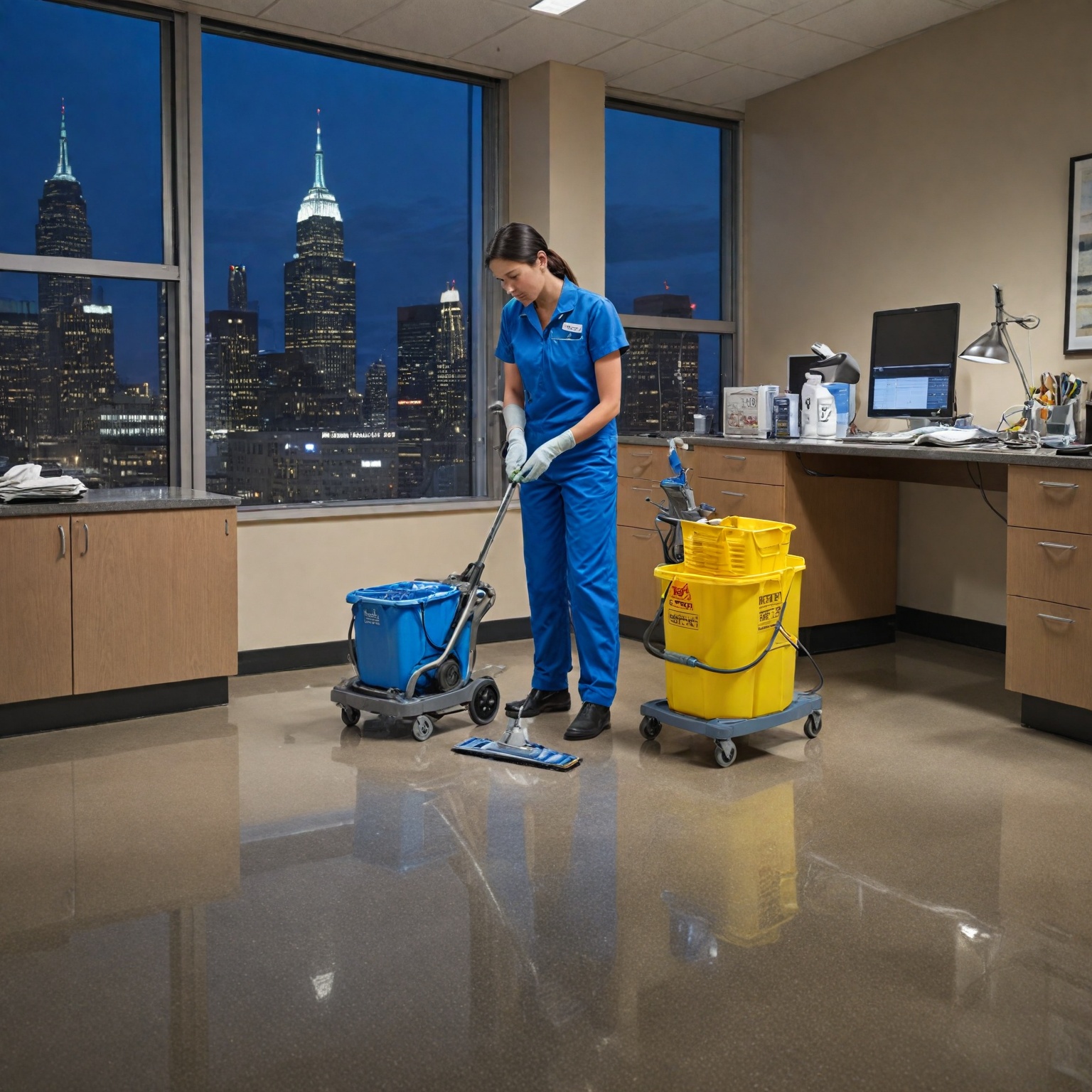
Highlights
- Night cleaning jobs offer flexible schedules and higher wages, appealing to many job seekers.
- The industry's growth is driven by increased hygiene demands and advancements in cleaning technology.
Summary
Night cleaning careers involve performing cleaning and maintenance tasks during overnight hours, primarily after regular business operations have ended. These roles are crucial across various settings—including offices, hospitals, schools, and commercial buildings—to ensure facilities remain sanitary, safe, and ready for use during daytime hours without disrupting daily activities. Common responsibilities encompass sweeping, mopping, vacuuming, dusting, restroom sanitation, and occasional deep-cleaning duties such as floor waxing and carpet shampooing. The accessibility of night cleaning jobs, which typically require minimal formal education or prior experience, has made them a significant entry point into the labor market for many individuals.
The popularity of night cleaning careers has grown notably due to increased demand for enhanced hygiene and disinfection, especially following the COVID-19 pandemic. This heightened awareness has accelerated the adoption of advanced cleaning technologies and expanded the commercial cleaning market globally, with a projected steady growth driven by urbanization and outsourcing trends in sectors like healthcare. Night shifts often offer higher wages and flexible schedules, attracting workers despite challenges such as social disruptions and health risks associated with overnight work.
Occupational health and safety are major concerns in night cleaning roles. Workers face physical demands, chemical exposure, and increased safety risks due to isolated work environments and circadian rhythm disruptions. Employers and industry organizations emphasize safety training, proper use of personal protective equipment, and wellness programs to mitigate these hazards and support employee wellbeing. Despite these challenges, night cleaning remains a vital and expanding segment of the cleaning industry, underpinning the cleanliness and operational continuity of countless facilities worldwide.
The labor market for night cleaning is shaped by demographic factors, including a substantial presence of immigrant workers, many undocumented, and a workforce predominantly composed of women. Technological advancements—from automated floor scrubbers to smart sensors and robotic cleaners—are transforming night cleaning practices, improving efficiency and safety while responding to evolving market demands and environmental concerns. As the industry continues to grow, certifications and industry associations play important roles in professionalizing the workforce and advocating for worker rights and safety standards.
Overview of Night Cleaning Careers
Night cleaning careers involve performing cleaning and maintenance tasks during nighttime hours, typically after regular business operations have concluded. These roles are essential in a variety of settings such as offices, schools, hospitals, and commercial buildings, ensuring that facilities remain clean and ready for use during the day without disrupting daily activities. Common duties include sweeping, mopping, vacuuming, dusting, emptying trash, sanitizing restrooms, furniture rearrangement, and occasionally deep cleaning tasks like waxing floors or shampooing carpets.
One notable aspect of night cleaning jobs is the minimal barrier to entry. Most positions do not require formal education or previous experience, making them accessible to a wide range of applicants. However, the work is physically demanding, often requiring the ability to lift heavy objects, stand for extended periods, and perform repetitive manual labor throughout the shift. Time management skills are also important to maintain a healthy work-life balance given the overnight schedule.
Night cleaners typically work independently or in small teams and must be attentive to detail while following safety protocols. They are often responsible for reporting maintenance issues to supervisors for further action. Due to the nature of the job, interpersonal or customer service skills are usually less critical compared to daytime cleaning roles.
Safety is a major consideration in night cleaning careers. Workers need to understand how to handle cleaning chemicals safely by interpreting Safety Data Sheets and using appropriate personal protective equipment (PPE). Training in emergency preparedness, including spill response and evacuation procedures, is also essential to protect employees during night shifts. Additionally, night cleaning crews may benefit from self-defense training due to the increased risks associated with working during late hours.
While night cleaning jobs offer flexible hours and steady employment opportunities, they may present challenges such as social and family life conflicts. Many workers in these roles report that their night shifts are a necessity rather than a preference, highlighting the limited options available for those seeking this type of work. Despite this, the demand for night cleaning services continues to grow as businesses and institutions prioritize maintaining clean, safe environments around the clock.
Growing Popularity and Demand
The demand for night cleaning careers has been steadily increasing, driven by several economic, social, and health-related factors. One major influence on the growth of the cleaning industry, including night cleaning services, is the heightened awareness around hygiene and sanitation following the COVID-19 pandemic. The pandemic significantly boosted demand for cleaning and disinfection services, leading to the widespread adoption of advanced tools such as electrostatic sprayers and UV lights, which were previously uncommon. This surge in demand has contributed to a booming disinfection sector within the broader cleaning market.
Globally, the commercial cleaning services market is projected to grow at an annual rate of approximately 4.5% from 2024 to 2032, with rapid urbanization in regions such as India and China further fueling the market expansion. Additionally, vacuuming services are expected to expand at a compound annual growth rate (CAGR) of 62%, while the commercial cleaning services sector overall anticipates a growth rate of 5.13% CAGR. This sustained growth reflects increasing adoption of commercial cleaning solutions in diverse settings including retail stores, supermarkets, office buildings, and hypermarkets.
The preference for night shifts among cleaning professionals also contributes to the popularity of these careers. Night shifts typically offer higher pay rates compared to daytime cleaning jobs, along with more flexible scheduling that supports better work-life balance. Moreover, outsourcing trends in sectors such as healthcare have expanded opportunities for cleaning companies and freelancers specializing in night cleaning services.
Labor dynamics also play a role in the growing demand. The cleaning industry faces an impending labor shortage caused by an aging workforce and evolving employment patterns. In the United States, a significant proportion of domestic cleaning work is performed by immigrant workers, including a notable percentage of undocumented immigrants, many of whom are employed in nighttime janitorial roles. This labor pool helps meet the rising demand for cleaning services during off-hours.
Technological advancements in scheduling software further support the efficient allocation of cleaning resources, allowing on-demand services to accommodate fluctuating client needs while avoiding overcommitment of staff. These operational improvements enhance the feasibility and appeal of night cleaning careers.
Skills, Qualifications, and Certifications
Qualifications to start a career as a night cleaner are generally minimal. There are no specific education requirements or prior experience necessary for entry-level positions, as competition for overnight custodian jobs is typically low. However, physical fitness is important because the role involves performing manual labor throughout the shift. Additionally, strong time management skills are essential to maintain a good work-life balance, given the mentally and physically demanding nature of overnight work. Unlike daytime cleaning roles, night cleaner positions often do not require customer service or interpersonal skills due to limited interaction with clients or the public during after-hours.
Regarding certifications, obtaining recognized cleaning certifications can enhance professional credibility and improve client satisfaction by demonstrating a commitment to maintaining a clean and safe environment. For instance, the House Cleaning Technician (HCT) certification covers knowledge of proper cleaning maintenance for residential homes, including sanitizing, disinfecting, and routine upkeep. The HCT focuses on interior cleaning techniques and non-disaster restoration.
Other notable certifications include the Cleaning Management Institute (CMI) Cleaning Professional 101 certification, which educates individuals about the importance of cleaning, health impacts, safe work practices, and fundamental cleaning procedures. This certification involves completing learning units followed by an exam, validating one’s understanding of professional cleaning standards. The International Sanitary Supply Association (ISSA) also offers the Cleaning Industry Management Standard (CIMS), which sets industry benchmarks for quality cleaning management.
It is important to note that not all certifications carry the same weight. While some industries maintain highly respected and regulated certifications, others may offer credentials that are less indicative of professional expertise. Therefore, individuals should carefully select certifications that will meaningfully contribute to their career advancement and business success. Furthermore, certifications such as OSHA Safety and Health Specialist Certificate Program provide essential safety knowledge that can be valuable for managing cleaning operations.
Occupational Health and Safety
Night cleaning careers involve a range of occupational health and safety risks that require careful management to protect workers. Common hazards include musculoskeletal disorders caused by manual handling of cleaning equipment, as well as skin complications such as allergies, asthma, and chemical burns from exposure to toxic cleaning agents. The proper use of Personal Protective Equipment (PPE) and adherence to safety guidelines are essential to minimizing these risks.
Workplace injuries in the cleaning industry frequently involve sprains or muscle strains resulting from slips and falls, particularly on wet or uneven surfaces. Nighttime cleaning presents additional challenges, such as reduced availability of immediate assistance in case of injury or emergencies, and the increased potential for crime when workers operate alone or in isolated areas. Safety protocols including the use of non-slip footwear, clear signage for wet floors, and well-defined emergency procedures are critical components of workplace safety for night cleaning crews.
Exposure to hazardous chemicals necessitates comprehensive training for employees on handling cleaning agents safely, interpreting Safety Data Sheets, and implementing proper ventilation to mitigate respiratory and skin-related health problems. Regulatory frameworks such as those established by the U.S. Occupational Safety and Health Administration (OSHA) provide important standards and training requirements to help employers maintain a safe working environment.
Night shift work also poses significant health risks due to circadian rhythm disruption. Working during hours of low natural alertness leads to sleep disturbances, excessive daytime sleepiness, and increased risk of errors and workplace accidents. Long-term circadian misalignment may contribute to more serious health concerns including metabolic disorders and even cancer. Moreover, night workers often face social and family life conflicts due to their schedules, which can add psychosocial stressors impacting overall well-being.
To address these multifaceted risks, some employers offer holistic wellness programs focusing on physical, mental, nutritional, and sleep health, along with emergency preparedness and regular safety drills, aiming to enhance both safety and quality of life for night cleaning personnel. Continuous evaluation of job exposures and integration of both physical and psychosocial workplace factors remain important areas for future occupational health research and prevention strategies within the cleaning sector.
Working Conditions and Employee Benefits
Night cleaning careers often involve irregular and unsocial working hours, including evenings, nights, and weekends. Employees in these roles may be required to work variable schedules, sometimes with shifts that vary day-to-day or week-to-week. The physical demands of the job can include standing for extended periods, climbing stairs multiple times a day, and lifting up to 50 pounds. Maintaining a safe and clean work environment is essential, and employees typically work as part of a team to ensure timely room turnover and sanitation of designated areas.
These working conditions can present unique challenges, particularly due to the disruption of natural circadian rhythms caused by night shifts. This interruption affects the body’s physical, mental, and behavioral processes, especially the sleep/wake cycle, leading to adverse health outcomes for shift workers. The negative impact extends beyond health, affecting family life, social inclusion, and overall well-being. A large international survey of cleaners highlighted these detrimental effects, emphasizing the heightened vulnerability of workers on irregular and nighttime schedules.
In response to these challenges, some employers provide comprehensive benefits and wellness programs to support night cleaning employees. For example, NYU Langone Health offers a holistic employee wellness program addressing seven key areas: physical, mental, nutritional, sleep, social, financial, and preventive care. This benefits package aims to support workers at every life stage, from career development to retirement planning. Additionally, many cleaning jobs include benefits such as health, dental, and vision insurance, paid time off, paid parental leave, and retirement plans with employer matching, helping to create a robust support system for employees.
The increasing demand for cleaning services, driven in part by demographic shifts like the aging baby boomer generation, underscores the importance of addressing these working conditions and benefits to retain a healthy and motivated workforce. Moreover, occupational safety and health regulations, including state-level OSHA-approved programs, contribute to maintaining workplace standards and protecting night shift workers in this sector.
Labor Market and Demographics
The labor market for night cleaning careers is characterized by both growth and challenges influenced by demographic shifts and employment trends. Employment of janitors and building cleaners is projected to increase modestly, with a 2 to 3 percent growth expected from 2023 to 2034, aligning closely with the average growth rate across all occupations. Despite this limited growth, the industry anticipates about 351,300 job openings annually, primarily due to the need to replace workers leaving the workforce or changing occupations, such as retirees.
A notable factor shaping the labor supply in this sector is the significant participation of undocumented immigrant workers. Estimates suggest that between 17% and 23% of the total undocumented immigrant population in the United States are employed in the cleaning industry, a figure that continues to grow annually by approximately 0.5% to 0.33%. This population provides a considerable source of inexpensive labor, particularly attractive to janitorial companies due to the nocturnal nature of much cleaning work, which facilitates clandestine employment opportunities.
Gender representation within the cleaning workforce also displays distinct patterns. Studies indicate a predominance of female workers in the sector, with more than two-thirds of research samples consisting of women. In the United Kingdom, for example, women comprise 56% of the cleaning workforce, compared to 44% men. This gender imbalance is also significant when considering the impacts of shift and night work on worker health and well-being, emphasizing the need for gender-sensitive occupational studies and interventions.
Geographically, cleaning companies have varied presence and employment shares across countries. In Europe, France and Spain report cleaning companies accounting for 16-17% of industry employment, whereas Germany, Italy, and the UK have slightly lower figures around 12-13%. Globally, the commercial cleaning services market continues to expand, driven by factors such as rapid urbanization in Asia-Pacific regions—particularly India and China—and increasing adoption of commercial cleaning solutions in retail and office environments. North America is projected to maintain the largest market share, expected to represent 45% of total industry revenue by 2037.
Tools, Equipment, and Technological Advancements
Night cleaning careers have evolved significantly with the integration of advanced tools, equipment, and technology designed to enhance efficiency, safety, and overall cleanliness. Among the essential equipment are floor scrubbers, which come in walk-behind or ride-on models. These machines clean large floor areas by injecting water mixed with cleaning solutions, scrubbing surfaces, and removing residue, allowing professional cleaners to manage dirt, dust, and debris quickly and effectively across various floor types.
Industrial vacuum cleaners are another critical component in a night cleaner’s toolkit. These machines are specialized for use in industrial environments and other demanding settings, providing powerful suction to maintain cleanliness in expansive or heavily trafficked areas. Alongside these machines, a variety of cleaning products tailored for specific tasks are used. While multi-purpose cleaners are common and useful for light, general cleaning, professional cleaners carry an assortment of products to meet the precise needs of different surfaces and contamination types. This ensures both safety and effectiveness, as some products require personal protective equipment while others are suitable for everyday use.
Technological advancements are increasingly shaping the future of night cleaning. Smart sensors and automated systems allow for more efficient monitoring and management of cleaning duties. For example, sensors integrated into soap dispensers can track usage and predict refill needs, while other smart devices notify cleaning teams of areas requiring immediate attention. Such innovations enable cleaning to be scheduled during nighttime hours without disrupting business operations or requiring cleaners to work inconvenient shifts. This results in smarter, more cost-effective, and thorough cleaning processes that respond to heightened awareness of hygiene standards, especially in a post-COVID environment.
Moreover, the rapid pace of innovation includes the adaptation of robotic cleaning machines, such as autonomous vacuum cleaners originally designed for residential use, now deployed in commercial settings. These devices support cleaner teams by performing routine tasks, freeing human workers to focus on more detailed or complex duties. Together, these tools and technological advancements not only boost productivity and safety but also contribute positively to the workplace environment by maintaining high standards of cleanliness and hygiene.
Future Trends and Outlook
The demand for night cleaning jobs, particularly janitors and building cleaners, is projected to grow significantly, with a 10% increase expected from 2016 to 2026, according to the Bureau of Labor Statistics. This growth rate surpasses that of many other industries, driven in part by expansion in sectors such as healthcare, which is experiencing rapid overall growth and consequently increasing the need for cleaning services.
However, the cleaning industry is also facing challenges, notably a looming labor shortage attributed to an aging workforce and shifting employment patterns. The average age of house cleaners and maids in the United States is 44, with a substantial portion of the workforce between 45 and 59 years old, indicating potential workforce gaps in the near future. This demographic trend emphasizes the importance of attracting younger workers to sustain the labor supply.
Technological advancements are playing a pivotal role in shaping the future of night cleaning careers. Innovations such as automated floor scrubbers, which efficiently clean large areas by scrubbing and lifting debris, are becoming essential tools in the industry. Additionally, smart cleaning technologies—including sensors that monitor soap dispenser levels and notify cleaning teams when tasks need to be performed—are improving operational efficiency and enabling more thorough cleaning during off-hours without disrupting employees or customers. The adoption of autonomous cleaning machines, inspired by residential robotic vacuums, is accelerating in commercial environments, further transforming cleaning processes.
Environmental concerns are also influencing the trajectory of the cleaning industry. As both businesses and households increasingly prioritize eco-friendly solutions, the green cleaning market is expected to expand substantially. Projections indicate the global green cleaning products market could reach USD 430.61 billion by 2030, growing at a compound annual growth rate of nearly 6% from 2023 to 2030. This shift not only impacts the types of products used but also the skills and knowledge required of cleaning professionals.
Notable Organizations, Industry Associations, and Unions
The night cleaning industry is supported by various organizations and associations that provide certification programs, advocacy, and job placement services. Indeed Flex is one such platform that has transformed how job seekers find night cleaning roles by offering speed, choice, and flexibility through a mobile app-based system. Job seekers can download the app, create an account, and book interviews for night cleaning positions, empowering workers to take control of their employment opportunities.
Industry-specific certifications play a significant role in establishing credibility and improving professional standards within the cleaning sector. For example, the OSHA Safety and Health Specialist Certificate Program focuses on general industry safety and health standards, providing essential knowledge for cleaning professionals aiming to enhance their qualifications and workplace safety. Additionally, obtaining certifications such as the Customer Service Certification, Bloodborne Certification, and Chemical Hazards Certification is often a prerequisite for earning the Registered Cleaning Specialist (RCS) credential. These certifications help workers develop key skills and reassure clients about the quality and safety of the services provided.
While unions specifically representing night cleaning workers are not explicitly detailed in the available information, worker experiences highlight the challenges faced by evening and night-shift employees, including social and family life conflicts. Organizations and associations that address these concerns, alongside providing collaborative work environments with rotating shifts and on-call duties, play an important role in supporting night cleaning workers’ wellbeing and job satisfaction.
The content is provided by Blake Sterling, Gear Shift Zone