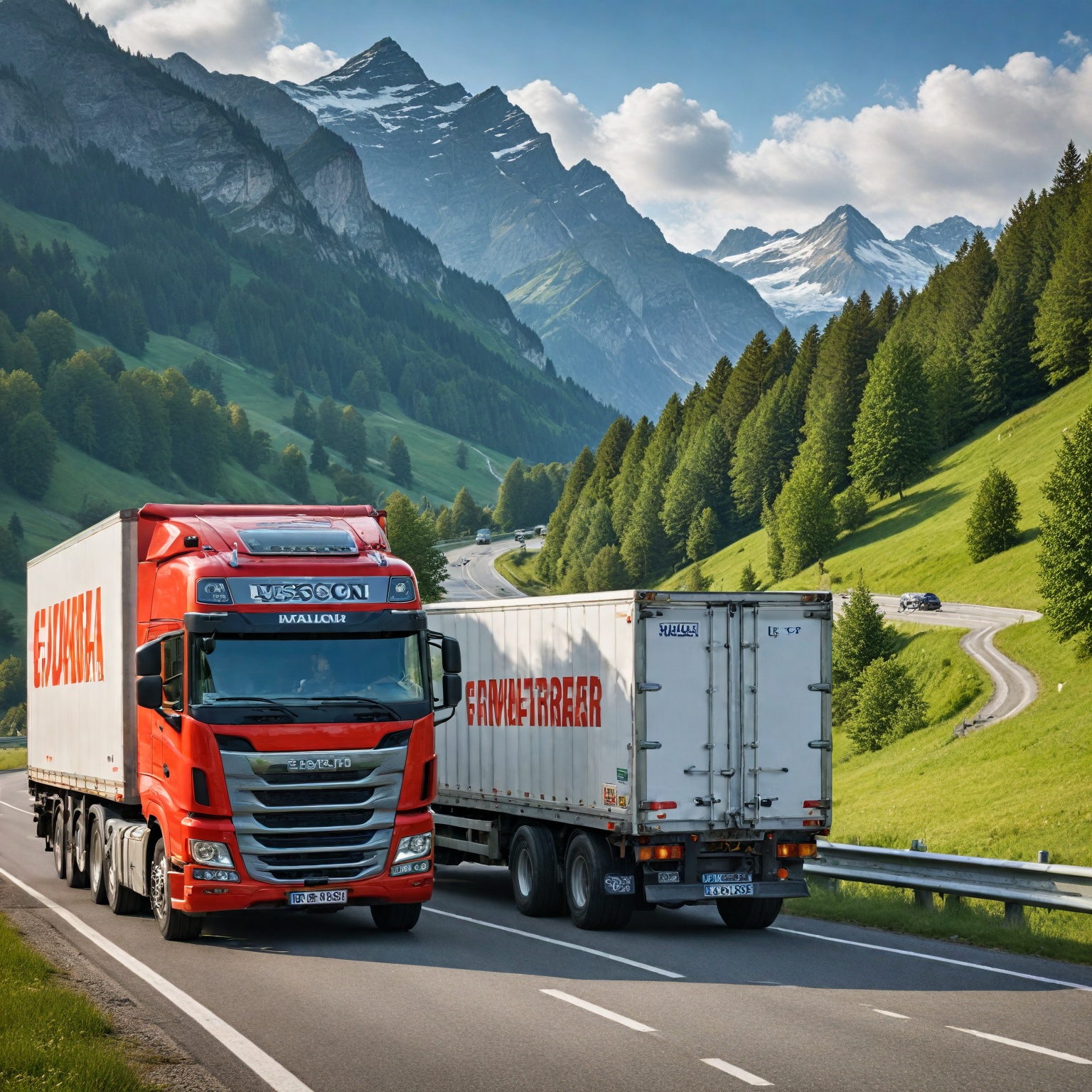
Highlights
- Switzerland's trucking industry offers competitive salaries and robust career growth opportunities.
- Meeting regulatory requirements and ongoing training are essential for success in this field.
Summary
Unlocking Truck Driving Careers in Switzerland: Key Insights for 2025 provides a comprehensive overview of the opportunities, requirements, and challenges facing professional truck drivers in Switzerland. As a vital hub for freight transportation connecting neighboring countries such as France, Germany, Italy, and Austria, Switzerland’s trucking sector plays a crucial role in regional and international logistics. The profession is notable for its competitive salaries, diverse employment sectors, and stringent regulatory framework, making it an attractive yet demanding career choice for both domestic and foreign drivers.
To pursue a truck driving career in Switzerland, candidates must obtain a Category C driver’s license and comply with the Chauffeur Admission Regulation (Chauffeurenzulassungsverordnung – CZV), which mandates initial certification and ongoing training to ensure high safety and professional standards. Foreign drivers face additional requirements, including license conversion and valid work permits, reflecting Switzerland’s commitment to regulated and skilled workforce development in this sector. Specialized training programs and employer support services help facilitate entry and career progression within the industry.
Despite favorable employment prospects driven by steady economic growth and expanding freight demands, the sector confronts several challenges. These include Switzerland’s high cost of living, complex regulatory compliance, and a persistent shortage of qualified truck drivers—a trend mirrored across Europe. Additionally, the industry is undergoing transformation due to tightening environmental regulations, increased emphasis on vehicle emissions certification, and the gradual shift toward electric trucks, with infrastructure limitations posing a notable barrier to adoption.
Looking ahead to 2025, the Swiss trucking industry is expected to maintain its significance within the national economy, supported by competitive wages and robust logistics demand. However, addressing workforce shortages and adapting to evolving environmental policies and technological innovations will be critical for sustaining growth and enhancing the sector’s long-term viability. These dynamics underscore the complex but promising landscape for truck driving careers in Switzerland moving forward.
Overview of Truck Driving Careers in Switzerland
The truck driving profession in Switzerland offers a promising career path due to the country’s critical role in freight transportation across its borders with France, Germany, Italy, and Austria. The demand for truck drivers is growing, driven by economic expansion and increasing freight transport needs, making it an attractive option for both local and foreign workers.
To become a truck driver in Switzerland, individuals must obtain a Category C driver’s license and often benefit from enrolling in specialized training programs to enhance their skills and employment prospects. Experience in truck driving is mandatory, and drivers often work in various sectors such as long-distance freight, construction site logistics, passenger transport, and distribution traffic.
Salaries for truck drivers in Switzerland are competitive, with an average annual pay of CHF 77,401 or about CHF 37 per hour. These wages are generally higher than those of other logistics roles like warehouse workers, although factors such as experience, type of cargo transported, employer, and region of employment influence earnings. Many foreign drivers choose to live in nearby border towns in France, Germany, or Italy to offset Switzerland’s high living costs while commuting or utilizing company-provided accommodations during routes.
Despite some economic uncertainties, including a minor expected rise in unemployment, Switzerland’s economy remains resilient with a projected growth of 1.0% in 2024 and positive prospects for 2025. This stability supports continued demand for truck drivers, making the sector a viable and rewarding career option.
Legal Requirements and Licensing Procedures
In Switzerland, the legal framework governing truck driving careers encompasses vehicle certification, driver licensing, and compliance with CO2 emissions regulations. Importers of passenger cars and light commercial vehicles must ensure their vehicles are certified before first registration. This certification, issued by the Federal Office of Energy (SFOE), confirms that the vehicle meets CO2 emission targets. If a vehicle exceeds these targets, a penalty fee must be paid prior to registration. The process begins by submitting import data to the Federal Roads Office (FEDRO), and the customs clearance certificate costs CHF 20. Regardless of whether a penalty applies, small-scale importers must complete the certification application before vehicle registration, typically handled through cantonal vehicle licensing offices.
Regarding driver licensing, the Chauffeur Admission Regulation (Chauffeurenzulassungsverordnung – CZV) mandates professional training and certification for drivers operating vehicles in categories C/C1 and D/D1. All professional drivers transporting goods or passengers must obtain a certificate of competence and undergo continuous training courses. The category C license allows driving vehicles over 3.5 tonnes without a weight limit and up to nine passengers, including authorization for categories C1, D1, and taxi driving (BPT) without additional fees. Preparation for licensing includes theory tests, with available teaching materials and courses to assist candidates.
Foreign drivers, particularly those from the United States, seeking to drive commercially in Switzerland must convert their licenses through the relevant cantonal road traffic office. This conversion process generally requires submission of a valid foreign commercial driver’s license, proof of residency, and may involve passing local theory or practical tests, depending on the canton’s regulations. Compliance with these local requirements is essential for legal operation and employment.
For foreign truck drivers pursuing employment in Switzerland, valid work permits are mandatory. Demonstrated truck driving experience is required, and certain visa programs offer family benefits, including employment eligibility for spouses. Employers may also provide financial assistance for obtaining or renewing commercial driving licenses, supporting workforce development in the sector.
Additionally, for business owners registering vehicles, documentation such as commercial register entries or proof of self-employment, residence confirmation, and proof of compulsory third-party liability insurance is required. Insurance certificates are automatically forwarded to the appropriate Road Traffic Office upon issuance.
Training and Certification Programs
In Switzerland, professional truck drivers must comply with strict regulations regarding training and certification to ensure safety and competence in the transport of goods and passengers. The Chauffeur Admission Regulation (Chauffeurenzulassungsverordnung – CZV) governs the licensing and ongoing training requirements for drivers of vehicle categories C/C1 and D/D1. All professional drivers within these categories are mandated to complete further training courses periodically to maintain their qualifications.
Specifically, within a five-year period, drivers are required to attend five days of additional training at institutions certified by the Association of Road Traffic Offices (ASA). This mandatory further education can be fulfilled through day courses, each lasting seven hours, or through weekly courses. Even those who have previously obtained a certificate of competence without examination are obliged to complete this supplementary training to continue operating legally in Switzerland.
The training programs are designed to be flexible and tailored to individual needs. Various driving schools, such as Freshup, offer courses for truck driving licenses in categories C1 and D1. These programs accommodate different learner requirements, including those who want to drive larger vehicles like company buses or school buses, or who aspire to become paramedics. Experienced instructors provide personalized training to ensure efficient and successful course completion. The use of well-equipped vehicles with quiet and comfortable interiors and powerful engines helps facilitate a smoother learning experience.
To begin professional truck driving careers, candidates must possess a legitimate truck driver’s license along with a diploma from a recognized trucking academy. Additionally, demonstrated practical experience in truck driving is required to validate proficiency and readiness for commercial operations.
Moreover, private and small-scale importers of cars and light commercial vehicles in Switzerland must have their vehicles certified prior to first registration. If the vehicle’s CO2 emissions exceed regulatory targets, corresponding fees must be paid before registration. This certification process is overseen by the Federal Roads Office (FEDRO) and the Federal Office of Energy (SFOE), with penalties applied retrospectively if emissions standards are not met. Although this certification mainly concerns vehicle compliance, it complements the overall framework ensuring that professional transport adheres to national standards.
Employment Landscape and Industry Sectors
The trucking industry in Switzerland is experiencing a growing demand for professional drivers, driven by steady economic growth and increasing freight transport needs both domestically and across neighboring countries such as France, Germany, Italy, and Austria. This demand is reflected in active hiring efforts by Swiss transport companies seeking qualified truck drivers to support the critical role of moving goods within Switzerland and beyond.
Employment opportunities in the sector are influenced by various factors including the type of cargo transported, employer size, and geographic location. Salaries tend to be more competitive in urban areas compared to rural regions, contributing to regional variations in job attractiveness and income levels. Moreover, experienced drivers typically command higher wages, with salary progression linked closely to years of professional experience in the field.
Switzerland’s transport industry encompasses multiple sectors such as logistics, freight forwarding, and specialized cargo transport, each presenting distinct career paths for truck drivers. The diverse nature of these sectors means that drivers may work in short-haul regional deliveries, long-distance international freight, or niche markets requiring specialized skills. This variety provides flexibility and options for drivers depending on their preferences and qualifications.
The regulatory framework in Switzerland plays a significant role in shaping the employment landscape. The Chauffeur Admission Regulation (Chauffeurenzulassungsverordnung – CZV) mandates that all professional drivers in vehicle categories C/C1 and D/D1 complete compulsory further training and obtain a certificate of competence to legally transport goods and passengers. This ensures a high standard of professional qualification and safety within the industry.
Looking ahead, the Swiss trucking sector is expected to be influenced by broader trends such as the increasing emphasis on clean energy and stricter regulatory requirements seen across Europe. These developments may affect job roles and sector growth, potentially fostering new employment niches in electric and environmentally sustainable freight transport. Overall, the trucking industry remains a vital component of Switzerland’s economy, offering diverse and evolving employment opportunities for drivers in 2025 and beyond.
Economic Factors Influencing the Truck Driving Industry
The truck driving industry in Switzerland is significantly influenced by various economic factors that shape demand, employment conditions, and income levels. A key driver is the growing demand for truck drivers, fueled by ongoing economic growth and an increase in freight transport needs across the country. This demand correlates with broader economic indicators, such as solid domestic consumption and investment, which continue to support freight volumes despite a cautiously optimistic business outlook in several sectors, including manufacturing.
Income levels within the trucking profession vary according to experience, type of cargo handled, employer, and region of employment. Notably, truck drivers in Switzerland generally earn competitive salaries compared to other logistics roles, often surpassing wages of warehouse workers. The relationship between years of experience and income growth is evident, with longer-serving drivers typically commanding higher pay.
Despite this positive demand and wage environment, the Swiss economy faces challenges that could indirectly affect the truck driving sector. Inflation, which averaged 1.1% in 2024, is expected to decline in 2025, while unemployment is projected to rise slightly above pre-pandemic levels due to a modest economic slowdown. Such shifts may influence labor availability and cost structures within the trucking industry.
Furthermore, evolving regulatory and environmental policies are reshaping operational costs and practices. Switzerland imposes CO2-related certification and penalty fees for vehicles exceeding emission targets, impacting private and small-scale vehicle importers, with administrative processes managed by federal agencies. On a broader scale, regulatory pressures in Europe are accelerating the adoption of electrified trucks, driven by climate change commitments and stricter emissions standards, which will further influence the trucking industry’s economic landscape in the coming years.
Safety Regulations and Compliance
In Switzerland, ensuring safety and regulatory compliance is a critical aspect of truck driving careers. All vehicles, including trucks and light commercial vehicles imported privately or on a small scale, must undergo certification before their first registration. This certification process involves submitting necessary import data to the Federal Roads Office (FEDRO) and obtaining proof of customs clearance from the customs office in the form of inspection report form 13.20 A or form 15.10 for water transportation vehicles. If the imported vehicle exceeds the prescribed CO2 emission targets, a penalty fee must be paid before registration. Notably, this fee is imposed retrospectively by the Federal Office of Energy (SFOE), rather than at the time of customs clearance.
Professional drivers operating trucks in categories C/C1 and passenger vehicles in categories D/D1 are subject to stringent licensing and training requirements under the Chauffeur Admission Regulation (Chauffeurenzulassungsverordnung – CZV). All such drivers must obtain a certificate of competence, which is mandatory for the transport of goods and passengers within Switzerland. This certificate requires drivers to complete five days of further training every five years at institutions certified by the Association of Road Traffic Offices (ASA). Training may be completed as day courses of seven hours or as weekly courses, ensuring ongoing professional development and adherence to safety standards. This regulation applies even to those who have previously obtained their certificate of competence without an examination, emphasizing the importance of continuous education and compliance.
In addition to certification and training, practical experience is a prerequisite for truck driving careers, ensuring that drivers possess the necessary skills and knowledge to operate heavy vehicles safely on Swiss roads. Upon registration of a vehicle purchased abroad, drivers are also required to pay for number plates and a vehicle registration certificate at the Road Traffic Office, typically costing between 50 and 100 Swiss francs. Furthermore, vehicles may undergo a mandatory inspection, which varies by canton but generally costs between 35 and 50 francs, to confirm roadworthiness and compliance with Swiss safety standards.
Challenges Facing Truck Drivers in Switzerland
Switzerland’s trucking industry, despite offering high salaries and attractive working conditions, faces several notable challenges that impact professional truck drivers. One primary challenge is the country’s high cost of living, which can reduce the net financial benefits for drivers, particularly for foreigners. Many drivers mitigate this issue by residing in border towns in neighboring countries such as France, Germany, or Italy and commuting to Switzerland for work, or by utilizing company-provided accommodation during routes.
Another significant challenge is the strict regulatory environment governing professional driving. Swiss law mandates that all professional drivers in vehicle categories C/C1 and D/D1 must obtain a certificate of competence and participate in ongoing mandatory training courses under the Chauffeur Admission Regulation (Chauffeurenzulassungsverordnung – CZV). This continuous education requirement ensures high safety and professional standards but can present an additional time and financial burden for drivers.
Moreover, the trucking sector in Switzerland is influenced by broader European challenges, including a chronic shortage of qualified truck drivers. Across Europe, there are currently over 230,000 unfilled truck driver positions, with projections suggesting this number could rise to 745,000 due to retirements alone. This shortage creates increased competition for skilled drivers and can lead to increased workload and pressure on existing personnel.
Infrastructure challenges also affect Swiss truck drivers, particularly with respect to electric vehicle (EV) adoption. Although EV sales are strong, Switzerland struggles with insufficient fast-charging infrastructure, which can limit the efficiency and feasibility of transitioning to electric trucks in the future.
Collectively, these economic, regulatory, labor market, and infrastructure challenges form a complex environment that truck drivers must navigate to sustain and advance their careers in Switzerland.
Future Outlook and Industry Trends for 2025
The trucking industry in Switzerland and across Europe is poised for significant transformation in 2025, driven primarily by environmental regulations, technological advancements, and evolving economic conditions. Regulatory frameworks in both Europe and the United States are expected to accelerate the adoption of electrified trucks over the next decade, positioning clean energy solutions as a central component of the industry’s future. These changes are closely tied to global efforts to address climate change, with stricter CO2 emission standards impacting vehicle certification and import procedures in Switzerland, where compliance is enforced retrospectively by the Federal Office of Energy (SFOE).
Switzerland remains one of Europe’s most attractive destinations for professional truck drivers, supported by competitive salaries, excellent working conditions, and the appeal of scenic alpine routes. The country’s logistics and transport sector is anticipated to continue expanding in 2025, maintaining strong domestic demand driven by consumption and investment despite a cautious business outlook in certain industries such as manufacturing. Nonetheless, challenges such as the shortage of qualified drivers persist, influenced by factors including salary competitiveness and industry perceptions.
Infrastructure development is another critical area shaping the sector’s
Resources and Support for Aspiring and Current Truck Drivers
Aspiring and current truck drivers in Switzerland have access to a range of resources and support systems designed to facilitate their professional development and improve career prospects. One key aspect is the availability of specialized training programs tailored to meet the regulatory requirements and practical needs of truck drivers. For instance, training institutions such as Freshup provide personalized instruction with experienced instructors, ensuring that students receive effective and individualized preparation for obtaining licenses and passing practical tests. These programs often include access to modern equipment and vehicles, which help students gain confidence and proficiency.
The licensing framework in Switzerland is governed by the Chauffeur Admission Regulation (Chauffeurenzulassungsverordnung – CZV), which mandates that all professional drivers holding categories C/C1 or D/D1 licenses must undergo continuous training courses. This regulation ensures that drivers maintain a high standard of competence for the transport of goods and passengers, reinforcing safety and professionalism in the industry. Furthermore, obtaining a Category C driver’s license is essential for anyone looking to start a career in truck driving within the country.
Financial support is also available to truck drivers, with some employers offering assistance for the acquisition or renewal of commercial driving licenses such as the CDL or HGV. This support helps reduce the barriers to entry and encourages ongoing professional development. Additionally, certain visa programs allow foreign truck drivers to bring their families to Switzerland, with spouses often eligible for employment, which provides important social and economic stability for migrant workers.
Industry associations and leading transport companies contribute to the development of best practices and solutions to attract and retain drivers, sharing knowledge on regulatory compliance, safety, and efficient transport management. These collaborative efforts aim to address the growing demand for qualified truck drivers driven by economic expansion and increasing freight needs within Switzerland and Europe at large.
The content is provided by Harper Eastwood, Gear Shift Zone