Highlights
- Explore the enchanting evolution of Christmas markets from medieval fairs to global celebrations.
- Discover must-visit markets for 2025, blending historical charm with festive ambiance.
Summary
Unlocking the Magic of Christmas Markets: What to Explore in 2025 offers a comprehensive guide to the enduring tradition and vibrant cultural phenomenon of Christmas markets, with a focus on the upcoming 2025 season. Originating in medieval German-speaking Europe, Christmas markets have evolved from practical winter fairs into beloved festive events celebrated worldwide, drawing millions of visitors who seek to experience their distinctive blend of historical charm, handcrafted goods, traditional foods, and communal holiday spirit.
The article explores the rich history of Christmas markets, highlighting their roots in 13th- and 15th-century Europe and tracing their development into modern celebrations featuring wooden stalls, seasonal treats like gingerbread and mulled wine, and cultural attractions such as live performances and nativity scenes. It also details regional variations across Europe—from Germany and Austria’s Christkindlmarkts to the lively Advent in Zagreb—and the global expansion of the tradition to North America, Russia, and beyond.
Looking ahead to 2025, the piece identifies key markets to visit, including iconic locations such as Nuremberg, Vienna, and Strasbourg, noting the combination of historical significance, festive ambiance, and sustainable tourism efforts that make these destinations stand out. It also addresses practical travel tips, visitor demographics, and emerging challenges, such as economic pressures on artisans and the need for environmental sustainability, emphasizing the importance of preserving the cultural heritage and economic vitality of these markets in an evolving global context.
Overall, the article underscores Christmas markets as dynamic living traditions that connect communities, support local economies, and enchant visitors with their unique celebration of winter festivities. It highlights the balance between maintaining authentic cultural experiences and adapting to contemporary social, economic, and environmental realities, ensuring that the magic of Christmas markets continues to thrive well into the future.
History
Christmas markets have their origins in medieval Europe, particularly in the German-speaking regions. The tradition began as winter markets or fairs where citizens could stock up on meat, baked goods, and other necessities before the onset of the cold season. The earliest documented Christmas market dates back to 1296 in Vienna, when Duke Albrecht I authorized a 14-day fair in December. Another significant early record is from 1434 in Dresden, during the reign of Frederick II of Saxony, which mentioned the Striezelmarkt held on the Monday before Christmas.
Although street vendors have long been a feature of holiday seasons, the Christmas market as it is recognized today is a relatively modern creation. While the markets pose as an ancient tradition, their current form largely developed between the 17th and early 18th centuries, when such markets gained traction across Europe as places to buy seasonal food and commodities. Throughout the 19th century, Christmas markets faced competition from department stores, which sold mass-produced goods at lower prices and drew customers away from traditional outdoor stalls. Despite these challenges, the markets persisted, adapting alongside the rise of consumerism and becoming more commercially oriented by the late 1960s and 1970s, with many opening as early as the last weekend in November to extend shopping opportunities.
The Christkindelsmärik of Strasbourg exemplifies the tradition’s regional spread, with documented markets held near the Cathedral of Our Lady since at least the 19th century. From the mid-20th century onwards, Christmas markets became a deeply ingrained part of pre-Christmas customs, undergoing a revival in the 1990s that introduced chalets and attractions such as ice rinks and Ferris wheels, enhancing their commercial and festive appeal. Today, Christmas markets have evolved into a vibrant, global phenomenon rooted in medieval mercantile culture but continuously adapting to contemporary tastes and societal changes.
Scholars studying the history of Christmas markets emphasize the importance of allowing these intangible cultural traditions to evolve. This dynamic nature is what makes them meaningful expressions of cultural identity at any given time, even as they reflect both positive and negative changes throughout history.
Key Features
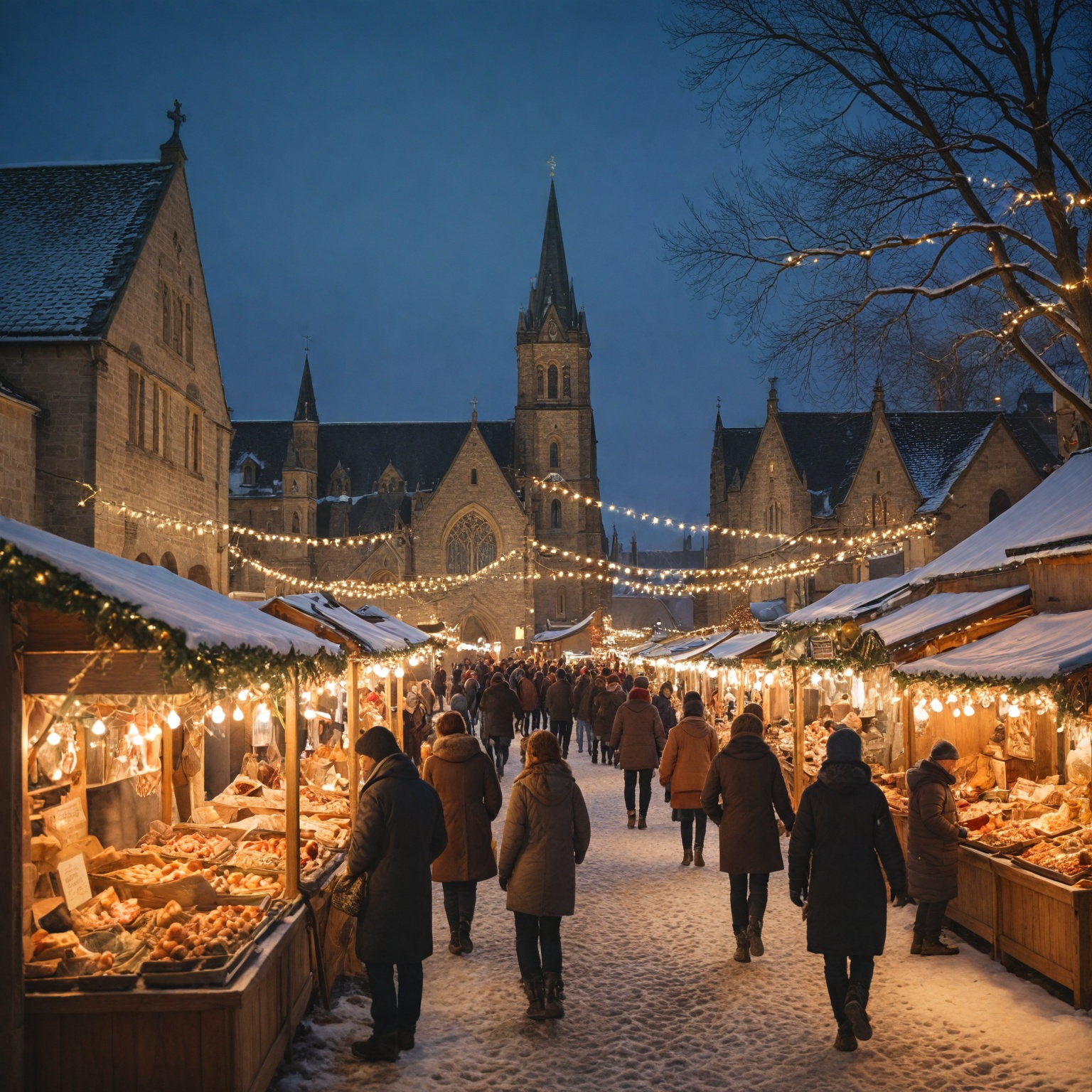
Christmas markets are renowned for their charming wooden stalls that evoke a nostalgic Old World atmosphere, enhanced by festive decorations, twinkling illuminations, and seasonal music that collectively create a magical holiday ambiance. These markets typically offer a wide array of handmade crafts and holiday-themed products such as custom ornaments, candles, scarves, jewelry, and festive home décor, which remain some of the best-selling items.
A hallmark of Christmas markets is their culinary delights. Visitors can enjoy traditional seasonal foods including roasted chestnuts, candied almonds (Gebrannte Mandeln), soft gingerbread varieties like Lebkuchen and Magenbrot, Bratwurst sausages, and regional specialties such as Christstollen in Saxony or Frankfurter Bethmännchen in Hesse. Hot beverages are also a highlight, with offerings like Glühwein (mulled wine), Eierpunsch (an egg-based warm alcoholic drink), hot chocolate, and regional favorites such as Apfelwein. These warm drinks help visitors stave off the cold winter air while enhancing the festive spirit.
Many markets feature traditional attractions that deepen the cultural experience, including Nativity Scenes (crèches), carved Nutcrackers (Nussknacker), Zwetschgenmännle (figures made of decorated dried plums), and live festive performances or workshops. Some larger markets also provide family-friendly activities such as ice skating rinks, reindeer rides, and unique events like the Jolly Christmas Tram, which offers rides through city centers accompanied by Santa and his elves.
The scale and scope of Christmas markets vary, with some, like Vienna’s Christkindlesmarkt or the markets in Budapest’s Vörösmarty Square and Stephen’s Basilica, drawing hundreds of thousands of visitors annually and featuring extensive stall offerings alongside iconic features like giant Advent calendars and 3D light shows. Meanwhile, cities like Zagreb spread their festivities across multiple locations, combining traditional stalls, live nativity scenes, concerts, and ice skating to create an immersive holiday atmosphere throughout the city.
Regional Variations and Unique Traditions
Christmas markets, while rooted primarily in German-speaking Europe, have developed distinct regional characteristics and unique customs across various countries, reflecting local culture and history. Originating in medieval Germany and spreading to Austria, Switzerland, parts of France, and beyond, these markets showcase a rich tapestry of traditions that continue to evolve today.
In southern Germany, Switzerland, and Austria, the markets are often called Christkind(e)l(s)(i)markt, meaning “Christ child market” in German. Traditionally held in town squares, these markets feature open-air stalls offering seasonal foods, drinks, and handcrafted goods, accompanied by singing and dancing. A notable tradition in towns like Nuremberg is the appearance of the Christkind, originally representing the infant Jesus but frequently portrayed as an angelic girl, who opens the market festivities and symbolizes the spirit of the season.
Food plays a significant role in regional variations. For example, Saxony is known for Christstollen (Stollen), a fruit bread with candied fruit, while Hesse offers hot Apfelwein and Frankfurter Bethmännchen, a type of marzipan pastry. German markets commonly feature bratwurst and gingerbread, staples that have become synonymous with the holiday atmosphere.
In Austria, markets such as the Vienna Christkindlmarkt and Salzburg Christkindlmarkt combine history with festive charm. Vienna’s market, located in front of City Hall, is renowned for its romantic old-world setting, live music, and attractions like a children’s ice rink. Salzburg’s market, set against the Hohensalzburg Fortress, offers a blend of elegance and tradition, drawing visitors from across Europe.
Beyond the German-speaking world, Christmas markets have adapted to local flavors and customs. The Advent in Zagreb, Croatia, features around 25 markets across the city, incorporating live Nativity scenes, ice sculptures, outdoor concerts, and even a Christmas tram with Santa and his elves. It also includes an area for “fuliranje” (“fooling around”), where revelers dance in the streets while enjoying street food and live entertainment, highlighting a lively, communal spirit unique to the region.
In the United Kingdom, Birmingham hosts what is considered the largest authentic German Christmas market outside Germany and Austria. It combines traditional market stalls with live entertainment, demonstrating how the markets have been embraced and localized beyond their original geographical roots.
Cultural Significance
Christmas markets hold a deep cultural significance that extends beyond their festive appeal. Rooted in medieval Europe, these markets originally served a mercantile function, reflecting 19th-century cultures of commerce and consumption that continue to influence their character today. They are vibrant celebrations of cultural heritage, showcasing traditional crafts, foods, and performances that preserve age-old customs and regional diversity.
The cheerful music, the aroma of roasted chestnuts, and the sight of beautifully decorated stalls all contribute to a sense of community and holiday spirit, fostering bonds among residents and visitors alike. This communal atmosphere is particularly impactful in diverse urban settings, where shared cultural activities help strengthen social cohesion. Additionally, immigrants have played a significant role in shaping the evolving character of Christmas markets, enriching their cultural tapestry.
Christmas markets also support local economies by attracting tourists and benefiting small businesses. For example, in the UK, the number of Christmas markets surged dramatically from 30 to over 100 between 2007 and 2017, highlighting their growing importance as community events that draw both locals and visitors. The increased foot traffic often results in a spillover effect, boosting sales in nearby cafés and shops.
Moreover, Christmas markets offer a unique opportunity to experience regional culinary traditions in their places of origin, such as nougat-based turrón, chimney-shaped trdelník, and potato pancakes like reibekuchen. This preservation and celebration of food heritage enhance the markets’ appeal for travelers seeking authentic cultural experiences.
The tradition of Christmas markets continues to evolve, with many European cities adding modern attractions such as ice rinks and Ferris wheels to complement the historic chalets and stalls, thus blending centuries-old customs with contemporary festive entertainment. Overall, Christmas markets serve as living cultural institutions that connect people to history, community, and regional identity during the holiday season.
Notable Christmas Markets Worldwide
Christmas markets, with origins tracing back to the Middle Ages in German-speaking Europe, have evolved into cherished festive events celebrated globally. While Germany remains the heartland of these markets, many countries have developed their own unique versions, attracting millions of visitors annually.
Europe
Germany hosts thousands of Christmas markets ranging from traditional stalls in small alpine towns to elaborate, theme-park-like settings in cities such as Munich, Frankfurt, and Nuremberg. The Nuremberg Christkindlesmarkt, dating back to at least 1628, is among the oldest and most famous, alongside Dresden’s Striezelmarkt, first documented in 1434. Austria also boasts significant markets, including Vienna’s Christkindlmarkt held in front of the City Hall, featuring a popular Tree of Hearts installation and a large children’s ice rink. Salzburg’s Christkindlmarkt, set against the Hohensalzburg Fortress, is another prominent event showcasing Austrian tradition and elegance. Other notable European markets include the Strasbourg Christkindelsmärik in France and Barcelona’s Fira de Santa Llúcia, held since 1786.
In Scandinavia, Copenhagen’s Tivoli Gardens transforms into a dazzling Christmas market blending traditional charm with festive attractions, a venue historically admired by Walt Disney. The Baltic countries are also recognized for their vibrant markets, adding to the region’s growing Christmas culture.
North America
North American Christmas markets have embraced the German tradition while infusing local elements. New York’s Winter Village and Toronto’s Distillery Winter Village are standout examples. The Distillery Winter Village is known for its historic setting, outdoor shopping cabins, artisanal food stalls, festive drinks, Christmas carol sing-a-longs, and a special village inspired by C.S. Lewis’s “The Lion, the Witch and the Wardrobe”.
Other Global Markets
The German-style Christmas market model has spread globally since the 1980s and 90s, reaching places as diverse as Japan and the United States. In Russia, the GUM-Fair on Moscow’s Red Square, established in 2013, is now the country’s largest and most popular Christmas market, running from December to March. In Romania, Sibiu has hosted a traditional Christmas market since 2007, reflecting the growing European influence on local holiday customs.
What to Explore in 2025
Christmas markets in 2025 promise a rich blend of tradition, culture, and festive cheer that travelers should not miss. Among the top destinations, the German markets stand out for their fairy-tale atmosphere, with cities like Cologne hosting more than six distinctive markets, each offering unique experiences that captivate visitors during the Yuletide season. Similarly, Vienna’s Christmas market combines history, tradition, and romantic old-world charm, making it ideal for those seeking a classic festive getaway. Nuremberg’s Christkindlesmarkt, one of the oldest and most famous markets worldwide, also remains a must-visit for its historical significance and vibrant atmosphere.
In addition to these iconic locations, markets in Strasbourg, Kraków, and Bolzano continue to attract millions of visitors annually, playing a vital role in both celebrating cultural heritage and supporting local economies through sustainable tourism initiatives. These markets feature a wide array of traditional crafts, seasonal treats such as gingerbread, roasted nuts, and woodcarvings, alongside live performances and festive workshops that enliven the spirit of the season.
For those planning their visits, it is advisable to research specific operational dates and consider early or mid-December travel to maximize the number of markets experienced, while booking in late November or early December can help avoid peak crowds closer to Christmas. Beyond Europe, Christmas markets have also expanded globally, with events in cities like St. Paul, Minnesota, recreating authentic European-style markets that blend cultural education with holiday festivities.
Visitors can expect lively market stalls offering handcrafted gifts, artisanal food, and festive drinks, often accompanied by traditional music, communal celebrations, and special attractions such as giant Advent calendars or themed village installations inspired by classic stories. The overall ambiance—complete with twinkling illuminations, Christmas pyramids, and seasonal performances—creates a magical holiday experience that continues to evolve while honoring centuries-old traditions.
As the tradition of Christmas markets grows, challenges such as rising vendor costs and economic pressures on small artisans have emerged, underscoring the importance of supporting these festive communities to preserve the cultural heritage and economic vitality they embody. Whether in bustling capitals or quaint alpine towns, the markets of 2025 invite travelers to explore a timeless celebration of community, craft, and Christmas spirit.
Visitor Demographics and Travel Trends
Christmas markets in Europe attract a diverse and growing international audience, with millions of visitors each year contributing significantly to local economies and cultural exchange. One notable demographic is American tourists, who have shown a marked increase in interest. For instance, United Airlines reported a 30% rise in travel from the United States to popular European Christmas destinations in 2024 compared to 2019, highlighting the growing appeal of these festive markets among North American travelers.
However, the concentration of visitors can create challenges. For example, cancellations of markets in rural areas like Saxony-Anhalt have led to economic losses, with regional GDP potentially falling by 1.5% as tourists redirect to better-known destinations such as Nuremberg, causing overcrowding and impacting the authentic charm of those markets. This highlights the delicate balance required to maintain both the appeal and sustainability of Christmas markets.
The visitor experience is enriched by traditional crafts, regional foods, and cultural performances that preserve and showcase the heritage of each locality. Immigrant
Planning a Visit
When planning a visit to Christmas markets in Europe, timing is a crucial factor to maximize your experience. The optimal period to explore multiple markets is early to mid-December, which offers a balance between the festive atmosphere and manageable crowds. For those aiming to avoid the peak tourist influx closer to Christmas, scheduling trips in late November or early December is advisable. Specific operational dates vary by location; for example, Vienna’s renowned market runs from November 29, 2025, to January 1, 2026, while Tuomaan Markkinat in Finland is scheduled from November 28 to December 22, 2025.
Booking travel and accommodations well in advance can help secure the best prices and availability, particularly since Christmas markets attract around 30 million visitors annually across Europe, generating substantial economic activity worth €12 billion. The surge in visitors supports a wide range of local businesses, from hotels and transport services to food vendors and artisans. In rural areas, the presence or absence of markets can significantly impact regional economies, with cancellations risking a decline in local GDP and redirecting tourist traffic to more popular destinations, potentially overcrowding them.
Visitors should consider the diverse experiences offered at these markets beyond shopping, including cultural events, festive performances, and children’s activities. Many markets feature unique local crafts, traditional foods, and special attractions such as Santa’s wooden cabin or themed children’s parks, enhancing their appeal to families and tourists alike. For example, Bethlehem’s Christmas market in the United States combines German vendors with music and holiday ceremonies from mid-November through December, providing an authentic festive experience without the large crowds typical of major cities.
To fully enjoy the magic of Christmas markets, travelers are encouraged to plan itineraries that allow time to savor the ambiance, sample local delicacies, and engage with community traditions. Ensuring travel insurance and preparing for seasonal weather conditions are also recommended for a worry-free visit. By thoughtfully selecting dates and destinations, visitors can unlock the unique charm of Christmas markets in 2025, experiencing a blend of festive joy, cultural heritage, and local hospitality.
Economic Impact
Christmas markets generate substantial economic benefits across various regions, playing a crucial role in both local and broader economies. These markets boost retail sales, particularly in sectors such as grocery, travel, and distribution, which in turn stimulates job creation and supports supply chains. Seasonal employment opportunities arise in areas like event setup, security, and vendor staffing, providing important income sources during the holiday period and contributing to the overall vitality of host communities.
In countries like Hungary, consumers exhibit heightened price sensitivity and careful spending habits during the Christmas season. Nonetheless, tourism linked to Christmas markets remains a significant economic driver, with growing importance in regional development and cultural tourism. Local governments often invest in promotional campaigns to attract visitors, which amplifies the markets’ economic impact and helps sustain local businesses.
European cities such as Strasbourg, Vienna, Kraków, and Bolzano exemplify how Christmas markets serve as engines of sustainable tourism by attracting millions of visitors annually. These markets not only celebrate festive traditions but also promote cultural heritage while supporting local economies and fostering a reputation for regenerative tourism. For example, the Austrian Christmas market in Vienna offers diverse attractions that contribute to the city’s vibrant holiday economy.
The scale of Christmas markets’ economic contribution is remarkable. In Germany alone, these markets attract approximately 30 million visitors each year, generating €12 billion in spending across sectors like hotels (€3 billion) and transport (€2.5 billion). However, post-terrorism security measures have introduced challenges, with cancellations in some regions risking significant GDP losses and visitor displacement that can affect market charm and economic distribution.
Environmental Considerations
Christmas markets have increasingly embraced sustainable practices as part of a broader movement toward environmentally responsible tourism. By offering authentic experiences that support local economies while minimizing environmental impact, these markets set an example for sustainable tourism models that benefit both visitors and host communities. Cities such as Strasbourg, Vienna, Kraków, and Bolzano illustrate how integrating environmental considerations with cultural celebration can enhance the appeal and viability of Christmas markets, attracting millions of visitors while promoting the preservation of cultural heritage and ecological sustainability.
Efforts to foster sustainable investment and growth are not limited to Europe. For instance, the Dominican Republic has been recognized for championing sustainable investment initiatives aimed at fueling economic growth while prioritizing environmental concerns within the Caribbean context. This emphasis on sustainability aligns with the growing global trend toward climate-conscious finance and responsible tourism development.
However, challenges remain for small traders and local vendors who depend heavily on Christmas market revenues. Rising operational costs and increased regulation aimed at environmental protection can strain these businesses financially. Reports highlight that some artisans face significant economic hits, with substantial revenue losses threatening jobs and the viability of traditional markets, especially when measures such as reduced energy consumption or waste management protocols raise expenses. Balancing economic sustainability for vendors with environmental goals is therefore a critical aspect of the evolving Christmas market landscape.
Local governments and market organizers often invest in marketing campaigns that not only attract tourists but also emphasize eco-friendly practices and community engagement. Such strategies help raise awareness about sustainability issues, foster greener consumer behaviors, and reinforce the markets’ roles as vital contributors to both local economies and environmental stewardship.
The content is provided by Harper Eastwood, Gear Shift Zone