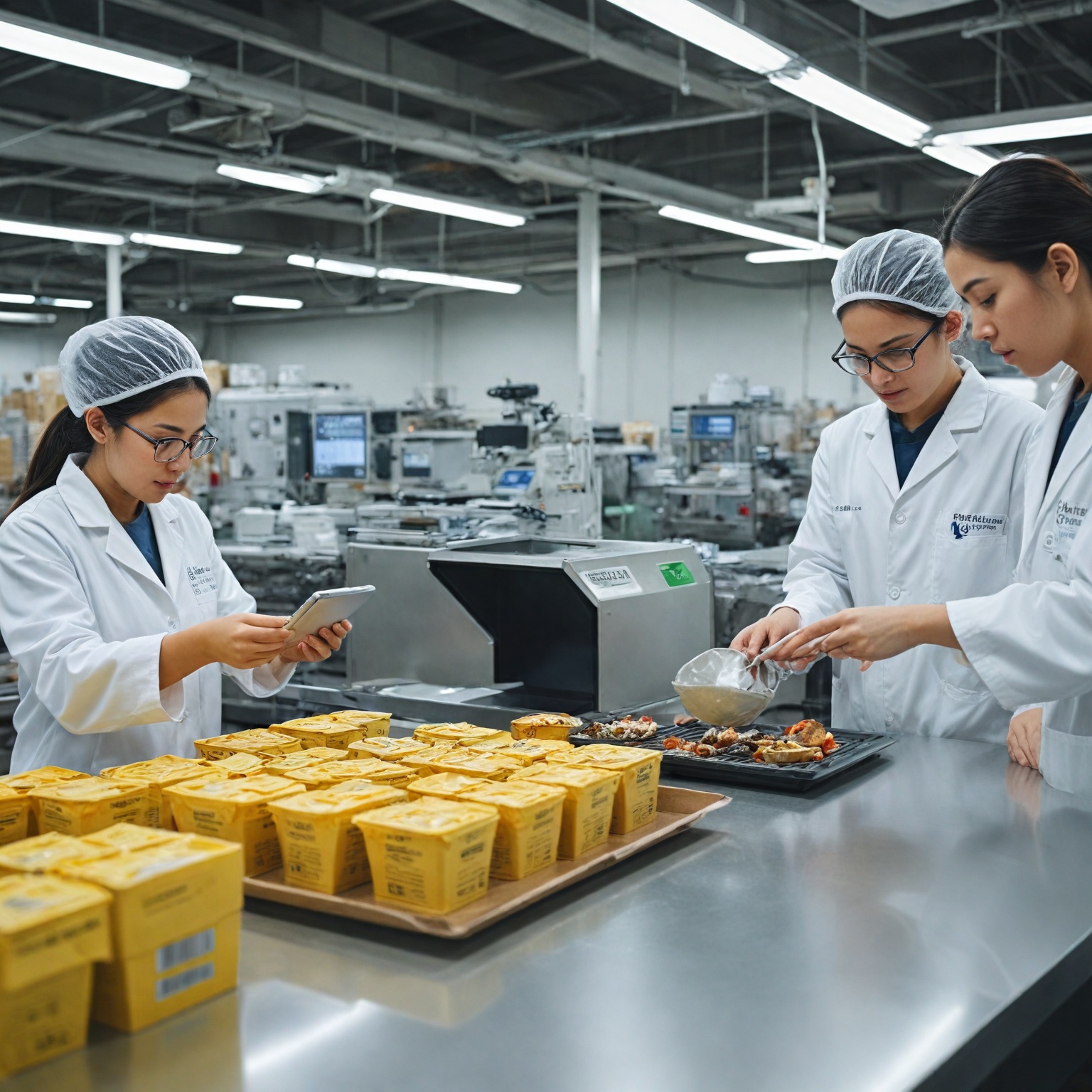
Highlights
- The food packaging industry offers diverse career opportunities driven by innovation and sustainability.
- Emerging trends necessitate continuous learning and adaptability for success in this evolving sector.
Summary and Industry Overview
The food packaging sector plays a vital role in the global food supply chain by preserving products, ensuring regulatory compliance, and providing consumer information. Driven by innovations in materials, design, and sustainability, the industry offers diverse career opportunities in technical, managerial, and creative roles. Sustainability, including the use of biodegradable and recyclable materials and smart packaging technologies, is increasingly shaping the field amid regulatory and environmental pressures. Professionals face challenges balancing food safety with environmental goals while navigating complex regulations. Education and training are adapting to include sustainability and digital innovation, preparing a workforce for a rapidly evolving industry.
Career Opportunities and Skills
Food packaging careers range from entry-level packing jobs to specialized roles in engineering, design, management, and compliance. Professionals work in segments such as food, pharmaceuticals, and health products, with roles including packaging scientists, engineers, and compliance managers. Success requires a combination of technical skills—such as knowledge of packaging machinery, food safety protocols, and quality control—and soft skills like creativity and communication. Certifications and continuous learning are important for career advancement, especially as sustainability and smart packaging technologies gain prominence.
Education and Training
Entry-level positions generally require a high school diploma or certification, while advanced roles demand degrees in food technology, engineering, or materials science. Cooperative education programs, such as those at Rochester Institute of Technology, combine classroom learning with industry experience to enhance job readiness. Specialized certificate programs led by industry experts focus on packaging management and design. Technical skills like HACCP, GMP, and record-keeping are emphasized to ensure compliance and safety, with sustainability increasingly integrated into curricula to prepare professionals for environmental challenges.
Technological Innovations and Engineering Challenges
Emerging technologies such as intelligent packaging with sensors, biodegradable biopolymers, and blockchain-based traceability are transforming the industry. These innovations improve food safety, reduce waste, and enhance supply chain transparency. Packaging engineers face challenges scaling production of active biomaterials, balancing multi-layer versus mono-material designs, and meeting stringent regulations aimed at reducing harmful substances. Advances like 3D printing show promise but require further development. Engineers also optimize machinery and automation to improve efficiency and sustainability in high-volume production.
Industry Trends and Education Evolution
Sustainability is a dominant trend, driven by consumer demand and evolving regulations promoting waste reduction and circular economy principles. Education and training have evolved accordingly, emphasizing sustainability, regulatory compliance, and practical skills through expert-led programs and cooperative education. Mastery of technical competencies alongside soft skills enables professionals to innovate and maintain high safety standards while advancing sustainability goals. This responsive educational approach prepares the workforce to meet current and future industry demands.
Case Studies and Sector Developments
Companies like Packaging Options USA demonstrate progress by integrating sustainable packaging technologies that balance environmental responsibility with product safety. Industry groups such as the Australian Packaging Covenant Organisation promote collaborative efforts to improve packaging sustainability through shared best practices. Despite advances, challenges remain in adopting bioplastics due to cost and performance issues. The rise of e-commerce and contactless delivery further influences packaging design, emphasizing convenience and safety. Career opportunities span business, engineering, design, and operations, reflecting the sector’s complexity and growth.
The content is provided by Blake Sterling, Gear Shift Zone