Highlights
- Professional arborist assessments are crucial for safe and compliant tree removal practices.
- Emphasizing sustainable methods in tree removal mitigates environmental impacts and promotes restoration.
Summary and Overview
Unlocking Solutions: A Comprehensive Guide to Tree Removal in 2023 covers the biological, environmental, legal, technical, and safety aspects of tree removal, emphasizing assessments by certified arborists to ensure safe, compliant practices. Reasons for removal include hazard mitigation, disease control, urban development, and environmental impacts like wildfires. Legal frameworks vary by jurisdiction, with unauthorized removal leading to liability. Modern methods such as crane-assisted removal and remote-controlled equipment improve safety and efficiency, while sustainable practices like directional felling and wood recycling reduce environmental harm. The guide addresses controversies balancing development and conservation and highlights evolving policies integrating ecological health with community needs.
Tree removal requires evaluating tree health, environmental conditions, legal liabilities, and safety. Arborists assess the tree’s structure and site factors to determine removal necessity. Legal issues involve property rights and municipal regulations; unauthorized removal can result in trespassing claims. Professional services are advised to ensure safe, lawful removal.
Reasons for Tree Removal and Environmental Assessment
Common reasons for tree removal include safety concerns from unstable or dead trees, managing competition among trees, disease or insect infestations, urban development, and environmental factors like wildfires and climate changes. Social issues such as neighbor disputes over property lines also influence removal decisions.
Biological and environmental assessments examine the tree’s health and site conditions, considering canopy, roots, soil, and structural stability. Tree removal impacts ecosystems by destroying habitats, increasing carbon levels, causing soil erosion, and intensifying urban heat effects. Models like WEPP predict erosion risks, emphasizing the need for balanced decisions that weigh ecological and social consequences.
Methods, Tools, and Sustainable Practices
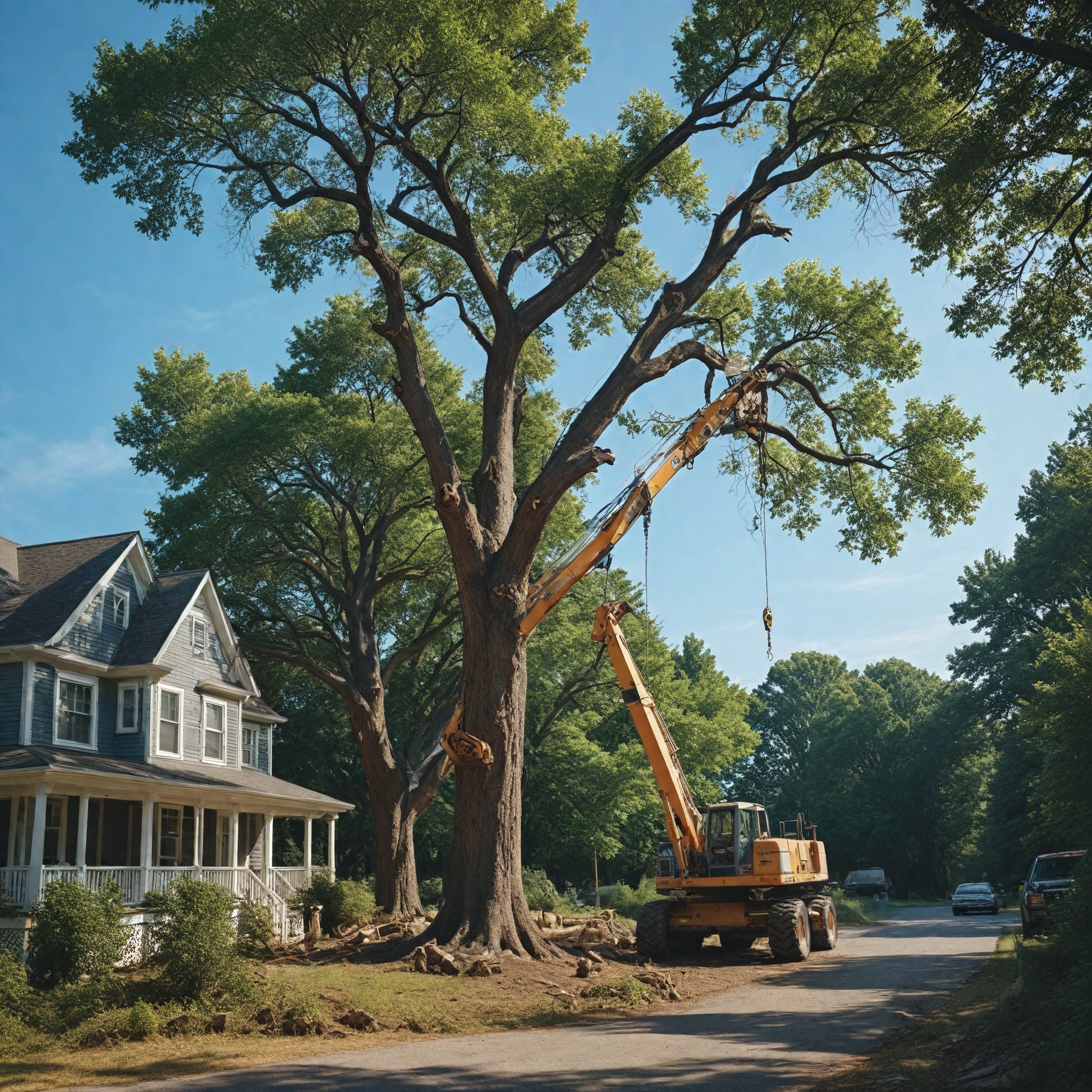
Tree removal methods depend on tree size and site conditions. Climbing and cutting is common for small to mid-sized trees, while crane-assisted removal suits large or hazardous trees. Equipment includes chainsaws, wedges, rigging tools, stump grinders, bucket trucks, and advanced machinery like remote-controlled cutters, which improve safety and efficiency.
Sustainable practices involve directional felling to minimize damage, recycling wood, and replanting native species to restore ecosystems. Site preparation clears brush and debris to create safe work areas, supporting environmentally conscious removal.
Safety and Legal Considerations
Tree removal is hazardous, requiring trained, certified arborists who follow safety protocols and conduct site assessments per ANSI standards. Safety measures include hazard identification, public warnings, use of protective gear, and adherence to manufacturer guidelines. Emergency removals address immediate threats but normally require notifications and permits.
Legally, property owners are responsible for tree safety on their land, while municipalities manage public trees under varying regulations. Permits are often required, especially in sensitive areas, with strict enforcement to prevent illegal removals. Legal disputes commonly arise over property boundaries and removal rights, highlighting the need for compliance with local laws and ordinances.
Environmental Impact and Mitigation
Tree removal leads to habitat loss, soil instability, erosion, and reduced biodiversity. Trees provide critical ecosystem services such as carbon sequestration and climate regulation. Sustainable alternatives include selective logging, use of eco-friendly equipment, gradual dismantling, and recycling wood products. Mitigation strategies focus on replanting, preserving surrounding vegetation, and integrating urban forestry initiatives to maintain ecological balance.
Professional Services and Innovations
Professional tree removal teams use specialized knowledge and equipment to ensure efficient, safe, and environmentally responsible operations. Techniques and tools are selected based on site assessments, with crane-assisted removal employed for difficult scenarios. Safety is paramount, with continuous risk management and public protection measures in place.
Recent innovations include remote-controlled equipment that enhances operator safety and productivity, lighter and more efficient chainsaws, and multi-team operations combining climbing and machinery. Advances in wood processing support sustainability by converting removed trees into valuable products. Collaborative research fosters improved urban tree management policies that balance ecological and community needs.
Case Studies and Applications
Legal cases often address disputes over tree removal related to property boundaries and municipal authority, requiring surveys and adherence to regulations. Urban tree removal balances safety, development, and ecological functions, with mitigation efforts like retaining habitats and planting wildlife-friendly features to preserve biodiversity.
Large-scale forestry practices such as selective logging and reforestation restore degraded lands, improve hydrology, reduce erosion, and contribute to climate mitigation. These applications demonstrate the complex considerations involved in responsible tree removal across urban and natural environments.
The content is provided by Sierra Knightley, Gear Shift Zone