Unlocking Freedom: Explore New Mobility Solutions and Their Impact on Daily Life
Highlights
- Explore how innovative mobility solutions enhance independence and connectivity in everyday life.
- Discover the importance of integrating emerging transport modes for sustainable urban environments.
Summary
Unlocking Freedom: Explore New Mobility Solutions and Their Impact on Daily Life examines the evolving landscape of mobility technologies and services that enhance individual freedom, accessibility, and sustainability in transportation. Mobility extends beyond mere movement, encompassing the ability to access opportunities and participate fully in society. This article explores how emerging personal mobility devices, shared mobility services, assistive technologies, and advanced digital platforms are transforming daily life by enabling greater independence and connectivity for diverse populations, including those with physical limitations.
The integration of innovative mobility solutions—such as electric scooters, bikesharing systems, autonomous vehicles, and smart urban infrastructure—addresses complex social, environmental, and technological challenges in modern transportation. These developments promote sustainable urban mobility by reducing reliance on private vehicles, lowering emissions, and optimizing traffic flow through intelligent transportation systems and Vehicle-to-Everything (V2X) communication. However, the rapid adoption of new modes, particularly micromobility devices, has also raised concerns regarding pedestrian safety, equitable access, regulatory frameworks, and data privacy, requiring careful policy responses and infrastructure adaptation.
Technological advancements underpinning these mobility innovations include artificial intelligence, sensor fusion, blockchain, and decentralized digital platforms, which collectively enhance autonomy, security, and operational efficiency. Public-private partnerships and urban planning efforts—such as the development of multimodal mobility hubs—further facilitate the seamless integration of emerging transport modes within existing infrastructure, promoting inclusive and efficient movement in cities worldwide. Case studies from urban centers like Amsterdam illustrate the potential benefits of coordinated approaches to mobility innovation, while highlighting the complexities involved in scaling solutions across diverse contexts.
Despite significant progress, challenges remain in balancing environmental sustainability, social inclusion, and individual freedoms. The complex interplay of technological, legal, behavioral, and infrastructural factors shapes the future of mobility, making ongoing research and collaboration essential. Unlocking the full potential of new mobility solutions promises to enhance quality of life, reduce environmental impacts, and foster more connected and equitable societies.
Conceptual Framework
Mobility is a multifaceted concept that extends beyond mere transportation, encompassing the ability and freedom of individuals to move within a space and access diverse locations and opportunities. It includes various forms of movement such as basic ambulation, transferring between positions, walking for leisure, performing daily tasks, engaging in work and recreational activities, driving, and utilizing public transport systems. This broad understanding situates mobility not only as a physical act but also as a critical component of freedom, reflecting both the opportunity to travel when and where one desires and the possibility to choose not to travel. The linkage between mobility and freedom has historical roots predating modern vehicular transportation, highlighting its fundamental role in human rights and democratic values. Freedom of movement is recognized as an essential human right and is integral to achieving global objectives such as the Sustainable Development Goals (SDGs), which emphasize the necessity of effective transport means and equitable access to services and opportunities for all individuals. However, the realization of this freedom is complex, as it intersects with social, political, and environmental considerations, including surveillance, control mechanisms, and the uncertainty introduced by mobility-related absences.
From a systems perspective, mobility operates within an evolving ecosystem influenced by social, economic, environmental, and technological factors that collectively shape the infrastructure and solutions available. Innovation in mobility solutions often involves working with diverse resources and contexts—from informal settings to industrial and scientific environments—to transform materials into technologies that enhance movement and access. Agent-based modeling (ABM) has been proposed as a valuable approach for analyzing and designing these innovative landscapes by simulating individual and collective behaviors across various scenarios such as urbanization, sanitation, and care services. Importantly, while building new infrastructure can facilitate mobility, studies indicate that its influence on resource depletion may be limited if existing infrastructure for shared mobility is already in place. This suggests that unlocking the full potential of mobility requires not only physical assets but also effective integration and utilization of mobility data and solutions that optimize movement while minimizing environmental impacts.
Types of New Mobility Solutions
New mobility solutions encompass a diverse range of technologies and services designed to enhance individual freedom, accessibility, and sustainability in transportation. These solutions span from advanced personal mobility devices to shared transportation systems, each catering to different needs and lifestyles.
Personal Mobility Devices
Personal mobility devices offer tailored support for individuals seeking greater independence and ease of movement. Examples include motorized wheelchairs, mobility scooters, and folding transportable devices such as the Robooter E40, which features remote control, independent suspension, and a comfortable ride designed for portability and user convenience. These devices help users overcome physical obstacles and improve quality of life by enabling participation in daily activities like commuting, socializing, and leisure. Technological advances in assistive mobility—such as exoskeletons and smart mobility devices—are further expanding the autonomy and accessibility of users in various environments.
Shared Mobility Services
Shared mobility refers to transportation modes that provide temporary access to vehicles or transport services, offering an alternative to private car ownership and helping to reduce environmental impacts. These services include carsharing, ridesourcing, microtransit, and micromobility options such as bikesharing and shared e-scooters.
Carsharing and Ridesharing
Carsharing allows users to rent vehicles for short periods, often reducing the need for personal vehicle ownership and associated emissions from production and disposal phases. However, some studies suggest that increased use of shared cars can lead to higher vehicle miles traveled, which may impact emissions if vehicles are driven more intensively or have shorter lifespans. Ridesharing, particularly high-occupancy ride-sharing, holds potential for decreasing overall vehicle kilometers traveled by increasing passenger occupancy per trip.
Micromobility: Bikesharing and E-Scooters
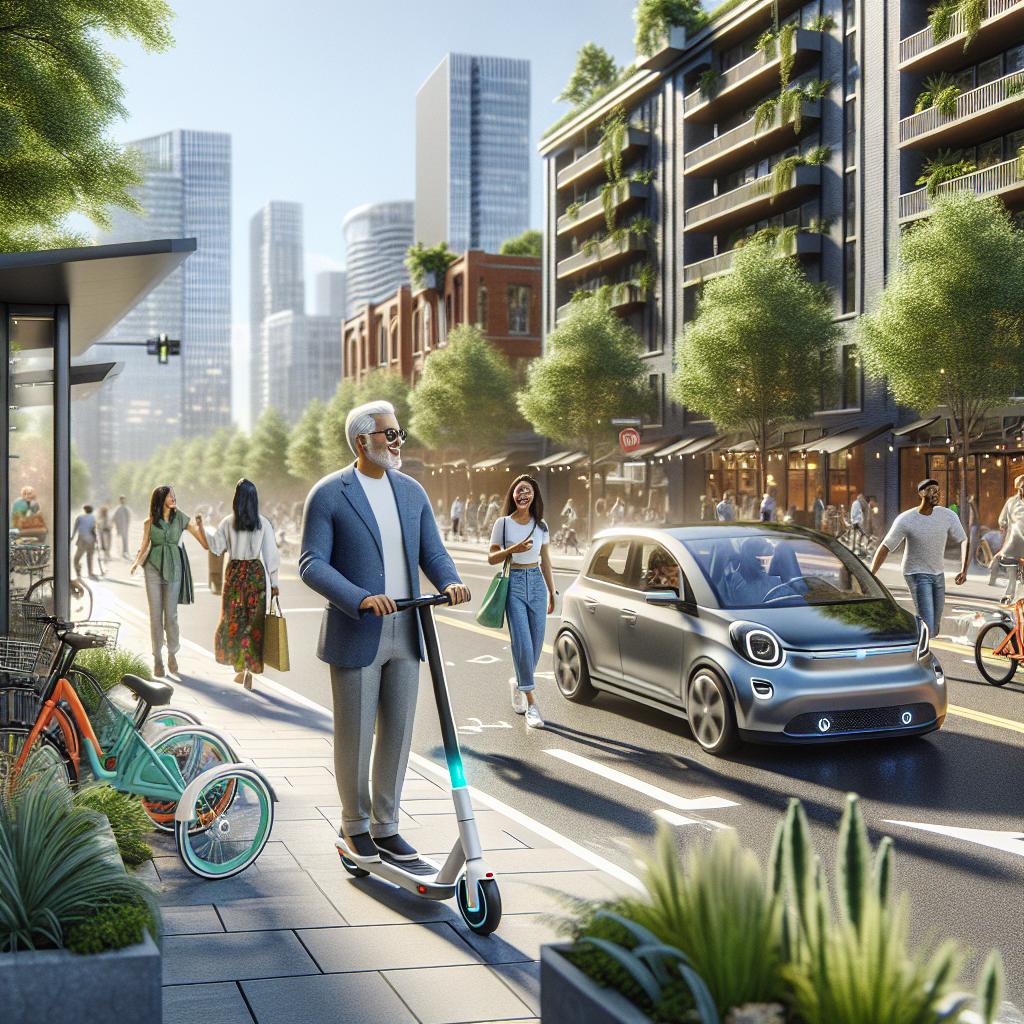
Micromobility services, such as bikesharing and electric scooters, offer convenient, flexible options for short-distance urban travel. Bikesharing systems typically deploy bicycles across docking stations within city networks, promoting stability and limited speeds to enhance safety. These services are often lauded for supporting sustainable urban mobility and reducing automobile dependence, though the long-term impacts on auto-use require further study. Electric scooters, particularly popular in dense urban and tourist areas, provide a micro-mobility alternative that can fill mobility gaps between neighborhoods and other transport modes. Nonetheless, safety concerns persist due to injury rates and improper parking, highlighting the need for thoughtful integration into urban infrastructure.
Assistive and Adaptive Technologies
Beyond mobility devices and shared services, innovative assistive technologies contribute significantly to unlocking freedom of movement. Adaptations such as wheelchair lifts, hand controls, and home modifications improve access and independence for users with disabilities. These solutions, coupled with emerging smart mobility devices, empower individuals to make autonomous decisions about their travel and participation in society.
Technological Innovations Enabling New Mobility
Technological advancements have been pivotal in reshaping the landscape of mobility, offering new solutions that enhance freedom, independence, and quality of life for users. Central to this transformation are innovative devices and digital platforms, such as motorized wheelchairs and smart mobility devices, which provide increased autonomy and facilitate access to diverse environments. These solutions are supported by an ecosystem of technologies including the Internet of Things (IoT), data analytics, artificial intelligence (AI), and cloud computing, which enable connected urban mobility systems capable of addressing complex transportation challenges.
Autonomous vehicles (AVs) exemplify the integration of multiple advanced technologies to improve safety and efficiency in mobility. These vehicles utilize an array of sensors—such as GPS, LiDAR, radar, and cameras—to perceive their surroundings and make driving decisions. Sensor fusion techniques combine data from these sensors to enhance perception accuracy, particularly for pedestrian avoidance and obstacle detection. Additionally, vehicle-to-everything (V2X) communication allows AVs to interact with other vehicles, traffic infrastructure, and smart city systems, fostering cooperative traffic management and improved road safety.
Communication technologies underpinning V2X include Dedicated Short Range Communication (DSRC) and emerging wireless standards like IEEE 802.11p, which facilitate real-time data exchange without the need for centralized infrastructure. Vehicular ad-hoc networks (VANETs) further enhance communication efficiency and collision avoidance by enabling direct vehicle-to-vehicle and vehicle-to-sensor interactions. These networks contribute to intelligent transportation systems (ITS) that integrate adaptive traffic lights, dynamic lane adjustments, and pedestrian safety protocols, all of which promote sustainable and efficient urban mobility.
Blockchain technology is also gaining traction within the mobility ecosystem by providing transparent, secure, and tamper-proof transaction records. Its applications range from vehicle purchasing and ride-sharing payments to the management of decentralized mobility platforms, enabling seamless booking and payment across multiple providers for single trips. Moreover, blockchain supports the expansion of intermodal transportation by reducing transactional inefficiencies inherent in international trade and complex logistics networks.
The rise of digital platforms combined with emerging technologies such as Web3 fosters decentralized mobility solutions that empower individual users while maintaining trust and data security. Additionally, drone technology is expanding urban delivery services, offering swift and efficient goods transportation that complements existing mobility networks. The integration of these innovations collectively unlocks new mobility possibilities that promote freedom and ease of exploration in daily life.
Integration with Urban Transportation Infrastructure
The integration of new mobility solutions into existing urban transportation infrastructure is essential to unlocking their full potential and enhancing daily life in cities. This integration involves a multifaceted approach, including adapting physical infrastructure, digital systems, and regulatory frameworks to support emerging mobility modes such as micromobility, autonomous vehicles, and shared mobility services.
Micromobility providers, such as e-scooter and e-bike operators, must tailor their offerings to suit urban environments with compact, high-density populations, focusing on developing cities and middleweight urban centers rather than car-centric megacities where adoption prospects are lower. Achieving successful integration requires support from city officials to invest in necessary infrastructure, such as docking bays and charging stations, which are critical for the widespread adoption and operational efficiency of micromobility options. Dockless bike-sharing, for example, has rapidly become a key component of urban public transport but poses challenges related to parking management and enforcement, which necessitates standardized solutions including electronic parking spots to prevent illegal parking.
Cities are increasingly adopting mobility hubs that facilitate seamless transfers between multiple transportation modes, integrating shared mobility options like electric bikes and scooters with public transit. Amsterdam exemplifies this strategy by planning mobility hubs that connect various transport modes to reduce private car usage and improve accessibility. However, scaling such initiatives to other urban contexts is complex due to varying local standards, technological protocols, system maturity levels, and project-specific constraints, underscoring the need for tailored approaches to smart mobility integration.
Intelligent transportation systems (ITS) and smart intersections play a pivotal role in optimizing traffic flow, enhancing safety, and promoting sustainability within urban transportation ecosystems. These systems leverage advanced technologies such as Vehicle-to-Everything (V2X) communication, artificial intelligence, multi-sensor data fusion, and adaptive traffic signal control to improve the efficiency of urban road networks and reduce environmental impacts. Smart intersections incorporate pedestrian safety protocols and dynamic lane adjustments, while also integrating with broader smart city infrastructure, including traffic management centers, public transit networks, and emergency services, thereby enabling real-time data exchange and coordinated urban mobility management.
The adoption of autonomous vehicles (AVs) further transforms urban transportation infrastructure by necessitating the development of new vehicle designs and compliance with vehicle-to-vehicle and vehicle-to-infrastructure communication standards. AV integration demands the establishment of regulatory frameworks addressing vehicle registration, licensing, and minimum service requirements, often achieved through public-private partnerships that combine governmental oversight with private-sector technological investment. AVs promise substantial safety improvements by significantly reducing accidents caused by human error, which currently accounts for the vast majority of road traffic incidents. Moreover, advanced research into machine learning algorithms and localization technologies for closed environments like tunnels is crucial for the development of reliable autonomous driving systems within increasingly dense urban transport networks.
In addition to physical and regulatory integration, leveraging mobility data is critical for unlocking efficiencies and enabling digital innovations such as smart parking applications, real-time availability of parking spaces tailored to vehicle dimensions, and centralized parking facilities near mobility hubs. These solutions address urban challenges such as overcrowding and resource conservation, thereby contributing to more sustainable urban environments. Furthermore, emerging technologies including blockchain and decentralized internet platforms offer promising avenues to enhance transparency, security, and trust across mobility ecosystems, facilitating smoother transactions and coordination among diverse transport services.
Impact on Daily Life and Society
Mobility profoundly influences multiple aspects of daily life and the broader society. Beyond mere physical movement, it affects health, independence, social engagement, and overall quality of life. The freedom to move enables individuals to participate more fully in their communities, pursue personal and professional opportunities, and maintain essential social connections.
Health and Well-being
Adequate mobility is closely linked to better health outcomes. It supports the maintenance of muscle mass, strength, and flexibility, which are critical for healthy aging and the prevention of chronic diseases such as obesity, cardiovascular disease, and diabetes. Mobility also helps reduce the risk of falls and injuries, allowing older adults to live independently for longer periods. The ability to perform daily tasks without restrictions—such as shopping, personal care, or commuting—enhances psychological well-being by fostering a sense of autonomy and freedom.
Independence and Social Inclusion
Freedom of movement is recognized as a fundamental human right, encompassing the ability to travel within and beyond a country’s borders. Mobility solutions, including assistive devices like wheelchairs, mobility scooters, and advanced technologies such as exoskeletons, provide greater independence to individuals with physical limitations. These technologies not only facilitate access to essential services and environments but also empower users to make autonomous decisions and engage actively in society. Consequently, mobility contributes significantly to social inclusion and emotional well-being by enabling participation in work, leisure, and family life.
Community and Environmental Impacts
The evolving mobility ecosystem responds to various social, economic, environmental, and technological changes. Shared mobility services, including carsharing, ridesourcing, and micromobility options like bikesharing and shared scooters, present new opportunities to reduce emissions and traffic congestion while enhancing accessibility. The adoption of such services, particularly when supported by targeted policies and environmental objectives, can foster broader societal benefits. Moreover, ensuring safe and accessible physical environments—through features such as pedestrian crossings, sidewalks, and traffic-calming measures—is essential to support healthy mobility behaviors and maximize community participation.
Challenges and Considerations
Despite advancements, mobility challenges persist, especially for people using personal mobility devices (PMDs). Environmental barriers and differing individual needs affect how users navigate community spaces, highlighting the importance of person-environment interactions in mobility planning. Tailoring mobility solutions and urban designs to accommodate diverse user requirements is critical to ensuring equitable access and participation for all.
Environmental Impacts
Shared mobility solutions have been identified as promising demand-side strategies that can alter travel behaviors and potentially reduce environmental burdens associated with transportation. By providing users with short-term access to vehicles or transportation services, shared mobility can decrease reliance on privately owned cars, which may lead to reductions in traffic congestion, urban sprawl, and associated natural habitat loss.
However, the environmental impacts of shared mobility are complex and not yet fully understood. For instance, building new infrastructure for shared-car use appears to have a limited effect on fuel and material depletion, primarily because existing infrastructure can often be leveraged. Yet, there remains a research gap concerning the environmental consequences during the end-of-life stage of shared vehicles, as well as the broader impacts on land use and ecosystems.
Differences in environmental outcomes between business-to-consumer (B2C) and peer-to-peer (P2P) car sharing models have been insufficiently studied, with most analyses focusing narrowly on the use phase and climate impacts. Moreover, shared cars tend to be driven more intensively, which can shorten their lifetimes and potentially increase carbon dioxide emissions linked to vehicle manufacturing. Despite this, sharing still contributes to a
Urban Design, Public Space, and Traffic Dynamics
Urban design and the allocation of public space are fundamental aspects shaping modern mobility solutions and their impacts on daily life. The rise of new mobility options—such as e-scooters, shared bikes, and autonomous vehicles—has initiated significant changes in how public spaces are organized and how traffic flows within cities.
Integration of New Mobility in Urban Spaces
The proliferation of shared micro-mobility services like dockless bike-sharing and e-scooter rentals has transformed urban transport networks by providing first-and-last-mile connectivity that complements public transit systems. These modes have become integral to urban public transport, reducing reliance on private vehicles and alleviating traffic congestion. However, their rapid adoption also presents challenges, such as illegal or suboptimal parking, which can obstruct sidewalks and public spaces. Efforts to standardize management, including electronic parking spots, aim to mitigate such issues and promote orderly usage.
Land use patterns are directly affected by the presence of new mobility services. Research indicates that e-scooter trips are more frequent in densely populated areas with higher median incomes, mixed land use, abundant parks, and effective bike-sharing infrastructure. The appearance and distribution of e-scooters influence traffic policy and spatial occupation, particularly in central urban areas where space is scarce. Urban planners must balance accommodating these devices with preserving pedestrian priority and safety.
Pedestrian Safety and Public Space Usage
The interaction between pedestrians and micromobility devices presents new urban design challenges. Sidewalks, traditionally dedicated to walking, can become contested spaces when faster devices such as e-scooters operate nearby. Studies emphasize the subjective perception of safety and comfort among pedestrians, highlighting concerns that the presence of such devices may deter walking trips or increase the risk of injuries, especially among vulnerable groups like children and the elderly. Enhancing pedestrian infrastructure, including crosswalks, refuge islands, and traffic-calming measures, remains critical to ensuring safe coexistence.
Traffic Dynamics and Capacity Enhancements
Advanced technologies, including autonomous vehicles (AVs) and intelligent transportation systems, promise to improve urban traffic dynamics significantly. Autonomous and connected vehicles can increase traffic flow efficiency by reducing phenomena such as “phantom congestion” and improving driving consistency, leading to lower emissions and enhanced safety. The integration of Vehicle-to-Everything (V2X) communication, artificial intelligence, and multi-sensor data fusion at smart intersections further supports capacity increases and environmental sustainability.
Despite these promising advances, scaling such solutions across cities is complex due to the diverse local contexts, stakeholder involvement, and technological integration challenges. City planners must collaborate with technology providers, enacting regulations and building infrastructure that supports these innovations to realize their full potential.
Impact of Micromobility Policies on Traffic Flow
Policy decisions regarding micromobility use can have unintended effects on traffic congestion and commute times. For example, bans on e-scooters during certain hours in cities like Atlanta led to increased average commute durations by about 10%, demonstrating the delicate balance between safety regulations and traffic efficiency. As micromobility becomes a staple of urban transport, its regulation must carefully consider both pedestrian safety and overall traffic dynamics to avoid adverse outcomes.
Challenges and Concerns
The adoption of new mobility solutions, while promising significant benefits for sustainability and urban transit, faces a range of challenges and concerns that must be addressed to ensure equitable and effective implementation. One prominent issue is the variability of local contexts; solutions that work well in one city may not be replicable or scalable in others due to differences in existing infrastructure, budget constraints, and specific transportation needs. The integration of multiple technological layers and adherence to local standards further complicate the development of universally applicable smart mobility systems.
Environmental impacts present another critical challenge. Although shared mobility systems have the potential to reduce carbon footprints, there remain significant research gaps related to their effects on land use, material depletion, and ecosystem harm. In particular, distinctions between business-to-consumer (B2C) and peer-to-peer (P2P) car-sharing schemes and their respective climate impacts require further investigation. The tension between profitability and environmental sustainability continues to pose difficulties for designing systems that effectively minimize the ecological footprint of passenger transportation.
Legal and regulatory frameworks also raise concerns, especially regarding restrictions on freedom of movement and privacy. New legal prohibitions, such as road tolls or curbs on private vehicle ownership, may be instituted alongside requirements like personal identity cards for accessing public services. The COVID-19 pandemic highlighted how mobility rights could be temporarily constrained by governments worldwide, emphasizing the delicate balance between public health and individual freedoms. Additionally, data privacy issues arise with the use of detailed mobility data, necessitating robust approaches to preserve user anonymity while enabling valuable research and service improvements.
Behavioral adaptation and public acceptance remain vital hurdles. The success of shared mobility initiatives depends on user trust and willingness to shift away from private vehicle ownership, particularly in rural settings where vehicle prevalence is high. Understanding how human behavior influences mode substitution and compliance with new policies is essential for fostering long-term changes in travel patterns. Moreover, individual mobility challenges vary widely, requiring personalized evaluations of solutions based on ease of use, durability, safety, and maintenance needs.
Finally, the rapid integration of emerging technologies such as blockchain, Web3, and drone delivery introduces both opportunities and uncertainties. While these innovations promise enhanced transparency, security, and efficiency, they also demand careful consideration of trust architectures and potential regulatory implications to prevent unintended consequences in the mobility ecosystem.
Addressing these challenges and concerns holistically will be crucial for unlocking the full potential of new mobility solutions and ensuring they contribute positively to daily life and urban sustainability goals.
Case Studies and Examples
Several case studies and examples illustrate the diverse applications and impacts of new mobility solutions across different urban and rural contexts.
One notable example is the adoption of shared mobility systems in rural settings, where high vehicle ownership typically prevails. A research institution’s population, characterized by high educational levels and environmental awareness, embraced navette services, indicating potential wider societal acceptance if such initiatives are aligned with targeted policy incentives and environmental goals. This suggests that shared mobility can be effectively integrated beyond urban areas, provided there is sufficient support.
In urban environments, cities like Amsterdam have demonstrated successful strategies by reducing private car usage since the 1970s and now planning mobility hubs that integrate multiple transport modes with shared options such as electric bikes and scooters. This integration promotes sustainable urban mobility and serves as a model for other cities aiming to decrease reliance on private vehicles.
Technological advancements also play a crucial role. Adaptive traffic light systems, pedestrian safety protocols, and dynamic lane adjustments have been implemented to optimize traffic flow and enhance sustainability. These systems are designed to integrate seamlessly into smart city infrastructures, enabling Vehicle-to-Everything (V2X) communication, air quality monitoring, and real-time data exchange among traffic management hubs, public transport, and emergency services.
The rise of micromobility devices such as e-scooters has transformed short urban trips, offering convenient and eco-friendly options. However, their rapid adoption has introduced challenges related to pedestrian safety, prompting some cities like Atlanta to implement time-based bans in response to increased accidents and hospitalizations. Such regulatory measures highlight the need to balance innovation with safety considerations.
Public-private partnerships have emerged as effective mechanisms to drive innovation and facilitate the development and deployment of advanced mobility technologies. These collaborations combine public funding with private sector expertise, accelerating progress in areas such as autonomous driving, electrification, and shared mobility. For instance, technology companies working on autonomous vehicles focus on integrating specialized sensors and systems to enable effective vehicle-environment interaction and automation.
Finally, the incorporation of digital trust architectures and decentralized platforms, such as those enabled by Web3 technologies, is expanding possibilities for mobility services. These platforms can allow users to book travel seamlessly across providers in a single transaction, enhancing user convenience and data security.
Collectively, these examples demonstrate the multifaceted nature of emerging mobility solutions and underscore the importance of technological innovation, regulatory frameworks, and collaborative efforts in shaping the future of transportation.
Future Trends and Prospects
The mobility industry in 2024 is witnessing transformative trends that promise to reshape how people move, interact with transportation systems, and experience freedom in their daily lives. Emerging innovations, driven by advances in technology and shifting societal demands, are opening new avenues for startups and established players alike to explore novel mobility solutions.
A major driver of these trends is the rise of smart cities, which require integrated and sustainable transportation systems to address growing urban challenges. These cities are increasingly adopting multimodal mobility hubs that combine public transport, shared electric vehicles, and active travel options such as cycling and walking infrastructure. For example, Amsterdam’s strategic reduction of private car use since the 1970s has evolved into current plans to implement mobility hubs that seamlessly link various transport modes with shared electric bikes and scooters. Such integrated approaches improve accessibility for vulnerable populations, including those with mobility challenges, low-income groups, and individuals without access to smartphones, thereby promoting equity in urban mobility.
Technological advances play a crucial role in enabling these new mobility paradigms. Enhanced connectivity through 5G and upcoming 6G networks, widespread adoption of Wi-Fi 6 and 7, and low-Earth-orbit satellite communications support digital platforms that facilitate real-time route planning, dynamic pricing, and secure payment methods. Automation and electrification further contribute to reducing operating costs, traffic congestion, and environmental impacts, while improving service reliability and quality. Additionally, smart mobility devices such as motorized wheelchairs enhance independence and access for individuals with disabilities, demonstrating the inclusive potential of these technologies.
Shared mobility services, encompassing ride-sharing, car-sharing, and micro-mobility options, continue to expand their role as demand-side solutions that reduce reliance on private vehicles and lower emissions. To maximize their benefits and minimize adverse effects, collaboration between shared mobility providers and local governments is encouraged through data sharing initiatives. This cooperation enables informed policy-making tailored to the specific needs and existing transportation systems of different urban contexts.
Looking ahead, unlocking the full potential of mobility data and fostering convergence among various industries in the mobility ecosystem are expected to accelerate innovation and sustainable urban transportation. Investments in digitalizing transport infrastructure and expanding pedestrian and cycling networks will further support the shift toward greener and more efficient mobility solutions. While projections for 2030 indicate progress, significant efforts remain necessary to scale these innovations and achieve comprehensive sustainable mobility.
The content is provided by Blake Sterling, Gear Shift Zone