Highlights
- Airport cleaning careers are vital for maintaining safety and passenger satisfaction in aviation.
- Ongoing training in technology and safety is essential due to evolving industry demands.
Summary
Understanding Airport Cleaning Worker Careers: Key Insights for 2025 provides a comprehensive overview of the critical role played by airport cleaning workers within the facilities management and aviation industries. These workers are essential to maintaining high standards of cleanliness and sanitation across airports, directly influencing passenger experience, safety, and operational efficiency. The evolving demands of airport environments, coupled with advances in cleaning technology and growing regulatory requirements, have made airport cleaning a specialized and dynamic career path that requires physical stamina, technical skills, and adherence to strict safety protocols.
The article highlights the qualifications and skills needed for airport cleaning roles, emphasizing the importance of training in hazardous material handling, use of personal protective equipment (PPE), and emerging technologies such as electrostatic sprayers and autonomous cleaning machines. It also addresses the challenging working conditions faced by workers, including exposure to hazardous chemicals, extreme temperatures, biological hazards, and occupational emissions, which necessitate compliance with Occupational Safety and Health Administration (OSHA) guidelines and ongoing professional development to safeguard worker health.
Labor conditions and workplace issues form a significant part of the discussion, detailing the economic challenges faced by airport cleaning workers, such as low wages and limited benefits despite the essential nature of their work. The article explores the growing influence of labor unions like the Service Employees International Union (SEIU) in advocating for improved wages, benefits, and working conditions, alongside legislative efforts such as the Good Jobs for Good Airports Act aimed at establishing nationwide labor standards. These developments underscore broader social and policy efforts to address longstanding inequities in this workforce.
Finally, the article examines the impact of technological advancements and regional market trends on airport cleaning careers. The integration of automation and advanced sanitization technologies has transformed job roles, enhancing efficiency and safety but also requiring continuous training and adaptation. Regional differences in labor protections, union density, and regulatory frameworks further shape the landscape of airport cleaning employment globally, highlighting the complexity and significance of this occupation within the broader aviation sector.
Job Overview
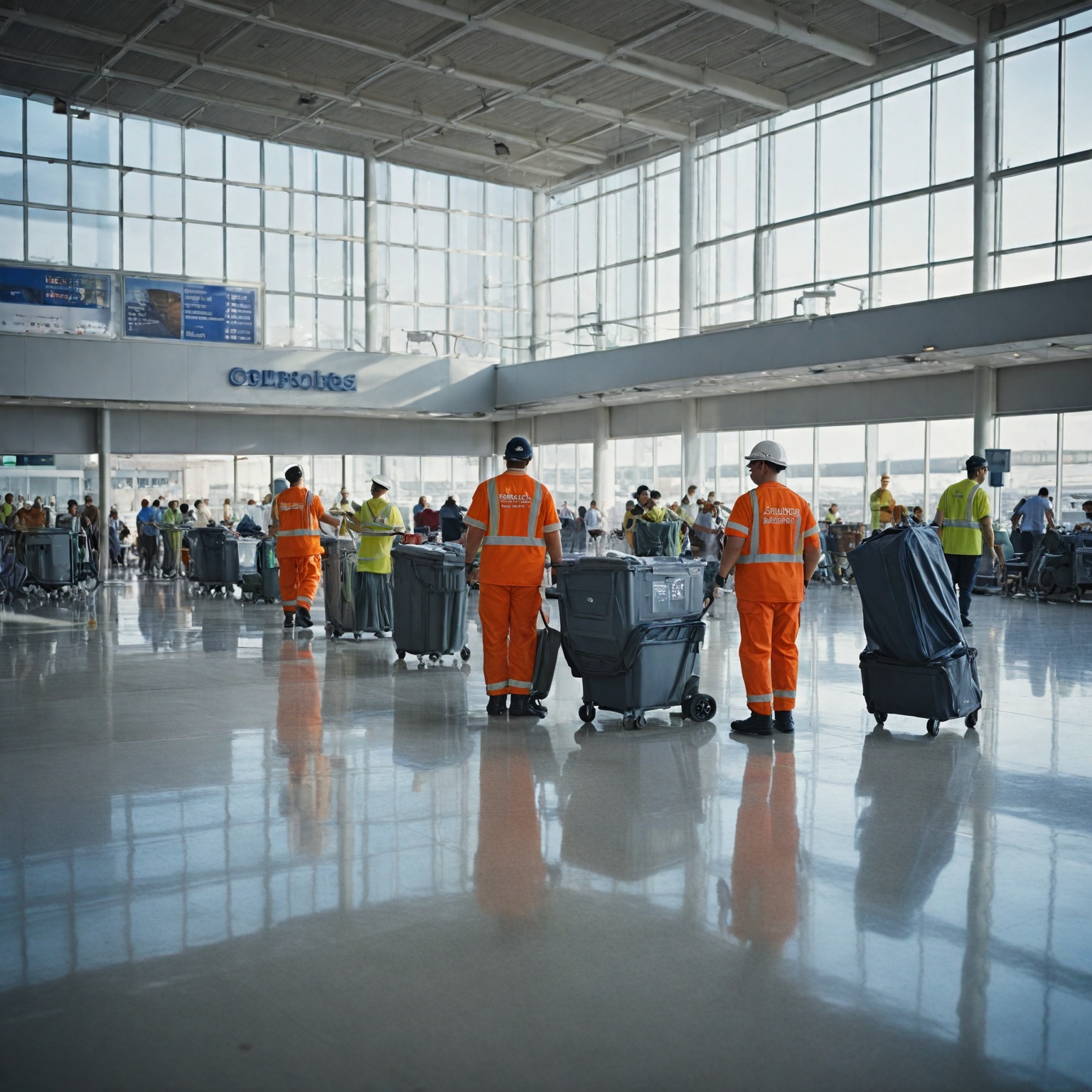
Airport cleaning workers play a vital role within the Facilities Management sector by maintaining high standards of cleanliness and sanitation throughout airport facilities. Their work directly influences passenger experience, safety, and overall operational efficiency at airports. These personnel operate on the frontline of facility maintenance, collaborating with multiple departments to ensure that cleanliness protocols and regulatory requirements are met consistently.
The responsibilities of airport cleaning workers include routine cleaning of terminals, restrooms, waiting areas, and aircraft interiors, often using advanced cleaning technologies such as electrostatic sprayers and UV-C sanitization to create germ-free environments. The role demands physical stamina, keen attention to detail, and the flexibility to work various shifts, including nights and weekends, to accommodate the continuous nature of airport operations.
Success in this position is typically measured by adherence to cleanliness standards, timely completion of tasks, positive feedback from passengers and staff, and compliance with safety and security regulations. Workers must also be trained in the proper use and disposal of cleaning chemicals, including handling hazardous materials safely, supported by access to Material Safety Data Sheets (MSDS) and emergency spill containment procedures.
The job environment presents challenges such as exposure to hazardous substances, temperature extremes, and common workplace hazards like slips and falls, making adherence to Occupational Safety and Health Administration (OSHA) guidelines essential to protect worker health and safety. To sustain physical and emotional well-being, workers are encouraged to take regular breaks, stay hydrated, and maintain good hygiene practices, especially during peak travel periods.
Career growth opportunities exist within airport cleaning roles for those who develop strong communication, organizational, and leadership skills. Pursuing certifications in hazardous material handling or facility management can lead to supervisory or managerial positions, expanding roles into broader facility maintenance or operations management.
Qualifications and Skills
Airport cleaning workers are typically required to have a high school diploma or equivalent, along with physical stamina, attention to detail, and familiarity with basic cleaning procedures. Practical knowledge of industrial cleaning equipment, chemicals, and safety protocols—including OSHA guidelines—is highly beneficial. Key soft skills include reliability, the ability to follow instructions, and strong teamwork capabilities.
Specialized training plays a crucial role in equipping staff to handle the specific needs of different airport areas. For instance, personnel responsible for restroom sanitation receive comprehensive instruction on proper sanitation techniques, handling bloodborne pathogens, and safe use of cleaning chemicals. Additionally, training on safety protocols and the correct use of personal protective equipment (PPE) is mandatory to ensure safe handling of hazardous materials.
Proficiency in the use of advanced cleaning technologies is increasingly important. Familiarity with IoT-enabled cleaning tools, automated systems, and green cleaning practices enhances efficiency and supports higher standards of cleanliness. Certification in industrial cleaning, biohazard cleaning, or specialized sanitation further strengthens an individual’s qualifications and career prospects.
Airport cleaning workers must also comply with strict security procedures. Training aligned with Transportation Security Administration (TSA) and airport regulations is essential, especially for accessing restricted areas such as baggage handling zones and security checkpoints. Coordination with airport management ensures secure access and accountability of both personnel and equipment, maintaining operational safety alongside cleanliness.
Developing skills in team leadership, safety compliance, and specialized cleaning techniques can lead to advancement into supervisory or management roles, supported by opportunities to pursue certifications in hazardous material handling or facility maintenance.
Employment and Career Opportunities
Employment opportunities for airport cleaning workers are available across various facilities, with numerous openings frequently posted by companies seeking reliable staff. The role often involves on-the-job training, which prepares employees to perform their duties effectively and safely while also opening pathways for career progression. Advancement typically comes through demonstrating reliability, acquiring specialized skills, and gaining experience, allowing workers to move into supervisory or management positions.
Career growth in this field is supported by the development of skills such as team leadership, safety compliance, and expertise in specialized cleaning techniques. Additionally, pursuing certifications in hazardous material handling or facility maintenance can enhance prospects for higher responsibility roles. Continuous learning about industry trends and technological innovations further bolsters career advancement in this dynamic sector.
Employment outlook for aircraft cleaners is positive, with projected growth over the next decade driven by increasing demand for maintaining stringent cleanliness standards at airports. Benefits offered by employers often include competitive salaries, flexible scheduling, free uniforms, relocation bonuses, and company-sponsored training and development programs, all of which contribute to attracting and retaining talent.
Technology also plays a crucial role in shaping employment opportunities. Modern airport cleaning programs increasingly incorporate innovative equipment and automated systems, requiring workers to adapt to new technologies and maintain proficiency in advanced cleaning methods. This evolution not only improves operational efficiency but also expands the skill set and career opportunities available to airport cleaning personnel.
Working Conditions and Challenges
Airport cleaning workers face a variety of challenging working conditions that impact their health and safety. One of the primary hazards is exposure to numerous hazardous chemicals, including jet fuel, hydraulic fluids, solvents, deicing fluids, and cleaning agents. These substances can cause respiratory problems, skin irritation, and potentially long-term health complications if proper precautions are not taken. To mitigate these risks, workers are required to use appropriate personal protective equipment (PPE) such as gloves, goggles, face shields, and chemical-resistant clothing, supported by strict adherence to safety protocols and hazard communication standards.
In addition to chemical exposure, airport cleaning personnel frequently encounter physical hazards. Heavy lifting and repetitive tasks contribute to musculoskeletal disorders (MSDs), necessitating ergonomic interventions such as workstation adjustments and training in proper lifting techniques to reduce strain. The presence of machinery with moving parts also poses risks of crushing or entrapment injuries, particularly in baggage handling operations that often overlap with cleaning duties.
Another significant challenge is the exposure to temperature extremes. Airport workers are often required to work outdoors in harsh environmental conditions, ranging from extreme heat near jet engines to severe cold in winter climates. These exposures can lead to heat exhaustion, frostbite, cognitive impairment, or even fatal outcomes if preventive measures are not in place. Employers are encouraged to implement protective strategies, including providing hydration, scheduling regular breaks, and ensuring proper clothing to combat these hazards.
Furthermore, airport cleaning staff are at risk of exposure to biological hazards such as bloodborne pathogens and infectious materials, which are prevalent due to the nature of airport environments involving high passenger turnover and waste handling. Proper hygiene practices, timely access to safety data sheets, and comprehensive training on exposure control plans are critical to minimizing these risks. During peak travel seasons or public health emergencies, heightened attention to sanitation, PPE usage, and workplace cleanliness becomes even more essential.
Lastly, occupational exposure to jet engine emissions is a notable concern, particularly for workers in close proximity to aircraft during fueling, maintenance, and cleaning operations. These emissions contain volatile organic compounds, particulate matter, and metals, with exposure levels varying by job type and proximity to emission sources. Airport personnel can be categorized into exposure groups, with those working outdoors near aircraft facing the highest risks.
Training and Professional Development
Training and professional development play a crucial role in the career growth of airport cleaning personnel. New employees often receive on-the-job training tailored to the specific needs of their assigned areas, ensuring they acquire the necessary skills to perform their duties effectively. This specialized training fosters a sense of ownership and confidence among staff, empowering them to act as airport ambassadors who can assist passengers and address various operational needs.
Career advancement opportunities are available for those who demonstrate reliability and leadership, allowing progression into supervisory or management roles. Developing competencies in team leadership, safety compliance, and specialized cleaning techniques enhances prospects for higher responsibility positions. Additionally, obtaining certifications related to hazardous material handling and facility maintenance can further support career growth within airport cleaning services.
Safety training forms a core component of professional development, emphasizing the correct use and maintenance of personal protective equipment (PPE), adherence to safety protocols, and injury prevention strategies. Employees learn proper procedures for donning, doffing, and caring for PPE, along with understanding its limitations and disposal methods. Training also covers the prevention of musculoskeletal disorders through ergonomic practices, de-escalation of workplace violence, and hazardous material management to ensure a safe working environment.
The incorporation of advanced cleaning technologies, such as autonomous floor scrubbers, electrostatic sprayers, and UV-C sanitization, necessitates ongoing training for staff to effectively utilize these tools. Partnerships with industry leaders enable airports to provide access to innovative technology solutions that improve cleaning efficiency and passenger satisfaction. Staff are trained to operate these machines and apply hospital-grade disinfectants, ensuring high standards of cleanliness in large and complex airport areas.
Furthermore, comprehensive hazard communication training is provided to ensure workers understand chemical labeling requirements, have access to Safety Data Sheets, and are familiar with hazard communication programs. This training helps minimize exposure to harmful substances and maintains compliance with occupational health and safety regulations.
Impact of Technology on Airport Cleaning
Technological advancements have significantly transformed airport cleaning operations, improving efficiency, effectiveness, and safety. The integration of automated and autonomous cleaning machines, such as robotic scrubbers and electrostatic sprayers, has enabled the thorough sanitization of large and complex airport areas including terminals, baggage claim zones, and concourses. These machines often feature advanced systems like water-delivery mechanisms, adjustable motorized brushes, vacuum collection, and flexible squeegees to optimize cleaning performance while minimizing slip hazards.
Moreover, emerging technologies like UV-C light sanitization and electrostatic spraying are increasingly utilized to ensure rapid and germ-free environments. These methods target high-touch surfaces such as check-in kiosks, seating areas, handrails, and elevator buttons, critical points of contact for travelers. The use of hospital-grade disinfectants combined with such technology further enhances disinfection standards within airport facilities.
Autonomous cleaning equipment also benefits from sophisticated sensors and algorithms that allow navigation and obstacle avoidance in crowded airport settings, with emergency stop features to prevent accidents. Airports like Narita and Changi have embraced these innovations, employing autonomous scrubbers during off-peak hours and integrating AI-assisted waste sorting and centralized vacuum waste collection systems to minimize manual handling and contamination risks.
These technological improvements not only increase cleaning efficiency but also contribute to compliance with stringent regulations aimed at maintaining airport cleanliness and preventing the spread of infectious diseases. Additionally, automation reduces operational costs and alleviates some of the physical burdens on cleaning staff, improving workplace safety and hygiene standards.
However, the adoption of advanced cleaning technologies requires comprehensive staff training to ensure proper use, disposal of cleaning materials, and adherence to safety protocols when handling hazardous substances. Overall, the impact of technology on airport cleaning is driving market growth and setting new benchmarks for cleanliness, health, and operational excellence in airport environments.
Labor Conditions and Workplace Issues
Airport cleaning workers and other service personnel face a variety of challenging labor conditions and workplace issues that impact their health, safety, and economic well-being. These challenges stem from exposure to extreme temperatures, hazardous emissions, low wages, and limited labor protections.
Occupational Hazards and Health Risks
Workers in airport environments are frequently exposed to temperature extremes that can cause heat exhaustion, frostbite, and other weather-related health conditions. Certain work areas, such as those near jet engines, present additional risks due to extremely high temperatures. Furthermore, airport personnel experience significant exposure to aircraft emissions, which fluctuate depending on factors like proximity to emission sources and job type. Outdoor ground-affiliated roles, including baggage handlers and aircraft mechanics, face the highest levels of exposure compared to indoor office or landside positions.
To mitigate these risks, the Occupational Safety and Health Administration (OSHA) enforces safety standards tailored to airline and airport workers. OSHA emphasizes the importance of hygiene practices, proper hydration, and regular breaks, especially during peak travel periods. Updates to workers’ compensation laws and safety regulations anticipated in 2025 aim to strengthen protections for aviation workers, encouraging a safer and healthier work environment.
Wage Disparities and Economic Challenges
Despite the essential nature of their work, many airport service workers—including cleaners, wheelchair attendants, baggage handlers, and ticketing agents—earn median wages below those typical for private-sector employees. A 2018 to 2022 analysis of U.S. Census Bureau data revealed that wages in these occupations are frequently low, with a substantial share of workers earning less than the federal contractor minimum wage. For example, ticketing agents have a median hourly wage of $17.44, yet over one-third earn less than the minimum federal wage required for contractors.
Several cities and states have enacted policies aimed at raising wages and benefits for airport workers. New York’s Local 32BJ union has successfully advocated for one of the highest targeted minimum wages in the country—reaching $19 per hour by 2023—for a range of airport service roles including cabin cleaners and janitors. Similarly, after a protracted campaign, cleaning staff at Atlanta’s Hartsfield-Jackson Airport secured a collective bargaining agreement that increased starting wages by 41 percent, raising hourly pay to $15 and improving leave benefits.
Unionization and Legislative Efforts
Union organizing has played a crucial role in improving labor conditions for airport workers. The Service Employees International Union (SEIU), among others, has committed significant resources to unionizing contract workers in airports across the East Coast and beyond. These efforts aim to ensure stable employment, better wages, and enhanced labor standards in a sector historically marked by low pay and job insecurity.
Legislative initiatives such as the Good Jobs for Good Airports Act, introduced in 2022 by Senator Edward Markey and Representative Jesús “Chuy” García, seek to establish consistent pay, benefits, and labor protections for airport service workers nationwide. This legislation includes provisions for minimum and prevailing wages to combat the ongoing “race to the bottom” in compensation and working conditions.
Collectively, these developments indicate a growing recognition of the vital role airport cleaning and service workers play in the aviation industry, and the need for continued advocacy and policy reform to address longstanding workplace inequities and hazards.
Union Representation and Collective Bargaining
Labor unions play a significant role in shaping the working conditions and wages of airport cleaning workers
Outcomes of Improved Labor Conditions
Improved labor conditions for airport cleaning workers have led to a range of positive outcomes that enhance both employee well-being and operational efficiency. One significant development has been the implementation of some of the highest targeted minimum wages in the country, reaching up to $19 in 2023 through phased increases. These wages cover a broad spectrum of airport service workers, including cabin cleaners, wheelchair attendants, janitors, and restaurant employees, contributing to better financial security for these essential roles.
Legislative efforts have also played a crucial role in advancing labor standards. The Good Jobs for Good Airports Act, introduced in 2022 by Senator Edward Markey and Representative Chuy García, seeks to establish comprehensive pay, benefits, and labor standards for airport service workers such as cleaners, baggage handlers, and security personnel. This federal initiative underscores the growing recognition of the importance of fair labor practices in airport operations.
Enhanced labor conditions have also fostered workforce stability and improved service quality. By promoting retention of qualified staff and emphasizing total service hours rather than arbitrary staffing caps, airports and service providers have managed to maintain or even increase cleaning standards without unnecessary reductions in personnel. Additionally, companies have invested in competitive salaries, benefits, and opportunities for career advancement, which help attract and retain skilled workers.
The emphasis on continuous training and professional development has contributed to better career growth prospects for airport cleaning personnel. Training programs focus on advanced cleaning techniques, safety protocols, and the use of innovative technologies, which not only improve job performance but also align with sustainability goals such as eco-friendly cleaning practices. Investments in leadership development and employee engagement have created a motivated workforce that delivers higher quality cleaning and maintenance services, thereby enhancing passenger experience and satisfaction.
Furthermore, improved labor conditions are part of broader organizational transformations within airports. Robust strategic planning that prioritizes new staffing models, processes, and systems enables airports to adapt effectively to changing macroeconomic conditions and evolving industry demands. Collectively, these improvements in labor conditions contribute to a more resilient and efficient airport cleaning workforce, supporting both employee welfare and operational excellence.
Global and Regional Perspectives
The airport cleaning machine market displays notable regional variations, with North America and Europe currently commanding significant market shares. However, emerging economies within the Asia-Pacific region are anticipated to experience substantial growth in the coming years, driven by increasing airport infrastructure development and rising passenger traffic. This trend is further reflected in the dominance of East Asian hubs in global cleanliness rankings, as evidenced by the Skytrax 2025 World’s Cleanest Airports list, where airports from this region consistently outperform others.
Market segmentation includes diverse machine types such as sweepers, scrubbers, and specialized units tailored for cleaning airport runways and aircraft interiors. The global market remains moderately concentrated, with key players like Nilfisk, Smets Technology, and Multihog Limited holding significant shares alongside numerous smaller specialized companies.
In terms of labor dynamics, comparing union density and representation across different countries reveals important distinctions. For example, variations in union coverage—the proportion of workers under union contracts—affect the nature of labor organization and protections in different regions. Such distinctions are crucial when analyzing workforce conditions and collective bargaining in airport cleaning sectors globally.
Regulatory environments also differ regionally, influencing worker safety and hazard management. In the United States, OSHA’s Hazard Communication standards provide a regulatory framework for handling hazardous substances, though certain materials like fuel and compressed oxygen are excluded from FAA hazardous materials handling requirements. Furthermore, states may adopt OSHA standards or implement their own, sometimes more stringent, regulations to ensure worker protection, including training and emergency response protocols. These regulatory frameworks emphasize the importance of hazard prevention, safety training, and compliance with both federal and state-level occupational health and safety policies. Such policies shape workplace conditions for airport cleaning workers and underscore the need for region-specific approaches to occupational safety and health.
The content is provided by Blake Sterling, Gear Shift Zone