Highlights
- Technological advancements in aviation training offer personalized learning experiences while reducing costs.
- Sustainability is now central to training, ensuring pilots adopt eco-friendly operational practices.
Summary
Aviation training in 2025 is undergoing a transformative evolution driven by rapid technological advancements, shifting regulatory frameworks, and an increasing emphasis on sustainability. The integration of augmented reality (AR), virtual reality (VR), and artificial intelligence (AI) into training programs has revolutionized traditional methods, enabling immersive, adaptive, and personalized learning experiences that enhance pilot proficiency while reducing costs and risk. Cloud-based platforms and digital tools facilitate remote training and continuous skill development, broadening access and standardizing procedures across geographically dispersed learners.
Regulatory bodies such as the Federal Aviation Administration (FAA), the European Union Aviation Safety Agency (EASA), and the International Civil Aviation Organization (ICAO) are actively updating certification requirements and simulator standards to align with these innovations. New regulations emphasize competency-based training, safety management, and harmonization of simulator qualifications worldwide, while addressing cybersecurity and data privacy concerns arising from increased digitalization. These regulatory changes seek to balance encouraging technological adoption with maintaining rigorous safety and quality standards.
Sustainability has become a core focus within aviation training curricula, reflecting the industry’s commitment to reducing carbon emissions and fostering environmentally responsible operational practices. Training providers are embedding green procedures and energy-efficient methods to prepare pilots for a future where ecological considerations are integral to aviation operations. Meanwhile, flight instructors face challenges adapting to advanced technologies and evolving instructional roles, requiring new competencies to effectively leverage immersive tools and data-driven insights while preserving the critical human element in pilot development.
Despite these advances, the transition to technology-enabled training raises challenges related to regulatory compliance, cybersecurity, and administrative workload. However, industry case studies—including Boeing’s Virtual Airplane Procedures Trainer (VAPT) and AI-driven simulators like CAE Rise and Acron Astra—demonstrate significant improvements in training efficiency, safety, and scalability, addressing pilot shortages and operational demands globally. As the aviation training landscape continues to evolve, ongoing collaboration among stakeholders will be essential to navigate this complex environment and ensure the development of competent, safety-conscious aviation professionals.
Overview of Aviation Training in 2025
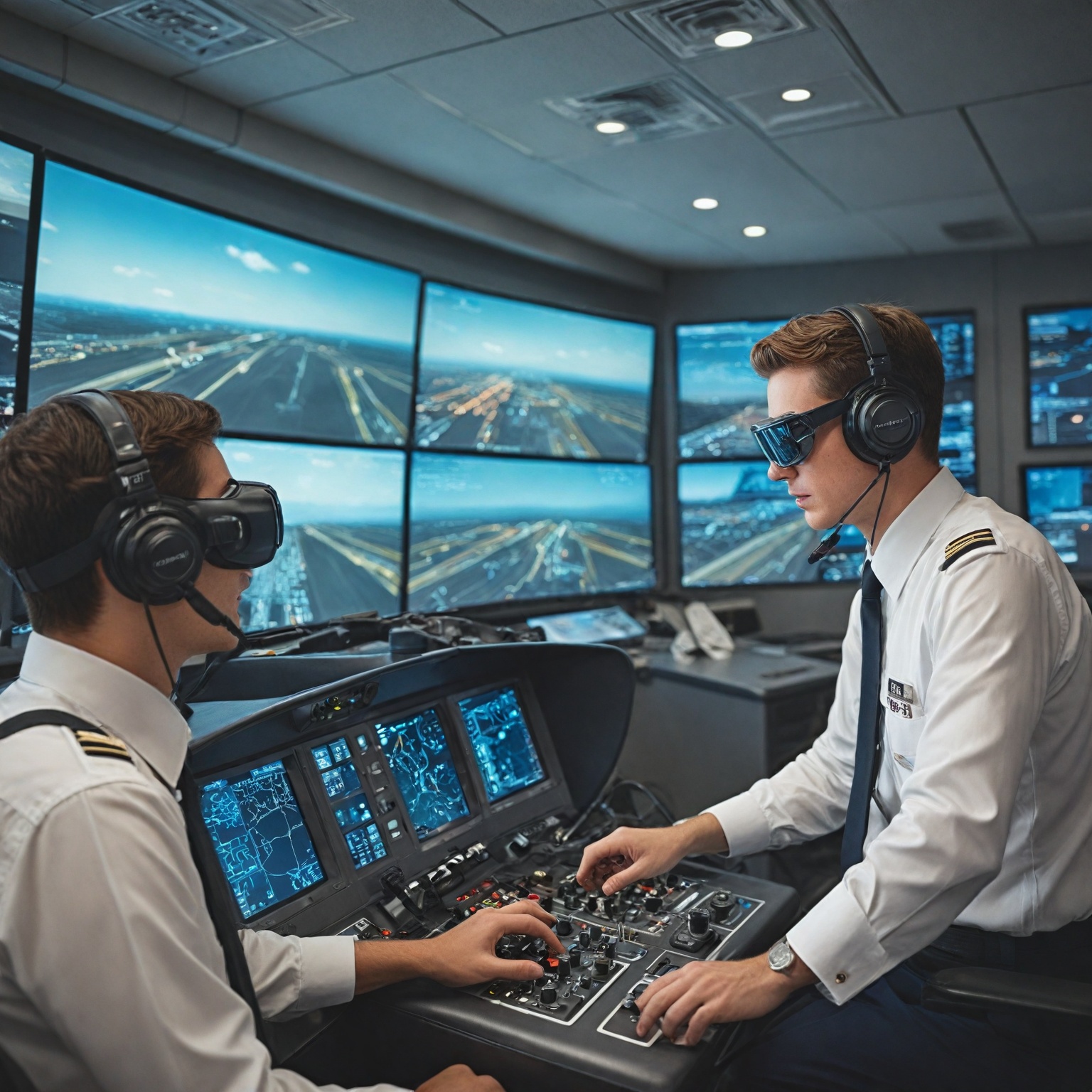
Aviation training in 2025 is characterized by significant advancements driven by innovation, sustainability, and regulatory updates. The integration of cutting-edge technologies such as augmented reality (AR), virtual reality (VR), and artificial intelligence (AI) has transformed traditional training methods into immersive, personalized experiences. Modern simulators now offer 360-degree environments that replicate complex flying conditions with enhanced realism, allowing trainees to develop critical skills like cockpit coordination and decision-making in a risk-free setting.
The widespread adoption of digital transformation tools has enabled remote and flexible learning. Cloud-based platforms facilitate continuous skill development outside the classroom, while devices like laptops and tablets support high-fidelity simulation applications such as Boeing’s Virtual Airplane Procedures Trainer (VAPT), which provides realistic procedural training on widely accessible hardware. These technologies reduce training costs and improve readiness by standardizing learning and shortening familiarization time with physical simulators.
Sustainability has become a core component of aviation training programs. With the aviation sector under pressure to lower carbon emissions, flight schools are embedding environmentally responsible practices into curricula, such as green operational procedures and energy-efficient training methods, preparing pilots to meet future ecological standards.
Regulatory bodies are actively updating certification requirements, simulator standards, and operational procedures to keep pace with technological and industry developments. The Federal Aviation Administration (FAA), European Union Aviation Safety Agency (EASA), and other global authorities are introducing new rules that emphasize safety, competency-based assessment, and the harmonization of simulator qualification processes. These regulatory changes encourage innovation while ensuring consistent training quality and adherence to safety standards worldwide.
Additionally, advancements in data analytics and biometric technologies are enhancing training evaluation and security. Performance metrics, video playback, and progress tracking provide detailed insights into pilot proficiency, while concerns around cybersecurity and privacy are prompting careful implementation of digital training solutions.
Adaptation of Training Curricula and Instructional Methods
The evolving demands of the aviation industry in 2025 have driven significant adaptations in training curricula and instructional methods, emphasizing the integration of advanced technologies and innovative pedagogical approaches. A key trend is the increasing incorporation of augmented reality (AR) and virtual reality (VR) technologies into training programs. These immersive tools provide enriched learning experiences by engaging multiple senses, delivering real-time feedback, and enhancing knowledge retention, particularly in safety-critical environments such as aviation maintenance and flight operations.
Training curricula are shifting from traditional classroom lectures toward more experiential, simulation-based learning. This shift aligns with qualitative insights highlighting three primary themes: the use of innovative technologies and simulation in pilot training; realistic and practical training enhancements; and collaborative, experiential learning methods. Recommendations stemming from these themes include adopting video recording combined with flight data monitoring during solo flights, leveraging home simulators, and utilizing customized digital programs alongside AR/VR to foster personalized and immersive learning experiences.
Moreover, instructional methods are being redefined by the rise of intelligent training ecosystems. For example, digital twin technology and cloud-edge architectures enable adaptive, closed-loop training pathways that accelerate competence development and support continuous regulatory compliance. Such systems empower instructors to transition from traditional content delivery roles to adaptive learning strategists by providing real-time actionable insights through intelligent dashboards, thereby personalizing instruction to meet individual learner needs.
Regulatory frameworks are also influencing curricular adaptation. Updates such as the EASA FSTD 2025 initiative promote a capability-based approach to simulator qualification, encouraging training providers to familiarize themselves with emerging technologies like mixed reality and data analytics to meet modern training standards. This regulatory evolution necessitates that training institutions revise their curricula and instructional methodologies to align with new compliance requirements and technological capabilities.
In response to broader industry trends, training programs are also incorporating sustainability education and environmental responsibility into their curricula, reflecting the aviation sector’s commitment to reducing carbon emissions. Additionally, the diversification of pilot recruitment, driven by the growth of low-cost carriers and regional routes, requires training providers to customize curricula to meet varied airline operational demands and pilot competencies.
Flight Instructors’ Role and Challenges
Flight instructors play a pivotal role in navigating the evolving landscape of aviation training in 2025, acting as both educators and adaptors to rapidly changing technologies and regulatory demands. Their responsibilities extend beyond traditional content delivery to becoming adaptive learning strategists who leverage real-time data and immersive tools to personalize training and improve pilot readiness. With the integration of innovative technologies such as virtual reality (VR), augmented reality (AR), and high-fidelity 3D simulations, instructors are required to develop new competencies to effectively incorporate these tools into their teaching methodologies.
One of the major challenges faced by flight instructors is the need to keep pace with continual updates to training curricula and regulatory standards. The aviation sector’s rapid evolution necessitates ongoing collaboration with regulatory bodies to ensure training programs remain compliant and effective. Additionally, instructors must manage the increasing administrative burden associated with new performance-based qualification processes and the adoption of modular, mixed-reality simulators, which require extra documentation and testing during transition phases.
Another significant challenge arises from the decentralized and digital nature of modern flight training. Instructors now utilize cloud-based platforms and authoring tools to create and distribute validated training content across geographically dispersed student populations, including pilots in remote locations. This shift demands proficiency in digital tools and the ability to interpret learning analytics to provide timely interventions and personalized feedback. Moreover, as instructors move towards data-driven training orchestration, they must overcome organizational silos and streamline access to critical training data to enhance safety and continuous improvement efforts.
The transformation of the instructor role also entails fostering collaborative and experiential learning environments that blend technology with hands-on practice. Instructors are expected to guide trainees through immersive simulations and ensure the effective integration of home simulators and personalized digital programs into the learning process. Despite these opportunities, the balance between leveraging advanced technology and maintaining the human element of mentorship remains a complex challenge.
Advances in AI and Data Analytics in Training
Artificial intelligence (AI) and data analytics have become central to the modernization of aviation training, profoundly transforming how pilots and other aviation professionals acquire and hone their skills. AI-driven simulators utilize real-time assessments and adaptive learning techniques to personalize instruction and accelerate competence development, leading to more effective training outcomes. These technologies enable a shift from traditional, fixed training modules to dynamic, evidence-based training pathways that continuously adapt to the trainee’s performance and evolving regulatory requirements.
AI-powered flight simulators incorporate real-time adaptive Competency-Based Training and Assessment (CBTA), biometric feedback, and evidence-based training (EBT) scenarios derived from millions of flights. Systems such as CAE Rise and Acron Astra leverage these capabilities to reduce the need for over 100 flight hours traditionally required, predict potential risks, and overcome cost and regulatory barriers, thus enhancing aviation safety. This approach supports faster development of elite pilots by simulating realistic scenarios and providing instant feedback loops, which accelerate the learning process and ensure continuous skill improvement.
Moreover, training programs are evolving to integrate AI literacy alongside conventional flight skills. Pilots are now required to develop familiarity with digital interfaces, predictive analytics, and AI-driven communication systems to navigate increasingly complex operational environments effectively. The use of big data analytics further strengthens these programs by enabling the continuous adaptation of training modules through the analysis of data collected from simulators, lessons, and real-world flights. For instance, Egnatia Aviation applies advanced analytics to personalize training and improve outcomes, demonstrating the critical role of data in modern aviation education.
Immersive technologies such as Augmented Reality (AR) and Virtual Reality (VR) complement AI and data analytics by providing highly realistic, 360-degree environments for training without the associated risks and costs of actual flight hours. These tools are particularly effective in simulating high-pressure scenarios, helping trainees develop decision-making skills and perform under stress. Studies indicate that VR can significantly enhance knowledge retention and recall compared to traditional methods by engaging multiple senses and offering immersive experiences.
Despite these advances, challenges remain regarding regulatory compliance, cybersecurity, and the administrative workload associated with adopting new technologies. Digital training systems collect sensitive biometric and performance data, raising important cybersecurity and privacy concerns that must be addressed to safeguard trainee information. Additionally, regulators and Approved Training Organizations (ATOs) face a learning curve in interpreting AI-driven capability signatures and managing the transition to new standards, such as the upcoming CS-FSTD standard expected in 2025. While initial administrative and budgetary burdens may increase, the long-term benefits of standardization, modular innovation, and adaptability are projected to outweigh early complications.
Regulatory Oversight, Compliance Verification, and Certification
Regulatory oversight and compliance verification in aviation training continue to evolve in 2025, driven by updates from major authorities such as the Federal Aviation Administration (FAA), the European Union Aviation Safety Agency (EASA), and the International Civil Aviation Organization (ICAO). These bodies maintain rigorous frameworks that include Airworthiness Directives, Acceptable Means of Compliance (AMC), Guidance Material, and Certification Memoranda to ensure aviation safety and operational standards.
EASA’s regulatory process exemplifies this evolution with the introduction of Commission Delegated Regulation (EU) No 2025/1044, which establishes detailed rules and procedures for the acceptance of air traffic controller licenses and certificates issued by third countries. This reflects a broader trend toward harmonization and mutual recognition of qualifications within the global aviation community, facilitating international cooperation and consistency.
The FAA has also been proactive in updating its regulations to enhance safety and efficiency. Notably, Revision C to FAA Order 8100.15 incorporates new policy responding to the Aircraft Certification, Safety, and Accountability Act of 2020. This revision reorganizes content, introduces the Airmen Certification Organizational Designation Authorization (AC ODA) type, and adopts a systems-based approach to oversight. Additionally, FAA regulations in 2025 include changes to pilot training certification requirements, simulator standards, and operational procedures that underscore the agency’s commitment to adapting regulatory frameworks to emerging aviation technologies and operational realities.
Safety Management Systems (SMS) integration remains a key focus within regulatory compliance. The FAA encourages certificate holders to incorporate SMS into their repair station processes and daily operations, supported by updated guidance and participation in the FAA SMS Voluntary Program (SMSVP). These systems-based approaches promote continuous safety improvement and risk management across aviation operations.
The impact of the COVID-19 pandemic has further influenced regulatory flexibility, with extensions and revisions to deadlines and validity periods for training, certifications, licenses, and medical examinations issued by agencies like EASA, FAA, and ICAO. This adaptability has been critical to maintaining compliance and operational readiness amidst unprecedented challenges.
In the domain of flight simulation training devices (FSTDs), EASA’s 2025 updates mark a significant regulatory shift by consolidating the previously separate Certification Specifications for airplanes and helicopters into a unified CS-FSTD standard. This integration simplifies qualification and oversight processes, allowing for more flexible and realistic training programs that align simulator capabilities directly with specific training objectives under the “task-to-tool” principle. This regulatory advancement reflects the increasing emphasis on performance-based qualification and operational realism in aviation training.
Looking ahead, data security and digital training innovations are emerging as critical regulatory considerations. Digital training systems gather sensitive data, including biometric information and performance metrics, raising cybersecurity and privacy concerns that regulators and operators must address to ensure compliance and protect trainee information.
Case Studies and Industry Examples
One prominent example in the evolving aviation training landscape is Boeing’s introduction of the Virtual Airplane Procedures Trainer (VAPT). Unveiled at the European Aviation Training Summit (EATS) 2025, VAPT is a cloud-powered training platform that leverages Microsoft Azure and Microsoft Flight Simulator technologies to provide high-fidelity flight-deck procedure practice on laptops and tablets. This tool is designed to enhance pilot learning and readiness by delivering immersive, accessible, and customizable training experiences, positioning itself as a potential game-changer in pre-simulator crew preparation. Boeing presents VAPT as the first application within a broader “Virtual Airplane” product suite aimed at transforming how airlines train their pilots.
Another significant advancement in pilot training is the adoption of AI-driven flight simulators. These systems offer realistic, adaptive training scenarios that prepare students to handle various flight challenges safely and effectively. AI-powered simulators incorporate features such as real-time adaptive Competency-Based Training and Assessment (CBTA), biometric feedback, and evidence-based training (EBT) scenarios derived from millions of flight hours. Platforms like CAE Rise and Acron Astra exemplify this trend by reducing the need for extensive flight hours, predicting potential risks, and overcoming cost and regulatory barriers. These technologies are rapidly redefining aviation safety and training efficiency in 2025 and beyond.
Flight schools and training organizations are increasingly embracing cloud-based simulation systems that allow real-time access to training data from anywhere in the world. This shift facilitates accommodation of the growing pilot training demand, particularly in regions experiencing rapid aviation growth such as Asia and the Middle East. These technological advances help bridge training gaps and provide scalable solutions to the global pilot shortage.
From a regulatory standpoint, organizations like the Federal Aviation Administration (FAA) are actively collaborating with flight training entities to modernize pilot school regulations, such as Part 141. Public engagement efforts, including virtual meetings and comment periods, are underway to support safety, efficiency, and innovation in training practices. Additionally, industry associations such as the National Business Aviation Association (NBAA) are involved in shaping the operational frameworks for emerging aviation technologies, like advanced air mobility vehicles, signaling proactive stakeholder involvement in regulatory evolution.
Finally, successful pilot training initiatives emphasize the importance of proving business cases through pilots that demonstrate tangible benefits, such as cost avoidance in equipment failures. Equally critical is the focus on people — ensuring that comprehensive training programs are implemented so that personnel effectively use new technologies and derive maximum value from them.
Future Outlook
The future of aviation training in 2025 is shaped by a convergence of technological innovation, regulatory evolution, and an urgent need to address workforce shortages. The industry faces significant challenges in maintaining a steady pipeline of qualified pilots, driven by factors such as high training costs, stringent regulatory requirements, and long qualification timelines, all amidst a resurgence in air travel demand. To meet these challenges, organizations must adopt dynamic training programs that evolve in close collaboration with regulators and incorporate ongoing curriculum updates
The content is provided by Sierra Knightley, Gear Shift Zone