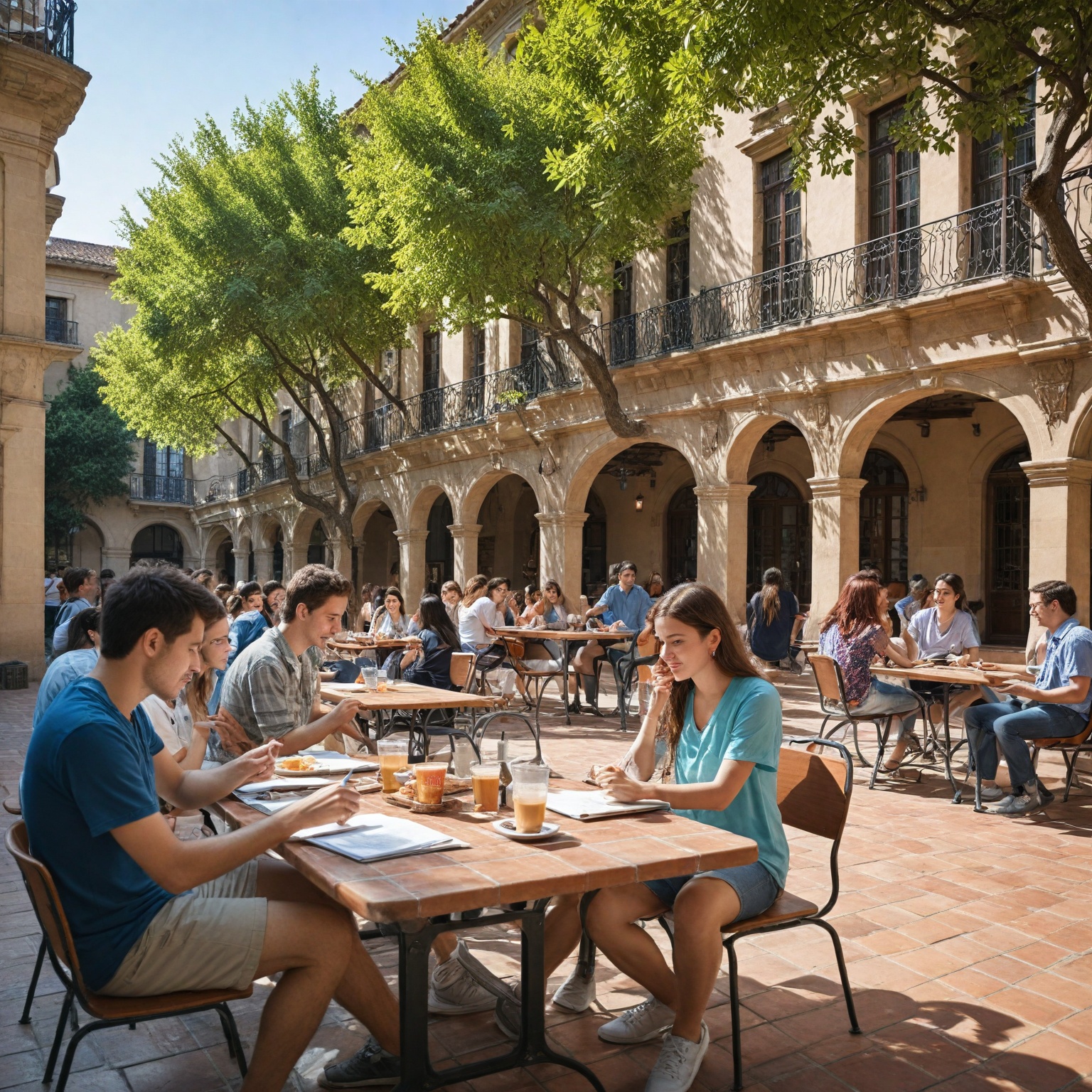
Highlights
- Discover affordable living and quality education while studying in vibrant Spain for 2025.
- Navigate the challenges of student life with insights into support services and cultural integration.
Summary
Exploring Student Life in Spain: A Guide for 2025 provides an overview of studying in Spain, highlighting its cultural richness, quality education, and affordable living costs. The guide covers university admissions, academic calendars, accommodation, expenses, language, and student support, aiding prospective students. Spain offers over 400 master’s programs in English, attracting diverse international students. Both public and private universities vary in tuition and services. Visa requirements for non-EU/EEA students are explained. Student life is enriched by festivals and regional languages, though challenges like language barriers and social integration exist. Universities offer support services, yet disparities remain. The guide also discusses debates in higher education, helping students navigate academic and cultural experiences in Spain.
Student Life and Education System
Spain is a favored destination for international students due to its culture, education quality, and lifestyle. Non-EU/EEA students need a national student visa for stays over 90 days. The academic year runs from September to July, with two semesters and varying exam schedules. Public universities like Complutense rank globally, and private institutions offer more extracurriculars but higher fees. Career services and alumni networks aid professional growth.
Spain has 55 universities in the 2025 Times Higher Education rankings. Most instruction is in Spanish, though many offer English courses, especially for international students. Admission often requires passing the Selectividad exam. From June 2025, entrance exams will follow standardized grading combining high school and exam scores. Public and private universities coexist amid political debate, with private institutions now enrolling more master’s students.
Accommodation and Cost of Living
Accommodation options include university dorms (Colegios Mayores), host families, shared apartments, and studios, with costs varying by city and type. In major cities, shared rooms cost €300–600/month, full apartments €700–1,200. Additional expenses include transport, food, and utilities. Student discounts apply to public transport. Online platforms assist housing searches, and early planning is advised.
Monthly living costs range from €800 to €1,200, covering housing, food, transport, insurance, and leisure. Public transport is widely used with passes costing €20–55 monthly. Food expenses average €200–300 monthly, with affordable dining options. EU students use EHIC for healthcare; non-EU students need private insurance (€50–150/month). Academic materials and miscellaneous costs add to the budget. Students should plan for €900–1,200 monthly depending on lifestyle.
Student Support and Financial Aid
Universities offer academic advising, career counseling, health and psychological services, visa assistance, and orientation. Some struggle to meet international students’ needs fully, but integration programs and language support are common. Career services provide networking through alumni and industry links, promoting social engagement.
Scholarships are available for domestic and international students, with some targeting master’s programs taught in English, particularly in Business and STEM fields. Financial aid varies, so early research and application are crucial. Universities often assist students in scholarship applications and financial planning.
Student Visa and Legal Requirements
International students must secure a student visa before arriving, allowing study, travel within Schengen for 90 days per 180, and part-time work up to 30 hours weekly. Visa applications must be made from the home country; after May 20, 2025, they cannot be filed within Spain. Required documents include proof of enrollment, financial means, and health insurance. Family members can join under conditions but without work rights. Non-EU students face stricter employment rules than EU students. The visa enables legal residence and study in Spain.
Language and Cultural Environment
Spain is multilingual, with Castilian Spanish spoken by 74% and regional languages like Catalan, Basque, and Galician holding official status in their regions. These languages are integral to regional identities and cultural heritage. International students often face language challenges, potentially causing social isolation. Universities offer language courses to aid integration, though social mixing with locals can be limited. Regional languages have seen revival efforts and institutional recognition, reflecting Spain’s diverse cultural fabric.
Popular Student Cities and Lifestyle
Top student cities include Madrid, Barcelona, Seville, Granada, Valencia, and Alicante, each offering quality universities and vibrant cultural scenes. These cities host major festivals like Semana Santa and Las Fallas, providing rich cultural experiences. Daily life involves affordable food, transport, and opportunities to engage with local customs. Bilingual regions emphasize language heritage as part of student life.
Challenges and Tips for International Students
Common challenges include language barriers, cultural differences, homesickness, and social isolation. Discrimination and difficulty integrating with local students are also issues. Universities offer language and cultural programs to help, but international students often cluster by ethnicity. Students are encouraged to practice Spanish, participate in cultural events, maintain home support, and seek help to ease adjustment and enrich their experience studying in Spain.
The content is provided by Harper Eastwood, Gear Shift Zone