Highlights
- Smart mobility solutions promise enhanced efficiency, sustainability, and connectivity by 2025.
- Integrating technology and policy is crucial for building equitable transportation ecosystems for all.
Summary and Overview of Smart Mobility
Smart mobility in 2025 integrates electrification, autonomous driving, AI, and vehicle-to-everything (V2X) communication to create efficient, sustainable, and connected transportation systems. Autonomous vehicles (AVs) use advanced AI to navigate complex environments, while electric vehicles (EVs) and improved batteries support decarbonization. Mobility-as-a-Service (MaaS) platforms unify various transport modes into seamless, app-based services promoting shared mobility. Despite technological progress, challenges in regulation, infrastructure, safety, and equity remain. The future of smart mobility depends on balancing innovation with affordability and inclusivity to benefit all urban and regional populations.
Key Innovations in Smart Mobility
By 2025, smart mobility features integrated electric and autonomous vehicles, connected through 5G and V2X communication to improve traffic flow, safety, and emissions. AI processes large sensor data volumes for real-time decision-making in AVs, which are moving from pilot programs to commercial use. Electrification advances include complex, digitally integrated charging networks and emerging clean fuels like hydrogen, supporting net-zero goals. MaaS platforms combine multiple transport modes into unified apps that facilitate travel planning and payment while providing cities with data to manage congestion and emissions. The autonomous vehicle market is rapidly growing, driven by companies such as Waymo and Tesla, alongside evolving safety-focused regulations.
Impact on Urban Transportation
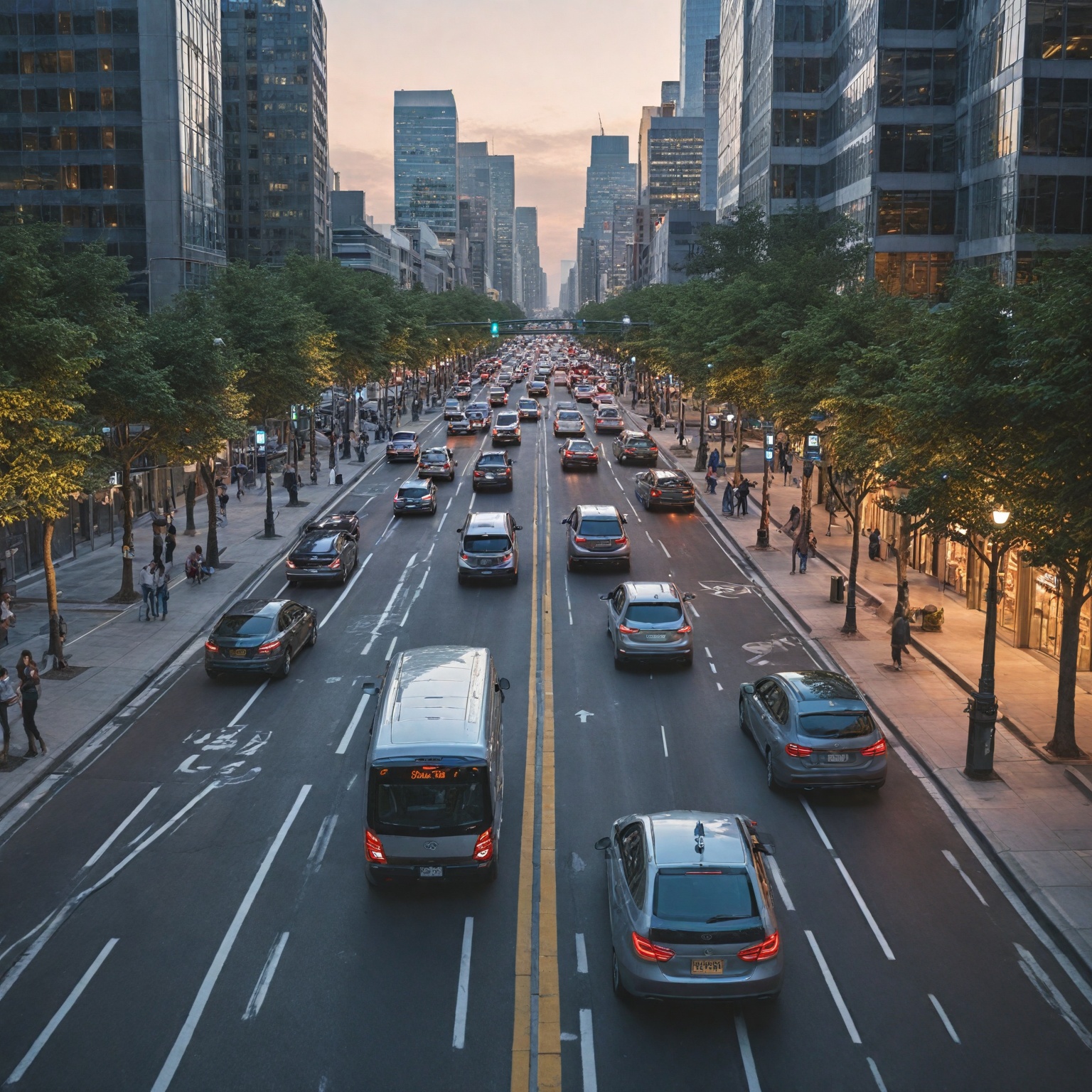
Smart mobility transforms urban transport by reducing emissions and congestion through widespread EV and AV adoption and advanced traffic management systems. Projections suggest emissions could fall by up to 40% by 2030 and over 95% by 2050. AI-driven systems enable safe coexistence of autonomous and human-driven vehicles, improving safety and accessibility. These solutions expand affordable transport options, support inclusive mobility, and encourage public-private partnerships to accelerate innovation and infrastructure development, moving toward integrated, sustainable urban ecosystems.
Challenges and Limitations
Smart mobility faces hurdles including the need for environmentally impactful technology across all transport modes and the slow, cautious deployment of AVs requiring human oversight and emergency infrastructure. Regulatory complexities and infrastructure gaps, especially in developing regions, slow adoption. EV adoption depends on technological advances, fuel prices, and charging availability, with full effects expected post-2030. Ensuring affordability, equity, and widespread public acceptance remains critical, as demonstrated by early adopters like Los Angeles and Singapore, whose successes require replication amid diverse global challenges.
Future Trends and Prospects
Future smart mobility emphasizes expanded EV adoption supported by advanced batteries and charging infrastructure. Autonomous vehicles will feature enhanced AI for safer, more efficient navigation, integrated with V2X communication and smart city digital platforms to optimize traffic and energy use. Sustainability drives investments in green technologies and system-wide emissions reductions. These advancements aim to transition from isolated pilots to comprehensive urban solutions that improve quality of life, governance, and environmental resilience globally.