Highlights
- Optimizing pick and pack operations is essential for reducing costs and enhancing customer satisfaction.
- Advanced technologies significantly improve efficiency and accuracy in warehouse order fulfillment processes.
Summary and Overview of the Pick and Pack Process
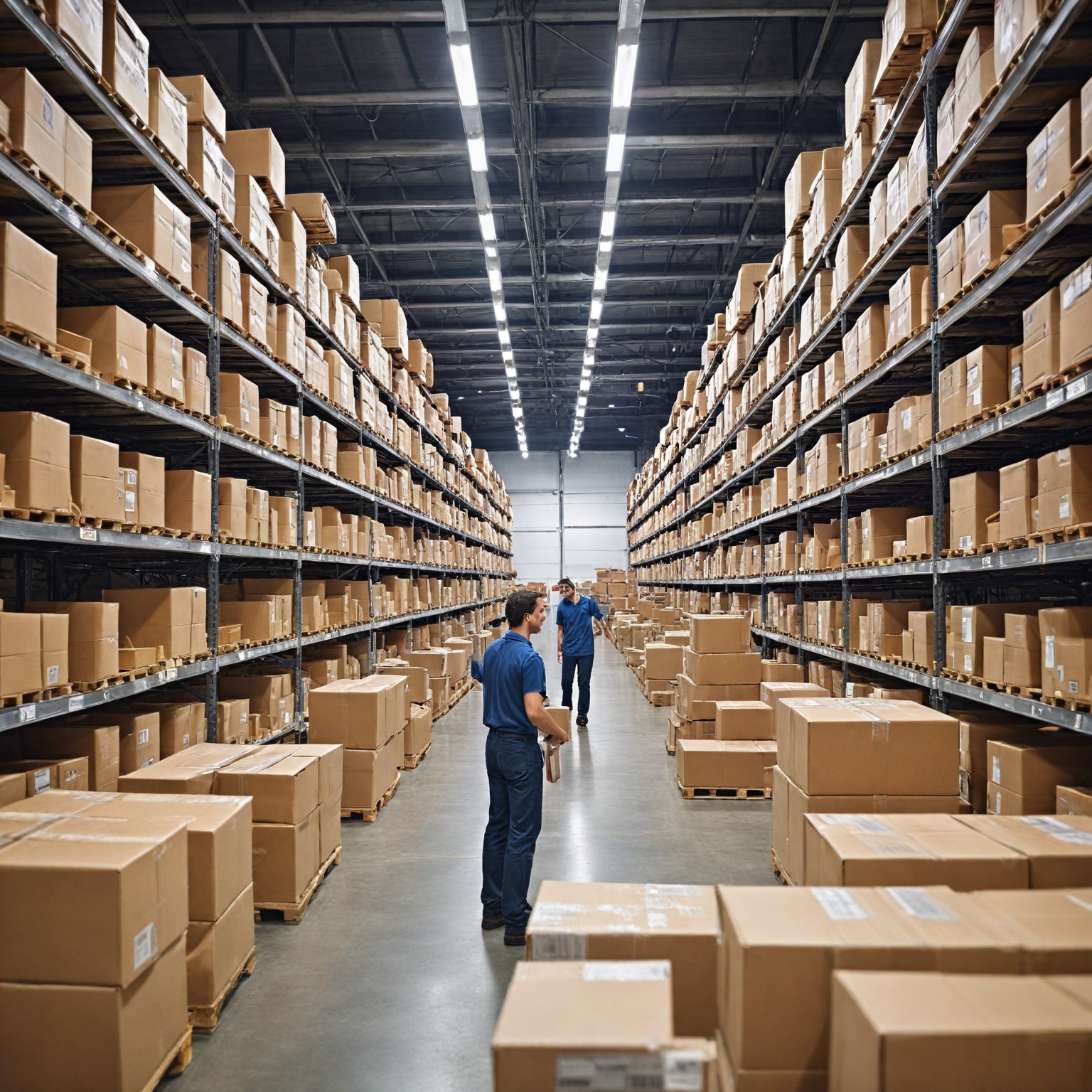
The pick and pack process, essential for warehouse order fulfillment, involves selecting items from inventory and packing them for shipment, impacting order accuracy, speed, and customer satisfaction. Efficiency is critical, especially for warehouses managing diverse and large volumes of SKUs. Optimizing this process involves improving warehouse layout, adopting technologies like warehouse management systems (WMS), automated storage and retrieval systems (AS/RS), autonomous mobile robots (AMRs), and enhancing workforce skills. Common picking methods include piece picking for low volumes and batch or zone picking for high volumes. Technologies such as barcode scanners, voice-directed systems, and robotic arms reduce errors and speed operations. Efficient pick and pack operations directly influence throughput and fulfillment quality.
Challenges in Pick and Pack Operations
Key challenges include inefficient picking methods, poor inventory layout, technological bottlenecks, and integration issues. Disorganized warehouses increase picker travel time and fatigue, while outdated software systems can cause delays during peak periods. Inadequate task prioritization and bypassing validation tools lead to errors. Packing bottlenecks also slow fulfillment despite inventory availability. Ineffective coordination of picking and packing methods further reduces efficiency, especially under high volume or complex orders.
Best Practices for Enhancing Pick and Pack Efficiency
Improving efficiency involves optimizing warehouse layout by implementing zone picking and slotting high-demand items near packing stations. Leveraging technologies like WMS, AS/RS, voice-directed picking, and robotic systems enhances accuracy and speed. Continuous workforce training and ergonomic workstations maintain productivity and adaptability. Regular process assessments identify inefficiencies and guide improvements. Strategic planning includes vigilant inventory management, quality control, and smooth integration of automation within existing systems. Emphasizing continuous improvement ensures responsiveness to increasing customer demands and operational challenges.
Technologies and Automation in Pick and Pack
Advanced technologies streamline pick and pack processes by reducing errors and increasing throughput. Automated storage and retrieval systems (AS/RS) maximize space and speed up handling, while autonomous mobile robots (AMRs) transport goods efficiently. Robotic arms assist in packing and shipping, integrated with WMS and warehouse execution systems (WES) for seamless operations. Successful technology adoption requires compatibility with existing infrastructure and workforce training to ensure smooth transitions and acceptance.
Operational and Supply Chain Challenges
Managing complex inventory locations and integrating multiple automation systems pose significant challenges, risking delays and increased costs if not properly addressed. Fixed, inflexible systems limit scalability and responsiveness, highlighting the need for adaptable automation and skilled staff. Supply chain issues, including inaccurate forecasting and inefficient packing materials selection, also impact fulfillment efficiency and profitability. Incorporating returns data aids quality improvements and supplier management.
Strategies for Integration and Implementation
Successful automation integration requires documenting current workflows, ensuring compatibility with WMS and ERP systems, and establishing centralized control for multi-vendor solutions. Workforce training is vital to adapt to new technologies and maintain operational flexibility. Balancing automation with process optimization enhances efficiency. Clear automation rules and client management integration support scalability and clarity in complex environments. Collaboration among operators, technology providers, and system technicians is essential for overcoming integration challenges.
Case Studies and Industry Examples
High-volume warehouses using Automated Storage and Retrieval Systems (AS/RS) have increased throughput by 5 to 10 times and reduced floor space by up to 85%, demonstrating strong returns despite initial costs. Adoption of Autonomous Mobile Robots (AMRs) and Automated Guided Vehicles (AGVs) improves material transport efficiency and reduces manual labor dependence, contributing to faster, reliable order fulfillment.
Future Trends in Pick and Pack Operations
Emerging trends include the use of artificial intelligence (AI) and machine learning (ML) for predictive analytics and self-optimizing systems, promising 30-50% efficiency gains. Robotics and collaborative robots (cobots) enhance safety and throughput by working alongside humans in tasks such as packing and quality control. Advanced automation systems like AS/RS maximize space and integrate with WMS for precise, fast order fulfillment. Data-driven optimization through business intelligence and predictive analytics supports continuous improvement by forecasting demand, optimizing layouts, and identifying bottlenecks.
The content is provided by Avery Redwood, Gear Shift Zone