Highlights
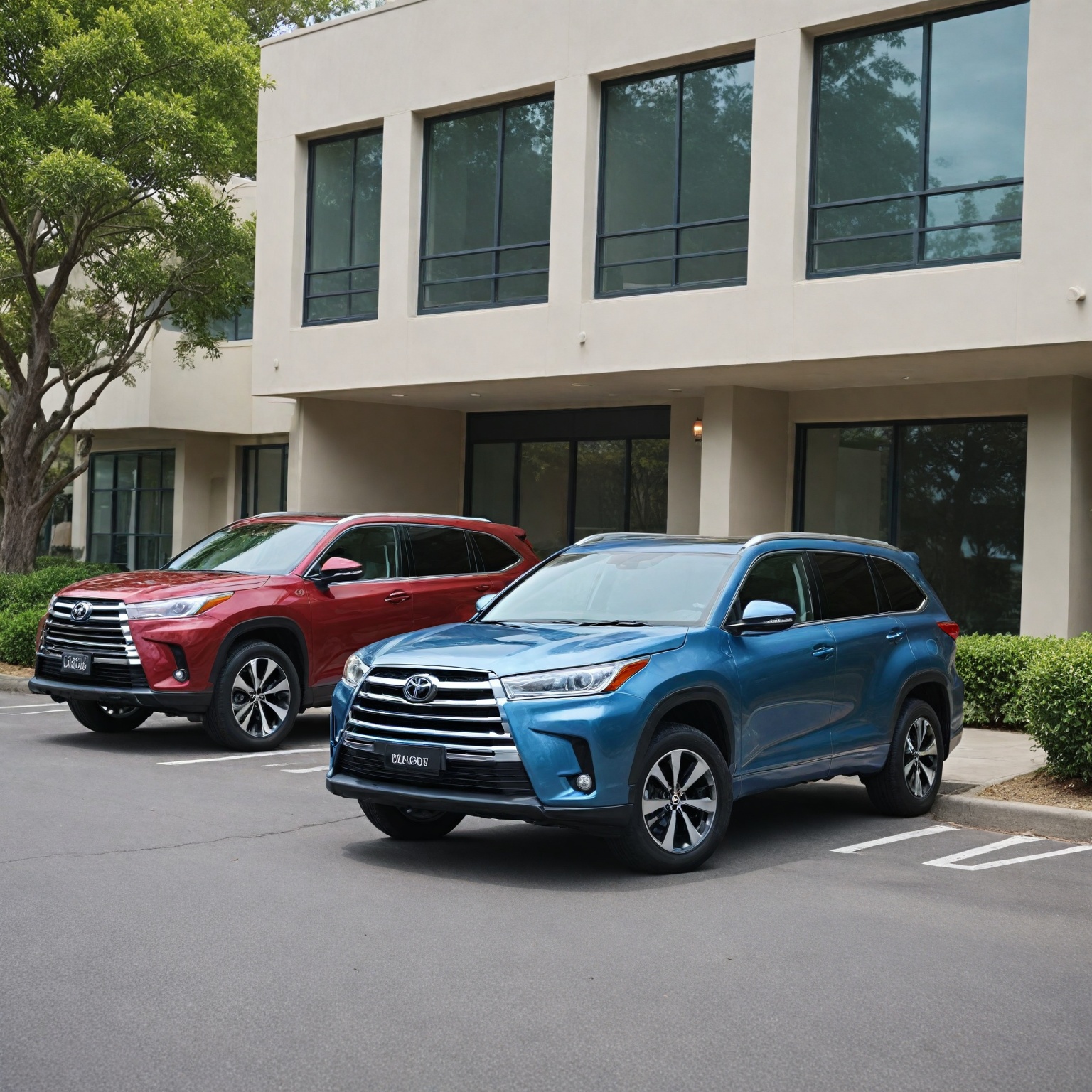
- The 2025 Toyota Kluger and Highlander showcase regional branding while sharing core engineering and advanced safety features.
- Both models offer powerful engine options and impressive fuel efficiency, appealing to diverse consumer preferences.
- Discover which model suits your lifestyle best and explore Toyota's latest offers today!
“`html
Summary
The 2025 Toyota Kluger and Highlander are midsize SUVs that represent regional variants of essentially the same vehicle, marketed under different nameplates depending on the market. The Highlander is primarily sold in North America and selected global markets, while the Kluger name is used mainly in Australia, the Middle East, and some other international regions. Both models share a common platform with the Lexus RX and Toyota Harrier, reflecting Toyota’s strategy of tailoring branding and specifications to regional preferences while maintaining core engineering consistency. Notable distinctions between the two arise from branding and market positioning. The Kluger name, derived from the German word klug meaning “clever,” was adopted in Australia due to a longstanding trademark conflict with Hyundai over the Highlander name in that market. Despite Toyota’s recent attempts to secure the Highlander trademark in Australia, the Kluger remains the country’s most popular seven-seat SUV. Mechanically and dimensionally, the Kluger and Highlander closely mirror each other, with both offering turbocharged four-cylinder and hybrid powertrains, advanced driver-assistance systems, and family-oriented interior features. Performance and technology updates for the 2025 models include the Highlander’s shift from a V6 to a 2.4-liter turbocharged engine, offering improved low-end torque and fuel efficiency, albeit with some critiques about engine noise and refinement. The Kluger maintains a focus on hybrid efficiency and comfort for Australian consumers, with a hybrid powertrain delivering approximately 5.6L/100km fuel economy. Both vehicles are equipped with Toyota Safety Sense technology suites, advanced infotainment options, and comprehensive safety features, achieving strong safety ratings in their respective regions. Market reception has been mixed, with the Kluger experiencing a decline in Australian sales partly due to the phase-out of petrol-only models and increasing competition within Toyota’s SUV lineup. Expert reviews generally praise the Kluger’s interior quality and family-friendly features but note certain technological shortcomings such as dated instrument clusters on some trims. The Highlander continues to be a significant player in the competitive midsize SUV segment in North America, further expanded by the introduction of the larger Grand Highlander variant.
Overview
The Toyota Kluger and Highlander are essentially the same midsize SUV model marketed under different names depending on the region. The Highlander nameplate is primarily used in North America, where production for gasoline engine models has been consolidated at Toyota Motor Manufacturing Indiana (TMMI) since the 2010 model year, while hybrid versions were imported from Japan until the third generation XU50 model. In contrast, the same vehicle is sold as the Kluger in Australia, the Middle East, and several other international markets.
The Kluger name originated from the German word klug, meaning “smart” or “clever,” and was chosen in Australia partly because the Highlander name is a trademark owned by Hyundai in that market. This trademark dispute has persisted for more than two decades, with Toyota recently filing a trademark application for the Highlander name in Australia, where the Kluger is the country’s most popular seven-seater SUV. Despite this, Toyota continues to use the Highlander name globally outside of Australia and certain other markets.
The Kluger and Highlander share a common platform with the Lexus RX and Toyota Harrier (XU30 series), highlighting Toyota’s strategy to adapt its vehicles to fit regional branding and market preferences while maintaining core engineering and design elements. The 2024 model year saw the introduction of the Toyota Grand Highlander, expanding the lineup further.
Design and Features
The 2025 Toyota Kluger and Highlander share a modern and sophisticated design ethos, tailored to meet the needs of families and tech-savvy drivers alike. Both models offer refreshed exterior styling with updated grille designs and new alloy wheel options, including unique trims such as the Highlander’s Heavy Metal color and the Kluger’s Hybrid Nightshade with blacked-out 20-inch alloy rims and mirror caps.
Inside, the Kluger emphasizes family-friendly comfort with a spacious interior layout measuring 4966mm in length and a 2850mm wheelbase. It accommodates seven passengers in Australian models, with a second-row bench seat designed for optimal adult comfort, featuring a flat floor and adjustable sliding and reclining capabilities. Although the third row is somewhat limited in legroom and best suited for children or smaller adults due to its high floor and upright backrest, it includes amenities such as armrests, cupholders, and roof-mounted ventilation to enhance passenger comfort. The Kluger offers 241 litres of cargo space with all three rows in use, comparable to smaller vehicles.
Cabin materials in the Kluger include high-quality finishes, with options for leather seats and a Black Premium or Black Synthetic interior, depending on the trim. Front seats in higher trims offer eight-way power adjustments, heated and ventilated options, and power lumbar support for the driver, providing excellent comfort for long drives. The instrument cluster, however, is less advanced on some trims, featuring dated analog dials alongside a central display, with more modern digital clusters reserved for higher-end variants such as the Grande.
The Highlander similarly balances bold design with everyday elegance, integrating sophisticated exterior styling cues and convenient technology features to meet the demands of modern lifestyles. Its interior is equipped with high-quality materials and a larger touchscreen display than previous models, enhancing usability and connectivity. The availability of a 12.3-inch infotainment touchscreen supports Apple CarPlay, Android Auto, and Amazon Alexa integration for seamless smartphone connectivity.
Both models prioritize driver and passenger safety with Toyota Safety Sense technology. The Kluger is equipped with Toyota Safety Sense 2.5+, which includes adaptive cruise control, lane departure alert, and pre-collision systems with pedestrian detection. The Highlander advances this suite with Toyota Safety Sense 3.0 on select trims, offering enhanced driver-assistance features to improve safety and confidence behind the wheel.
Connectivity is a key focus, with the Kluger offering Toyota Connected Services that include remote features, connected navigation, voice command, and safety and security functions through a complimentary one-year subscription. Similarly, the Highlander integrates wireless Apple CarPlay and Android Auto along with Bluetooth and Wi-Fi hotspot capabilities, ensuring passengers remain connected throughout their journeys.
Performance
The 2025 Toyota Kluger offers a driving experience typical of a large, family-oriented Toyota SUV. It emphasizes low-speed response and predictable, safe handling, with light steering that facilitates urban maneuvering. The vehicle’s boxy shape and large windows provide good outward visibility. Its suspension setup contributes to a smooth ride quality comparable to Toyota’s other refined vehicles, though the petrol engine can sound uninspiring and the continuously variable transmission (CVT) produces a dreary noise when engaged. The Kluger also features an efficient hybrid powertrain variant, delivering a fuel economy of approximately 5.6L/100km, with the top hybrid model producing 184 kW of power and 242 Nm of torque. The hybrid system allows the vehicle to flick back to electric-only mode during coasting or light throttle conditions, particularly noticeable during highway driving.
In contrast, the 2025 Toyota Highlander has transitioned from its previous 3.5-liter V6 to a smaller 2.4-liter turbocharged inline-four engine for the base gas model. This turbocharged four-cylinder produces 265 horsepower and 310 pound-feet of torque. While horsepower is down by 30 compared to the outgoing V6, the increased low-end torque improves everyday driving responsiveness, especially in city conditions. The turbo engine delivers brisk acceleration, with all-wheel-drive models capable of 0 to 60 mph in approximately 7.4 seconds, outperforming many V6-equipped competitors. However, the turbocharged engine is noted to be louder and less refined than the smooth V6 it replaced, exhibiting a clattery and buzzy character at times. The Highlander’s drivetrain options include standard front-wheel drive and available all-wheel drive, which is standard on higher trims such as the XSE and Platinum. The suspension system features independent front suspension and a double-wishbone rear setup aimed at delivering a comfortable and composed ride.
Safety
The 2025 Toyota Kluger and Highlander both prioritize occupant and pedestrian safety through comprehensive suites of advanced safety technologies and high structural standards. The Kluger boasts a robust safety design with intelligent safety technology aimed at supporting safe driving and protecting passengers. It is equipped with up to seven airbags, including driver’s, driver’s knee, front passenger, two side impact, and two curtain shield airbags extending to the third row, ensuring extensive protection throughout the cabin. Active safety features include front and rear parking sensors, a reversing camera, and a parking support brake that can automatically apply brakes to avoid collisions with rear-crossing vehicles or static objects while reversing.
The Kluger incorporates the Pre-Collision Safety System (PCS) with Pedestrian and Daylight Cyclist Detection, which provides audio and visual alerts and can apply brake force automatically to mitigate or prevent collisions. Additionally, Lane Trace Assist helps keep the vehicle centered in its lane by applying partial steering corrections if unintentional lane departure is detected. These features contribute to the Kluger’s strong safety performance, which earned it a five-star ANCAP safety rating based on 2021 testing.
Similarly, the 2025 Toyota Highlander is equipped with Toyota Safety Sense™ 2.5+, a suite of advanced driver-assistance technologies standard across all trims. This includes adaptive cruise control, lane departure alert with lane tracing assist, and automatic emergency braking with pedestrian detection, providing a high level of driver support to prevent accidents. The Highlander’s safety suite is enhanced with blind-spot monitoring and rear cross-traffic alert, which are particularly useful for a vehicle of its size when merging or reversing. Its adaptive cruise control and Lane Trace Assist facilitate semi-autonomous highway driving, reducing driver fatigue on longer trips.
Crash safety ratings further reflect the Highlander’s solid safety credentials. The 2025 Grand Highlander variant has received a “Good” rating in the Insurance Institute for Highway Safety (IIHS) crash tests, including passenger-side small overlap frontal impact tests. The previous generation Highlander also achieved “Top Safety Pick” status by IIHS for the 2020 model year, with good ratings in multiple crash test categories.
Pricing and Trim Levels
For the 2025 model year, the Toyota Kluger and Highlander feature notable updates in pricing and trim configurations reflecting market preferences and model positioning.
The 2025 Toyota Kluger lineup in Australia has seen price increases of up to AUD 2,630, following earlier adjustments in March 2024 that coincided with the discontinuation of petrol-powered front- and all-wheel-drive models. The entry-level Kluger now starts at AUD 54,420 before on-road costs, marking a substantial rise of AUD 6,770 since the launch of the current generation in 2021. The range-topping Kluger Grande eFour Hybrid variant is priced from AUD 82,860 before on-road costs, making it the most expensive Kluger variant in Australian history. Despite these price changes, features and specifications remain largely unchanged except for the removal of petrol-only versions.
In contrast, the 2025 Toyota Highlander for the North American market discontinued the LE trim, standardizing all-wheel drive (AWD) across all remaining trims. The power output is uniform at 265 horsepower for all trims, which also share fuel economy ratings of 21 MPG in the city, 28 MPG on the highway, and a combined 24 MPG. This move reflects Toyota’s emphasis on AWD capability and streamlined trim offerings for the Highlander lineup. Additionally, the Grand Highlander, a larger alternative to the regular Highlander, was introduced in early 2023, expanding the model range further.
Regionally, the Highlander primarily targets the North American market, whereas the Kluger remains popular in Australia and other international markets such as the Middle East. This regional focus influences both the pricing strategies and available trim levels for each model.
Comparison Between Kluger and Highlander
The Toyota Kluger and Highlander are essentially the same vehicle, with the primary distinction being their regional branding. The Kluger name is used in Australia, the Middle East, and select international markets, while the Highlander name is primarily reserved for North America and other key global markets. The name “Kluger” is reportedly derived from the German word “klug,” meaning “intelligent,” reflecting a localized marketing strategy.
In terms of design and dimensions, both SUVs share the same platform and overall measurements. For example, the Kluger measures 4,966 mm in length with a 2,850 mm wheelbase, providing spacious second-row seating with flat bench and floor design that enhances comfort for middle passengers. It supports child seats with top rope and ISOFIX points and offers family-friendly amenities such as a third-zone climate control system with roof-mounted vents, a fold-down center armrest with cupholders, extra USB ports, and a sliding and reclining second row. These features are consistent across both Kluger and Highlander models, emphasizing their shared architecture and focus on passenger comfort.
Powertrain options for the 2025 model year are also aligned between the two. The base engine is a 2.4-liter turbocharged four-cylinder producing 265 horsepower and 310 lb-ft of torque, replacing the previous 3.5-liter V6 in the Highlander lineup. This engine offers improved low-end torque and reduced emissions, with NOx and NMOG emissions cut by over 50 percent. The hybrid powertrain option remains available and unchanged in both models, catering to drivers seeking enhanced fuel efficiency.
Suspension systems are identical as well, featuring independent front suspension and double-wishbone rear suspension, designed to provide a smooth and comfortable ride. Safety is a critical focus for both vehicles, with standard equipment including multiple airbags (driver, passenger, knee, side impact, and curtain shield airbags extending to the third row), front and rear parking sensors, reversing camera, and advanced parking support brake systems to help prevent collisions while reversing. Additionally, the infotainment and driver-assistance technologies are equally advanced across both models, extending beyond entertainment to incorporate some of the latest safety innovations available from Toyota.
Interior appointments vary slightly based on trim levels and market preferences but generally include features such as power-adjustable heated front seats with lumbar support, ventilated seats, memory driver’s seat, and premium black synthetic or leather interiors depending on the variant. For example, the Kluger GXL and Grande trims emphasize comfort and versatility with extensive family-friendly features, closely mirroring the Highlander’s trim offerings and interior design philosophy.
Pricing, availability, and minor equipment specifications may differ between the Kluger and Highlander due to regional taxes, levies, regulations, and market strategies, with Toyota reserving the right to modify or discontinue features and trims without notice. Nonetheless, the fundamental driving experience, safety, comfort, and technological attributes remain consistent, making the Kluger and Highlander two faces of the same capable midsize SUV tailored for different regions.
Market Reception and Sales Performance
The 2025 Toyota Kluger, also known as the Highlander in markets like North America, has experienced a mixed reception across its various regions. While the vehicle has seen moderate success in Australia and other international markets, its sales figures have not matched those of Toyota’s more popular SUVs such as the LandCruiser, Prado, and RAV4. Specifically, Australian Kluger sales declined by 24.8 percent to 2,125 units by the end of April 2025, reflecting relatively low demand compared to these other models. This downturn coincides with Toyota Australia’s decision to close order books for petrol-only versions of several models, including the Kluger, shifting focus to petrol-hybrid powertrains across its lineup.
Despite this, the Kluger has received generally positive expert reviews, with CarsGuide rating the 2025 model an average of 8.6 out of 10, highlighting its appealing interior and features such as leather-trimmed heated and ventilated seats. Some reviewers noted initial reservations about the Kluger but
Competitors and Market Position
The 2025 Toyota Kluger occupies a distinctive niche within the mid-size SUV segment, particularly in the Australian market, where it competes predominantly as a hybrid all-wheel-drive model. This positioning came into effect following a significant update in 2024, when Toyota streamlined the Kluger range to feature only hybrid AWD variants, aligning with broader changes in Toyota’s passenger vehicle lineup in Australia. The Kluger’s hybrid, car-based monocoque construction sets it apart from several key competitors in the segment, such as the Ford Everest and Isuzu MU-X, which utilize body-on-frame designs and also offer seven-seat capacity. Despite the growing popularity of these rugged, ladder-frame SUVs, the Kluger faces stiff competition, with the Everest outselling it considerably in 2024, recording 26,494 deliveries compared to Toyota’s Prado’s 9,868 and the MU-X’s 17,978 units during the same period. Toyota’s ladder-frame Prado, another major player in the segment, lost its long-held leadership position to the Everest during the introduction of its 250 Series generation, underscoring the intense rivalry among large SUVs in Australia. Within this competitive landscape, the Kluger’s unique selling points include its hybrid powertrain and all-wheel-drive capability, which appeal to families seeking a balance between performance, efficiency, and spaciousness. The Toyota Highlander, a model closely related to the Kluger, also garners attention as a popular three-row SUV globally, with adaptability to different markets influencing its success. While the Highlander shares many attributes with the Kluger, such as seating capacity and hybrid options, its market penetration varies by region, including growing acceptance in Australia. The Highlander faces competition from other crossover SUVs, such as the Hyundai Palisade, which are also noted for their spaciousness and family-friendly features.
“`
The content is provided by Harper Eastwood, Gear Shift Zone